
BVLOS Explained for Commercial Drone Teams
BVLOS stands for beyond visual line of sight. In simple terms, it means flying a drone where the remote pilot cannot maintain direct, unaided visual contact with the aircraft throughout the flight.
For commercial drone teams, BVLOS is one of the biggest unlocks in the industry. It can make long linear inspections, remote site monitoring, emergency response, security patrols and large-area surveys far more practical. But it is not just VLOS with a longer route. BVLOS changes the risk profile, the regulatory expectations, the technology requirements and the level of operational discipline needed from the team.
The useful question is not whether your drone can physically fly that far. It is whether your organisation can prove that the operation remains safe when the pilot cannot see the aircraft.
What BVLOS actually means
Most commercial drone work starts with VLOS, or visual line of sight. The remote pilot can see the drone directly and use that visual reference to maintain control, monitor orientation, identify nearby hazards and avoid other aircraft.
BVLOS removes that direct visual reference. The team must therefore replace it with a combination of planning, procedures, communications, aircraft capability, airspace awareness, detect and avoid measures, emergency actions and auditable records.
| Operating mode | What it means | Typical commercial use |
|---|---|---|
| VLOS | The remote pilot keeps unaided visual contact with the drone | Site surveys, roof inspections, media work, construction progress capture |
| EVLOS | Extended visual line of sight using trained observers to maintain visual contact | Longer routes where observers support the pilot along the operating area |
| BVLOS | The drone flies beyond the pilot's direct visual range | Linear asset inspection, remote monitoring, emergency response, wide-area mapping |
EVLOS can be a stepping stone for some teams, but it is not the same as BVLOS. In EVLOS, human observers still provide visual coverage. In BVLOS, the safety case must account for the fact that direct visual monitoring is no longer available.
Why BVLOS matters for commercial drone operations
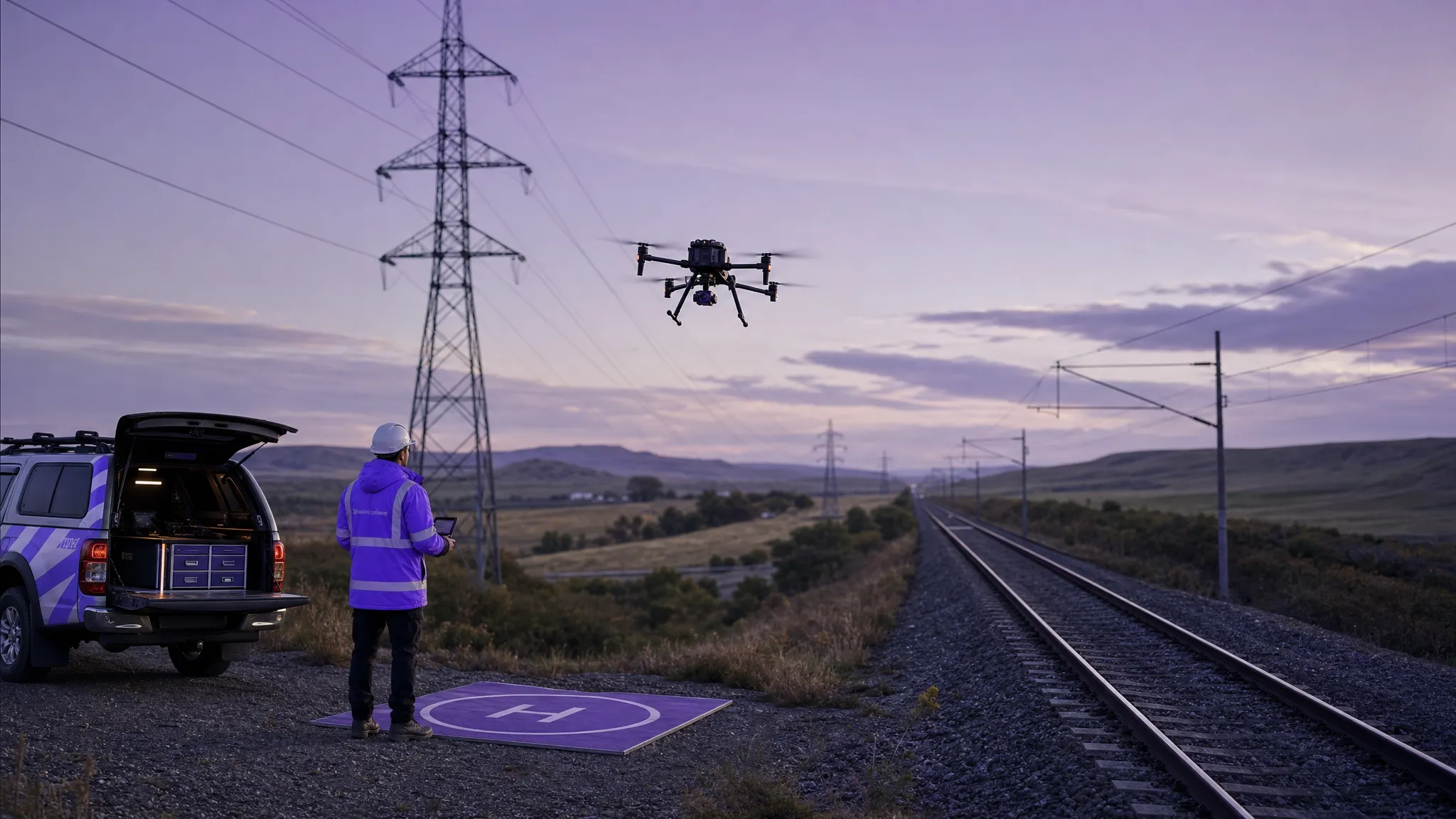
BVLOS is attractive because many high-value drone tasks are geographically spread out. Utility networks, rail corridors, pipelines, solar farms, highways, coastlines and flood zones rarely fit neatly inside a short VLOS operating box.
For survey companies, BVLOS can support larger capture areas and more consistent repeat surveys. For utility companies, it can reduce the need to send people into difficult terrain just to inspect a remote asset. For emergency services, it can extend situational awareness across search areas, fire grounds or inaccessible locations, provided the operation is properly authorised and controlled.
The commercial value usually comes from a combination of factors:
- Wider area coverage per mission
- Reduced time moving crews between launch points
- Safer inspection of remote, hazardous or hard-to-access assets
- More repeatable data collection over fixed routes
- Faster operational awareness during time-sensitive incidents
However, BVLOS only delivers these benefits if the operation is built on a robust safety case. A poorly prepared BVLOS programme can create delays, regulatory problems and unnecessary risk.
BVLOS is not the same as autonomous flight
BVLOS and autonomy are often discussed together, but they are different concepts.
A BVLOS flight may be manually controlled, highly automated or somewhere between the two. The defining feature is not the level of automation. It is the fact that the drone is operating beyond the pilot's direct visual line of sight.
Likewise, an automated flight can still be VLOS if the pilot can see the aircraft and intervene when required. This distinction matters because regulators and clients will focus on operational risk, not marketing language. If your aircraft is beyond visual line of sight, you need to show how you will maintain safe control, separation, navigation and contingency management.
The main risks BVLOS teams must manage
BVLOS operations introduce new risk controls because the remote pilot loses direct visual cues. That does not make BVLOS unsafe by default, but it does mean the team must be able to identify and mitigate risks in a more systematic way.
The biggest areas to address are air risk and ground risk. Air risk covers the possibility of conflict with crewed aircraft, other drones or airspace users. Ground risk covers the potential impact on people, property and infrastructure beneath or near the route.
Other critical risk areas include command and control link reliability, navigation accuracy, lost link behaviour, weather changes, emergency landing options, battery or power management, cybersecurity for connected systems, pilot workload and coordination between crew members.
Detect and avoid is a particularly important concept. In VLOS operations, the pilot's eyes are a core part of collision avoidance. In BVLOS, the operation may need alternative means of detecting traffic and avoiding conflict. The exact solution depends on the aircraft, airspace, operating environment and regulator expectations.
This is why BVLOS planning must be evidence-led. A generic procedure copied from a standard operating manual is unlikely to be enough for complex routes or higher-risk environments.
BVLOS regulation in 2026: what commercial teams should know
Regulation is changing quickly as aviation authorities work towards more scalable BVLOS frameworks. In 2026, commercial teams should still treat BVLOS as an operation that normally needs specific authorisation, not a routine extension of standard drone permissions.
In the UK, operators should start with current UK Civil Aviation Authority drone guidance and any relevant operational authorisation requirements. BVLOS in shared airspace is a key policy area, and operators should expect to demonstrate a clear concept of operations, risk assessment, aircraft capability, crew competence, procedures and record keeping.
In the EU, BVLOS commonly sits within the Specific category, where operators use a risk-based approach under EASA rules. The EASA Easy Access Rules for Unmanned Aircraft Systems are a useful starting point for understanding the wider regulatory structure.
In the United States, many commercial BVLOS operations have historically required waivers or other approvals, while the FAA continues to develop a broader rulemaking pathway. The FAA BVLOS Aviation Rulemaking Committee final report remains useful background for understanding the issues regulators are trying to solve.
The practical takeaway is simple: do not design a BVLOS operation around assumptions. Check the current rules in the country of operation, speak to the regulator or a qualified aviation adviser where appropriate and keep evidence for every safety claim you make.
What a BVLOS operating case needs to prove
A good BVLOS case is built around a defined operation, not a vague desire to fly further. Regulators and enterprise clients need to understand what you want to do, where you want to do it, who is involved, what could go wrong and how you will prevent or manage those scenarios.
| Planning question | Why it matters | Typical evidence |
|---|---|---|
| What is the mission? | Defines the purpose, location, route and operating limits | Concept of operations, maps, tasking documents |
| What airspace is involved? | Determines traffic risk, coordination needs and restrictions | Airspace review, NOTAM checks, stakeholder engagement |
| What is beneath the route? | Determines ground risk to people, property and infrastructure | Ground risk assessment, population review, emergency landing sites |
| How will the aircraft stay connected? | Shows how command and control will be maintained | C2 link analysis, coverage planning, lost link procedures |
| How will conflicts be avoided? | Replaces the visual avoidance normally provided by the pilot | Detect and avoid strategy, observers, surveillance data, procedures |
| Who does what? | Prevents confusion during normal and abnormal events | Crew roles, training records, communications plan |
| How will the operation be recorded? | Creates an auditable trail for compliance and improvement | Flight logs, checklists, maintenance records, incident reports |
The risk assessment is central to this process. If your organisation is still maturing its approach, Dronedesk has a practical guide on building a drone flight risk assessment that works, which is directly relevant before moving into more complex BVLOS planning.
A practical BVLOS planning workflow
BVLOS planning should be repeatable. Even when the route or client changes, the team should follow a consistent process so that risk controls are not missed under time pressure.
A sensible workflow looks like this:
- Define the business case and mission outcome before selecting the aircraft or route.
- Map the route, operating volume, launch sites, recovery sites and contingency areas.
- Review airspace, nearby aerodromes, restrictions, terrain, obstacles and likely traffic.
- Assess ground risk, including people, roads, property, sensitive sites and emergency landing options.
- Decide how the team will manage detect and avoid, communications and lost link events.
- Confirm aircraft suitability, maintenance status, payload limits, endurance and navigation performance.
- Assign crew roles, competence requirements, communications channels and escalation procedures.
- Record the plan, approvals, checks, flight logs and post-flight findings for audit and improvement.
The workflow should also include a go or no-go decision point. BVLOS operations can be sensitive to weather, temporary airspace changes, local events, crew availability and communications coverage. A mission that was safe during planning may not be safe on the day.
Technology and evidence requirements
The technology needed for BVLOS depends on the risk of the operation. A remote rural inspection route may have different requirements from a route near controlled airspace, infrastructure or populated areas.
Commercial teams should think in terms of capabilities rather than gadgets. The regulator and your client will care less about the brand of equipment and more about whether the system performs reliably in the intended environment.
| Capability | Purpose in BVLOS | Evidence to keep |
|---|---|---|
| Reliable aircraft platform | Maintains safe flight across the planned route | Maintenance records, aircraft specifications, test results |
| Command and control link | Keeps the aircraft connected to the remote pilot or control system | Coverage assessment, link performance data, lost link procedures |
| Navigation and positioning | Supports accurate route following and geofencing | GNSS performance notes, route validation, contingency plans |
| Detect and avoid measures | Helps manage conflict with other airspace users | DAA concept, observer plan, surveillance sources, response procedures |
| Airspace and proximity intelligence | Helps identify restrictions, hazards and nearby sites | Airspace checks, proximity checks, planning records |
| Flight logging and reporting | Creates an auditable operational history | Flight logs, checklist records, incident and maintenance reports |
Why admin becomes a safety function in BVLOS
In simple VLOS work, some teams can get by with lightweight admin, although that approach often becomes painful as operations scale. In BVLOS, administration becomes part of the safety system.
The reason is straightforward. Your approval, client confidence and internal decision-making all depend on evidence. You need to show that pilots are competent, aircraft are maintained, routes have been assessed, checklists have been completed, risks have been reviewed and flights have been logged.
For growing teams, this is where dedicated operations management becomes valuable. Dronedesk brings together commercial drone admin in one web platform, including client management, fleet management, team management, airspace intelligence, proximity intelligence, flight planning, configurable checklists, risk assessments, flight logging and data reporting. You can explore the platform's capabilities on the Dronedesk features page.
Fleet oversight is especially important when BVLOS planning moves from occasional trials to repeatable operations. If you are managing multiple aircraft, pilots, payloads, maintenance cycles and operating sites, the challenges overlap heavily with broader drone fleet management.
Common mistakes when teams move towards BVLOS
Many BVLOS delays are not caused by aircraft performance. They are caused by unclear planning, weak documentation or underestimating the operational change.
A common mistake is starting with the drone instead of the mission. Aircraft capability matters, but the route, airspace, ground environment, data need and emergency plan should shape the platform choice.
Another mistake is treating BVLOS as a one-off permission exercise. A regulator may authorise a defined operation, but the team still needs to execute consistently every time. That means training, supervision, maintenance, reporting and review.
Teams also underestimate stakeholder engagement. Depending on the location, BVLOS planning may involve landowners, infrastructure owners, local authorities, emergency services, aerodromes, air navigation service providers or internal safety teams. Late engagement can slow the project more than technical limitations.
Finally, some organisations write procedures that look good on paper but fail under real workload. BVLOS procedures need to be clear enough for crews to use during abnormal events, not just detailed enough to satisfy a document review.
BVLOS readiness checklist for commercial teams
Before investing heavily in BVLOS, use a readiness check to find gaps. If several of these points are weak, it is usually better to fix the operating system before expanding the flight envelope.
- You have a clearly defined BVLOS use case with measurable operational value.
- You understand the current regulatory pathway in your country of operation.
- You can describe the route, operating volume, airspace and ground risk in detail.
- You have a documented detect and avoid concept appropriate to the environment.
- You have tested command and control coverage and defined lost link behaviour.
- Your aircraft maintenance, pilot competence and crew roles are documented.
- Your risk assessments, checklists, flight logs and reports are stored in an auditable way.
- You have a process for reviewing incidents, near misses, aborted flights and lessons learned.
BVLOS maturity is not only technical. It is organisational. The best-prepared teams can explain how people, procedures, technology and records work together to control risk.
Frequently Asked Questions
Is BVLOS legal in the UK? BVLOS can be legal in the UK when the operator has the correct authorisation and meets the applicable CAA requirements for the specific operation. It should not be treated as a standard Open category activity. Always check current CAA guidance before planning a BVLOS flight.
What is the difference between BVLOS and EVLOS? EVLOS uses trained observers to help maintain visual contact with the aircraft beyond the pilot's own direct visual range. BVLOS means the aircraft operates beyond direct visual observation, so the operation needs alternative safety controls.
Does BVLOS always require detect and avoid technology? BVLOS always requires a way to manage collision risk, but the exact solution depends on the airspace, aircraft, route and regulator requirements. In some cases this may involve technology, observers, airspace segregation, procedural controls or a combination of measures.
Can one pilot operate multiple drones BVLOS? Multiple-drone BVLOS operations are more complex than single-aircraft BVLOS and usually require a much stronger safety case. Teams must consider workload, command and control, detect and avoid, contingency handling and regulatory approval.
How should a commercial drone team start with BVLOS? Start with a specific use case, not a generic ambition to fly further. Build the concept of operations, assess air and ground risk, identify the regulatory pathway, validate the technology and create an auditable operating process before scaling.
Bringing BVLOS into a professional drone operation
BVLOS can transform commercial drone work, especially for survey companies, utility operators, emergency services and teams responsible for large or remote assets. But the teams that succeed are not simply the ones with the longest-range drones. They are the ones with the strongest operating discipline.
If you are preparing for more complex drone operations, Dronedesk can help you organise the operational foundations: planning, risk assessments, checklists, fleet and team records, flight logs and reporting. Explore Dronedesk to see how a structured drone operations management platform can support safer, more compliant commercial drone work.
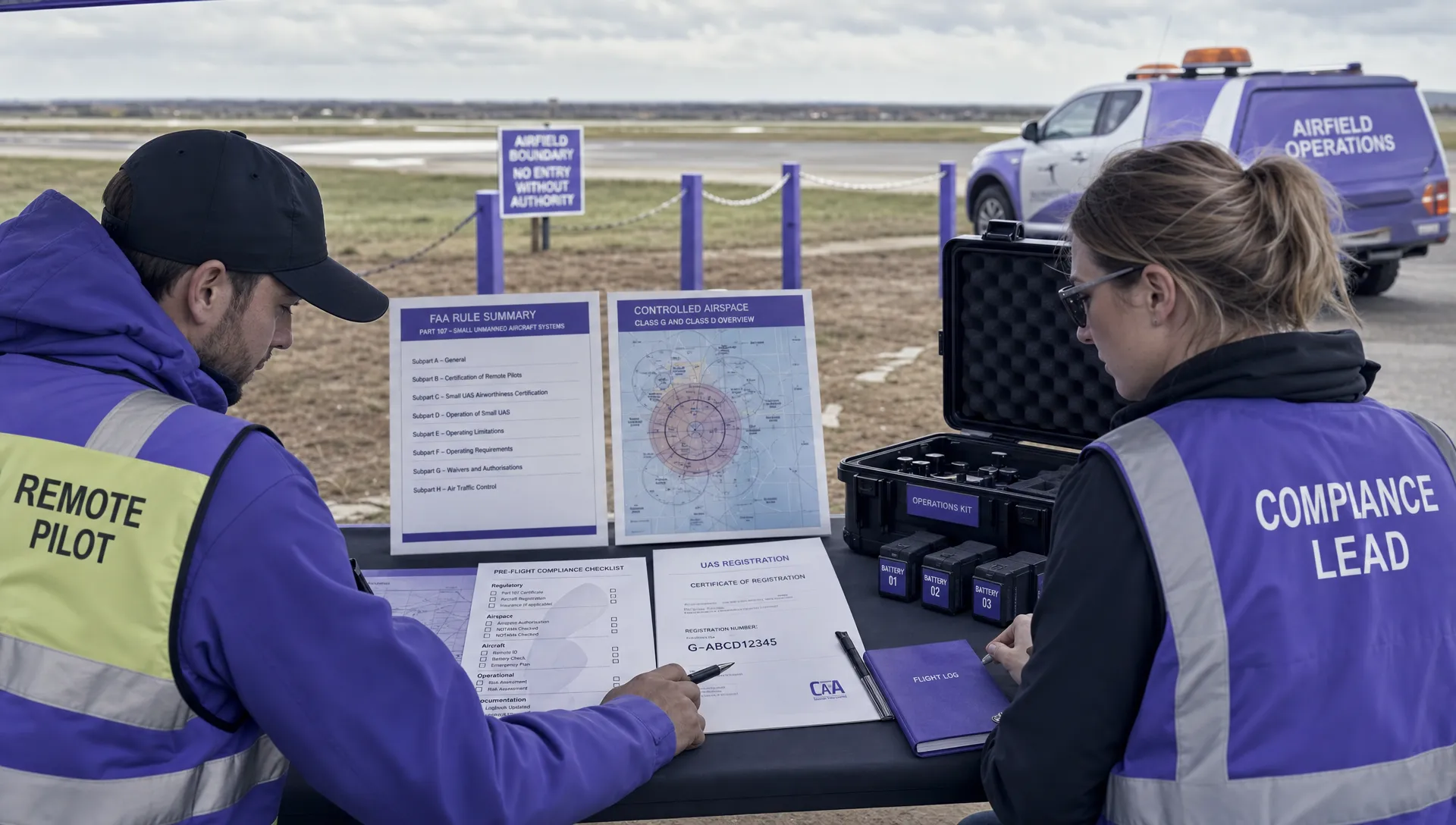 FAA Unmanned Aircraft Regulations Made Simple →
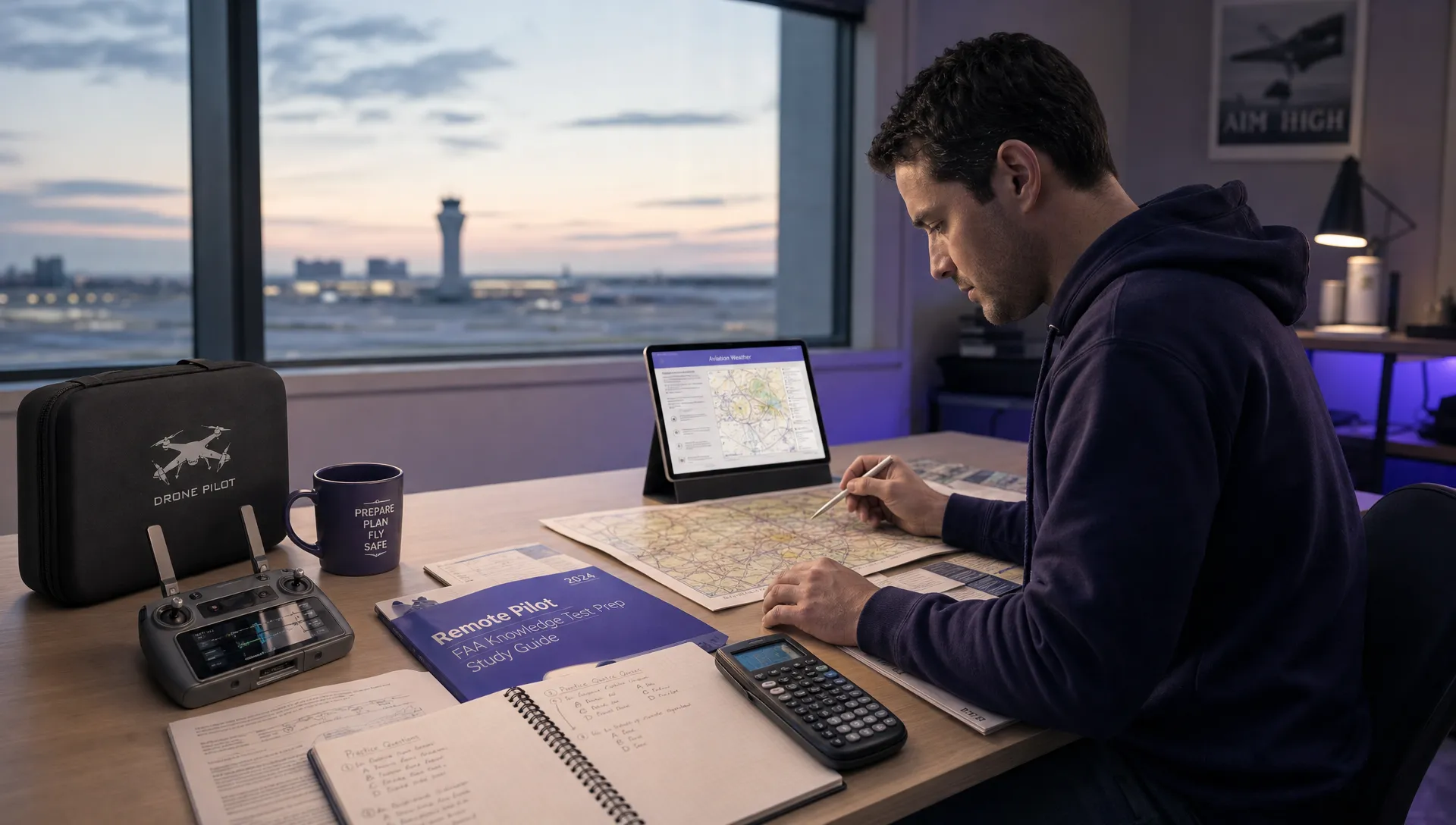 Part 107 Test Tips to Pass With Confidence →
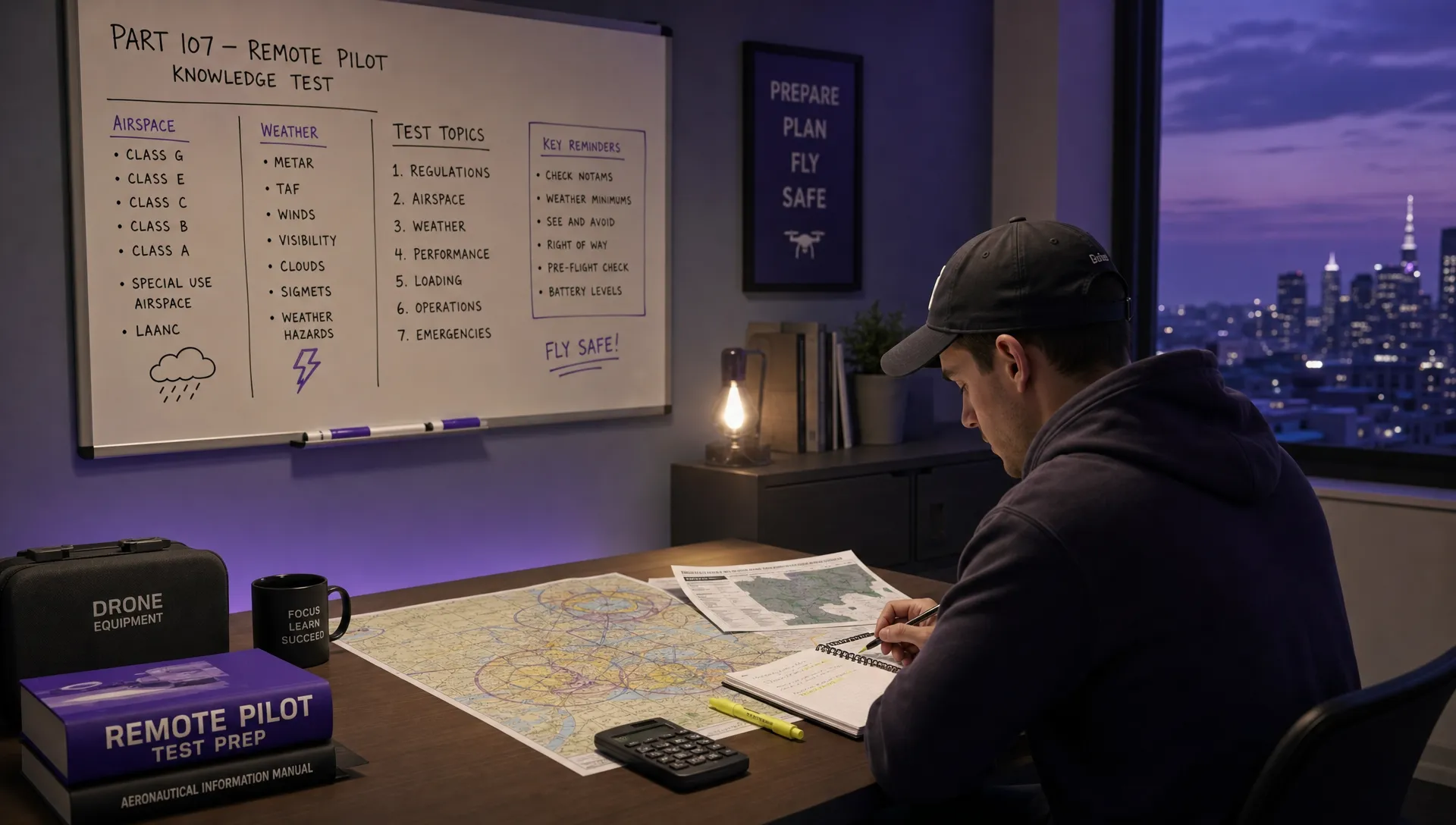 How to Pass the FAA Drone Written Test First Time →
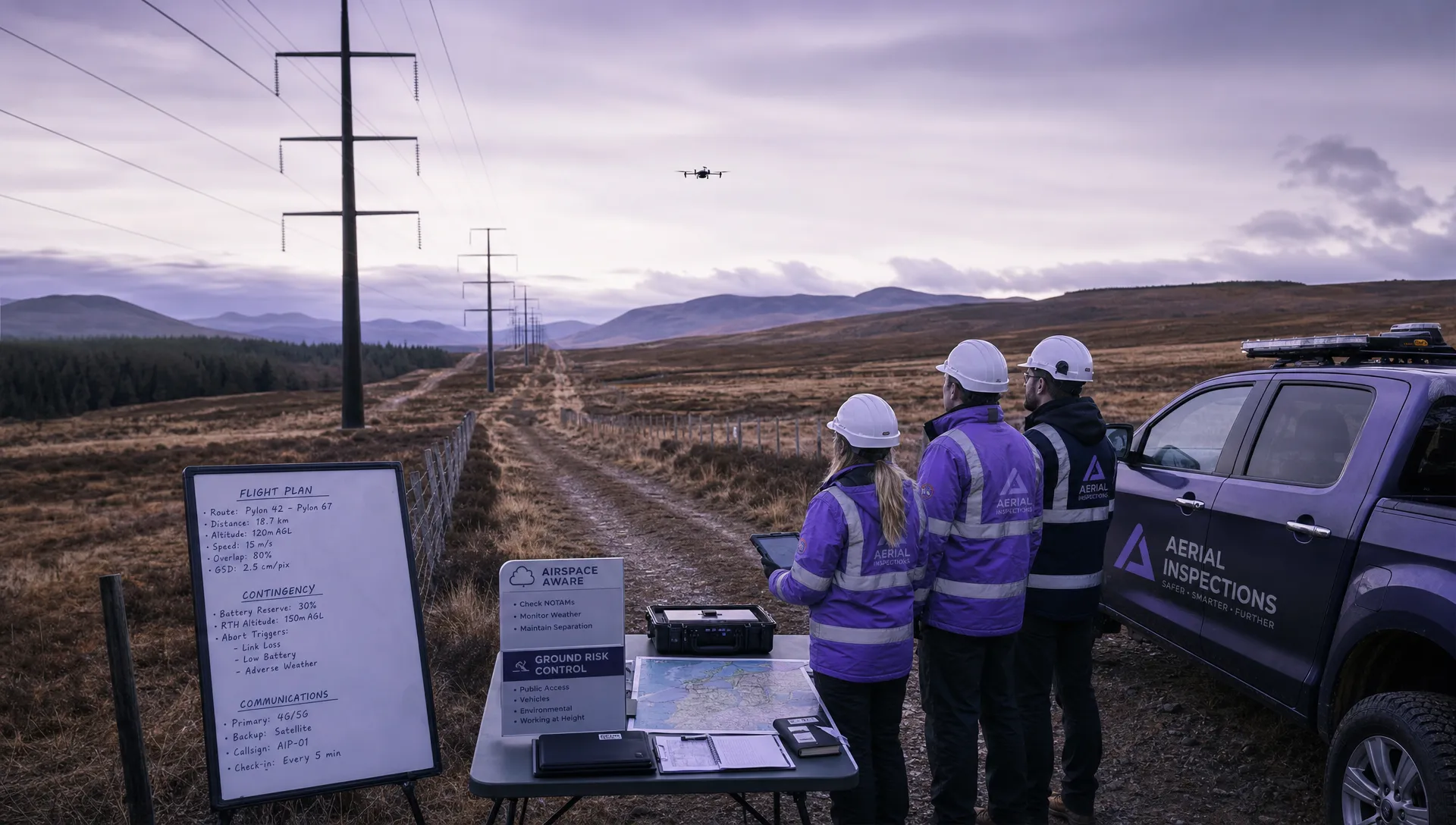 What a BVLOS Flight Means for Risk and Compliance →
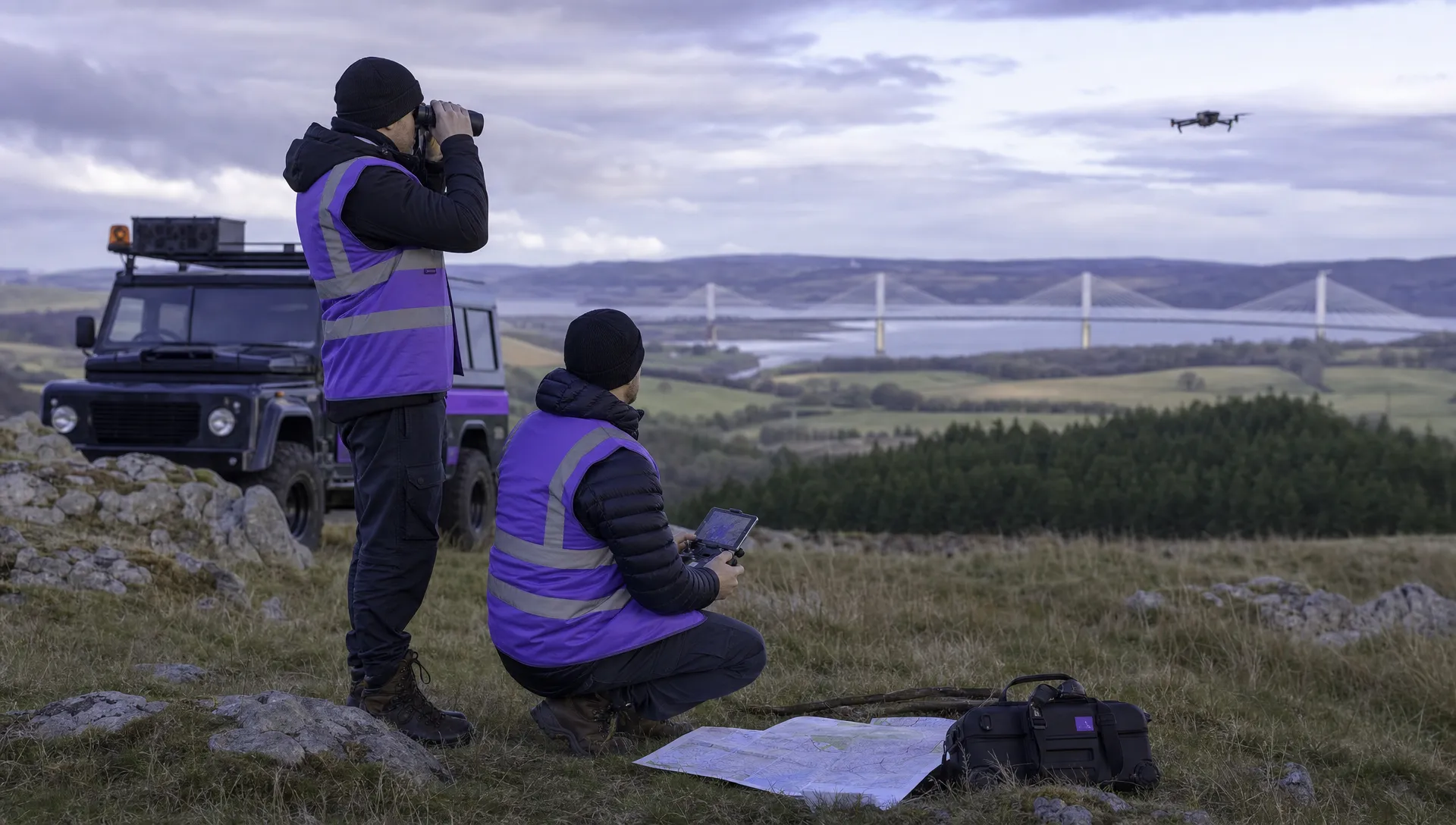 Drone VLOS Rules Explained for Commercial Teams →
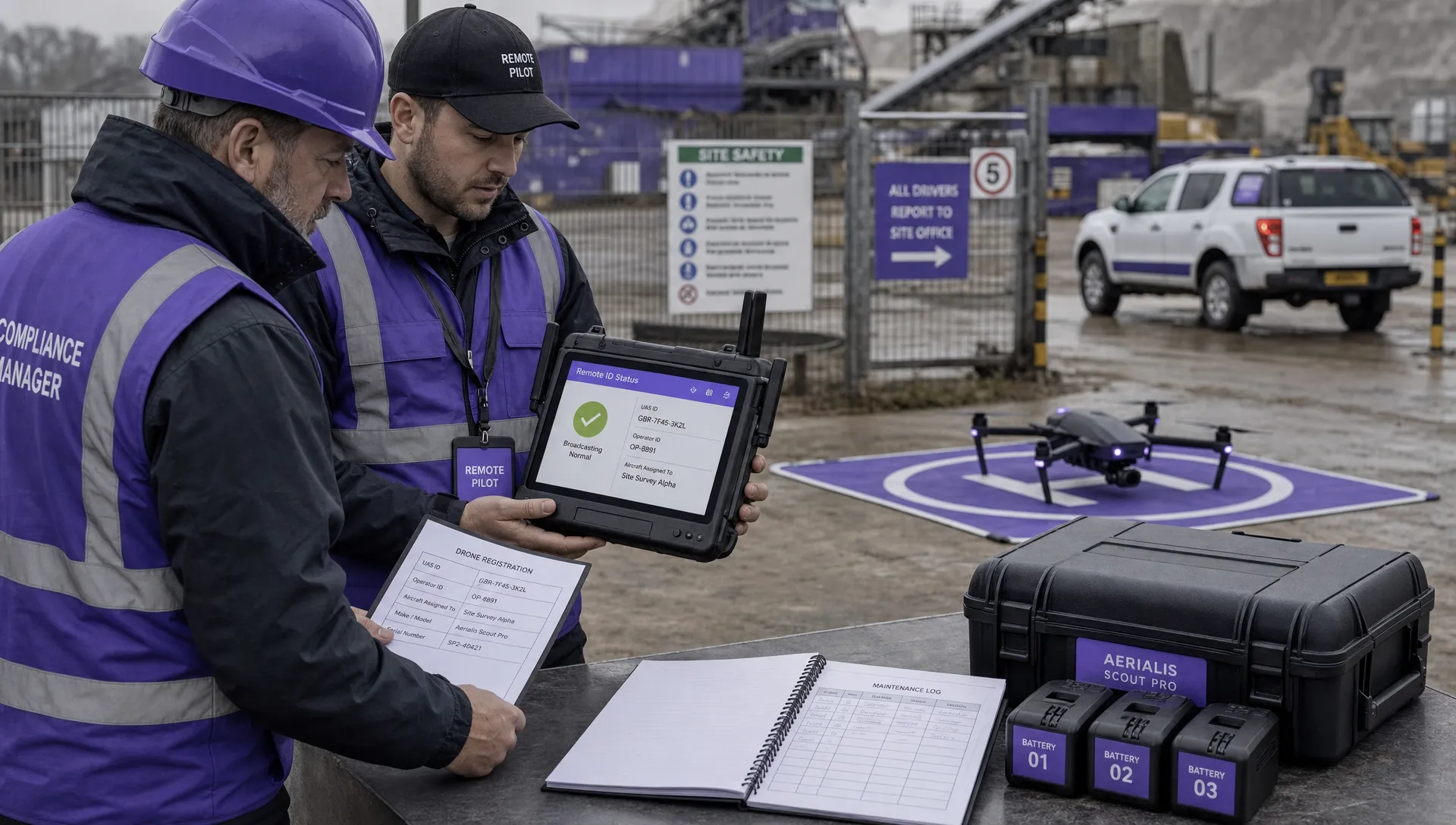 FAA Remote ID Rule Explained for Commercial Pilots →
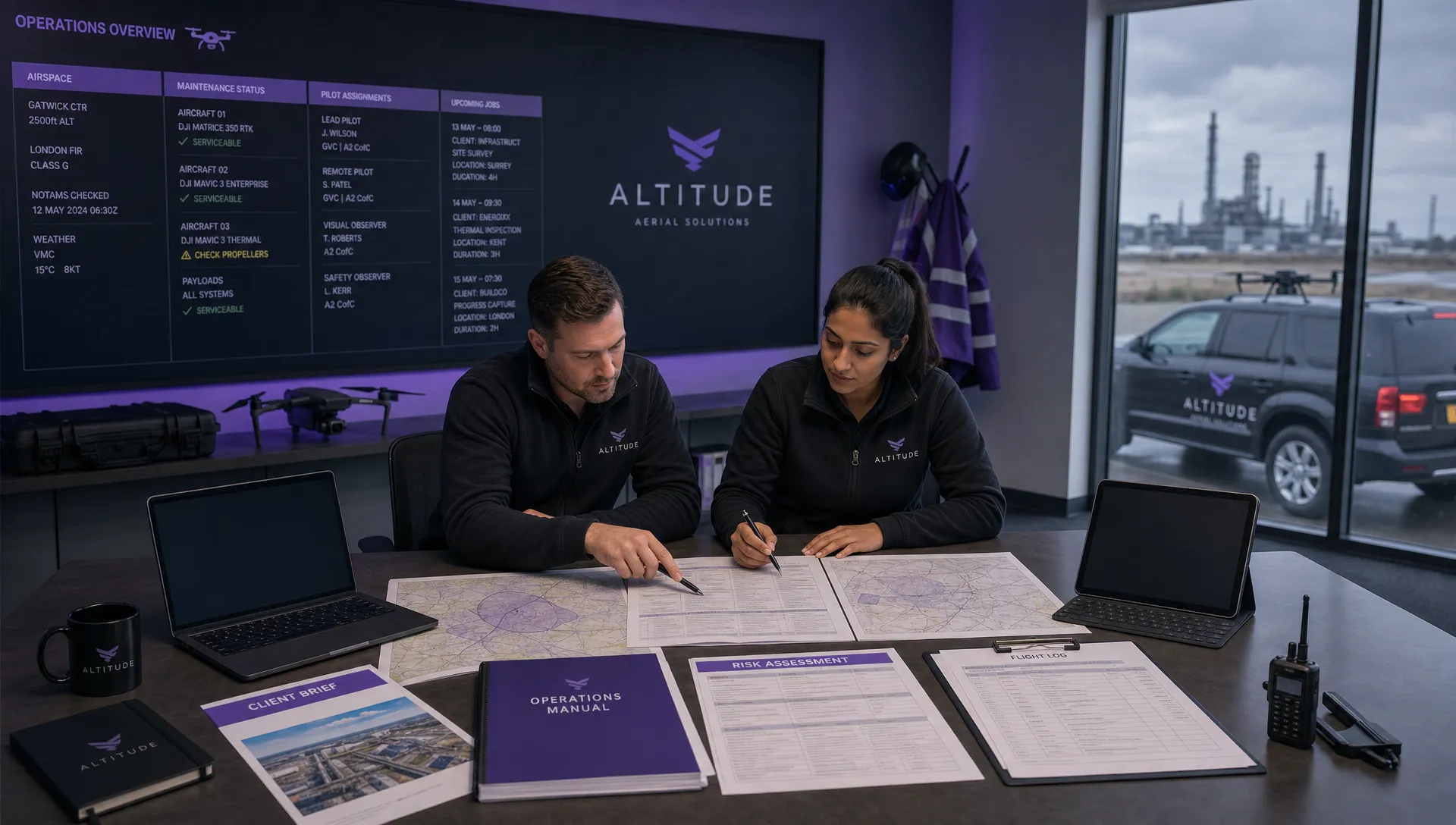 Drone Legal Requirements for Commercial Operations →
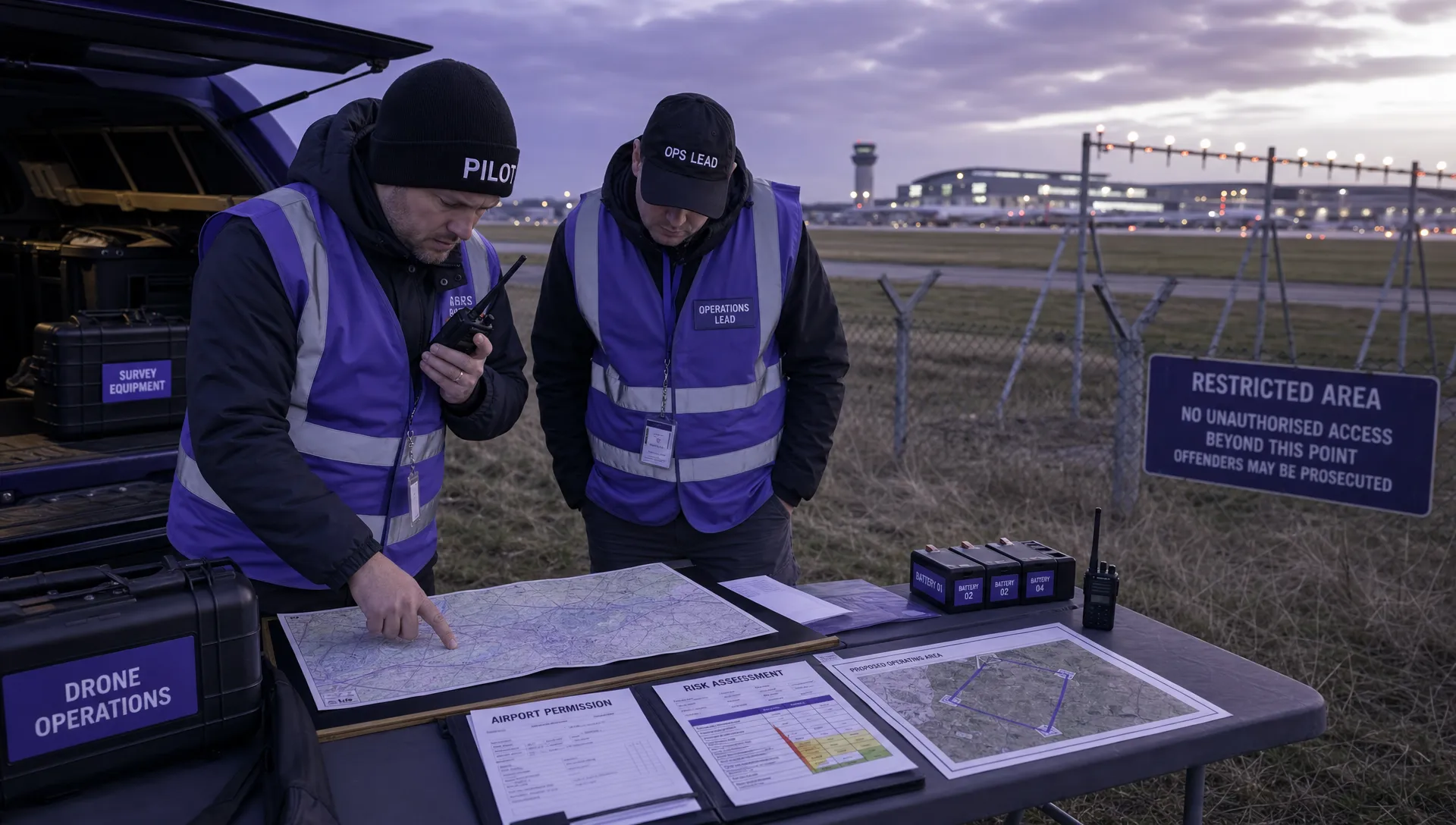 Drone Near Airport Rules Explained for Safer Planning →
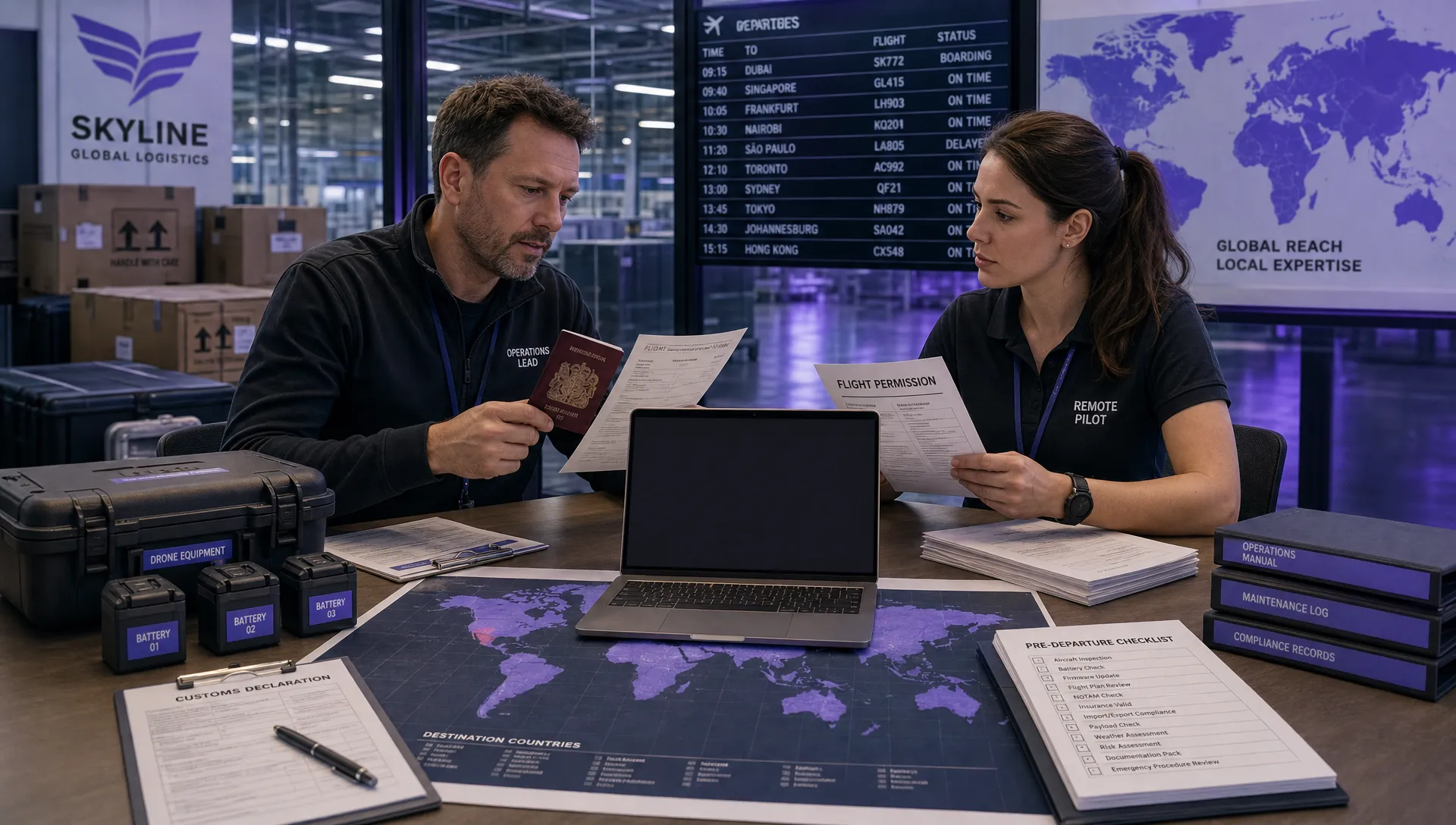 International Drone Regulations Every Global Team Should Know →
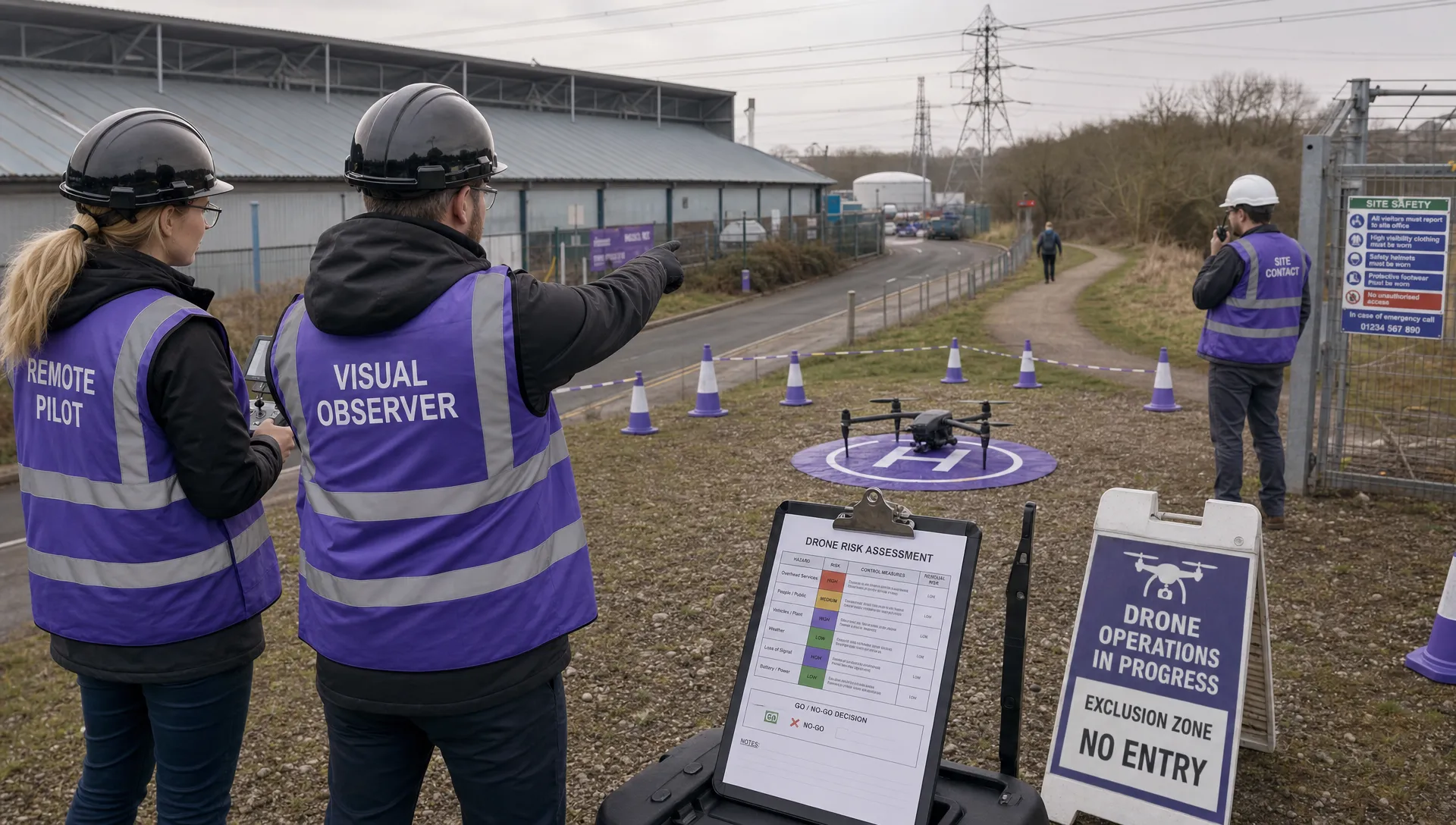 Drone Flight Risk Assessment Example for Safer Missions →