
Att Fleet Management: 2026 Guide to att fleet management, AI & Telematics
Think of ATT Fleet Management as the command centre for your entire fleet. It’s a powerful telematics system, built on the Fleet Complete platform, that takes all the raw data streaming from your vehicles and turns it into real business intelligence. The goal? To make your operations safer and a whole lot more efficient.
What Is ATT Fleet Management and Why Does It Matter
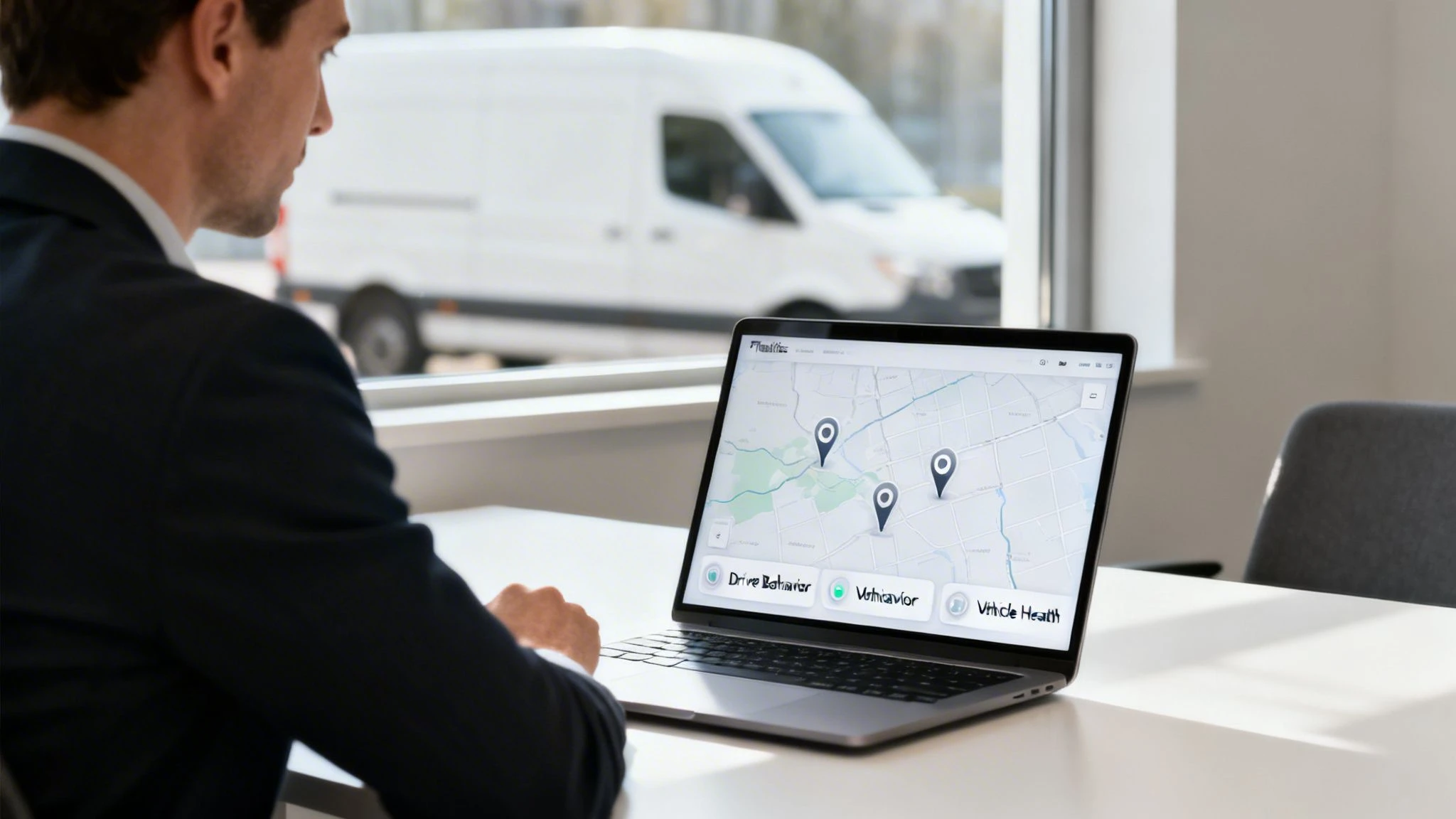
At its heart, AT&T Fleet Management is a cloud-based system that gives you a live, bird's-eye view of your vehicles and equipment out in the field. But it’s so much more than just dots on a map. It digs deep into how your vehicles are actually being used, how your drivers are performing behind the wheel, and the overall health of each piece of machinery.
This matters because it hits on the biggest headaches for any business that relies on a fleet: soaring fuel costs, unexpected breakdowns, driver safety issues, and navigating a minefield of regulations.
By pulling in and making sense of all this data, the system lets you get ahead of problems instead of just reacting to them. It gives you the information you need to fine-tune your operations, turning your fleet from a major expense into a genuine competitive edge.
Core Capabilities: What It Actually Does
The platform’s real value comes from a few key features that work together to give you the complete picture. Getting to grips with these is key to understanding what it can do for you.
- GPS Tracking and Geofencing: This is the bedrock of the system, giving you the precise location of every asset. It allows for smarter dispatching, gives customers accurate ETAs, and helps you recover stolen vehicles. You can also set up geofences—virtual perimeters—that send you an alert if a vehicle enters or leaves a specific area, perfect for stopping unauthorized use.
- Driver Behavior Monitoring: Using sensors in the vehicle, the system flags things like speeding, harsh braking, and sharp acceleration. This data gives you a clear look at risky habits, so you can provide targeted coaching to your team. It’s all about building a safety-first culture that can lead to fewer accidents and lower insurance bills.
- Vehicle Health and Diagnostics: The system plugs right into a vehicle's diagnostic port (the OBD-II port) to keep an eye on engine health, pull fault codes, and track maintenance needs. It’s a proactive approach that helps you catch small issues before they turn into expensive, business-halting breakdowns on the side of the road.
- Compliance and Reporting: If your business has to deal with rules like the ELD mandate for Hours of Service (HOS), this is a massive help. The system automates the logging process and makes reporting a breeze, cutting down on paperwork and helping you dodge hefty fines.
The results can be pretty impressive. AT&T has carved out a serious space for itself in the fleet world. Industry reports show its platform has helped businesses slash fuel costs by up to 15% with better routing and idle-time alerts. At the same time, companies have seen insurance premiums drop by 10-20% thanks to the detailed safety data they can provide.
To get the most out of this kind of tech, it helps to know what the industry standards are. Following these 10 Fleet Management Best Practices for 2025 can give you a solid game plan. And while AT&T's solution is all about ground vehicles, the core ideas of data-driven control apply everywhere—even to a modern https://blog.dronedesk.io/uav-fleet-management/.
Exploring the Core Features and Capabilities
To really get what AT&T Fleet Management is all about, you have to look past a simple feature list. It's better to think of it as a complete toolkit, where every tool is built to fix a real-world problem in your business. At its heart, the platform is designed to take the raw data pouring out of your vehicles and turn it into clear, usable intelligence.
It all starts with near-real-time GPS tracking. Knowing exactly where every vehicle is at any given moment is the bedrock of any modern fleet operation. This lets you dispatch smarter—sending the closest tech to a job—and give customers accurate arrival times, which is a huge win for satisfaction. It's also a serious security feature, making it much easier to recover a stolen vehicle quickly.
But location is just the starting line. The real magic happens when you start layering other insights on top of that GPS data. That’s where things like driver behaviour monitoring come in, painting a much fuller picture of what's happening out on the road.
AT&T Fleet Management Feature Breakdown
To break it down, let's look at the core components of AT&T's fleet solutions and see what each one really brings to the table for a business owner or fleet manager.
| Feature | Description | Key Benefit |
|---|---|---|
| GPS Tracking | Provides near-real-time location data for every vehicle in your fleet. | Improves dispatch efficiency, enhances customer service with accurate ETAs, and enables faster vehicle recovery. |
| Driver Behavior Monitoring | Uses sensors to detect and report risky driving like harsh braking, speeding, and aggressive cornering. | Creates a culture of safety through targeted coaching, helping to reduce accidents and lower insurance costs. |
| Vehicle Diagnostics | Connects to the OBD-II port to monitor engine health, track usage, and report diagnostic trouble codes. | Shifts maintenance from reactive to proactive, preventing costly breakdowns and extending vehicle lifespan. |
| ELD Compliance | Includes an integrated Electronic Logging Device (ELD) to automate Hours of Service (HOS) tracking. | Simplifies regulatory compliance, drastically cuts down on paperwork, and minimizes the risk of expensive fines. |
Each of these features works together to give you a comprehensive view of your entire operation, moving you from simply managing vehicles to truly optimising them.
Improving Safety with Driver Behavior Monitoring
One of the most powerful parts of the system is its ability to watch and analyze how your team drives. Using sensors right in the vehicle, the platform automatically flags risky habits—think harsh braking, sudden acceleration, sharp cornering, and speeding.
This isn't about playing 'big brother'. It's about building a genuine safety culture through targeted coaching. When you can see exactly which drivers need a bit of support and what they need help with, you can offer personalised training that actually sticks. It's a proactive way to prevent accidents before they even have a chance to happen.
And the impact goes straight to your bottom line. A safer driving record often translates into lower insurance premiums, fewer expensive repair bills from accidents, and less vehicle downtime.
A key driver behind this is the integration of AI. Amid a recent road fatality crisis in the US, AT&T's AI-powered telematics has become a critical tool for monitoring speed, harsh braking, and fatigue. While broader AI adoption in fleets remains at just 5.6%, clients using AT&T's Fleet Complete Vision AI dash cams have seen driver safety scores improve by as much as 35% through real-time coaching.
From Reactive Repairs to Proactive Maintenance
Another standout capability is how deeply AT&T Fleet Management integrates with vehicle health. By plugging directly into a vehicle's On-Board Diagnostics (OBD-II) port, the system keeps a constant watch on the engine and other vital parts.
It pulls diagnostic trouble codes (DTCs), keeps tabs on engine hours, and monitors all the key health metrics you care about. This completely flips your maintenance approach from reactive to proactive. Instead of dealing with a surprise breakdown on the side of the road—and the expensive tows and unhappy customers that come with it—you get alerts about potential problems well in advance. This forward-thinking is a core principle in modern enterprise fleet maintenance.
This lets you schedule repairs during planned downtime, keeping disruptions to a minimum and getting more life out of your vehicles. If you really want to geek out on the tech, understanding the principles behind architecting high-reliability IoT and fleet management systems shows just how robust these solutions are.
Simplifying Compliance and Reducing Paperwork
Finally, the platform tackles one of the biggest headaches for any fleet: regulatory compliance. If your business falls under rules like the Federal Motor Carrier Safety Administration's (FMCSA) Hours of Service (HOS), this feature is a lifesaver.
The system comes with a fully compliant Electronic Logging Device (ELD) solution that automates the whole messy process. It gets rid of the clunky paper logbooks and replaces them with a simple digital interface that tracks driving hours automatically.
This automation does two huge things for you:
- Slashes Admin Work: It frees up countless hours of manual data entry for both your drivers and your office staff.
- Minimizes Compliance Risk: It keeps your logs accurate and up-to-date, helping you steer clear of costly violations and fines during inspections or audits.
By making these complex rules simple, AT&T Fleet Management lets your team stop worrying about paperwork and start focusing on the actual job.
How AI and Video Telematics Are Redefining Fleet Safety
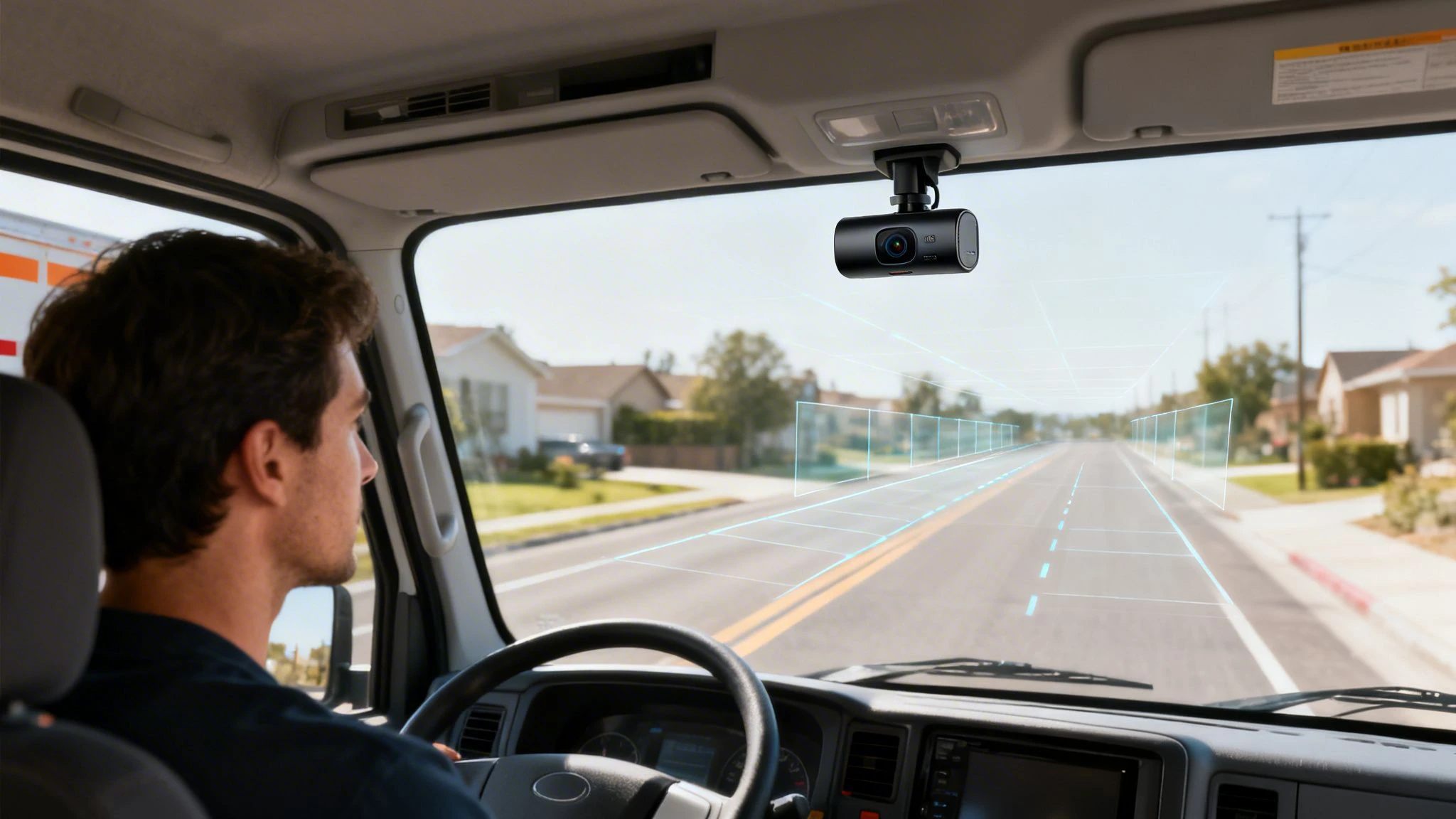
For years, GPS tracking told you where your vehicles were. That was useful, but it was only half the story. Now, the combination of artificial intelligence (AI) and video telematics finally tells you how they’re being driven. This is where AT&T Fleet Management goes way beyond simple dots on a map and becomes a proactive safety partner. It’s no longer about just reviewing incidents after they happen; it's about stopping them in their tracks.
Imagine a smart dashcam that’s more than just a recorder—it’s an extra set of eyes for every single driver. That's exactly what you get with solutions like VisionAI. These devices don’t just passively record video; they use AI to actively scan the road ahead and monitor the driver's behaviour in the cab.
The result is a powerful, preventative safety net. The system spots high-risk events as they unfold and provides instant in-cab alerts, effectively acting as a real-time driving coach.
From Reactive Recording to Proactive Coaching
A traditional dashcam is a bit like a silent witness. It's passive, only really providing value after something has gone wrong. AI-powered video telematics, on the other hand, are active participants. They are constantly looking for risky situations and can step in before they escalate, turning a simple recording device into a smart co-pilot.
Here are just a few of the critical behaviours that AI can identify in real time:
- Distracted Driving: It instantly spots when a driver’s attention isn’t on the road, whether they’re looking at a phone or just not paying attention.
- Tailgating: The system constantly measures the following distance and warns the driver if they get dangerously close to the vehicle in front.
- Lane Drifting: AI detects when the vehicle wanders out of its lane without signalling, which can be a key sign of driver fatigue.
- Rolling Stops: The camera knows when a driver hasn't come to a complete stop at a stop sign or intersection.
When the system flags one of these behaviours, it triggers an immediate audio alert right there in the cab. This gives the driver a chance to self-correct on the spot, long before a manager ever sees the footage. It completely reframes safety from a disciplinary headache into a supportive, coaching-led process. If you're keen to learn more about using data for these kinds of operational wins, check out our guide on advanced fleet management.
The Financial Power of Video Evidence
Beyond just coaching drivers, video telematics provide indisputable evidence that can be an absolute financial lifesaver for your business. When an accident does happen, clear video footage quickly establishes the facts, protecting your drivers from false claims and unfair blame.
Think about the classic "he said, she said" collision where another driver insists your truck was at fault. Without solid proof, your company could be staring down the barrel of long legal fights, soaring insurance premiums, and a hit to your reputation.
A single exoneration can save a company tens of thousands of dollars in liability costs and insurance hikes. Having video proof on your side transforms accident liability from a costly gamble into a clear-cut case.
This push towards AI is making huge waves in the industry. AT&T's integration of AI marks a fundamental change in fleet management, offering a clear return on investment through smarter maintenance and better safety. While overall industry adoption of AI is still low at just 5.6%, fleets using AT&T's solutions are seeing maintenance costs drop by 25-30%. What's more, the real-time analytics from tools like VisionAI have been shown to cut insurance costs by 15% and fuel use by 12%, finally addressing the needs of fleets stuck with outdated methods. Learn more about these findings from Fleetio's 2026 report.
This data-first approach not only protects you financially but also gives you the tools to build a genuinely stronger and more resilient safety culture from the ground up.
Which Businesses Benefit Most from This Solution
One of the best things about AT&T Fleet Management is how it scales. It’s not some rigid, off-the-shelf product. Think of it more like a set of tools that adapts to how your business actually runs, whether you're managing a couple of vans or a massive, sprawling fleet.
The platform grows right alongside your business, making it a solid investment at pretty much any stage. To really get a feel for whether it’s a good fit for you, it helps to see how different businesses are putting it to work every day. The real value isn't just in the tech itself, but in how it solves the unique, on-the-ground problems that different industries run into.
Small Businesses and Local Services
If you're running a small, local service business—think plumbing, HVAC, or electrical—you know that every single customer call matters. Your reputation is built on reliability, and your efficiency directly hits your bottom line. Even with a small fleet of five or ten vehicles, a system like this can be a game-changer.
Take a local plumbing company, for instance. With real-time GPS tracking, the dispatcher sees exactly where every technician is at any given moment. An emergency call comes in? They can immediately send the closest plumber, slashing response times and making for a much happier customer. It also means you can give people a genuinely accurate arrival time, getting rid of those huge, frustrating service windows.
A small business can completely transform its customer service almost overnight. Instead of telling a customer, "Our tech will be there sometime between 1 pm and 5 pm," you can say, "John is 15 minutes away, and you can track his arrival live on your phone." That kind of transparency builds serious trust and sets you miles apart from the competition.
Mid-Sized Regional Operations
Now, let's scale up to a mid-sized regional distributor or a commercial delivery service. Once you hit this level, things like fuel costs, route planning, and vehicle uptime become huge operational headaches. Trying to manage a fleet of 50 to 100 vehicles without a central system is pretty much a guarantee of wasted time and money.
This is where the optimization tools within AT&T Fleet Management really start to pay off. A regional food distributor, for example, can use the platform for a few key things:
- Route Optimization: The system can chew through daily delivery schedules and historical traffic data to map out the most efficient routes. This saves a ton of time and fuel. Even a small drop in fuel use per vehicle adds up to major savings across the whole fleet.
- Preventative Maintenance: With dozens of vehicles on the road, one unexpected breakdown can derail the entire day's schedule. The platform's vehicle health monitoring sends alerts for potential problems before they turn into a full-blown crisis, letting you schedule maintenance during off-hours.
- Driver Safety and Accountability: Keeping an eye on driver behaviour helps you enforce safety policies, cut down on speeding, and lower the chances of an accident. This isn't just about protecting your team and the public; it also helps keep your insurance premiums in check.
Large-Scale Industrial and Enterprise Fleets
For the big players—major construction firms, national logistics companies, or utility providers—the challenges get even bigger. They're often managing hundreds or even thousands of different assets, from standard trucks to incredibly expensive, specialized heavy equipment.
At this scale, the platform acts as a full-blown asset management command center. A large construction firm can track every piece of equipment across a massive job site, making sure excavators, loaders, and generators are exactly where they're supposed to be. Geofencing becomes indispensable here, firing off instant alerts if a high-value asset gets moved off-site after hours, which is a huge help in preventing theft and unauthorized use.
For these larger outfits, the data analytics are everything. By digging into fleet-wide data, managers can spot systemic weak points, compare performance between different regions, and make smart, data-backed decisions about when to buy new vehicles or retire old ones. This is the kind of approach that’s essential for controlling costs and getting the best possible ROI when you're operating at scale.
Diving into a system like AT&T Fleet Management can feel like a huge step, but it’s probably more straightforward than you imagine. If you break it down into a few manageable stages, you get a clear path from just thinking about it to having it fully up and running in your business. It all kicks off with a good, honest look at what your fleet actually needs.
This first chat with the AT&T team is where the magic happens. You’ll figure out the right mix of hardware and software for your specific goals. This isn't about buying an off-the-shelf box; it’s about tailoring the tech to solve your real-world problems.
Choosing the Right Package
Your first decision is the hardware. This could be anything from simple, affordable GPS trackers that give you basic location data, all the way up to advanced AI dash cams for serious safety monitoring. What you pick really depends on whether your main headache is route planning, asset security, or building a stronger safety culture.
Next, you match that hardware with a software plan. The software is what brings the features to life, whether you need in-depth reports, automated compliance tools like ELD for Hours of Service (HOS), or real-time alerts for driver coaching. The trick is to pick a package that fixes what’s broken today but has room to grow with you.
This diagram gives you a good idea of how the platform scales, no matter the size of your business.
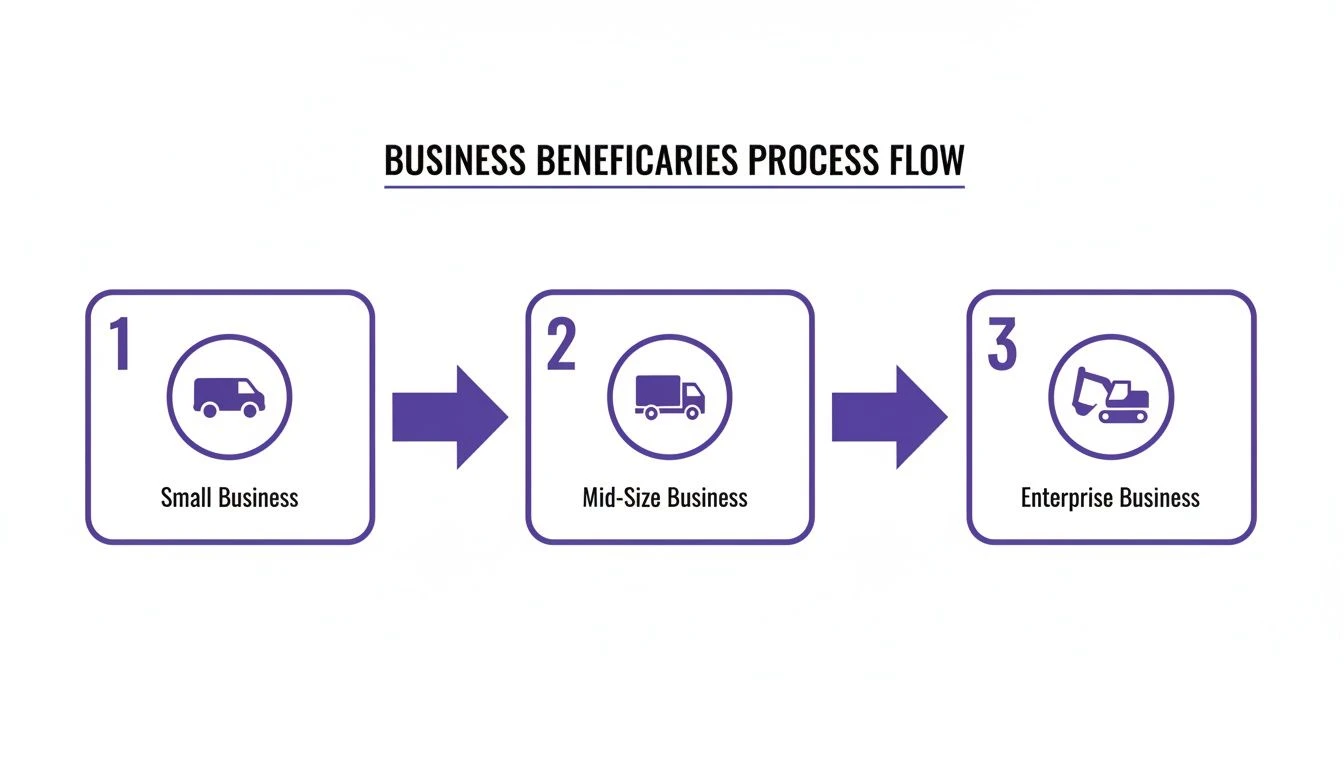
As you can see, it doesn't matter if you're a small outfit with a few vans, a mid-sized company running delivery trucks, or a large enterprise with heavy equipment—the solution is built to adapt.
Installation and Onboarding
Once you’ve settled on a package, it’s time to get everything installed. You’ve got a couple of options here, depending on how hands-on you want to be.
- Plug-and-Play Installation: A lot of the gear, especially the basic GPS trackers, is designed for you to install yourself. They just plug right into the vehicle's On-Board Diagnostics (OBD-II) port. You can get a vehicle done in minutes.
- Professional Hardwired Installation: For the more complex hardware like AI dash cams, or if you just want a cleaner, more permanent setup, you can have professional technicians do the work. They'll hardwire the devices straight into the vehicle’s electrical system.
With the hardware sorted, the focus shifts to your people. Getting the onboarding right is absolutely critical to making this investment pay off. This means training your managers on the software dashboard, but just as important is getting your drivers on board.
Always frame the technology as a tool to support them, not to spy on them. Point out how it can clear their name in an accident, make compliance paperwork a breeze, and ultimately make their job safer. This approach is the key to building trust and getting everyone to actually use it.
Finally, to really get the most out of the platform, think about connecting it with your other business software. Linking AT&T Fleet Management to your accounting, payroll, or customer relationship management (CRM) systems can automate a ton of admin and give you a complete picture of your entire operation.
Frequently Asked Questions About AT&T Fleet Management
Deciding on a tool as significant as AT&T Fleet Management is a big step, so it’s only natural you’ll have a few questions. Before you commit, you need clear, straightforward answers. I've pulled together the most common queries to give you the details you need.
The platform is built to be flexible, but getting your head around the core stuff like pricing, asset tracking, and installation is key to figuring out if it's the right fit for your business.
How Does Pricing for AT&T Fleet Management Work?
You won't find a simple price tag on the website for this one. The cost is set up as a monthly subscription that grows with your fleet.
The final price is worked out on a per-vehicle, per-month basis. It really boils down to two main things:
- Your Hardware Choice: The gear you put in your vehicles is a big factor. A simple GPS tracker for location pings will naturally cost less than an advanced AI dash cam that offers live video and driver coaching.
- The Software Features You Need: Your subscription level also shapes the price. You can go for a basic plan with essential tracking and diagnostics, or a full-blown package with ELD compliance, deep-dive reports, and route optimization.
Since every fleet is different, you'll need to get in touch with the AT&T sales team for a custom quote. They’ll work with you to put together a package that matches what you’re trying to achieve and what your budget looks like.
Can It Track Assets Other Than Vehicles?
Yes, absolutely. Don't let the "fleet" in the name fool you—its capabilities go way beyond just your trucks and vans. This is a huge plus, as most businesses have a mix of powered and unpowered assets that are vital to getting the job done.
With the right trackers, the AT&T Fleet Management platform can keep an eye on all sorts of equipment. We're talking about assets like:
- Trailers and shipping containers
- Generators and mobile light towers
- Heavy construction gear like bulldozers and excavators
By adding asset trackers, the system stops being just a vehicle locator and becomes a proper command center for your entire operation. You get complete visibility over every valuable piece of kit, whether it’s on the move or parked up on a job site.
What Does the Hardware Installation Involve?
The installation process is designed to be pretty flexible, so it can suit different business setups and levels of technical confidence. You’ve basically got two options.
If you're after a quick and easy setup, there are plug-and-play devices. These units just plug straight into the vehicle’s OBD-II port, which is usually found under the steering wheel. It takes just a few minutes per vehicle with no special tools needed, making it a great choice if you plan to do it yourself.
For a more permanent and hidden setup, or for fitting advanced hardware like AI dash cams, you can go for a professional hardwired installation. In this scenario, trained technicians will hook the device directly into the vehicle's electrical system for a clean and secure fit. This is the way to go for the more advanced features and maximum reliability.
Ready to take control of your drone operations with a platform designed for safety, efficiency, and compliance? Dronedesk provides an end-to-end solution for everything from flight planning to fleet management. Start your free trial of Dronedesk today!
 How to Evaluate a Free Drone Logbook Before Using It →
 FAA Part 107 Test: How to Master Airspace Questions →
 Drone Risk Assessment Controls That Work in the Field →
 FAA Drone License Costs Beyond the Knowledge Test →
 Drone Part 107 Operations: When a Waiver May Be Needed →
 Drone Operating Rules for Managing Contractors and Employees →
 BVLOS Drone Requirements for Building a Safety Case →
 Drone Pilot Test Mistakes That Cost Candidates Marks →
 FAA 107 License vs Part 107 Certificate: What’s the Difference? →
 Drone Airport Rules: A Field Checklist for Site Assessments →