
12 Best Alternative to AlarisPro Platforms for 2025
While AlarisPro offers a solid foundation for drone operations management, its framework may not align with every organization's specific workflow or scaling ambitions. For solo operators, growing teams, and large enterprises, the search for a platform that better fits unique compliance, fleet management, and data processing needs is a crucial step toward optimizing efficiency and safety. This guide is designed to simplify that search by providing a detailed, practical analysis of the leading alternatives.
Instead of generic marketing points, we will dissect each platform, exploring real-world use cases, potential implementation hurdles, and the distinct advantages they offer over one another. You will find an honest assessment of each solution, complete with screenshots and direct links, to help you visualize how it could integrate into your daily operations. Our objective is to arm you with the necessary insights to choose not just a replacement, but a superior operational hub. This resource moves beyond simple feature comparisons to help you find the best alternative to AlarisPro that will truly elevate your drone program. We'll examine top contenders like Dronedesk, Airdata, DroneDeploy, and others to match their capabilities with your specific operational demands.
1. Dronedesk
Best For: Solo operators and growing teams seeking a comprehensive, all-in-one management solution.
Dronedesk establishes itself as a powerful alternative to AlarisPro by offering a meticulously designed, end-to-end platform that excels in unifying every facet of drone operations. It is particularly effective for professionals who need to manage clients, fleet assets, and team members within a single, intuitive interface. This holistic approach eliminates the need for multiple disconnected software tools, streamlining workflows from initial job creation to final reporting.
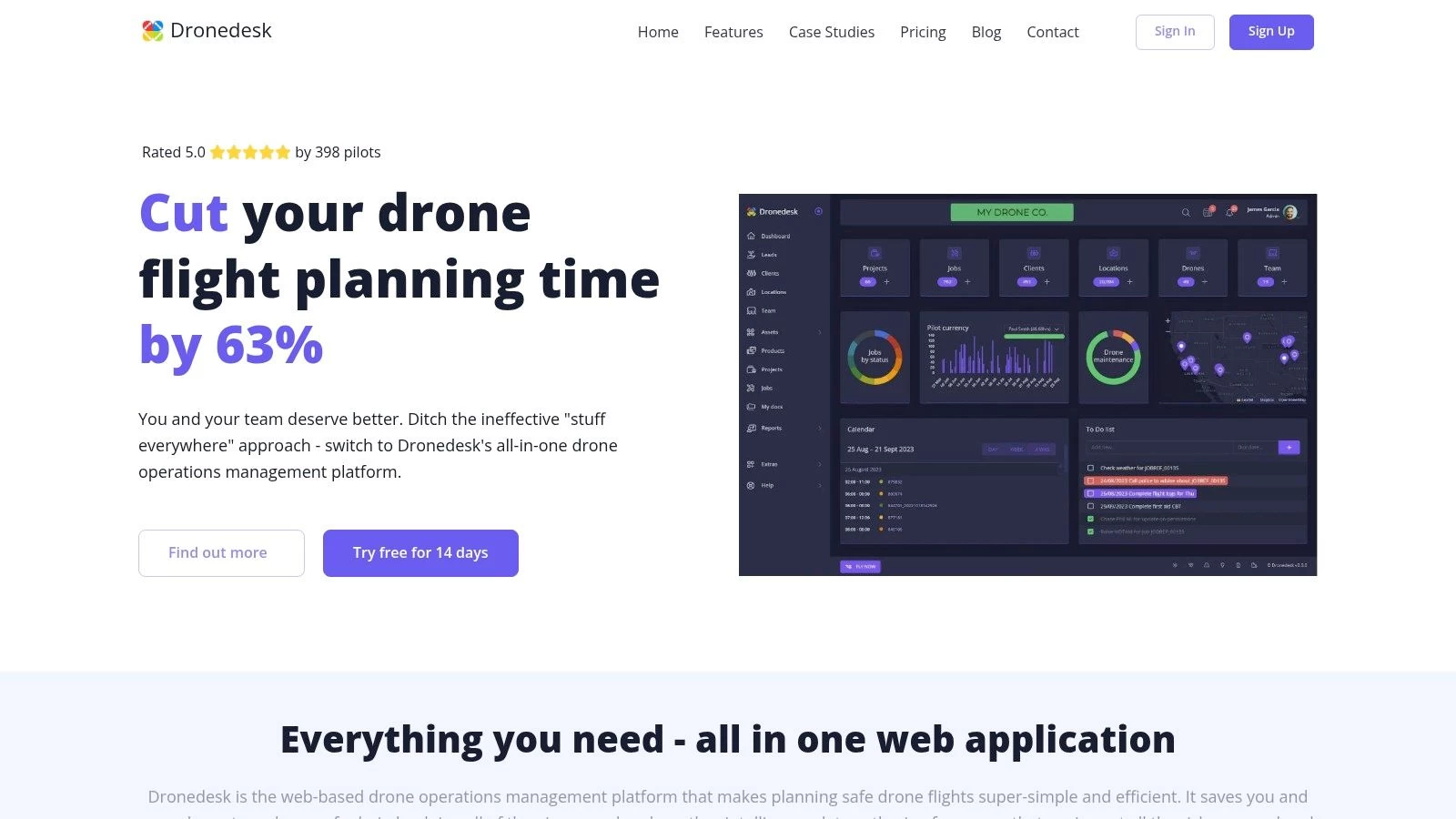
The platform’s strength lies in its ability to combine robust administrative tools with sophisticated operational intelligence. This integration is evident in its flight planning module, which features seamless, direct syncing with DJI drones. This key feature significantly reduces manual data entry and administrative time, allowing pilots to focus more on mission execution and data capture. The result is a guaranteed boost in efficiency, backed by Dronedesk's bold promise of at least a 50% reduction in planning time.
Key Features & Analysis
- Integrated Management Suite: Dronedesk consolidates client relationship management (CRM), fleet maintenance logs, and team scheduling. This prevents data silos and provides a single source of truth for all operational activities.
- Intelligent Flight Planning: The system automatically checks airspace restrictions, NOTAMs, and ground hazards, incorporating this data directly into risk assessments and flight plans for enhanced safety and compliance.
- Direct DJI Syncing: A standout capability that automates the transfer of flight logs and telemetry data from DJI drones directly into the platform, ensuring accurate record-keeping and saving significant time.
- Financial & Asset Reporting: Users can generate detailed reports on job profitability, asset usage, and maintenance schedules, providing critical business intelligence for strategic decision-making and improved ROI.
Practical Implementation
For a solo operator, Dronedesk can be set up in under an hour to manage all client projects and flight logs. For larger teams, a phased rollout is recommended, starting with a project manager to configure templates and workflows before onboarding pilots. Leveraging the free trial is an excellent way to test the DJI sync and reporting features with your existing equipment.
| Feature | Dronedesk | Typical Competitors |
|---|---|---|
| CRM Integration | Fully integrated with job management | Often requires a separate subscription or API |
| DJI Sync | Direct, automated log synchronization | Manual import/export or limited automation |
| Efficiency Guarantee | 50% time-saving money-back guarantee | No performance guarantees offered |
| Support Model | Highly-rated, direct customer support | Tiered support with slower response times |
Pros:
- Comprehensive platform covering clients, fleet, team, and flight operations.
- Intuitive flight planning with direct DJI integration saves considerable time.
- Robust reporting for financials, asset maintenance, and operational analysis.
- Scalable pricing with a free trial and a unique 50% efficiency guarantee.
Cons:
- Advanced features require upgrading from the basic Startup tier.
- New users may face a slight learning curve integrating all modules.
Website: https://dronedesk.io
2. Airdata
For drone pilots and small teams prioritizing deep flight analysis and automated logging, Airdata presents a compelling and affordable alternative to AlarisPro. It excels at automatically capturing and dissecting flight data, providing insights that help operators detect potential issues before they become critical failures. The platform automatically syncs flight logs from a wide array of flight apps, making data collection nearly effortless.
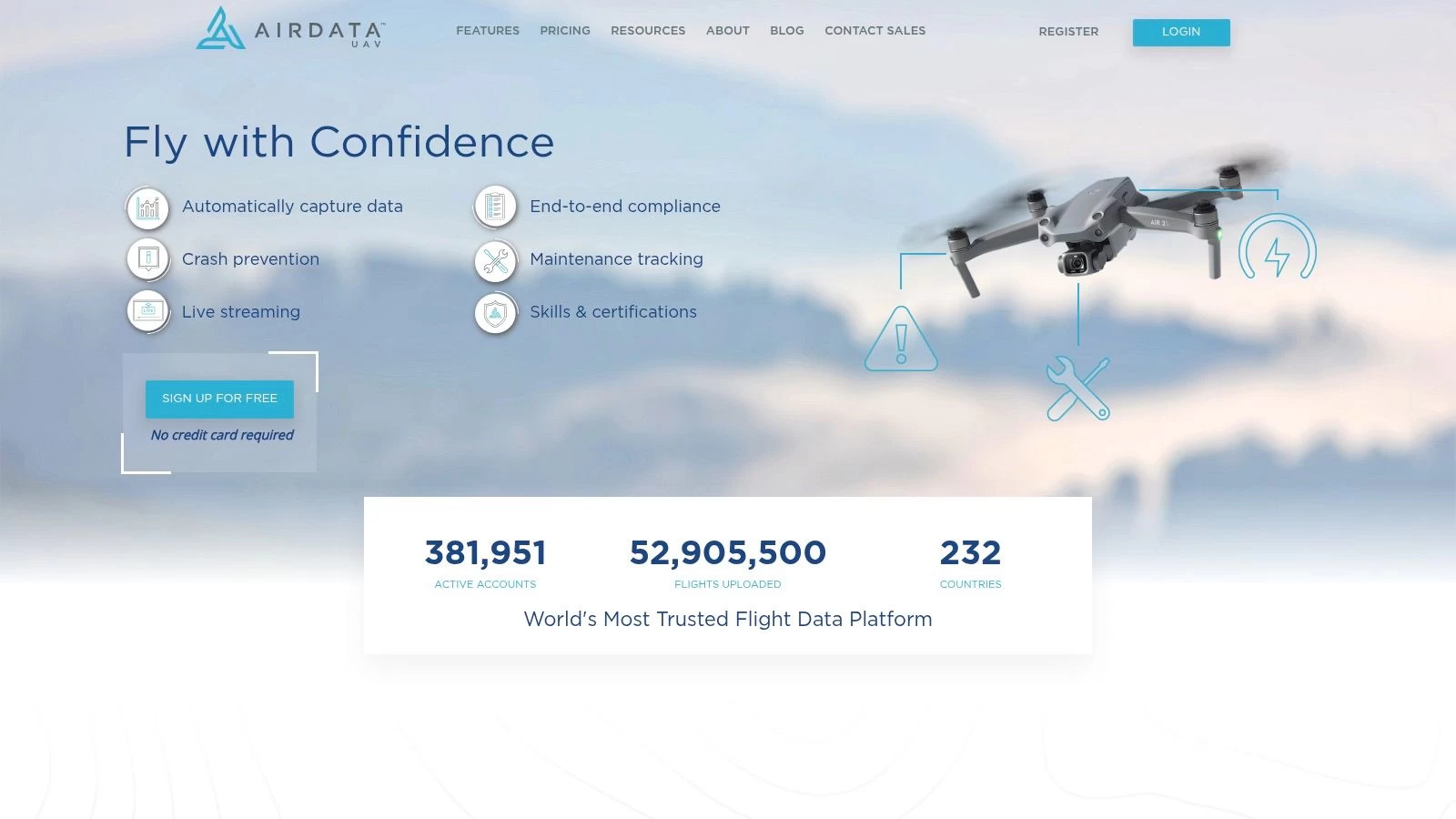
Airdata's strength lies in its comprehensive analytics. It generates detailed reports on battery health, sensor readings, and pilot performance, complete with visual graphs and incident alerts. This focus on preventative maintenance and post-flight analysis is a key differentiator. The platform also includes features for compliance tracking and offers live streaming capabilities, adding value for real-time operations.
Key Considerations for Airdata
- Best Use Case: Ideal for solo operators or smaller teams who need robust, automated flight data analysis and proactive maintenance alerts without the complexity of a full enterprise system.
- User Experience: The interface is generally praised for being user-friendly and intuitive, making it easy to navigate vast amounts of flight data.
- Pricing: Airdata stands out for its affordability, with plans starting as low as $2.99 per month, making it highly accessible for individual pilots and growing businesses.
- Limitations: While powerful in analytics, it lacks some of the advanced project management and end-to-end mission planning tools found in more enterprise-focused platforms. Some users have noted occasional issues with automatic flight log synchronization. For a deeper dive, you can explore more about alternatives to Airdata.
Website: https://airdata.com
3. DJI GS Pro
For operators deeply integrated into the DJI ecosystem, DJI Ground Station Pro (GS Pro) offers a powerful and intuitive alternative to AlarisPro, especially for mission planning. This iPad-exclusive application is designed for seamless control over DJI drones, enabling pilots to plan and execute complex, automated flight missions with precision. Its strength lies in its tight hardware-software integration, simplifying workflows for tasks like aerial mapping and inspections.
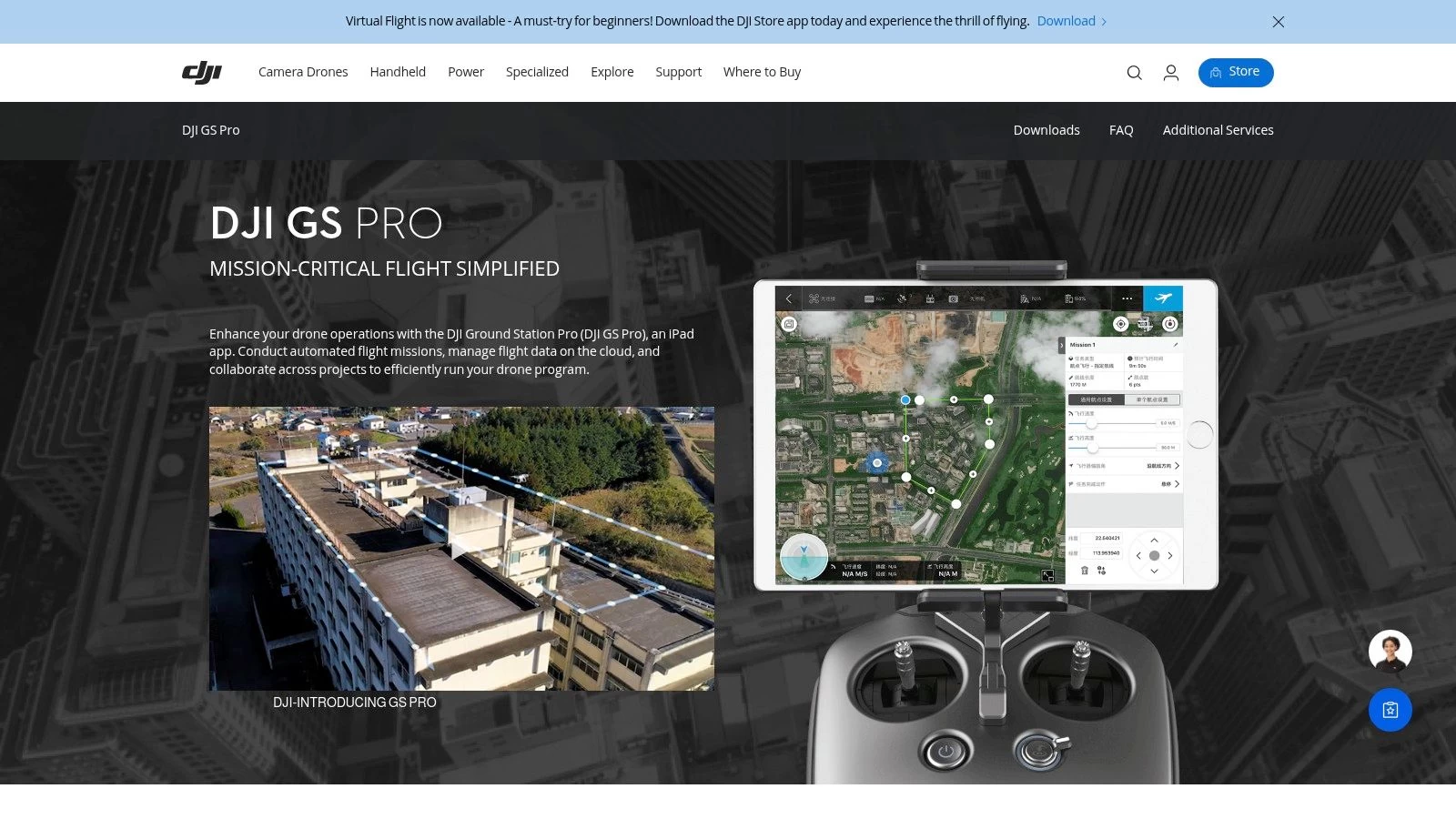
DJI GS Pro excels at creating detailed 2D and 3D maps and models directly from flight data. The platform provides various mission templates, including Waypoint, 3D Map Area, and Virtual Fence, giving pilots extensive control over flight paths and operational boundaries. With cloud-based data management, teams can share missions and flight data, improving collaboration and ensuring consistency across projects.
Key Considerations for DJI GS Pro
- Best Use Case: Ideal for drone pilots and teams using DJI aircraft who require advanced, automated mission planning and mapping capabilities directly on an iPad.
- User Experience: The interface is clean and specifically designed for touch-based interaction on an iPad, making mission planning a highly visual and intuitive process.
- Pricing: DJI GS Pro operates on a freemium model. Core features are available for free, with advanced functionalities like 3D mapping and KML/SHP file imports unlocked through in-app purchases or subscriptions.
- Limitations: Its biggest limitation is its platform dependency; it is only available on iOS (specifically iPad). It does not support non-DJI drone models, making it unsuitable for teams with mixed fleets.
Website: https://www.dji.com/ground-station-pro
4. Skydio Cloud
For enterprises invested in the Skydio hardware ecosystem, Skydio Cloud offers a powerful, integrated alternative to AlarisPro. It is specifically designed to leverage the advanced AI and autonomous capabilities of Skydio drones, providing a seamless bridge between hardware in the field and cloud-based operational management. The platform excels at centralizing fleet management, accessing real-time flight data, and streamlining workflows for large-scale operations.
Skydio Cloud's core strength is its deep integration, enabling unique features like live telemetry, remote viewing, and automated data offload. This tight coupling allows organizations to manage their Skydio fleet with unparalleled efficiency, turning drone-captured data into actionable intelligence almost instantly. Its API-first approach also ensures that data can be easily integrated into existing enterprise systems, enhancing overall operational awareness and data utility.
Key Considerations for Skydio Cloud
- Best Use Case: Enterprise-level organizations using Skydio drones that require advanced AI-powered fleet management, real-time data access, and streamlined operational workflows.
- User Experience: The interface is modern and built around the Skydio ecosystem, making it intuitive for those familiar with the hardware. It focuses on clarity and providing actionable insights from telemetry data.
- Pricing: Skydio Cloud is positioned as a premium, enterprise-grade solution. Pricing is typically customized based on fleet size and feature requirements, making it a higher-cost option than more hardware-agnostic platforms.
- Limitations: The most significant limitation is its exclusivity to Skydio drones, making it unsuitable for mixed-fleet operators. While powerful, it may be overly complex for small teams or solo pilots not requiring its advanced enterprise features.
Website: https://www.skydio.com/cloud
5. AeroGCS
For operators seeking a robust ground control station (GCS) with strong mission planning capabilities, AeroGCS emerges as a specialized alternative to AlarisPro. It is engineered for precise flight execution and management, with tailored editions designed for industries like agriculture, surveying, and emergency response. This focus on industry-specific workflows sets it apart from more generalized platforms.
AeroGCS excels in detailed flight planning, allowing users to create complex missions and manage multiple drones simultaneously. Its strength lies in providing a comprehensive command-and-control interface that integrates flight control, real-time tracking, and data capture into a single system. The software also supports regulatory compliance and provides cloud integration for seamless data storage and accessibility, making it a powerful tool for sophisticated field operations.
Key Considerations for AeroGCS
- Best Use Case: Ideal for drone service providers and enterprises in specialized sectors like agriculture or construction who need precise, repeatable mission planning and execution tools.
- User Experience: The interface is generally considered user-friendly, though unlocking its more advanced features may require some initial training and familiarization.
- Pricing: Specific pricing details are not publicly listed, requiring potential users to contact AeroGCS directly for a quote. This suggests a focus on customized enterprise packages.
- Limitations: While powerful for mission planning and control, it may not offer the same breadth of business management features, such as invoicing or client portals, found in all-in-one platforms like AlarisPro.
Website: https://aeromegh.com/aerogcs/
6. Aloft
For operators prioritizing regulatory adherence and streamlined airspace access, Aloft provides a powerful alternative to AlarisPro. It integrates fleet management with critical compliance tools, most notably its direct FAA LAANC integration for instant airspace authorizations in controlled U.S. airspace. The platform is designed to unify operations for everyone from individual pilots to large enterprise teams, ensuring safety and compliance are at the forefront of every flight.
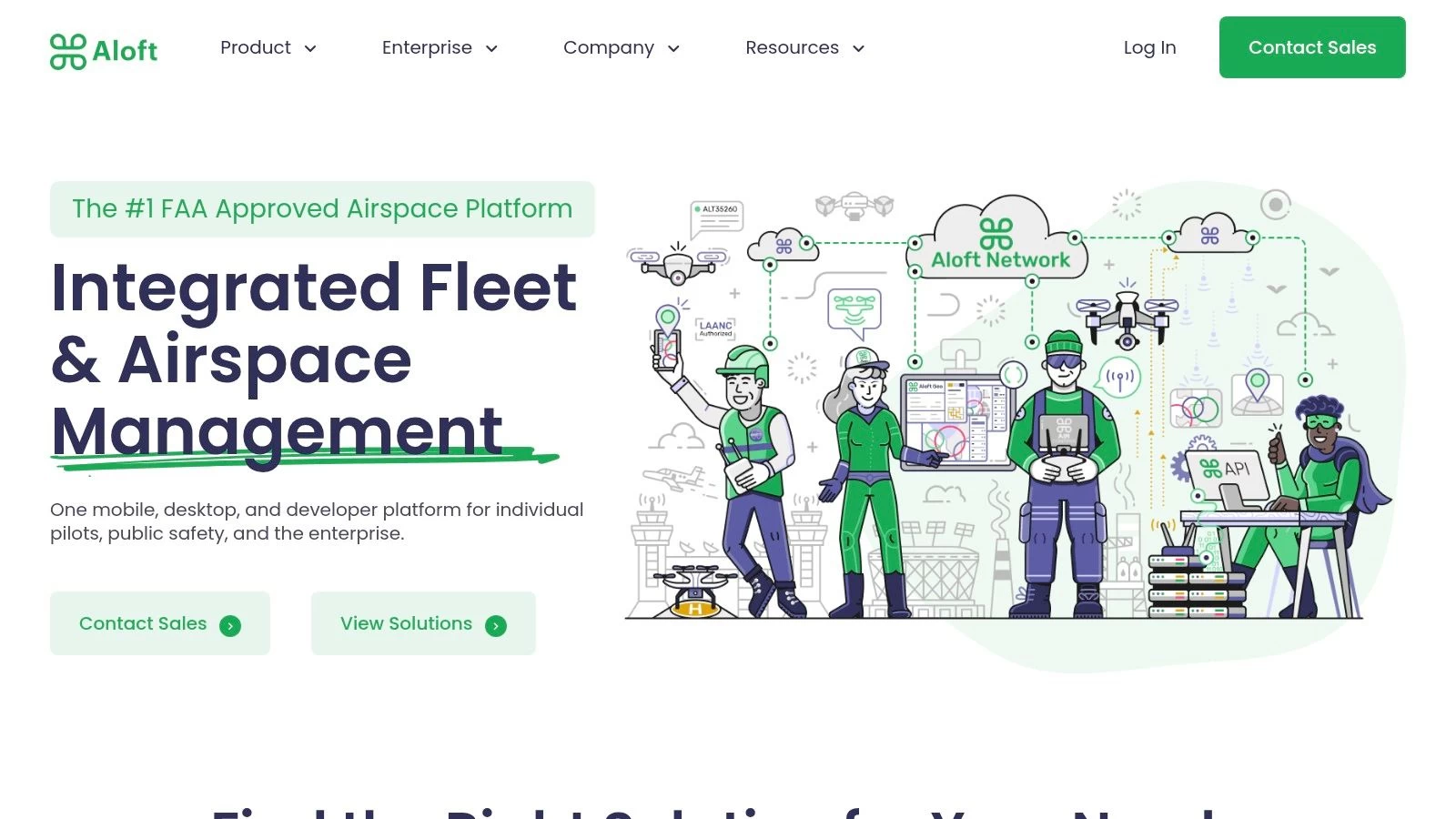
Aloft excels by combining comprehensive flight data management with integrated mobile workflows and automated flight restriction setups. This focus on a cohesive system allows teams to manage operators, track assets, and ensure every mission adheres to airspace rules from a single interface. Its strength in compliance makes it a go-to solution for commercial operations where regulatory oversight is a primary concern, bridging the gap between mission planning and execution.
Key Considerations for Aloft
- Best Use Case: Ideal for U.S.-based pilots and enterprise teams who require seamless FAA LAANC authorizations and a robust framework for managing fleet compliance and safety.
- User Experience: The platform, especially its mobile application, is generally well-regarded for its user-friendly design, making complex tasks like requesting airspace access straightforward.
- Pricing: Aloft offers various tiers, including a free plan for individuals and custom enterprise pricing, making it accessible for different operational scales.
- Limitations: Its primary focus on FAA regulations means it has limited support for operations outside of the U.S. Some of the more advanced enterprise features can present a learning curve for new users. To see how it stacks up against others, you can explore more about alternatives to Aloft.
Website: https://www.aloft.ai
7. SkyGrid
For organizations focused on future-proofing their operations with cutting-edge technology, SkyGrid offers a forward-thinking alternative to AlarisPro. It distinguishes itself by integrating artificial intelligence and blockchain to create an advanced airspace management system. This platform is designed not just for today's drones but also for the future of autonomous flight, including air taxis and other unmanned aircraft.
SkyGrid’s core strength lies in its AI-powered route planning, which automatically avoids hazards and ensures operational safety. The use of blockchain technology provides an immutable record for compliance and security, a feature that is particularly attractive for enterprises with stringent regulatory requirements. It offers real-time airspace monitoring and automated flight authorization, streamlining complex operational workflows and enhancing situational awareness for pilots and managers.
Key Considerations for SkyGrid
- Best Use Case: Enterprise-level and forward-looking drone programs that require advanced, autonomous flight management and a high degree of security and compliance.
- User Experience: The platform is technologically sophisticated, which means users may need a certain level of technical expertise to leverage its full capabilities effectively.
- Pricing: Specific pricing details are not publicly listed on the website, indicating a customized, enterprise-focused sales approach. Prospective users will need to contact SkyGrid directly for a quote.
- Limitations: The advanced nature of the platform could present a steep learning curve for smaller teams or those without dedicated technical staff. Its focus is more on airspace management than on team or equipment logistics.
Website: https://www.skygrid.com
8. DroneLogbook
For pilots and organizations seeking a straightforward and cost-effective alternative to AlarisPro, DroneLogbook offers a robust solution focused on core operational needs. It streamlines the entire flight management process by automating flight log imports, tracking equipment maintenance, and simplifying compliance reporting. Its strength lies in its wide compatibility with various drone models and file types, making it accessible to a diverse user base.
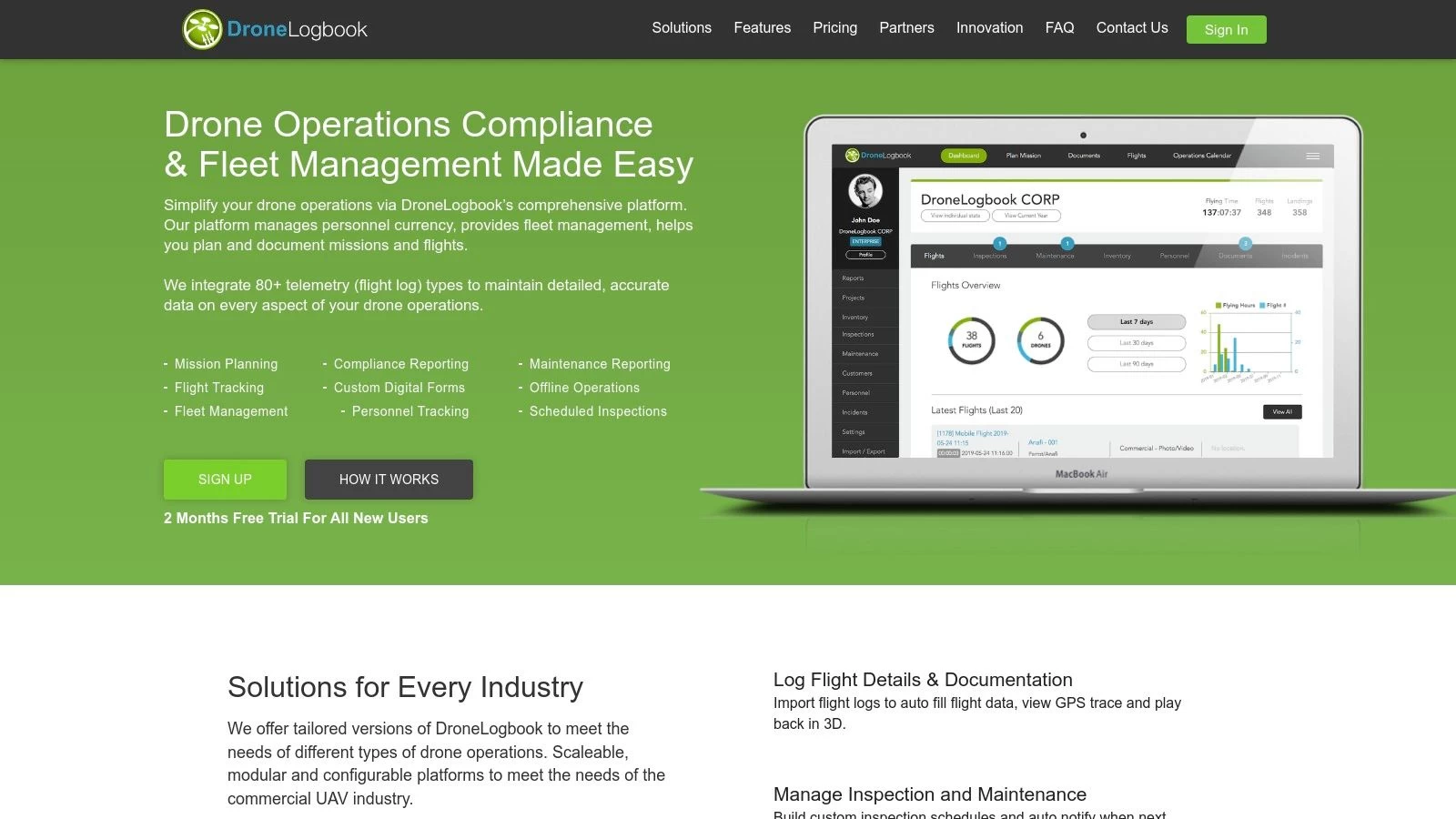
DroneLogbook is particularly valued for its scalability, serving everyone from hobbyists needing basic logging to commercial teams requiring detailed reporting and fleet management. The platform’s emphasis on automated data capture and scheduled maintenance alerts helps operators maintain airworthiness and stay compliant with regulatory requirements with minimal manual effort. This practical approach makes it a highly functional tool for day-to-day drone operations.
Key Considerations for DroneLogbook
- Best Use Case: Ideal for individual commercial pilots and small to medium-sized businesses needing a scalable, affordable platform for comprehensive logging, maintenance, and compliance without overly complex enterprise features.
- User Experience: The interface is generally considered clean and user-friendly, allowing operators to quickly access logs, maintenance schedules, and reports without a steep learning curve.
- Pricing: DroneLogbook provides excellent value with plans starting at just $6.95 per user per month, making it an affordable entry point for professional drone management.
- Limitations: While great for core tasks, it has limited integrations with certain third-party business applications. Some of the more advanced analytics and project management tools are reserved for higher-tier subscription plans. For more details, see this guide on alternatives to DroneLogbook.
Website: https://www.dronelogbook.com
9. Avision
For drone operators focused on compliance and advanced operations like Beyond Visual Line of Sight (BVLOS), Avision offers a powerful alternative to AlarisPro. It is uniquely positioned as a comprehensive solution for urban air mobility, integrating mission-critical services directly into its platform. Avision's core strength is its built-in FAA LAANC authorization, allowing pilots to gain real-time airspace clearance directly through its web and mobile applications.

This platform excels in managing complex drone operations by combining fleet management, BVLOS planning tools, and real-time video streaming capabilities. This all-in-one approach simplifies the workflow for organizations conducting advanced missions in controlled airspace. The inclusion of remote identification features further ensures that operators can meet evolving regulatory requirements, making it a forward-looking choice for enterprises scaling their drone programs.
Key Considerations for Avision
- Best Use Case: Enterprise teams and public safety agencies that require integrated FAA LAANC authorization and tools for planning complex operations, including BVLOS and urban flights.
- User Experience: The platform features user-friendly web and mobile interfaces that streamline the process of obtaining airspace authorizations and managing flights on the go.
- Pricing: Specific pricing details are not publicly listed and likely require a direct consultation, suggesting a focus on customized enterprise-level packages rather than standardized tiers.
- Limitations: While robust, the platform may require more significant integration efforts for large enterprises with existing systems. The lack of transparent pricing can be a hurdle for smaller teams evaluating their options.
Website: https://avision.io
10. FlytBase
For enterprises focused on full automation and scalable drone-in-a-box solutions, FlytBase provides a powerful alternative to AlarisPro. It is an enterprise-grade platform built specifically for autonomous BVLOS flights, fleet management, and integrating drone operations directly into existing business workflows. Its strength lies in its hardware-agnostic approach and robust API for custom development.
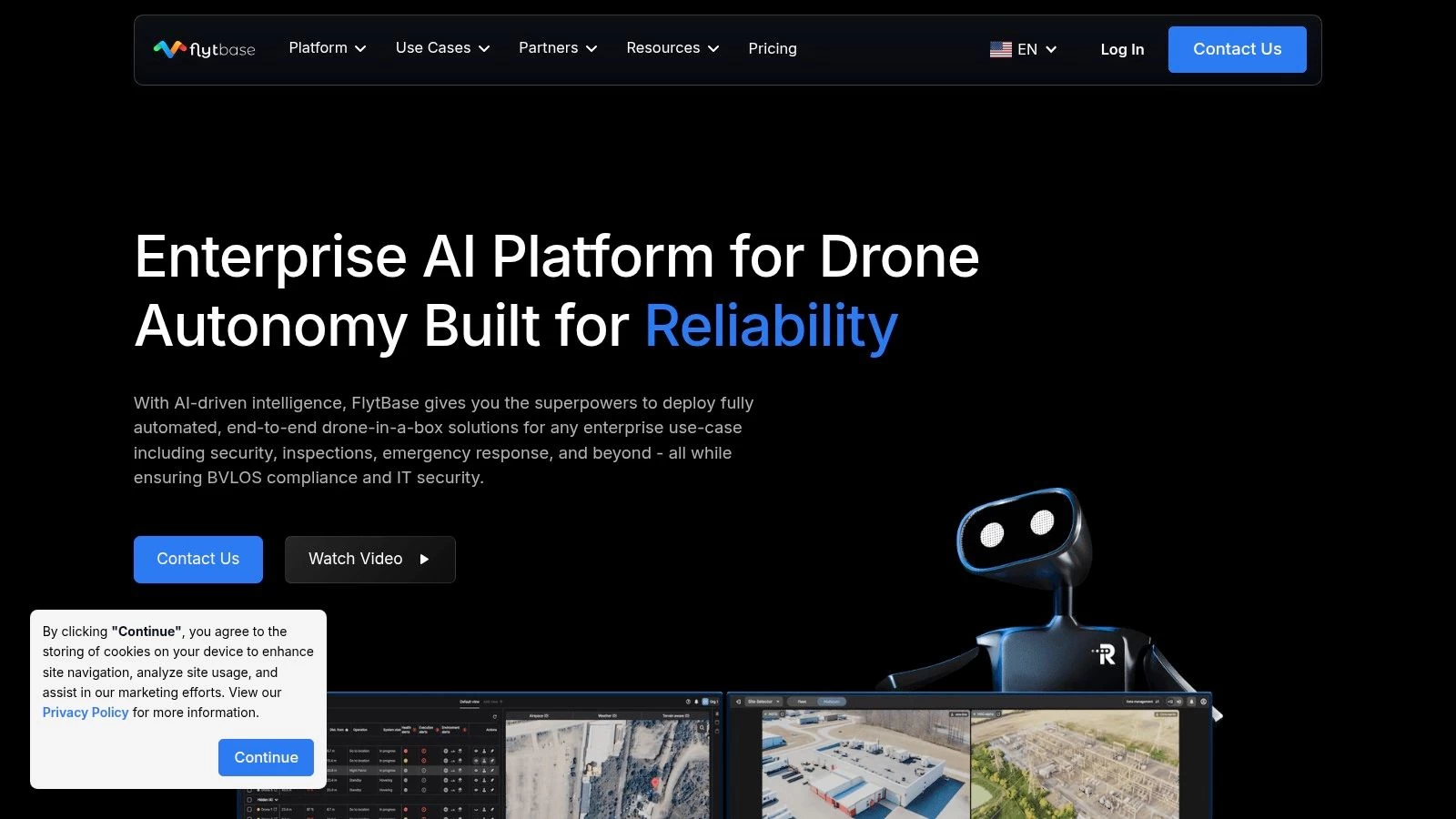
FlytBase enables users to plan and execute complex, repeatable missions from a centralized cloud-based dashboard. This includes real-time flight monitoring, remote gimbal control, and secure data transfer. The platform's focus on automation makes it ideal for security, public safety, and infrastructure inspection where consistent, autonomous data collection is critical. Its customizability sets it apart for organizations needing a deeply integrated solution.
Key Considerations for FlytBase
- Best Use Case: Enterprise-level operations requiring fully autonomous drone deployments, remote fleet management, and custom integrations for security, inspection, or delivery.
- User Experience: As an enterprise-grade platform, it has a steeper learning curve compared to simpler tools. It is built for technical users and developers who can leverage its extensive API.
- Pricing: Pricing is not publicly listed and is provided on a custom-quote basis, reflecting its enterprise focus on tailored solutions for large-scale and complex operations.
- Limitations: The platform may be overly complex and expensive for solo operators or small teams. Its primary value is unlocked through custom integration, which requires development resources.
Website: https://flytbase.com
11. DroneDeploy
For organizations focused on advanced data capture and analysis, DroneDeploy stands as a powerful alternative to AlarisPro. It is a market leader in reality capture, transforming job sites into comprehensive digital twins. The platform excels at automating complex flight missions for mapping, inspection, and surveying, making it a go-to solution for industries like construction, agriculture, and energy.
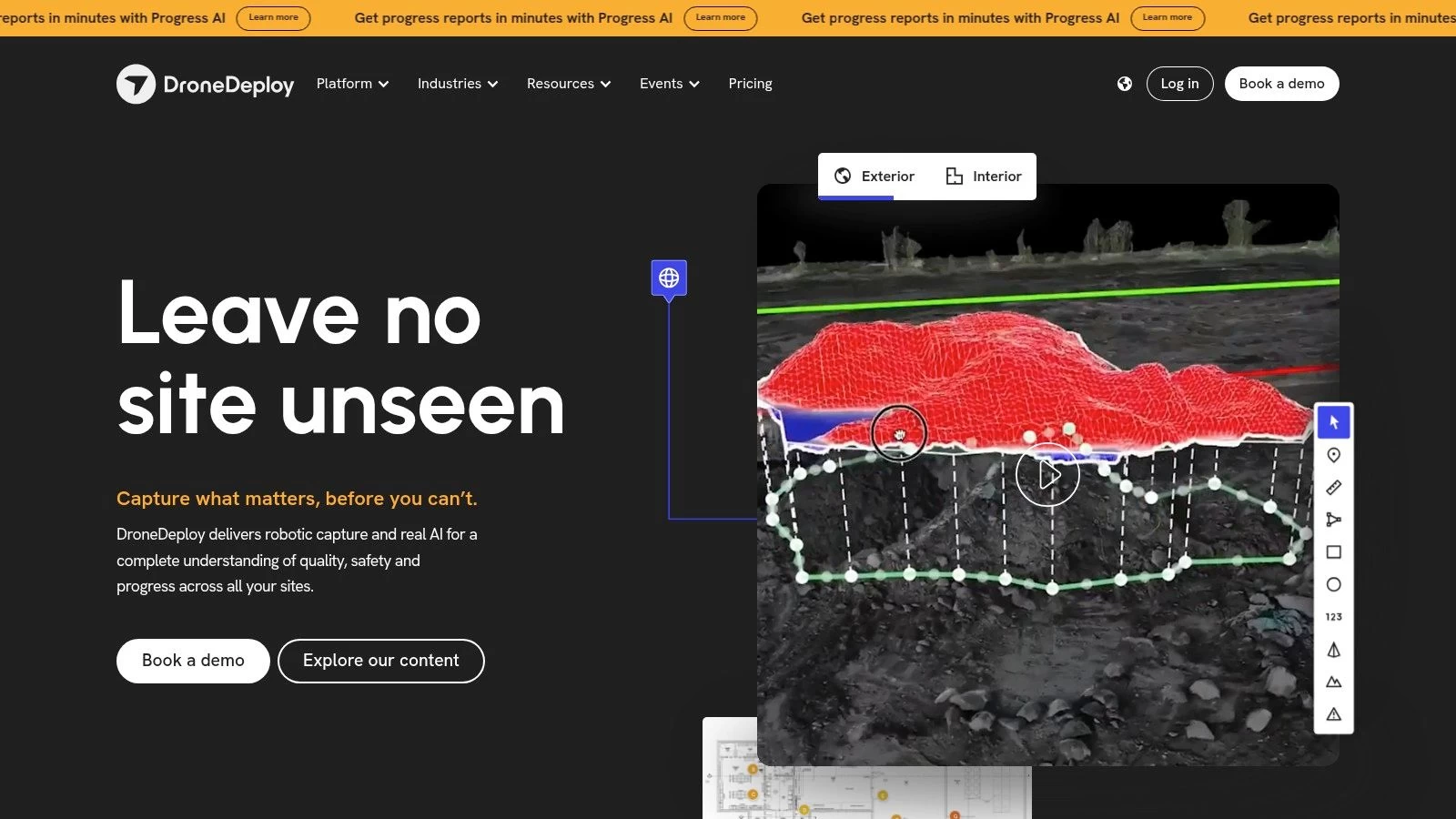
DroneDeploy's core strength is its end-to-end data workflow. It allows users to plan flights, process imagery into high-resolution maps and 3D models, and perform detailed analysis directly within the cloud-based platform. This seamless integration from flight to insight streamlines operations, providing actionable data for progress tracking, volumetric measurements, and detailed inspections. Its extensive app market further enhances its capabilities by integrating with other industry-standard software.
Key Considerations for DroneDeploy
- Best Use Case: Enterprise-level operations in construction, agriculture, or energy that require sophisticated mapping, 3D modeling, and data-driven site analysis.
- User Experience: The interface is widely regarded as polished and user-friendly, simplifying otherwise complex data processing workflows for professionals.
- Pricing: Positioned as a premium solution, its pricing reflects its advanced capabilities, making it more suitable for businesses with a clear ROI on drone data rather than individual pilots.
- Limitations: The platform is heavily focused on data capture and analysis, lacking some of the granular fleet and pilot management features found in dedicated operations platforms. The cost can be a significant barrier for smaller teams or independent operators.
Website: https://www.dronedeploy.com
12. FlightOps
For enterprises focused on large-scale, autonomous operations, FlightOps provides a powerful alternative to AlarisPro by shifting the focus from manual control to advanced flight intelligence. Its software is engineered to manage complex, beyond-visual-line-of-sight (BVLOS) missions like drone deliveries and persistent security monitoring, significantly reducing the reliance on highly skilled human operators for every flight. The platform is built for scalability and automation.
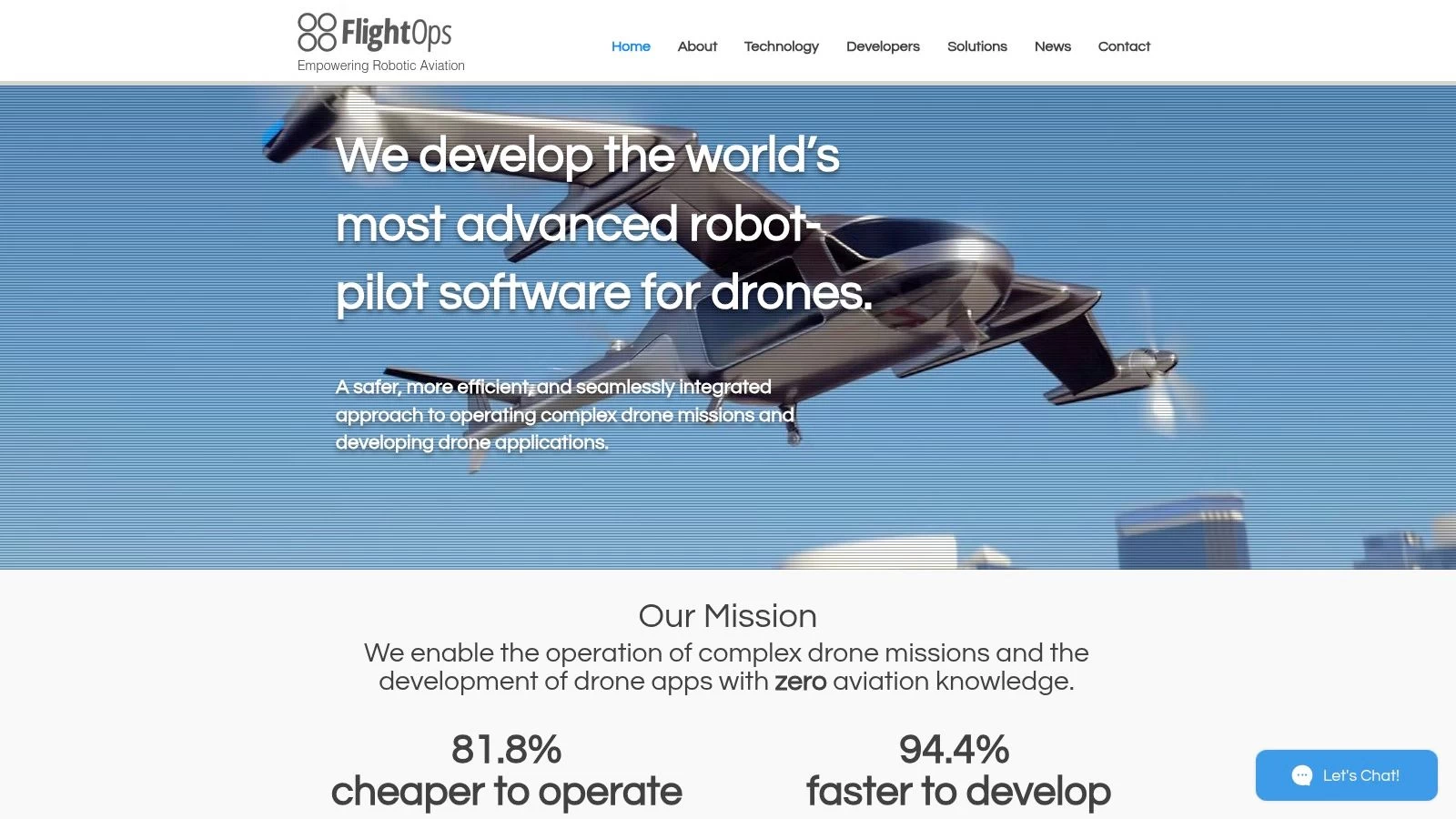
FlightOps stands out with its robust API and middleware, allowing deep integration with various drone hardware, payloads, and custom business applications. This flexibility enables organizations to build highly tailored, automated workflows. Real-time monitoring and control over entire fleets from a central dashboard ensure that even at scale, operators maintain situational awareness and can intervene when necessary, making it ideal for the future of autonomous drone logistics.
Key Considerations for FlightOps
- Best Use Case: Enterprise-level organizations planning or executing large-scale, automated drone operations such as delivery networks, autonomous security, or large area inspections.
- User Experience: The platform is powerful but complex, requiring significant technical expertise for initial setup, integration, and ongoing operation. It's designed for engineers and operations managers, not casual users.
- Pricing: Follows a per-drone, per-month subscription model, which can be costly and is better suited for businesses where the drone operations generate direct revenue.
- Limitations: The platform’s steep learning curve and high cost make it unsuitable for solo pilots or small teams. Its strength in autonomy means it lacks the more granular, pilot-centric flight logging and compliance features of other systems.
Website: https://www.flightops.io
Alternative to AlarisPro: Feature Comparison of 12 Solutions
| Platform | Core Features / Capabilities | User Experience & Quality ★ | Value Proposition 💰 | Target Audience 👥 | Unique Selling Points ✨ |
|---|---|---|---|---|---|
| Dronedesk 🏆 | Client, fleet & team management, airspace intelligence | ★★★★★ | Scalable plans, free trial, money-back | Solo to enterprise operators | Intuitive DJI sync, 50% faster planning |
| Airdata | Flight log sync, maintenance tracking, analytics | ★★★★ | Affordable from $2.99/mo | Hobbyists & small operators | Live streaming, broad drone compatibility |
| DJI GS Pro | Automated mission planning, cloud data, 3D maps | ★★★★ | Free with DJI devices | DJI users on iOS | Seamless DJI integration |
| Skydio Cloud | Fleet mgmt, real-time data, AI predictive maintenance | ★★★★ | Higher cost | Enterprise with Skydio drones | AI-powered fleet mgmt, API integration |
| AeroGCS | Flight planning, fleet mgmt, compliance, cloud storage | ★★★★ | Not publicly available | Agriculture, construction | Industry-specific editions |
| Aloft | Flight data mgmt, compliance, FAA LAANC integration | ★★★★ | Not publicly available | Individual & enterprise pilots | Strong US compliance focus |
| SkyGrid | AI route planning, blockchain compliance, real-time airspace | ★★★★ | Not publicly available | Advanced technical users | AI + blockchain for safety & compliance |
| DroneLogbook | Flight logs, maintenance, compliance reporting | ★★★★ | From $6.95/user/mo | Hobbyists & commercial users | Wide drone model support, affordable |
| Avision | FAA LAANC auth, BVLOS ops, live streaming | ★★★★ | Not publicly available | Urban air mobility, complex ops | BVLOS, remote ID, live video |
| FlytBase | Autonomous BVLOS, fleet mgmt, cloud data, APIs | ★★★★ | Not publicly available | Enterprise, automation focused | Strong automation & customization |
| DroneDeploy | Flight planning, mapping, 3D modeling, data analysis | ★★★★ | Higher cost | Professionals in multiple industries | Cloud data, extensive analysis |
| FlightOps | AI flight intelligence, autonomous ops, real-time control | ★★★★ | Higher cost | Large-scale automated ops | Reduces human operator dependency |
Final Thoughts
Navigating the crowded market of drone operations management software can feel overwhelming, but finding the right alternative to AlarisPro is crucial for streamlining your workflows, ensuring compliance, and scaling your business. As we've explored, the "best" platform is not a one-size-fits-all solution; it’s the one that aligns perfectly with your specific operational needs, team size, and primary use case.
AlarisPro has set a high standard, particularly with its detailed component-level tracking and maintenance forecasting. However, the alternatives we've detailed offer diverse strengths. Platforms like DroneDeploy excel in photogrammetry and data analysis, making them ideal for surveying and mapping professionals. Conversely, tools like Airdata and DroneLogbook provide deep post-flight log analysis and robust pilot-centric tracking, appealing to operators who prioritize granular flight data and compliance records.
Key Takeaways for Selecting Your Platform
When making your decision, move beyond a simple feature checklist. Consider the entire lifecycle of your drone operations. How will the software integrate into your existing pre-flight planning, in-field execution, and post-flight analysis?
- For Solo Operators and Small Teams: Prioritize ease of use, affordability, and core compliance features. A solution like Dronedesk or Aloft can provide a comprehensive yet manageable suite of tools without the enterprise-level complexity or cost.
- For Specialized Service Providers: Focus on platforms that enhance your specific deliverable. Surveyors should lean towards DroneDeploy or AeroGCS for their mapping capabilities, while security and inspection teams might find FlytBase or Skydio Cloud better suited for live streaming and automated missions.
- For Enterprise Operations: Scalability, security, and integration are paramount. Look for solutions like SkyGrid or FlightOps that offer robust API access, advanced user management, and the ability to manage a large, diverse fleet across multiple locations.
Your Next Steps
Before committing to a new platform, take a strategic approach. We recommend shortlisting two or three top contenders from this list that seem to fit your profile. Take advantage of free trials or demo versions to test the software in a real-world context.
Run a complete mock project through each platform. Can you easily create a project, plan a flight, generate a risk assessment, log the flight, and create a client-ready report? This hands-on evaluation is the single most effective way to identify the ideal alternative to AlarisPro for your unique operational rhythm. By investing this time upfront, you'll select a tool that not only replaces a single function but becomes a foundational asset for your entire drone program, empowering you to fly safer, work smarter, and grow faster.
If you're looking for an all-in-one solution that masterfully blends project management, compliance, and flight operations into one intuitive interface, Dronedesk is the ideal choice. As a powerful alternative to AlarisPro, it simplifies every step from client quote to final invoice, saving you time and ensuring you stay compliant. Start your free trial today and experience a smarter way to manage your drone business at Dronedesk.
 How to Evaluate a Free Drone Logbook Before Using It →
 FAA Part 107 Test: How to Master Airspace Questions →
 Drone Risk Assessment Controls That Work in the Field →
 FAA Drone License Costs Beyond the Knowledge Test →
 Drone Part 107 Operations: When a Waiver May Be Needed →
 Drone Operating Rules for Managing Contractors and Employees →
 BVLOS Drone Requirements for Building a Safety Case →
 Drone Pilot Test Mistakes That Cost Candidates Marks →
 FAA 107 License vs Part 107 Certificate: What’s the Difference? →
 Drone Airport Rules: A Field Checklist for Site Assessments →