
Aircraft maintenance tracking software - Boost Drone Ops and Uptime
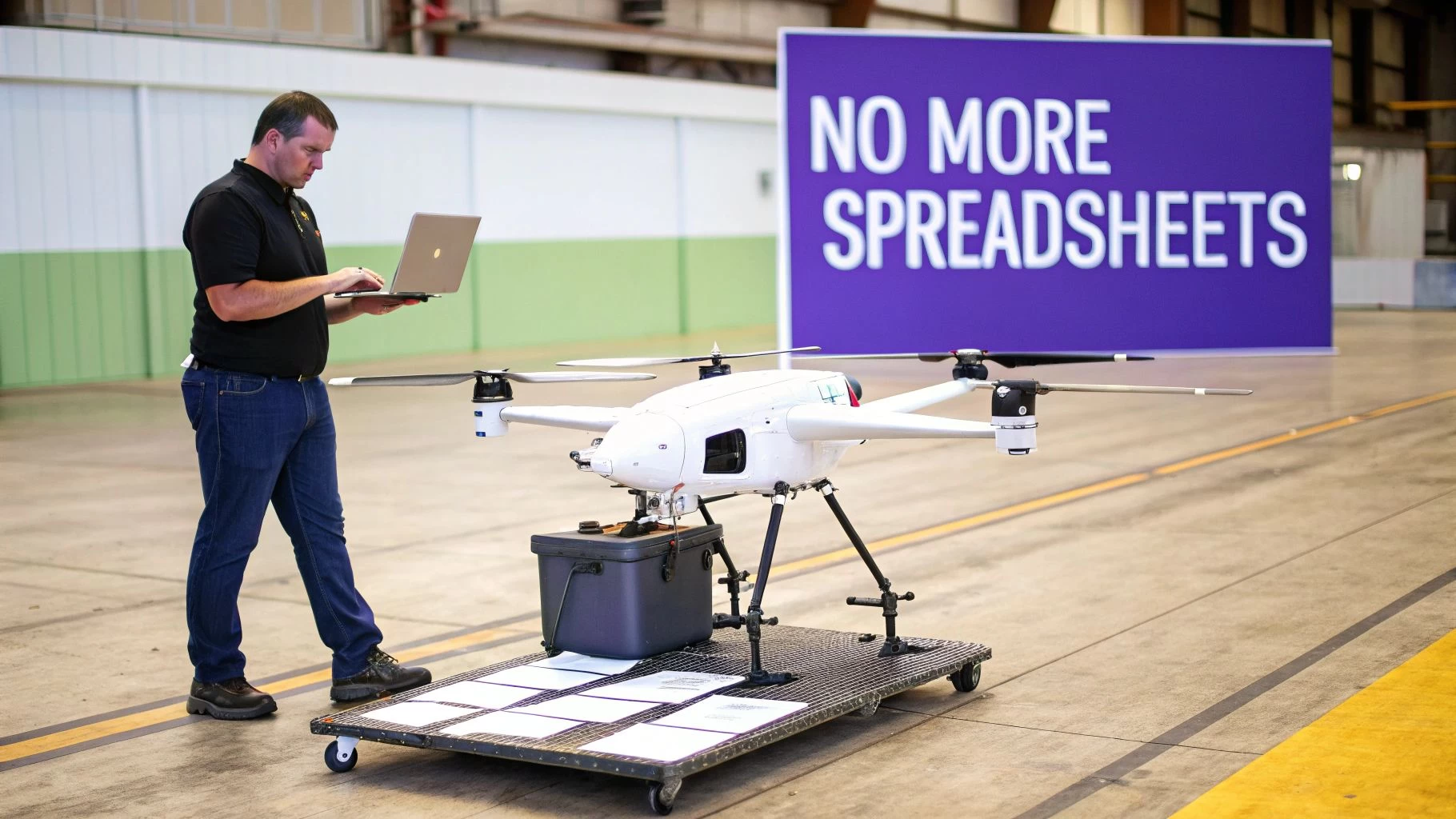
Aircraft maintenance tracking software is, at its heart, the digital system of record for an aircraft's entire service life. It’s what automates the scheduling, logging, and compliance reporting for every bit of upkeep. For professional drone operators, this kind of system is a complete game-changer, swapping out flimsy spreadsheets for a solid, auditable platform that guarantees safety and keeps your fleet ready to fly.
Why Manual Drone Maintenance Tracking No Longer Flies
Can you imagine running a professional delivery fleet without a system for tracking oil changes or tire wear? Of course not—it's unthinkable. Yet, many drone businesses are still trying to get by with risky, inefficient spreadsheets for maintenance. That’s a practice that belongs in the hobbyist world, not professional aviation.
Once you start scaling up, the cracks in that manual approach don't just show; they turn into critical failures.
The jump from flying for fun to flying for business is a massive shift in responsibility. Suddenly, safety and compliance aren't just good ideas; they're the absolute foundation of a sustainable company. Manual tracking creates dangerous bottlenecks, jacks up the risk of in-flight equipment failure, and simply cannot keep up as your fleet grows from one drone to ten or more.
The Pitfalls of Spreadsheet-Based Tracking
Relying on spreadsheets is like navigating a cross-country road trip with a paper map instead of a GPS. It might work for a bit, but when it fails, it fails spectacularly.
- Prone to Human Error: One simple typo, a missed cell, or an outdated formula can lead to a skipped service interval, potentially causing an accident.
- Lack of Real-Time Updates: Spreadsheets are static. They don’t give you a live look at your fleet's status, making it tough to know which drone is genuinely ready for a mission right now.
- Poor Scalability: Juggling maintenance for five drones on a spreadsheet is a headache. Trying to manage twenty is a full-blown migraine that opens the door to incredibly costly mistakes.
This operational friction is exactly why dedicated aircraft maintenance tracking software has moved from a "nice-to-have" to a fundamental necessity. The entire aviation industry is on board with this. The global market for this software was valued at USD 15.67 billion in 2024 and is projected to hit USD 28.06 billion by 2034. That's a clear signal of the massive shift towards digital solutions that lock in safety and efficiency. You can discover more about this industry trend and its growth drivers.
For a professional drone pilot, your maintenance logbook is every bit as critical as your flight log. A robust digital system is your proof of a commitment to safety, it keeps regulators happy, and it gives clients unshakable confidence in your operational integrity.
Take a look at the example below. This is what a centralised fleet management dashboard looks like, giving you an at-a-glance overview of all your assets.
This kind of clear, organised view instantly shows the status of each drone in your fleet. It replaces guesswork with data-driven clarity.
Inside the Digital Toolkit of Maintenance Software
Let's move beyond a simple feature list and really get our hands dirty. To understand what aircraft maintenance tracking software actually does, we need to open up the digital toolkit and see how these tools solve the real-world headaches drone operators deal with every single day.
Picture a survey company that has to ground a specific drone for a sensor calibration every 50 flight hours. Trying to track that manually on a spreadsheet is a recipe for mistakes. With the right software, this just… happens. It’s a background task, completely automated and impossible to miss.
This is the whole point of a good system—turning critical, complex jobs into simple, automated workflows that you don’t even have to think about.
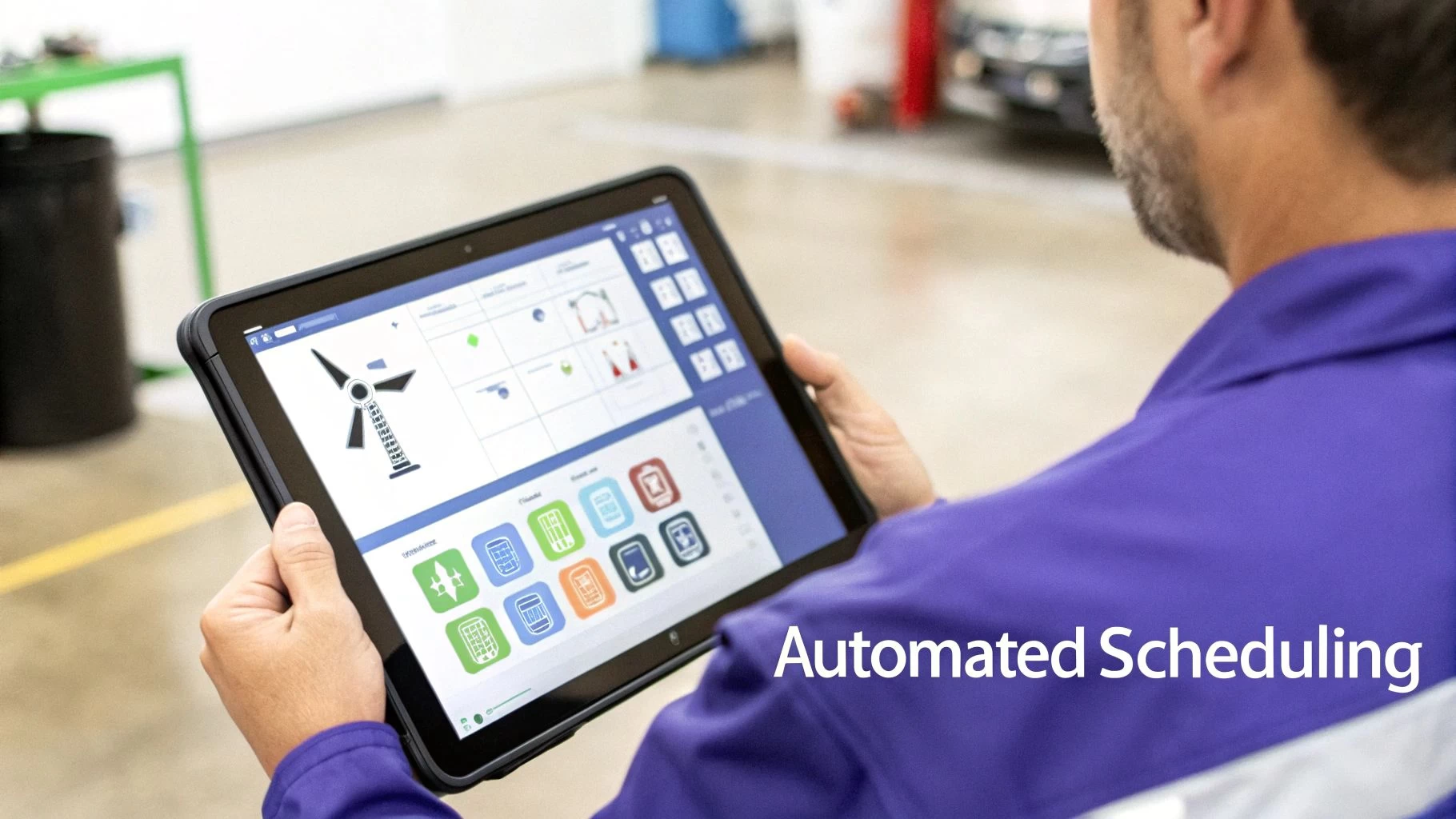
Automated Scheduling and Proactive Alerts
The best maintenance is always proactive, not reactive. Software makes this a reality through automated scheduling and alerts, acting as a tireless digital assistant for your entire fleet.
Think of it like setting a recurring reminder for your car's oil change, but a whole lot smarter. You can set up custom maintenance rules based on all sorts of triggers:
- Flight Hours: Ground an aircraft for a motor inspection after 100 hours.
- Time Intervals: Mandate a full airframe check every six months, regardless of use.
- Battery Cycles: Trigger a battery capacity test after every 75 charge cycles.
When a drone gets close to one of these limits, the system automatically flags it for maintenance and pings the right people with an alert. It completely removes the mental load of juggling countless service intervals, which becomes a lifesaver as your fleet grows.
Digital Logbooks and Component Lifecycle Tracking
Paper logbooks are a massive liability. They get lost, damaged, or filled with coffee-stained, illegible handwriting. Digital logbooks, the backbone of any modern platform, create a permanent, easily searchable record of every single thing that’s ever happened to an aircraft.
This creates a perfect, unbroken audit trail—something that's non-negotiable for regulatory compliance and proving you've done your due diligence.
But it gets better. This detailed logging fuels another critical feature: component lifecycle tracking. Every drone is just a collection of parts with a limited lifespan—propellers, batteries, motors, gimbals, you name it. The software tracks the individual usage of every component. It knows, for example, that the props on Drone A have 45 flight hours on them, while the brand-new set on Drone B has only five.
By monitoring the precise wear and tear on every part, the software can flag a component for replacement before it fails. This is the key to preventing catastrophic in-flight equipment failures and protecting your investment.
This proactive approach is part of a much bigger trend. The aviation software market was valued at USD 11.18 billion in 2024 and is projected to hit USD 16.93 billion by 2030, largely driven by tools that make scheduling and upkeep easier. You can dig into more data on how predictive tools are reshaping aviation on PrecedenceResearch.com.
Flight and Battery Hour Management
Accurate flight and battery data is the fuel that powers your whole maintenance engine. If you're logging flight times by hand, you’re probably getting it wrong. Pilots estimating flight times throws off your entire maintenance schedule.
Modern aircraft maintenance tracking software fixes this by syncing directly with flight logs from manufacturers like DJI. Every flight is automatically imported, capturing the exact flight duration, battery usage, and other vital data. You just can't get this level of accuracy with a notepad. To see more on how this works, check out our guide on flight data monitoring software.
This precision is especially important for battery management, arguably one of the most critical parts of drone safety. The software keeps tabs on:
- Charge Cycles: Know exactly how many times each battery has been charged, a key indicator of its health.
- Storage Status: Get alerts if batteries are stored for too long at an unhealthy charge level, which prevents degradation.
- Performance History: Easily spot batteries that are underperforming or failing to hold a full charge, so you can retire them safely.
The difference between using dedicated software and trying to manage this manually is stark. Let's break it down.
Core Features of Drone Maintenance Software vs Manual Spreadsheets
| Feature | Dedicated Software (e.g., Dronedesk) | Manual Spreadsheet Tracking |
|---|---|---|
| Scheduling | Automated triggers (flight hours, cycles, dates) with proactive alerts. | Manual calendar entries; easy to miss or forget. |
| Logbooks | Centralised, immutable, searchable digital records for every asset. | Prone to loss, damage, inconsistent entries, and human error. |
| Component Tracking | Tracks the individual lifecycle of every part (props, motors, batteries). | Extremely difficult to track accurately; relies on manual updates. |
| Flight/Battery Data | Automatic import from flight logs for 100% accuracy. | Relies on pilots manually entering estimated times; often inaccurate. |
| Audit Trail | Instant, complete, and defensible history for compliance checks. | A nightmare to compile; often incomplete or questionable. |
| Team Access | Secure, multi-user access with defined roles and real-time updates. | Version control issues; risk of overwriting data or using old info. |
Ultimately, a spreadsheet is a blank slate that puts all the responsibility on you. It can't warn you when a battery is failing or when an inspection is due.
By treating each of these features not as separate tools but as interconnected parts of a complete system, drone operators can build a truly resilient, safe, and efficient operation.
How Automated Tracking Elevates Your Drone Operations
Switching to aircraft maintenance tracking software isn't just about logging data more efficiently. It's about fundamentally changing your entire drone operation, moving from a reactive, paper-shuffling process to a proactive, data-driven machine. This shift is built on four pillars of operational excellence that have a direct impact on both your bottom line and your reputation.
By handing off the tedious but critical tasks of maintenance tracking to an automated system, you unlock entirely new levels of performance. Think of it as a digital co-pilot for your fleet, making sure every asset is safe, ready to fly, and accounted for at all times.
Pillar 1: Enhanced Safety
In aviation, safety is everything. It's the absolute bedrock of being a professional. A single component failure can have catastrophic results, from losing the aircraft to damaging property, or far worse. Automated tracking is your first and best line of defense.
The software meticulously tracks the wear and tear on every single critical part—from propellers getting close to their flight-hour limit to batteries that are nearing the end of their cycle life. It sends you alerts before there's a problem, forcing you to address potential issues long before they become in-flight emergencies. This data-driven approach turns safety from a simple checklist item into a core, automated function of your daily work.
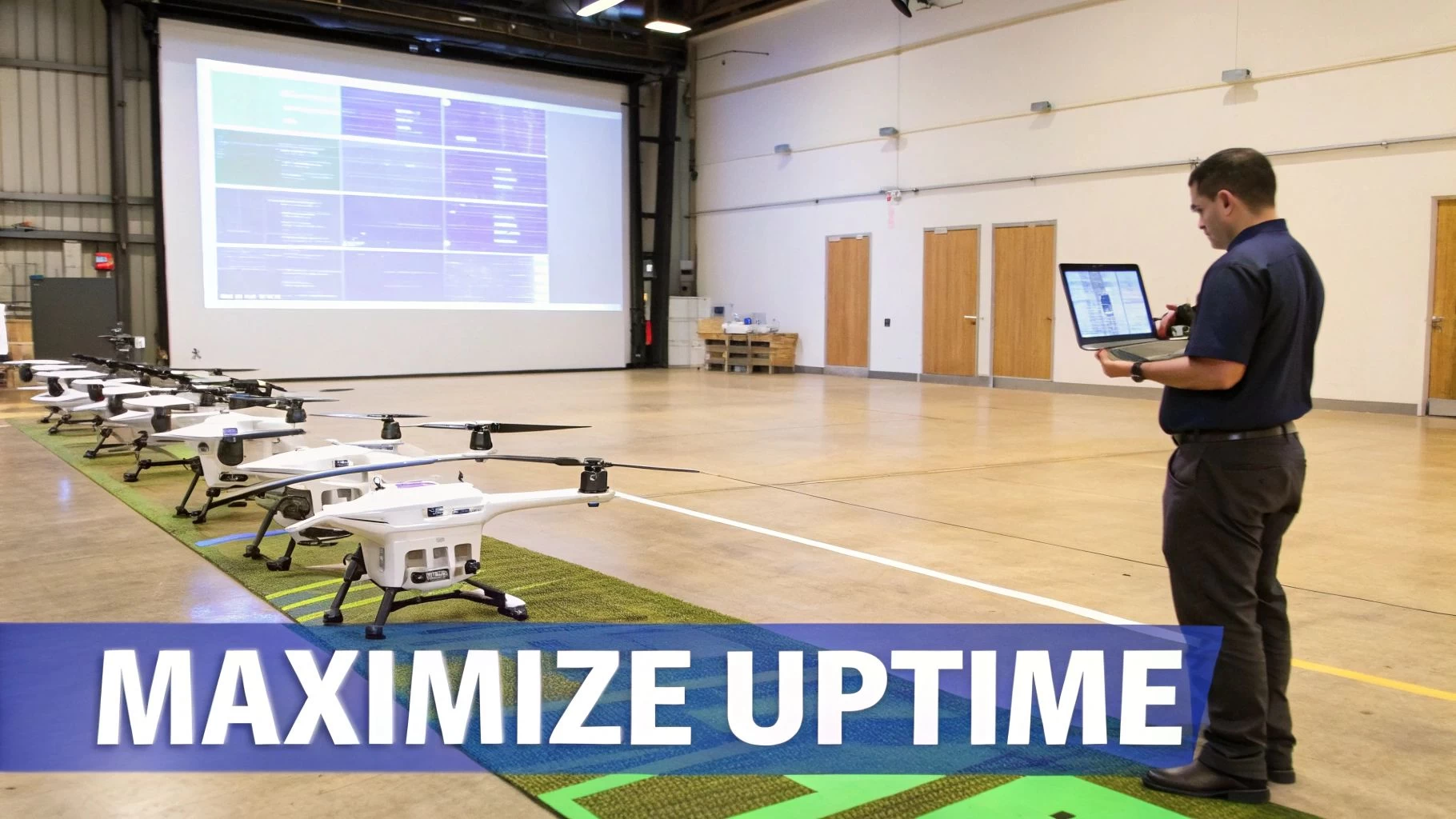
Pillar 2: Maximized Uptime
Let's be blunt: drones sitting on the ground aren't making you money. Maximizing uptime is the name of the game for profitability, but that requires smart planning. Automated software ensures maintenance is scheduled strategically, not just whenever you get around to it.
Picture a large-scale inspection project that needs multiple drones over several weeks. The software can intelligently stagger maintenance schedules so you always have enough airworthy aircraft ready to meet your client's demands. It completely prevents that costly scenario where a key drone is unexpectedly grounded for service right before a critical job. This is one of the core principles of successful fleet management, as we cover in our guide to asset tracking best practices.
A drone fleet is only as valuable as its availability. Automated tracking turns maintenance from a source of disruption into a predictable, manageable process that protects your operational tempo and client commitments.
Pillar 3: Ironclad Auditability
In the world of professional aviation, if it isn't documented, it didn't happen. Keeping meticulous records is completely non-negotiable for staying compliant with bodies like the FAA or EASA. But manual logs are a huge liability; they're often incomplete, inconsistent, and a nightmare to pull together under pressure.
Aircraft maintenance tracking software solves this problem instantly by creating a perfect, unchangeable digital trail. Every flight, every service task, every component replacement—it's all logged automatically and tied to a specific drone and pilot.
So, when an auditor comes knocking, you can generate comprehensive, professional reports with a single click. This doesn't just tick a box; it demonstrates a serious commitment to compliance and professionalism, strengthening your reputation and protecting your license to operate.
Pillar 4: Strategic Cost Control
Finally, automated tracking provides the hard data you need to get real financial control over your fleet. It takes you beyond just tracking expenses and helps you understand the total cost of ownership (TCO) for each and every drone.
By analyzing maintenance histories and how often components are replaced, you can spot which drone models are the most reliable or which batteries offer the best long-term value. This kind of data is invaluable for making smarter purchasing decisions down the road.
What's more, by tracking these trends over time, you can forecast future maintenance expenses with far greater accuracy, helping you budget more effectively and avoid those nasty surprise costs. This strategic oversight ensures every pound or dollar you spend on maintenance is a true investment in the long-term health and profitability of your fleet.
A Practical Checklist for Choosing the Right Software
Picking the right aircraft maintenance tracking software is a huge decision. It's something that will directly affect your efficiency, your safety, and your ability to grow. With so many options out there, you have to look past the glossy feature lists and really dig into how a platform will perform in the real world. This checklist is designed to help you do just that—to ask the right questions and choose a partner, not just a product.
Ultimately, you’re looking for a robust platform that feels like a natural extension of your operation, making complicated tasks simple and giving you clear, actionable information.
Can It Grow With You? Evaluating Scalability
Right now, you might just have your first drone. But what happens when your fleet grows to five, ten, or even fifty aircraft? A system that works perfectly for a solo operator can quickly become a massive headache for a growing team. Scalability isn't just a buzzword; it’s about making sure you don't paint yourself into a corner.
Ask any potential vendor these questions:
- Can the software handle a mixed fleet with different drone models and manufacturers without any fuss?
- What’s the pricing model look like as I add more drones and more pilots? Are there any hidden costs?
- Does the platform support different user roles? I need different permissions for pilots, admins, and maybe even clients.
A truly scalable solution grows with you. It ensures your initial investment is still paying off years down the line, saving you from a painful and expensive migration to a new system when you’re busiest.
Does It Play Well With Others? Assessing Integrations and Mobile Access
The best software slots right into your existing workflow without causing any friction. Let's be honest, manual data entry is the enemy of efficiency and a primary source of human error. This is why powerful integrations are completely non-negotiable for any modern drone operation.
The real magic of a maintenance platform is its ability to centralize data automatically. If your pilots are still punching in flight times by hand, you’re missing the point and leaving a ton of efficiency on the table.
Look for a platform that offers direct, automatic syncing with major flight log sources like DJI. This is fundamental. It ensures every single minute of flight time is captured accurately, which is the bedrock for reliable, usage-based maintenance schedules.
Just as important is mobile access. Maintenance doesn't happen sitting at a desk. Your pilots and technicians need to be able to run through pre-flight checks, log service tasks, and report issues straight from the field using a phone or tablet. A clunky mobile app or, even worse, no offline functionality can cripple your field operations and lead to patchy, inconsistent data.
Who Has Your Back? Prioritizing Vendor Support and Reliability
Finally, remember that you’re not just buying a piece of software; you’re starting a relationship. When something goes wrong right before a critical mission—and sooner or later, it will—the quality of the vendor's support is what really matters.
Before you commit, do your homework on the vendor's reputation. Look for case studies, read user reviews, and ask them directly about their support channels. Do they offer email, phone, or live chat? What are their typical response times? A vendor who invests in great customer service is a vendor who is invested in your success.
This shift to digital-first solutions is happening across the entire aerospace MRO (Maintenance, Repair, and Overhaul) world. The digital MRO market is expected to jump from $1.02 billion in 2025 to $1.88 billion by 2030, all driven by the demand for predictive maintenance—which relies completely on high-quality aircraft maintenance tracking. Discover more about this MRO market expansion. Picking a solid, reliable partner ensures you’re ready to take advantage of this trend, not get left behind by it.
Getting Your New Maintenance Tracking System Up and Running
So, you've decided to ditch the spreadsheets and move to a proper maintenance system. Good call. Making that jump can feel like a massive project, but it’s really just a few straightforward steps. Let's break it down and show you how quickly you can get a powerful aircraft maintenance tracking software humming along.
Think of it less as a technical setup and more like introducing the software to your fleet and how you operate.
Step 1: Onboard Your Assets
First things first, you need to build a digital twin of your physical fleet inside the software. This is called asset onboarding, and it’s where you’ll tell the system about every piece of kit you need to keep tabs on. And I don’t just mean the drones.
You’ll want to log all the key hardware:
- Drones: Add the make, model, serial number, and its current flight hours.
- Batteries: Get every single battery in there, along with its purchase date and how many charge cycles it's been through.
- Critical Components: Don't forget items like propellers, motors, and expensive payloads (like your LiDAR sensors), especially those with specific service life limits.
I won't lie, this initial data entry is probably the most tedious part of the whole process. But a good system makes it as painless as possible, and once it's done, you have a single, central database for everything.
Step 2: Set Your Maintenance Rules
With all your gear logged, it’s time to breathe some life into the system by defining your maintenance rules. This is the clever bit where you tell the software when to poke you about upcoming service. You can set up custom triggers based on the manufacturer’s recommendations or your own hard-won operational experience.
For example, you could create rules like:
- Motor Inspection: Flag for a check-up every 100 flight hours.
- Battery Health Check: Schedule a capacity test after every 50 charge cycles.
- Airframe Review: Set an annual reminder for a full structural inspection.
These rules are what automate your entire maintenance program. If you need a solid starting point, a good preventive maintenance schedule template can give you a great framework for setting up your own rules.
By setting these automated rules, you're essentially building a digital safety net for your operation. The software becomes your ever-watchful partner, making sure no critical service task ever gets missed.
Step 3: Get the Team Onboard and Integrate Your Workflow
A tool is only as good as the team using it. Proper training is non-negotiable. Every pilot needs to know exactly how to run through their pre-flight checks, log flight details, and record any maintenance actions right there in the platform. This is the only way to keep your data clean and reliable.
The final piece of the puzzle is weaving the software into your day-to-day operations. It should feel like a natural part of your workflow—from mission planning to post-flight debriefs—not just another box to tick. When your maintenance tracking is seamlessly connected to everything else, you'll know you've nailed the implementation. It’s there to help, not hinder.
Understanding the ROI for Fleets of All Sizes
Thinking about aircraft maintenance tracking software as just another expense is missing the point entirely. It's a strategic move, plain and simple, and one that pays real dividends for drone operations of every possible size. The return isn't a one-size-fits-all deal; it scales right alongside you, tackling the unique headaches faced by solo flyers, small crews, and massive enterprise fleets.
At the end of the day, any pro is trying to turn their time and gear into revenue. Good maintenance software is the engine that makes that happen more efficiently, directly fattening up your bottom line whether you fly one drone or a hundred.
The Solo Operator: Time Is Money
If you're a solo drone pro, your most precious, non-renewable resource is time. Every hour you waste wrestling with spreadsheets, manually typing up flight logs, or digging through old emails for a service record is an hour you're not earning. That administrative quicksand is a direct hit to your wallet.
The return on investment here is immediate and dead simple to calculate. If the software saves you just five hours of admin work a month—and that’s being very conservative—that’s five extra hours you can spend flying paying jobs, processing data, or marketing your services to land the next big contract.
- From Admin to Action: Swap those tedious paperwork hours for profitable flight hours.
- Professionalism Pays: Impress clients and regulators with instant, polished reports. That builds the kind of trust that leads to repeat business and bigger projects.
This isn't about some fancy extra; it's about being ruthlessly efficient so you can compete and grow your one-person show into a real business.
The Small Team: Efficiency Is Everything
Once you've got a small team of pilots and a handful of drones, the game changes. The challenge shifts from one person's schedule to the whole team's efficiency and making sure your aircraft are always working, not sitting on a shelf. The biggest threats to your profit are downtime, scheduling screw-ups, and bad communication.
For a growing team, the greatest value of maintenance software is in creating a single source of truth. It makes sure the right drone is available, airworthy, and ready for the right job at the right time, killing off that costly operational friction.
For a small team, the ROI is measured in how much time your drones spend in the air and how smoothly your team works together. When a pilot can instantly see which drones are mission-ready and which are down for service, the whole operation moves faster and with more confidence. It prevents that painful scenario where a crew shows up on-site only to find their drone is grounded—saving you fuel, wages, and your relationship with the client.
The Enterprise Fleet: Compliance Is Currency
At the enterprise level, the stakes are on another planet. With dozens or even hundreds of drones out in the field, the focus blows up to include large-scale compliance, managing risk across the entire system, and making smart, data-backed decisions. A single compliance slip-up can lead to massive fines, losing your permission to operate, and a PR nightmare.
For a big fleet, the ROI comes from a few key places:
- Risk Mitigation: The software creates an ironclad, auditable trail of every single maintenance action, massively cutting down your liability and making sure you can stand up to any regulatory inspection.
- Data-Driven Decisions: When you pool the data from the whole fleet, you start seeing patterns. You'll know which drone models have the lowest total cost of ownership or which parts are failing most often. That's the kind of insight that shapes multi-million dollar buying strategies.
- Operational Scalability: It gives you a standard playbook, ensuring every team in every location follows the exact same safety and maintenance rules.
Looking beyond the day-to-day wins, solid maintenance tracking plugs into the bigger picture of effective IT Asset Lifecycle Management, making sure every piece of equipment delivers maximum value from the day you buy it to the day you retire it. That kind of strategic view is what separates the long-term players from the flash-in-the-pans.
Frequently Asked Questions
Jumping into the world of professional drone operations always kicks up a few questions, especially when it's time to get serious about your systems. Here are a few of the most common things we hear from operators thinking about switching to proper aircraft maintenance tracking software.
Is This Software Overkill for a Solo Drone Operator?
Not at all. In fact, it might be more valuable for a solo pilot. As a one-person operation, your time is the one thing you can't get more of. This kind of software takes the soul-crushing admin work off your plate so you can focus on what actually pays the bills: flying.
It’s about swapping out clunky spreadsheets—and all the risks that come with them—for smart tools that automatically sync flight logs, ping you with service reminders, and generate compliance reports on the fly. It's not just about saving a few hours here and there; it’s about establishing a professional, safety-first reputation from day one. That’s how you start landing bigger, more lucrative contracts.
How Difficult Is Migrating My Existing Maintenance Records?
You'll be pleasantly surprised. Modern platforms are built by people who know you don't have time for a week-long data entry nightmare. Good software makes onboarding your fleet and its entire history pretty straightforward. You'll typically fill out a few simple forms for your drones, components, and batteries, plugging in their current flight hours or charge cycles.
This sets a clean starting point, and the software takes over the automated tracking from there. All your past data is preserved, with no gaps in your records. It’s a small, one-time setup that pays for itself almost immediately in efficiency and—more importantly—peace of mind.
Can This Software Predict When a Part Will Fail?
It's not a crystal ball, but it's the next best thing. This is where you shift from reactive, "fix-it-when-it-breaks" maintenance to proactive, condition-based maintenance. The software does this by keeping a hawk-eye on the critical numbers, like total flight hours on a motor or the number of charge cycles on a battery.
When a part starts getting close to its manufacturer-recommended service life, the system flags it and sends you an alert. This gives you plenty of time to schedule the replacement long before it has a chance to fail mid-mission. This data-driven approach is a massive step up for safety, preventing in-flight emergencies and costly equipment damage.
What Kind of Compliance Reporting Can I Expect?
Honestly, this is where the magic really happens. Forget spending hours—or even days—digging through spreadsheets to pull together records for an audit. A solid platform can generate comprehensive, professional-grade reports in seconds.
With a click, you should be able to produce:
- Detailed maintenance logs for every single asset in your fleet.
- Digital proof of every service task, signed off and dated.
- A complete, unbroken history of flight hours and battery cycles.
For anyone operating under the watch of regulators like the FAA or EASA, this "one-click" auditability is a game-changer. It’s undeniable proof that you're running a tight ship, which is essential for keeping your approvals and your professional reputation intact.
Ready to stop wrestling with spreadsheets and start managing your drone operations with professional-grade tools? Dronedesk provides a complete, end-to-end solution for everything from flight planning to maintenance tracking. Start your free trial today and see how much time you can save.
 FAA Drone License Costs Beyond the Knowledge Test →
 Drone Part 107 Operations: When a Waiver May Be Needed →
 Drone Operating Rules for Managing Contractors and Employees →
 BVLOS Drone Requirements for Building a Safety Case →
 Drone Pilot Test Mistakes That Cost Candidates Marks →
 FAA 107 License vs Part 107 Certificate: What’s the Difference? →
 Drone Airport Rules: A Field Checklist for Site Assessments →
 FAA Part 107 Record-Keeping Rules for Commercial Teams →
 How to Review a DJI Flight Log After an Unexpected Event →
 Drone Laws Around the World: A Pre-Flight Research Framework →