
UK SORA Explained for Drone Operators
UK SORA is one of those regulatory phrases that can make a straightforward drone planning conversation suddenly feel complicated. For UK drone operators, though, it is best understood as a structured way to prove that a higher-risk operation can be carried out safely and consistently.
If you only fly low-risk work within the Open category, UK SORA may not affect your day-to-day operations. If your organisation is moving into BVLOS inspections, complex industrial sites, urban surveys, emergency response, operations close to people, or unusual airspace environments, it becomes much more important.
The short version is this: UK SORA is not a permission by itself. It is a risk assessment methodology used to support an Operational Authorisation for operations in the Specific category. It helps you describe exactly what you want to do, assess risk to people on the ground and other airspace users, apply mitigations, and provide evidence that the operation is controlled.
Because UK drone regulation continues to evolve, always treat the Civil Aviation Authority drone guidance and current CAA publications, including CAP 722, as the primary sources. This guide is an operator-friendly explanation, not legal advice.
What is UK SORA?
UK SORA stands for UK Specific Operations Risk Assessment. It is the UK approach to assessing risk for drone operations that fall outside the lower-risk Open category and cannot simply be handled through a standard, pre-defined route.
The concept is based on the wider SORA methodology developed by JARUS, the Joint Authorities for Rulemaking on Unmanned Systems. In practical terms, it gives operators and regulators a common language for describing an operation, measuring risk, and deciding what safety objectives must be met before the flight can be authorised.
For operators used to older operational safety case thinking, SORA can feel more structured. Instead of saying that a flight will be safe because the operator is experienced, UK SORA asks more specific questions:
- What exactly is the intended operation?
- Who or what could be harmed if something goes wrong?
- What is the ground risk and air risk?
- What mitigations reduce that risk?
- What evidence shows those mitigations are reliable?
- What happens if normal procedures fail?
That structure is useful for commercial operators because it moves the safety argument away from generic statements and towards evidence, repeatability and accountability.
Where UK SORA fits in UK drone regulation
UK drone operations generally sit within three broad categories: Open, Specific and Certified. The Open category is for lower-risk operations that can be flown without applying for an Operational Authorisation, provided all relevant limits and rules are followed. The Specific category covers operations that carry more risk and usually require authorisation from the CAA. The Certified category is for the highest-risk operations.
UK SORA is mainly relevant to the Specific category. However, not every Specific category operation needs a full bespoke SORA-style submission. Where a CAA-published pre-defined risk assessment or standard route applies, operators may be able to use that route instead of building a completely bespoke risk argument.
| Type of operation | UK SORA relevance | What the operator should focus on |
|---|---|---|
| Routine VLOS work within Open category limits | Usually not required | Stay within Open category rules and maintain normal operating discipline |
| Specific category work covered by a CAA pre-defined route | May not require a full bespoke SORA | Meet the conditions of that route and maintain supporting evidence |
| BVLOS, complex airspace, higher-risk sites or unusual operating environments | Often highly relevant | Build a detailed ConOps, risk assessment and evidence pack |
| Very high-risk operations approaching Certified category | UK SORA alone may not be enough | Seek specialist regulatory advice and engage with the CAA early |
The key point is that UK SORA is not a shortcut. It is a way of showing that a non-routine or higher-risk operation has been thought through in enough detail for the CAA to test the safety case.
The aim: a safety case the CAA can test
A good UK SORA submission is not just a long document. It is a coherent safety argument. Each part should connect logically to the next.
Your concept of operations explains what you intend to do. Your risk assessment identifies the hazards created by that operation. Your mitigations explain how those hazards are controlled. Your evidence shows that those controls are realistic, reliable and embedded in your organisation.
This matters for survey companies, utility operators and emergency services because many valuable drone use cases sit close to the edge of standard permissions. Linear infrastructure inspections, difficult terrain, remote sites, flood response, search operations and work near critical assets can all involve changing risk profiles. UK SORA helps break those risks into manageable parts.
Core UK SORA terms drone operators need to know
UK SORA has its own terminology. You do not need to become a regulatory theorist, but you do need to understand the main building blocks.
| Term | Plain-English meaning | Why it matters |
|---|---|---|
| ConOps | Concept of operations, describing what you will do and how | The whole assessment depends on a clear, bounded operation |
| Operational volume | The airspace volume where the drone is intended to operate | Defines the planned operating area and helps assess containment |
| Contingency volume | Additional volume used if something abnormal happens | Shows how you prevent an abnormal event becoming a fly-away |
| Ground risk | Risk to uninvolved people and property on the ground | Drives mitigations such as buffers, controlled areas and emergency planning |
| Air risk | Risk of conflict with crewed aircraft or other airspace users | Drives airspace coordination, detect-and-avoid thinking and tactical mitigations |
| SAIL | Specific Assurance and Integrity Level | Indicates how robust your safety evidence needs to be |
| OSOs | Operational Safety Objectives | Safety objectives you must satisfy depending on the risk level |
| Mitigations | Measures that reduce risk | Must be credible, documented and applied consistently |
The most important practical lesson is that the risk level is not based on the drone alone. A small aircraft can present a high risk in the wrong environment, while a larger system may be acceptable in a well-controlled area with strong procedures and evidence.
How the UK SORA process works in plain English
Define the operation before you defend it
UK SORA starts with the ConOps. This should describe the aircraft, payload, operating location, height, range, crew roles, communications, weather limits, launch and recovery process, emergency procedures and operating boundaries.
Weak ConOps are a common cause of weak submissions. If the intended operation is vague, the risks cannot be assessed properly. For example, a statement such as rural infrastructure inspection is not enough. The assessment needs to know whether the operation is VLOS, EVLOS or BVLOS, whether roads or railways are crossed, whether the route passes near aerodromes, how the crew will maintain command and control, and how the aircraft will be recovered if something fails.
Assess ground risk
Ground risk considers what could happen to people and property beneath or near the operation. Factors include population density, whether uninvolved people can enter the area, the size and energy of the unmanned aircraft, the operating height, the terrain and the ability to create a controlled ground area.
Typical mitigations might include operating over low-density areas, using ground buffers, controlling access to the take-off and landing zone, scheduling work at lower-risk times, briefing site personnel, setting emergency landing areas, or using aircraft safety systems where they are appropriate and accepted.
A generic risk assessment is not enough for complex operations. Your daily risk controls still matter, but they need to connect back to the larger safety case. If you want a practical breakdown of that day-to-day discipline, Dronedesk has a separate guide on building a drone flight risk assessment that works.
Assess air risk
Air risk looks at the chance of encountering other airspace users. This depends on airspace classification, nearby aerodromes, heliports, gliding sites, military activity, known low-level routes, temporary restrictions, NOTAMs and local traffic patterns.
Mitigations can be strategic or tactical. Strategic mitigations reduce the likelihood of an encounter before the flight begins, such as selecting a quieter operating area, coordinating with an aerodrome, using a segregated or restricted volume where available, or limiting the operation to specific times. Tactical mitigations deal with conflict avoidance during the flight, such as observers, communications procedures, detect-and-avoid capability, or immediate contingency actions.
One important point: consumer drone obstacle avoidance is not the same as detecting and avoiding crewed aircraft. If your safety case relies on detecting other airspace users, the capability and limitations of that mitigation need to be clearly understood.
Determine the assurance level
Once ground and air risks are assessed, the SORA methodology leads to a Specific Assurance and Integrity Level, usually shortened to SAIL. The higher the SAIL, the more robust the evidence expected from the operator.
In plain English, a higher-risk operation requires stronger proof. That proof may relate to aircraft reliability, crew competence, operating procedures, maintenance, command and control links, software, organisational oversight, emergency response, or containment.
This is where operators sometimes underestimate the workload. A UK SORA submission is not only about describing mitigations. It is about showing that the mitigations are dependable in real operations.
Prove containment and recovery
Containment is central to higher-risk drone operations. The CAA will want to understand how the aircraft remains within the intended operational volume and what happens if it does not.
That means thinking about loss of command and control, navigation failure, battery issues, weather changes, human error, geofence limitations, lost-link behaviour, emergency landing options and adjacent airspace or ground areas. A credible safety case explains both normal operations and abnormal situations.
Operate within the authorisation you receive
If the CAA grants an Operational Authorisation, it will come with conditions and limits. Those limits matter. A SORA-based approval is not a general permission to do anything that feels similar. If the aircraft, location type, operating height, crew setup, airspace environment or risk mitigations change materially, the safety case may need to be reviewed.
Evidence that strengthens a UK SORA submission
Evidence is where many operators either build confidence or lose credibility. The CAA needs to see that the operation can be delivered consistently, not just that the operator understands the theory.
Useful evidence often includes the following types of records.
| Evidence area | Examples | Why it helps |
|---|---|---|
| Operational documentation | Operations manual, ConOps, standard procedures | Shows how the organisation intends to operate |
| Crew competence | Pilot qualifications, internal training, role-specific briefings | Shows people are capable of delivering the procedure |
| Aircraft and equipment | Maintenance records, configuration control, firmware records | Shows the system is managed and airworthy for the task |
| Risk management | Site assessments, dynamic risk checks, emergency plans | Shows hazards are identified and controlled |
| Flight history | Flight logs, occurrence records, lessons learned | Shows operational experience and continuous improvement |
| Airspace planning | NOTAM checks, aerodrome coordination, airspace reviews | Shows air risk is actively managed |
| Compliance monitoring | Checklists, audit trails, version control | Shows procedures are followed, not just written |
For growing operators, this evidence can quickly become difficult to manage in spreadsheets and disconnected folders. If you are scaling beyond a handful of aircraft or pilots, it is worth understanding how wider drone fleet management supports compliance, maintenance visibility and operational control.
Practical example: a utility inspection operation
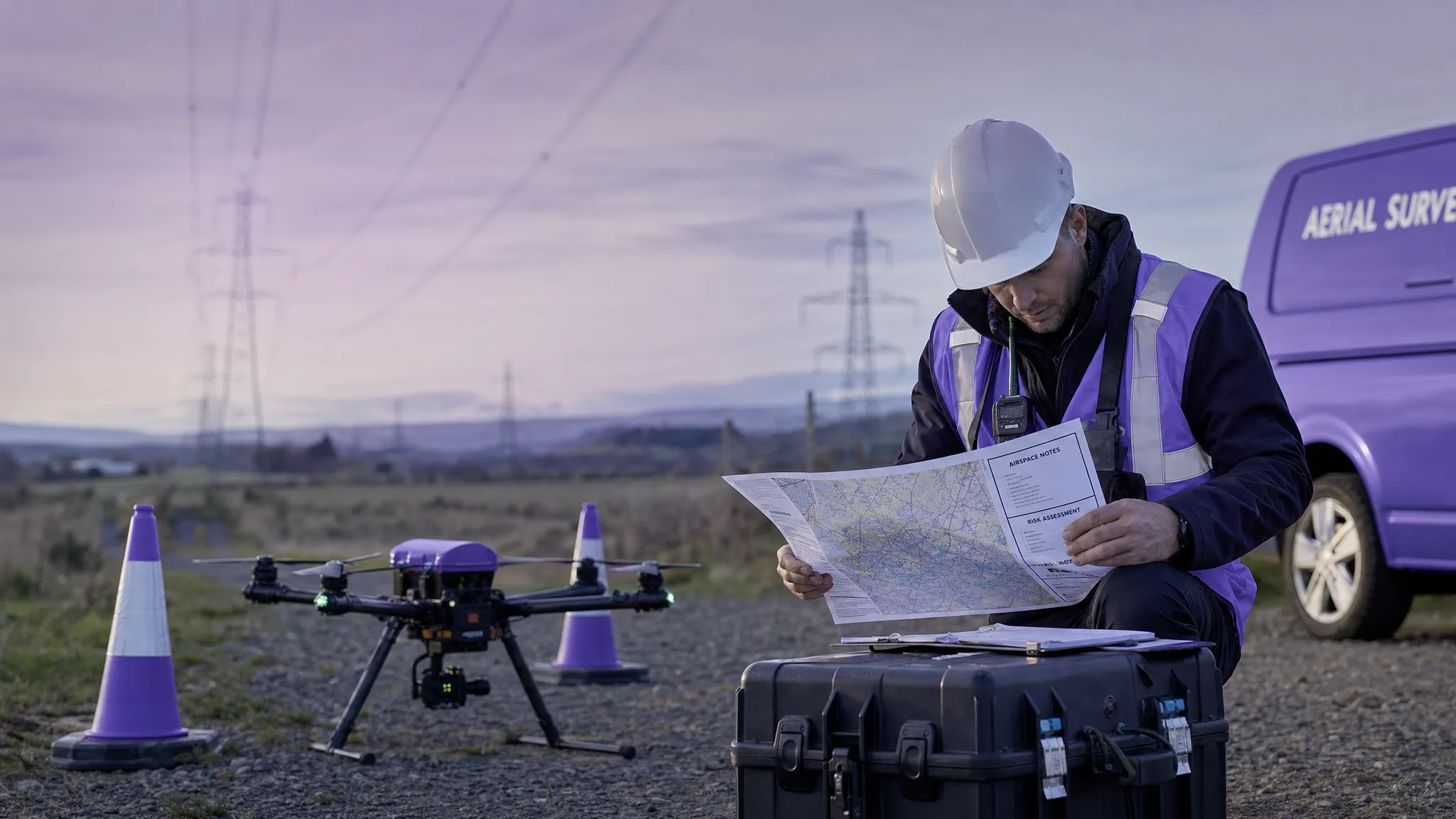
Imagine a utility company wants to inspect a long power line corridor. Some sections run over farmland, some cross minor roads, and one section passes near a village. A short VLOS inspection from a safe take-off point might fit within routine permissions, but a longer linear inspection, especially one involving EVLOS or BVLOS, could require a more detailed Specific category safety case.
A UK SORA approach would not treat the whole route as one simple risk. It would break the operation down into its real operating environment.
The ConOps would define aircraft type, inspection method, route segmentation, crew positions, communications, launch and recovery sites, weather limits and contingency areas. Ground risk would vary depending on whether the aircraft is over open fields, roads, footpaths or built-up edges. Air risk would change if the route passes near an aerodrome, gliding site, helicopter route or temporary airspace restriction.
Mitigations might include route segmentation, road crossing procedures, temporary ground control measures, landowner coordination, visual observers, pre-agreed lost-link behaviour, emergency landing locations, weather thresholds and defined abort points.
The operator should avoid jumping straight to the desired approval. The stronger approach is to show that each segment of the route has been assessed, that the highest-risk sections receive proportionate controls, and that the crew can apply those controls repeatably.
This same logic applies to emergency services. The operational context may be urgent, but the safety case should still be built around defined scenarios, trained roles, repeatable procedures and good records. The goal is not to slow down response. It is to make higher-tempo drone operations defensible and safe.
Common UK SORA mistakes to avoid
One common mistake is starting with the aircraft rather than the mission. Aircraft capability matters, but UK SORA is operation-specific. The same drone can present very different risks depending on where, when and how it is used.
Another mistake is relying too heavily on generic templates. Templates can help with structure, but a CAA reviewer needs to see that the assessment reflects the real operating environment. Copy-and-paste mitigations are weak if they do not explain how they will be implemented on the day.
Operators also underestimate emergency procedures. A short paragraph saying that the pilot will land immediately is rarely enough for complex operations. You need credible actions for loss of link, fly-away, deteriorating weather, uninvolved people entering the area, crewed aircraft conflict, battery warnings and site access problems.
Airspace is another frequent weak point. A planning check carried out days before the flight may not be enough if the environment is dynamic. NOTAMs, temporary restrictions, aerodrome activity and local aviation patterns can change. Your process should make airspace review part of both planning and pre-flight confirmation.
Finally, version control matters. If your ConOps, checklists, aircraft configuration or emergency procedures change, the supporting evidence should remain aligned. Inconsistent documents make it harder to prove that the operation is controlled.
How Dronedesk can support SORA-ready operations
Software will not replace a UK SORA submission, and it will not guarantee CAA approval. The safety argument remains the operator’s responsibility. However, software can make a major difference to how consistently you plan, evidence and record operations.
According to the Dronedesk features page, Dronedesk includes client management, fleet management, team management, airspace intelligence, proximity intelligence, flight planning, flight logging, data reporting, configurable checklists and risk assessments.
Those capabilities are relevant because a SORA-based operation does not end when an authorisation is issued. You still need to plan each job within the approved limits, brief the right people, check the aircraft and site, record the flight, retain evidence and learn from operational experience.
| SORA-related need | Dronedesk feature that can help |
|---|---|
| Keep mission planning consistent | Flight planning, airspace intelligence and proximity intelligence |
| Manage aircraft and equipment records | Fleet management |
| Coordinate pilots and operational roles | Team management |
| Apply repeatable procedures | Configurable checklists |
| Record site-level risk controls | Risk assessments |
| Maintain an operational audit trail | Flight logging and data reporting |
For drone businesses, survey teams, utilities and public safety organisations, the practical challenge is not only getting an authorisation. It is building an operational system that can keep meeting the conditions of that authorisation months later.
Frequently asked questions
What does UK SORA stand for? UK SORA stands for UK Specific Operations Risk Assessment. It is a structured methodology for assessing the risk of drone operations in the Specific category.
Do I need UK SORA for every commercial drone flight in the UK? No. Many commercial flights can be conducted within the Open category or under an existing Operational Authorisation. UK SORA becomes relevant when the operation is higher risk, more complex, or not covered by a standard route.
Is UK SORA the same as an Operational Authorisation? No. UK SORA is a risk assessment methodology. An Operational Authorisation is the permission granted by the CAA, subject to its conditions and limitations.
Can UK SORA be used for BVLOS operations? UK SORA is especially relevant to BVLOS and other complex Specific category operations, but approval depends on the full safety case, mitigations, evidence and CAA assessment.
How long does a UK SORA approval take? Timescales can vary depending on the complexity of the operation, the quality of the submission, the evidence provided and the CAA’s workload. Operators should plan early and avoid treating approval as a last-minute task.
Can software create my UK SORA for me? Software can help organise planning, risk assessments, checklists, logs and evidence, but it does not replace the operator’s responsibility to build a valid safety case and comply with CAA requirements.
Build the operational discipline behind your safety case
UK SORA is ultimately about confidence. The CAA needs confidence that your operation is properly defined, the risks are understood, the mitigations are realistic, and your organisation can deliver them consistently.
If your drone operations are becoming more complex, now is the time to tighten the way you plan, record and evidence every flight. Dronedesk helps operators bring core operational admin into one platform, from planning and risk assessments to fleet, team and flight records, so the paperwork behind safer operations is easier to control.
 How to Review a DJI Flight Log After an Unexpected Event →
 Drone Laws Around the World: A Pre-Flight Research Framework →
 How to Compare Drone Survey Services for Complex Sites →
 How to Start a Drone Mapping Business With a Clear Workflow →
 Class C Airspace Drone Rules for Commercial Flights →
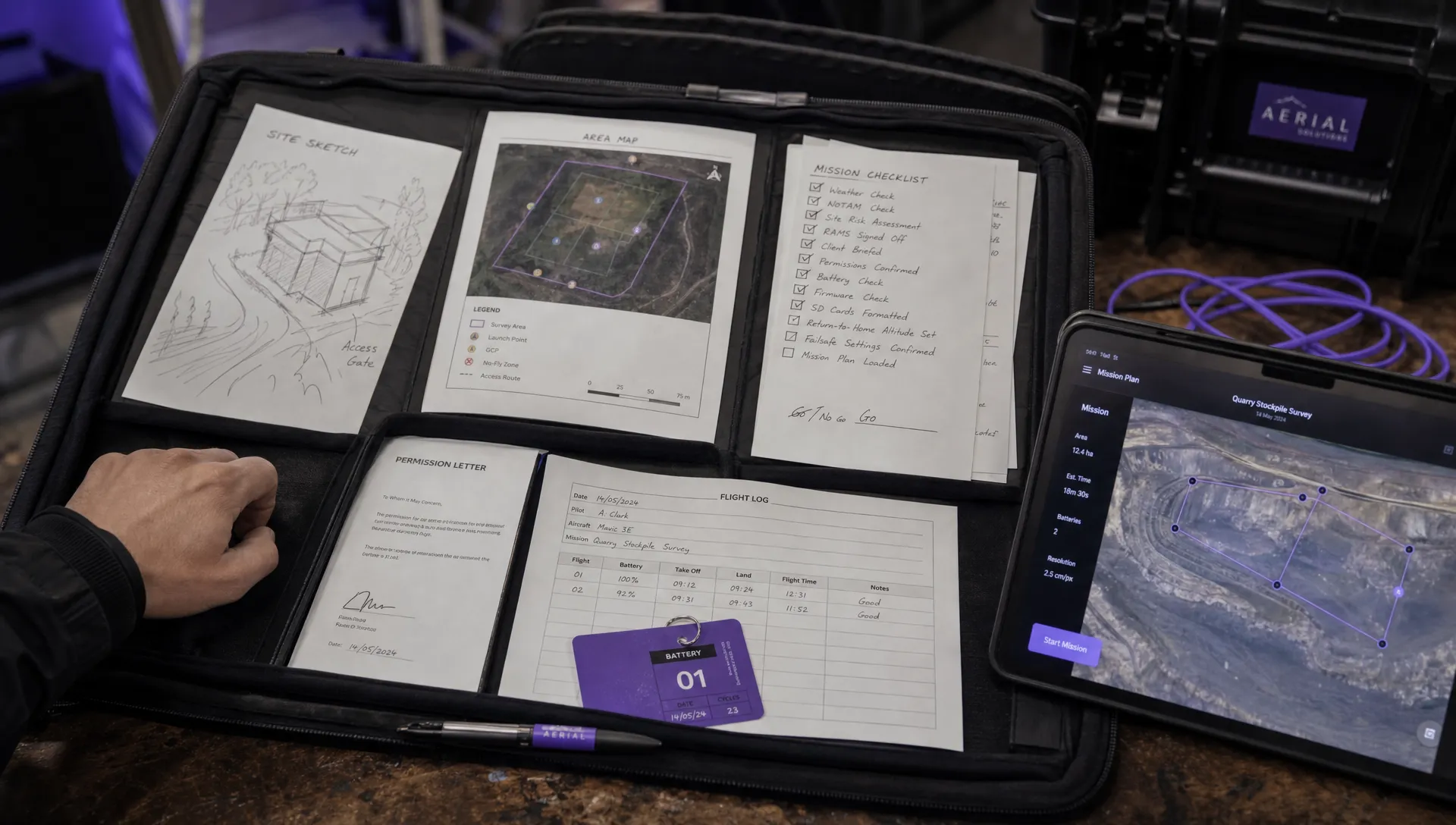 How to Create a Drone Job Pack for Every Mission →
 FAA Small UAS Rule: Key Requirements for Operators →
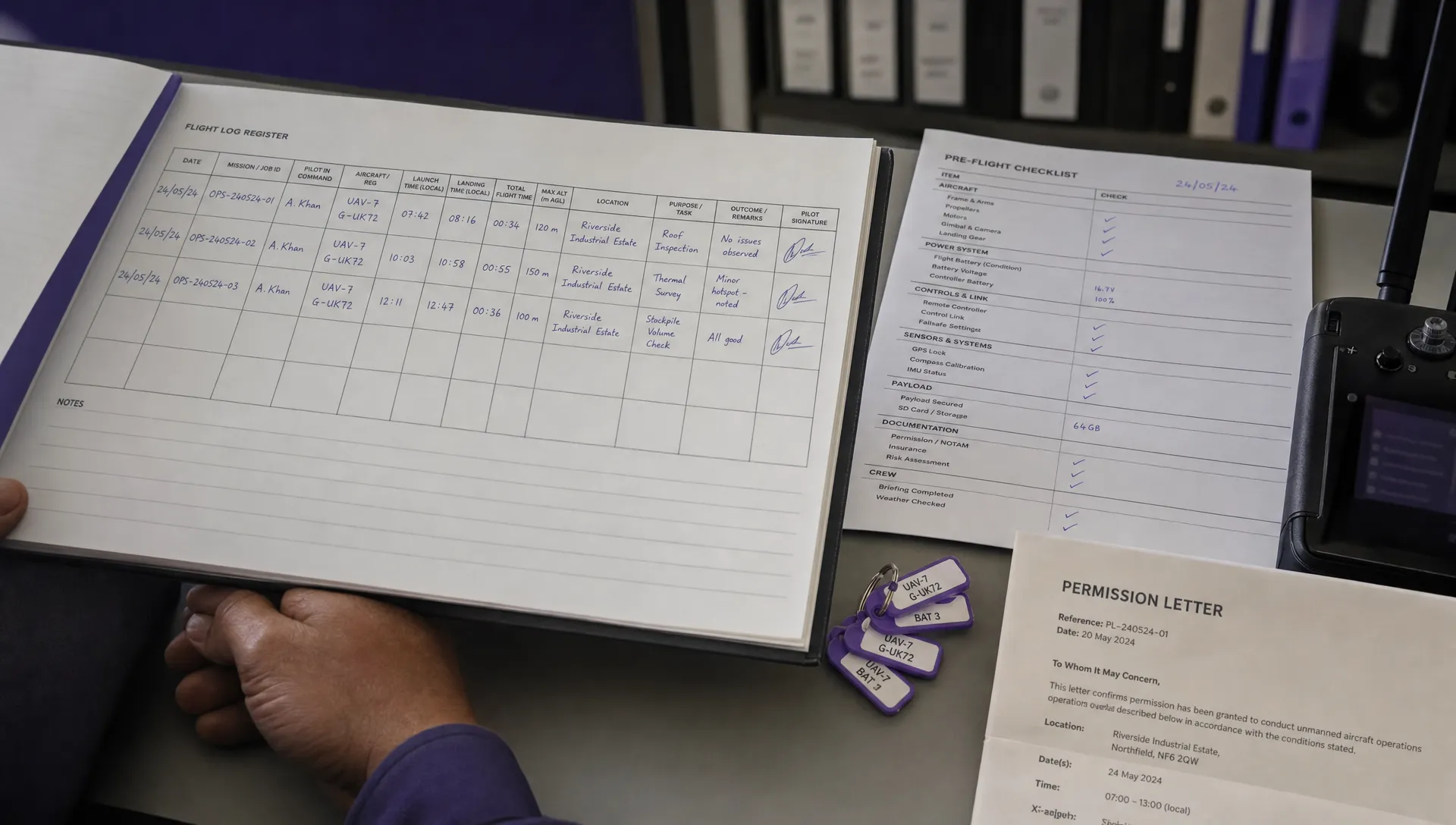 How to Build a Drone Pilot Flight Log That Is Audit Ready →
 FAA Drone Licence Requirements for Commercial Pilots →
 FAA BVLOS Waivers Granted: What Successful Cases Show →