
10 Essential Project Scheduling Techniques for 2025
In the world of professional drone operations, success isn't just about flight skills; it's about flawless execution from start to finish. Behind every successful aerial survey, inspection, or cinematic shot is a meticulously planned schedule. But with so many ways to organize a project, how do you choose the right approach? This guide explores the most effective project scheduling techniques, tailored specifically for the unique demands of drone missions.
We move beyond generic advice to provide actionable insights. You'll learn how to apply methods like the Critical Path Method for complex multi-site surveys or Agile scheduling for fast-paced media projects. Mastering these frameworks will help you enhance safety, improve efficiency, and deliver consistently outstanding results for your clients.
This article provides a practical rundown of ten essential techniques, from classic Gantt charts to advanced Monte Carlo simulations. Each section breaks down the method, explains why it's relevant for drone work, and offers specific tips for implementation. By the end, you'll have a clear understanding of which strategies best fit your operational needs, turning complex plans into streamlined, successful missions.
1. Critical Path Method (CPM)
The Critical Path Method (CPM) is one of the most powerful project scheduling techniques for mapping out complex projects. It identifies the longest sequence of dependent tasks that directly determines the project's total duration. This sequence is the "critical path." Any delay in a task on this path will delay the entire project, making it essential for managers to monitor these activities closely.

This method shines in projects where task order is paramount, such as large-scale construction or complex software rollouts. By calculating the earliest and latest possible start and finish times for each activity, CPM provides a clear roadmap, highlighting which tasks have "float" (can be delayed without affecting the project timeline) and which are critical.
Applying CPM to Drone Operations
Imagine planning a large-scale aerial survey of a commercial real estate development. Your critical path might include: Client Onboarding -> Site Hazard Assessment -> Securing Airspace Authorization -> Data Acquisition Flights -> Data Processing -> Final Deliverable Submission. A delay in securing airspace authorization will push back every subsequent step.
Actionable Tips for Implementation:
- Define All Dependencies: Meticulously map out every task and its relationship to others. Does pre-flight equipment calibration have to happen before the team travels to the site, or can it be done concurrently?
- Focus Resources: Allocate your most experienced pilots and best equipment to the tasks on the critical path to minimize the risk of delays.
- Use Software for Calculation: Manually calculating the critical path is feasible for small projects but becomes difficult quickly. Project management tools like Asana, Jira, or Microsoft Project can automate this process.
- Regularly Review and Update: The critical path is not static. Unforeseen events, like poor weather grounding flights, can change dependencies and create a new critical path. Review it weekly or after significant project events.
2. Program Evaluation and Review Technique (PERT)
The Program Evaluation and Review Technique (PERT) is a statistical project scheduling technique designed for projects where time estimates are uncertain. Instead of a single estimate, PERT uses three for each task: optimistic, pessimistic, and most likely. This approach calculates a weighted average, providing a more realistic probability of project completion time, which is ideal for innovative or R&D-heavy endeavors.

Developed by the U.S. Navy for the Polaris missile program, PERT excels where there is little historical data, like developing a new type of drone sensor or launching a service in an untested market. By acknowledging and quantifying uncertainty, it helps managers assess risk and set more achievable deadlines, moving beyond single-point estimates that can often be misleadingly precise.
Applying PERT to Drone Operations
Consider a project to develop a custom drone-based LiDAR system for mapping dense, unmapped forests. The time needed for sensor integration, software development, and field testing is highly uncertain. A PERT chart would use optimistic (everything works perfectly), pessimistic (major technical hurdles), and most likely scenarios to forecast a probabilistic timeline for delivering the new system.
Actionable Tips for Implementation:
- Engage Subject Matter Experts: Consult experienced engineers, pilots, and data analysts to get accurate optimistic, pessimistic, and most likely time estimates for each task.
- Use the PERT Formula: Calculate the expected time for each activity using the standard formula: (Optimistic + 4×Most Likely + Pessimistic) / 6.
- Combine with CPM: Use PERT to determine task durations and then apply CPM to identify the critical path based on these more nuanced estimates.
- Document Your Assumptions: For each three-point estimate, record the reasoning. This clarifies why the estimates were chosen and helps in future project planning.
3. Gantt Chart
The Gantt chart is one of the most popular and enduring project scheduling techniques, offering a clear visual representation of a project timeline. It's a horizontal bar chart where each bar represents a single task. The length and position of the bar correspond to the task's start date, duration, and end date, providing an at-a-glance overview of the entire project schedule, task dependencies, and overall progress.
This technique is exceptionally useful for managing projects with multiple moving parts and overlapping timelines, such as software development, event planning, and marketing campaigns. Gantt charts make it easy to see how tasks relate to one another and to track progress against the original plan, making them a cornerstone of modern project management.
Applying Gantt Charts to Drone Operations
Consider a comprehensive roof inspection project for a large industrial complex. A Gantt chart would visually map out every phase: Initial Client Consultation -> Pre-flight Planning & Risk Assessment -> On-site Data Capture -> Image Stitching & Analysis -> Report Generation -> Client Debrief. You could see instantly that 'Image Stitching' cannot begin until 'On-site Data Capture' is complete and how a delay in one directly impacts the other.
Actionable Tips for Implementation:
- Start with Milestones: Define your major project deliverables first (e.g., "Preliminary Report Delivered") and then fill in the smaller tasks required to reach them.
- Color-Code for Clarity: Assign different colors to tasks based on the team responsible (e.g., blue for the flight team, green for the data processing team) or by project phase.
- Update Regularly: A Gantt chart is a living document. Update it weekly or as tasks are completed to maintain an accurate picture of the project's status.
- Link Dependent Tasks: Use software to create dependencies between tasks. If the "Secure Flight Permissions" task is delayed, all subsequent tasks like "Execute Flight Plan" will automatically shift, keeping your timeline realistic.
4. Agile Scheduling (Scrum/Kanban)
Agile scheduling is an iterative and flexible project management approach that breaks large projects into smaller, manageable cycles called "sprints." This method prioritizes adaptability and continuous delivery, allowing teams to respond quickly to feedback and changing requirements. Frameworks like Scrum (time-boxed sprints) and Kanban (continuous workflow visualization) are popular implementations of Agile principles.
This technique is ideal for projects where the final outcome isn't fully defined at the start, such as developing a new drone-based data analytics platform or a client-facing flight operations portal. Instead of a rigid, long-term plan, Agile focuses on delivering functional increments of the project frequently, gathering feedback, and adjusting the plan for the next sprint. This continuous improvement cycle ensures the final product truly meets stakeholder needs.
Applying Agile to Drone Operations
Consider developing a new autonomous flight mission for a specific type of infrastructure inspection. An Agile approach would involve breaking the project into two-week sprints. Sprint 1 might focus on basic pathfinding, Sprint 2 on obstacle avoidance, and Sprint 3 on data capture triggers. After each sprint, the team demonstrates a working prototype, gets feedback from stakeholders, and refines the plan for the next cycle.
Actionable Tips for Implementation:
- Define Realistic Sprint Goals: Each sprint should have a clear, achievable objective. For instance, a goal could be "successfully map a 5-acre field with 75% image overlap" rather than a vague "work on mapping software."
- Maintain a Prioritized Backlog: Keep a running list of all desired features and tasks (the backlog), ordered by priority. This ensures the team is always working on the most valuable items first.
- Use Daily Stand-ups: Hold brief, daily meetings where each team member shares what they did yesterday, what they will do today, and any obstacles they face. This promotes transparency and rapid problem-solving.
- Embrace Continuous Improvement: Use sprint reviews to demonstrate progress and retrospectives to discuss what went well and what could be improved. This is key to refining processes and boosting team productivity.
5. Resource-Leveling Scheduling
Resource-Leveling Scheduling is a project scheduling technique used to resolve conflicts when key resources, such as specialized personnel or equipment, are over-allocated. Instead of letting resource constraints derail the project, this method adjusts the schedule, often extending the timeline, to ensure the workload is feasible. It smooths out resource peaks and valleys, creating a more balanced and sustainable work pace.
This approach is crucial in environments where resources are shared across multiple projects, such as a drone services company with a limited number of certified thermographers or high-end LiDAR sensors. By leveling resources, managers prevent team burnout and ensure that critical equipment is available when needed, even if it means non-critical tasks are delayed. For effective resource management, understanding how specialized scheduling software operates, such as yoga studio scheduling software, can offer practical insights into balancing demand and availability.
Applying Resource-Leveling to Drone Operations
Imagine your drone team has two simultaneous projects: a cell tower inspection and a real estate videography shoot, but only one senior pilot qualified for both. Resource-leveling would involve scheduling their tasks sequentially rather than concurrently. The tower inspection might be prioritized, pushing the less time-sensitive real estate shoot back a day to free up the pilot.
Actionable Tips for Implementation:
- Conduct a Capacity Analysis: Before scheduling, get a clear picture of your team's availability and equipment capacity. How many flight hours can each pilot safely log per week? Is your LiDAR scanner already booked for another project?
- Prioritize Ruthlessly: Rank tasks and projects based on deadlines, client value, and strategic importance. Use this hierarchy to decide which activities get priority access to constrained resources.
- Split Tasks When Possible: Break down larger tasks into smaller sub-tasks. While one pilot conducts the data acquisition flight, another can begin logging the previous day's data, making more efficient use of your team.
- Communicate with Stakeholders: If resource leveling extends the timeline, inform your clients and stakeholders immediately. Explain the reasons clearly to manage expectations and maintain trust. To dive deeper, explore these resource allocation strategies.
6. Rolling Wave Planning
Rolling Wave Planning is an iterative project scheduling technique that embraces uncertainty by planning in increments. Instead of detailing an entire project from start to finish, you plan the near-term work in high detail while keeping future work at a high-level summary. As the project progresses and more information becomes available, the next "wave" of work is planned in detail.
This method is ideal for long-term or complex projects where requirements are likely to evolve, such as a multi-year infrastructure inspection program or developing a new proprietary drone sensor. It allows teams to remain agile and adapt to new information or changing client needs without being locked into a rigid, outdated plan.
Applying Rolling Wave Planning to Drone Operations
Consider a two-year contract to monitor the construction progress of a large solar farm. The initial phase, covering the first three months of site clearing and foundation work, would be planned meticulously: flight paths, data deliverables, team schedules, and specific client check-ins. The subsequent phases, like monitoring panel installation or final commissioning, would remain as high-level milestones. As the first phase concludes, you would then detail the plan for the next three months based on actual site progress and refined client expectations.
Actionable Tips for Implementation:
- Define Clear Phases: Break the project into logical time-based or milestone-based waves (e.g., quarterly planning cycles). Define what triggers the detailed planning for the next wave.
- Establish Elaboration Criteria: Determine what level of detail is required for each planning horizon. Near-term tasks need assigned resources and exact dates, while far-term tasks might just be a title and an estimated duration.
- Schedule Regular Planning Reviews: Set up recurring meetings (e.g., monthly or quarterly) to collaboratively plan the upcoming wave in detail. This ensures the plan remains relevant and aligned with project realities.
- Communicate the Approach: Ensure stakeholders understand that the full project plan will be progressively detailed. This manages expectations and highlights the plan's flexibility as a strength, not a sign of incompletion.
7. Fast-Tracking
Fast-tracking is a schedule compression technique where activities that would normally be performed sequentially are overlapped. Instead of waiting for a task to be 100% complete, a subsequent dependent task begins once its predecessor is partially finished. This aggressive approach aims to shorten the overall project timeline but inherently increases risk, as decisions are made with incomplete information.
This technique is most valuable when speed is the top priority, such as meeting a tight client deadline or responding to an emergency. By running phases in parallel, fast-tracking can deliver results much quicker than traditional sequential workflows, making it a powerful tool among modern project scheduling techniques when used judiciously.
Applying Fast-Tracking to Drone Operations
Consider a large-scale agricultural mapping project. Instead of waiting for the entire multi-day data acquisition phase to finish, you could start processing the flight data from Day 1 while the pilots are still capturing data on Day 2. The data processing team can create preliminary orthomosaics and identify potential issues, allowing the flight team to perform corrective re-flights immediately rather than days later.
Actionable Tips for Implementation:
- Overlap Low-Risk Tasks: Identify activities where potential rework is minimal. For instance, start logistical planning for the next site while final data from the current site is still rendering.
- Establish Clear Communication: Constant, real-time communication between the parallel teams is non-negotiable. Use shared dashboards or daily stand-ups to ensure the data processing team knows exactly which datasets are ready.
- Plan for Rework: Build contingency time into the schedule specifically for rework. If the processing team finds a gap in the initial data, the flight team needs the bandwidth to address it without derailing the entire schedule.
- Use Progressive Information: Don't wait for a complete report. Share partial findings and preliminary results as they become available to keep all project phases aligned and moving forward. For more on this, see how to improve operational efficiency.
8. Crashing
Crashing is an aggressive project scheduling technique used to shorten the project timeline by adding more resources to specific tasks. Unlike other methods that rearrange schedules, crashing directly trades money for time. It involves paying for overtime, hiring extra personnel, or deploying more equipment to complete activities on the critical path faster, thereby compressing the overall project duration.
This high-cost, high-reward strategy is reserved for situations where meeting an accelerated deadline is more valuable than the additional expense. Think of time-sensitive product launches or emergency system implementations where every day saved has a significant financial or operational benefit. It's a powerful tool, but one that requires careful cost-benefit analysis before implementation.
Applying Crashing to Drone Operations
Imagine your team is contracted for an urgent post-disaster damage assessment, and the client needs the final report 48 hours earlier than planned. Crashing the schedule could involve paying two extra pilots for overtime to fly simultaneous data acquisition missions or hiring a specialized data processing firm to run the photogrammetry analysis overnight instead of using your in-house team.
Actionable Tips for Implementation:
- Analyze the Cost-Benefit: Before crashing, calculate the exact cost of the extra resources versus the financial gain or penalty avoidance from finishing early. Is paying for overnight data processing cheaper than the late delivery penalty?
- Focus Only on Critical Tasks: Adding resources to non-critical path activities is a waste of money as it won't shorten the project timeline. Identify the tasks that are the true bottlenecks and target them exclusively.
- Monitor for Burnout and Quality: Pushing a team with overtime can lead to fatigue, which increases the risk of mistakes and safety incidents. Ensure quality control checks are enhanced and that team members are not overworked to the point of compromising safety protocols.
- Communicate Clearly: Inform the team why crashing is necessary and what the new expectations are. This transparency can help maintain morale during a high-pressure period and ensure everyone is aligned on the accelerated goals.
9. Monte Carlo Simulation
The Monte Carlo Simulation is an advanced quantitative risk analysis technique that moves beyond single-point estimates for project schedules. Instead of one fixed duration for each task, it uses probability distributions (like a three-point estimate: optimistic, most likely, and pessimistic) and runs thousands of simulations. This process generates a probabilistic forecast of project completion dates, providing a much richer understanding of potential outcomes.

This method is invaluable for high-stakes projects where uncertainty is high, like developing a new drone-based inspection service or planning a mission in a remote, unpredictable environment. It helps answer critical questions like, "What is the probability we finish by our deadline?" or "Which tasks pose the greatest risk to our timeline?"
Applying Monte Carlo Simulation to Drone Operations
Consider a complex, multi-day LiDAR survey in a mountainous region with variable weather. A simple schedule is unlikely to hold. Using a Monte Carlo Simulation, you can model uncertainties like weather delays, equipment malfunctions, and airspace access issues. The output won't be a single date but a probability curve, showing, for example, a 15% chance of finishing in 10 days, a 70% chance of finishing in 14 days, and a 95% chance of finishing within 18 days.
Actionable Tips for Implementation:
- Define Realistic Distributions: For each task, define optimistic, most likely, and pessimistic durations. Base these on historical data from past flights and expert judgment from your team.
- Run Sufficient Iterations: To get a reliable result, run at least 1,000 simulations. Most project management software with this feature, like Primavera P6 or add-ins for Microsoft Project, can handle this easily.
- Identify High-Risk Tasks: The simulation will highlight which tasks have the biggest impact on schedule variability. Focus your risk mitigation efforts on these high-leverage activities.
- Communicate in Probabilities: Instead of giving stakeholders one date, present the results as a range of possibilities. For example, "We are 80% confident the data processing will be complete between July 15th and July 19th."
10. Buffer Management (Theory of Constraints)
Buffer Management is a project scheduling technique derived from the Theory of Constraints (TOC). Instead of padding individual task estimates with safety time, this method consolidates that contingency into strategic "buffers" placed at critical points in the project schedule. This approach protects the project's overall timeline from the inevitable variations and delays in individual tasks.
This method is highly effective for complex projects where resources are constrained and dependencies are tight, such as in software development or large-scale construction. By focusing on managing the buffers rather than micromanaging every task's deadline, project managers can maintain momentum and ensure on-time delivery. It shifts the focus from meeting individual deadlines to protecting the final project due date.
Applying Buffer Management to Drone Operations
Consider a multi-stage infrastructure inspection project involving several drone teams. Instead of giving each team a padded timeline for their inspection segment, you would create a lean schedule based on aggressive but achievable estimates. You would then place a "project buffer" just before the final client deliverable date to absorb any cumulative delays.
Actionable Tips for Implementation:
- Identify the Critical Chain: First, determine the resource-constrained critical path, also known as the critical chain. This is the sequence of tasks that dictates the project's shortest possible duration.
- Place Buffers Strategically: Insert buffers at key points: a project buffer at the end of the critical chain, feeding buffers where non-critical tasks merge into the critical chain, and resource buffers to ensure critical resources are ready when needed.
- Size Buffers Correctly: A common rule of thumb is to make the project buffer about 50% of the total safety time removed from the individual tasks on the critical chain.
- Monitor Buffer Consumption: Track how quickly the buffers are being used. Rapid consumption is an early warning sign that the project is at risk, allowing you to take corrective action before the timeline is compromised.
10-Method Project Scheduling Comparison
| Method | 🔄 Implementation Complexity | ⚡ Resource Requirements | 📊 Expected Outcomes | Ideal Use Cases | ⭐ Key Advantages / 💡 Tips |
|---|---|---|---|---|---|
| Critical Path Method (CPM) | Moderate–High; upfront network modeling and deterministic durations | Moderate; scheduling tools and accurate activity estimates | Clear project completion date; identifies critical vs non‑critical tasks | Construction, manufacturing expansions, product launches | Clear timeline and focus on critical tasks. 💡 Start with a solid WBS and update critical path regularly |
| Program Evaluation and Review Technique (PERT) | High; requires three‑point estimates and probabilistic calculations | Moderate; statistical skills and estimation workshops | Probabilistic durations and confidence intervals for completion dates | R&D, aerospace, defense, uncertain innovative projects | Handles uncertainty with probability estimates. 💡 Use SMEs and (O+4M+P)/6 for expected times |
| Gantt Chart | Low–Moderate; simple bar‑chart creation and updates | Low; common tools (Excel, PM apps) | Intuitive visual timeline for tasks, milestones and progress tracking | Marketing campaigns, events, small–medium projects, releases | Excellent for stakeholder communication. 💡 Color‑code and update weekly |
| Agile Scheduling (Scrum / Kanban) | Moderate; requires new processes, team practices and ceremonies | Moderate; cross‑functional teams, backlog tools and stakeholder engagement | Frequent incremental deliveries, adaptable plans and improved team collaboration | Software development, digital projects, startups, rapid delivery contexts | High adaptability and early value delivery. 💡 Define realistic sprint goals and maintain a prioritized backlog |
| Resource‑Leveling Scheduling | Moderate–High; detailed resource analysis and schedule adjustments | High; resource planning tools, data and coordination across projects | Balanced resource utilization; often extended project duration for feasibility | Multi‑project environments, matrix organizations, large infrastructure | Reduces overallocation and burnout. 💡 Prioritize work by business value and review capacity regularly |
| Rolling Wave Planning | Low–Moderate; iterative progressive elaboration of near‑term work | Low–Moderate; recurring planning cycles and stakeholder input | Flexible, progressively detailed plans that improve over time | Multi‑year programs, enterprise implementations, evolving requirement projects | Low upfront planning while improving accuracy. 💡 Define phase gates and schedule regular replanning |
| Fast‑Tracking | Moderate; careful overlap of dependent activities increases coordination needs | Variable; higher communication and potential rework costs | Shorter schedule at higher risk of rework and coordination issues | Time‑critical launches, emergency recovery, tight construction schedules | Compresses timelines without added resources. 💡 Overlap low‑risk dependencies first and monitor closely |
| Crashing | Low–Moderate; add resources to critical tasks (straightforward concept) | High; increased labor, equipment or overtime costs | Reduced durations with direct cost increases and possible quality/efficiency tradeoffs | Deadline‑driven construction, urgent bug fixes, market deadlines | Predictable time reduction by adding resources. 💡 Perform cost‑benefit and focus only on true critical path tasks |
| Monte Carlo Simulation | High; builds probabilistic models and runs many iterations | High; specialized software, statistical expertise and compute power | Detailed probability distributions and risk quantification for completion dates | Megaprojects, pharma R&D, aerospace, complex IT transformations | Robust uncertainty and risk analysis. 💡 Use historical data and run ≥1000 iterations; validate inputs |
| Buffer Management (Theory of Constraints) | Moderate–High; requires schedule restructuring and disciplined monitoring | Moderate; training, buffer‑tracking and cultural buy‑in | Improved on‑time performance by protecting critical chain buffers | Projects with tight dependencies, CCPM adopters, complex programs | Efficient use of contingency and clearer schedule health. 💡 Place buffers at constraint points and monitor consumption regularly |
Integrating Advanced Scheduling into Your Drone Workflow
Mastering the art of drone operations extends far beyond piloting skills; it requires a sophisticated approach to planning and execution. Throughout this guide, we've explored a powerful arsenal of project scheduling techniques, each offering a distinct advantage for managing complex aerial missions. From the visual clarity of Gantt charts to the risk-aware forecasting of PERT and Monte Carlo simulations, the right method can transform a chaotic project into a streamlined, predictable success.
The key takeaway is that no single technique is a universal solution. A simple real estate shoot might only need a basic Gantt chart, while a large-scale infrastructure inspection across multiple sites could benefit from a hybrid approach, using the Critical Path Method (CPM) to define the core timeline and Resource Leveling to manage pilot and equipment availability. The most effective drone operators are those who can fluidly select, combine, and adapt these strategies to fit the specific demands of each client and environment.
Actionable Next Steps for Implementation
Moving from theory to practice is the most critical step. To begin integrating these advanced scheduling concepts into your daily operations, consider the following actions:
- Audit Your Current Process: Start by analyzing a recent project. Where were the bottlenecks? Did you face unexpected delays? Identify which of the techniques discussed, such as Crashing or Buffer Management, could have mitigated these issues.
- Start Small and Iterate: Choose one new technique to apply to your next small-scale project. For instance, try using a simple PERT analysis to estimate durations for a task with uncertain weather conditions. Document what works and what doesn't, and gradually build your expertise.
- Leverage Technology: Manually implementing methods like CPM or Resource Leveling is cumbersome and prone to error. A dedicated platform is essential. For those looking to streamline their operations, exploring a complete guide to small business scheduling software can provide invaluable strategies for integrating advanced scheduling into your workflow.
The Strategic Advantage of Precision Scheduling
Ultimately, embracing these project scheduling techniques is about more than just finishing on time. It's about building a reputation for reliability, maximizing profitability by optimizing resource use, and ensuring operational safety and compliance. When you can accurately predict timelines, manage risks, and communicate progress with confidence, you elevate your service from a simple commodity to a professional, indispensable solution. This strategic foresight is what separates leading drone service providers from the rest of the pack, enabling you to take on more ambitious projects and deliver exceptional results, every single time.
Ready to implement these powerful scheduling strategies with a tool built for drone professionals? Dronedesk integrates project planning, flight logging, risk assessment, and team management into a single, intuitive platform. Stop juggling spreadsheets and start building more efficient, compliant, and profitable drone operations today by exploring Dronedesk.
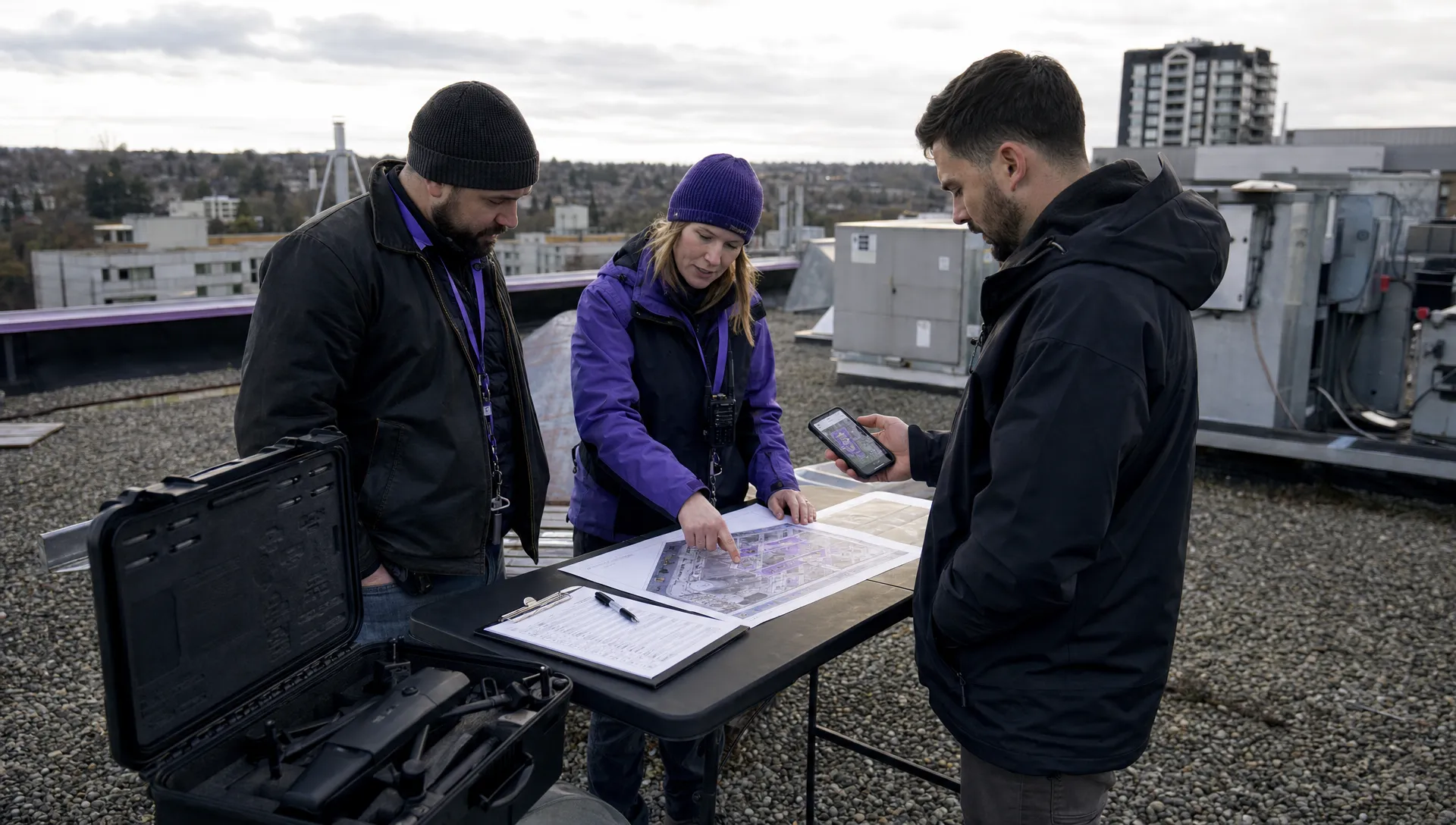 Drone Part 107 Operations: When a Waiver May Be Needed →
 Drone Operating Rules for Managing Contractors and Employees →
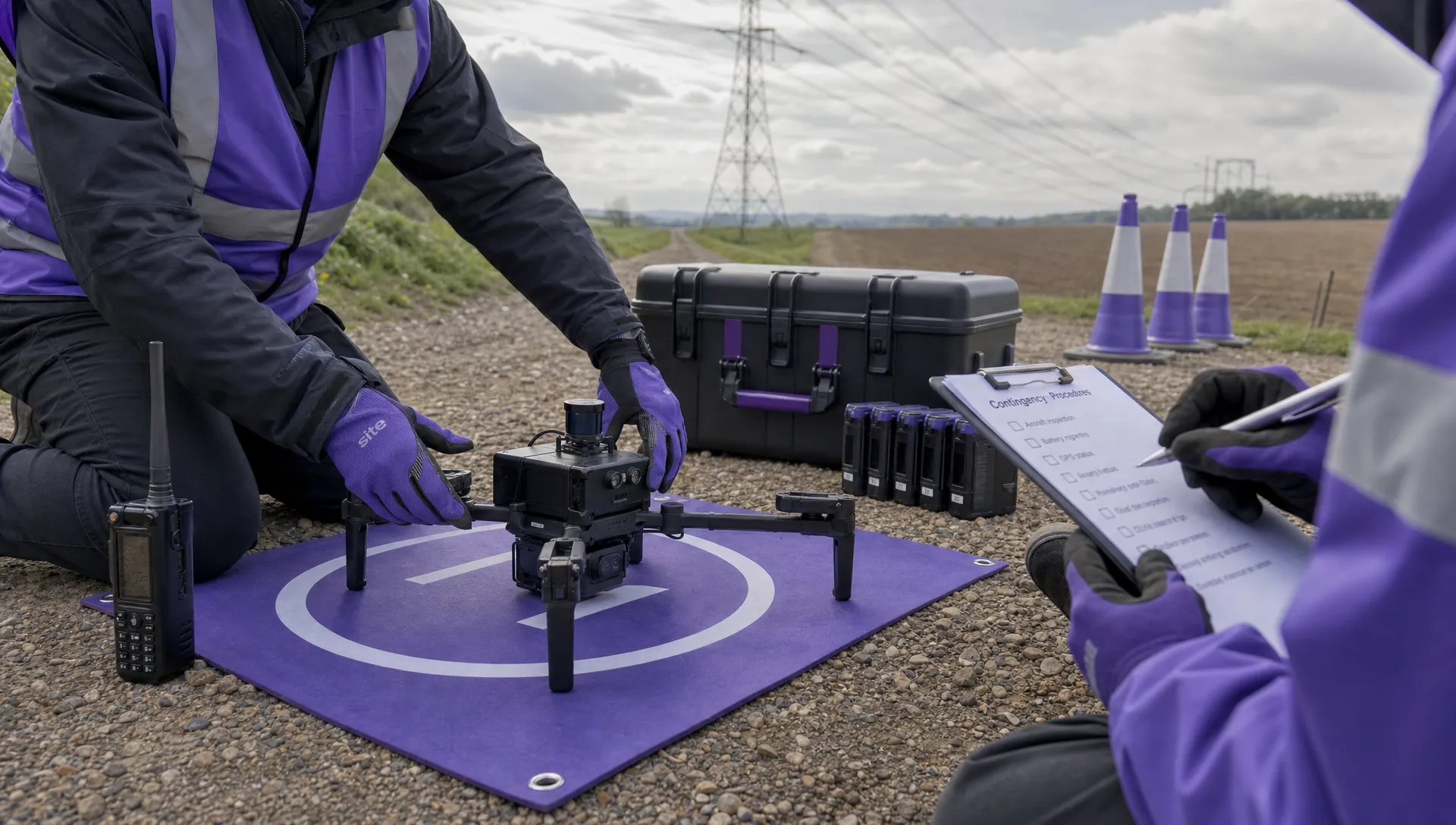 BVLOS Drone Requirements for Building a Safety Case →
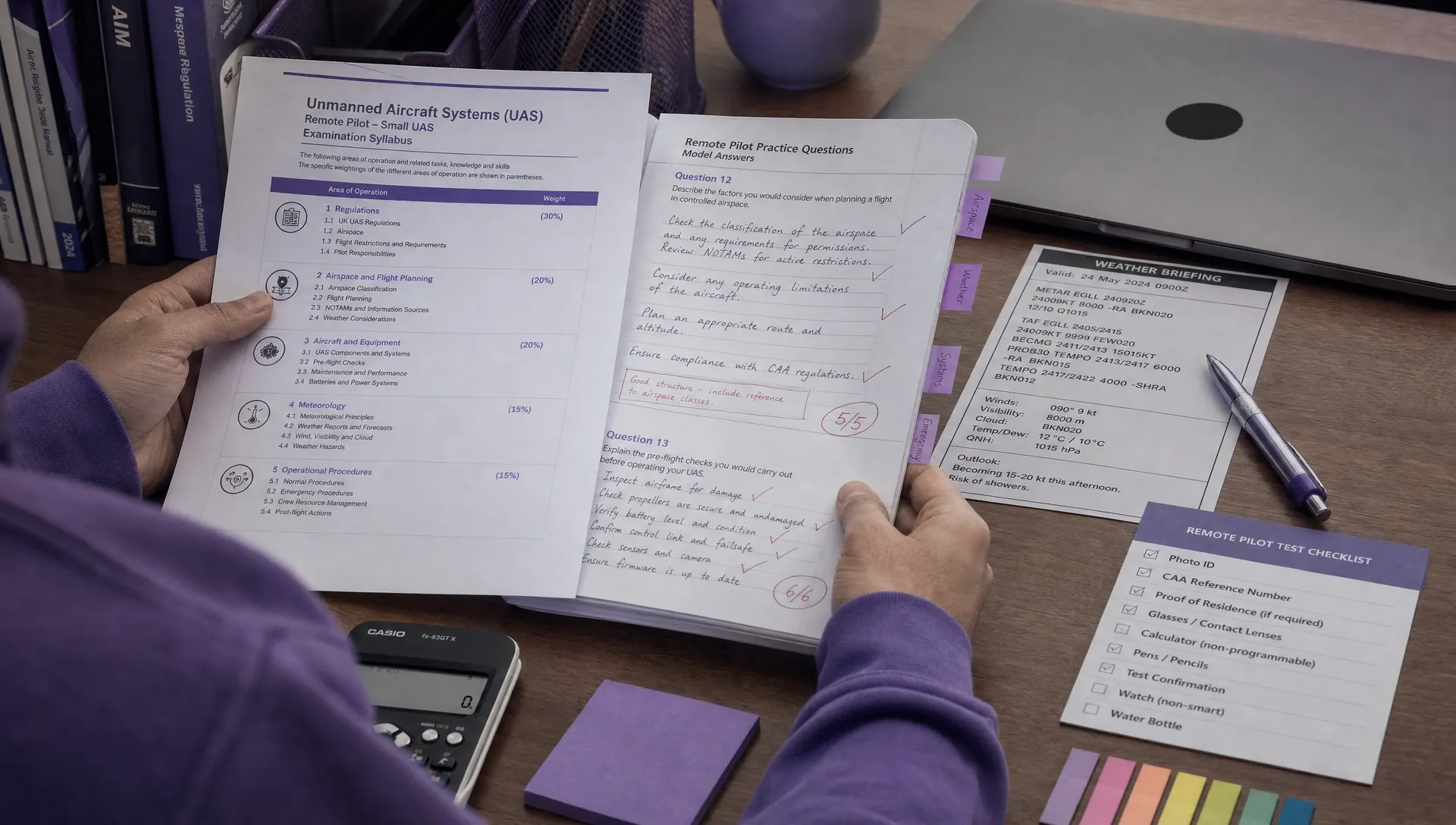 Drone Pilot Test Mistakes That Cost Candidates Marks →
 FAA 107 License vs Part 107 Certificate: What’s the Difference? →
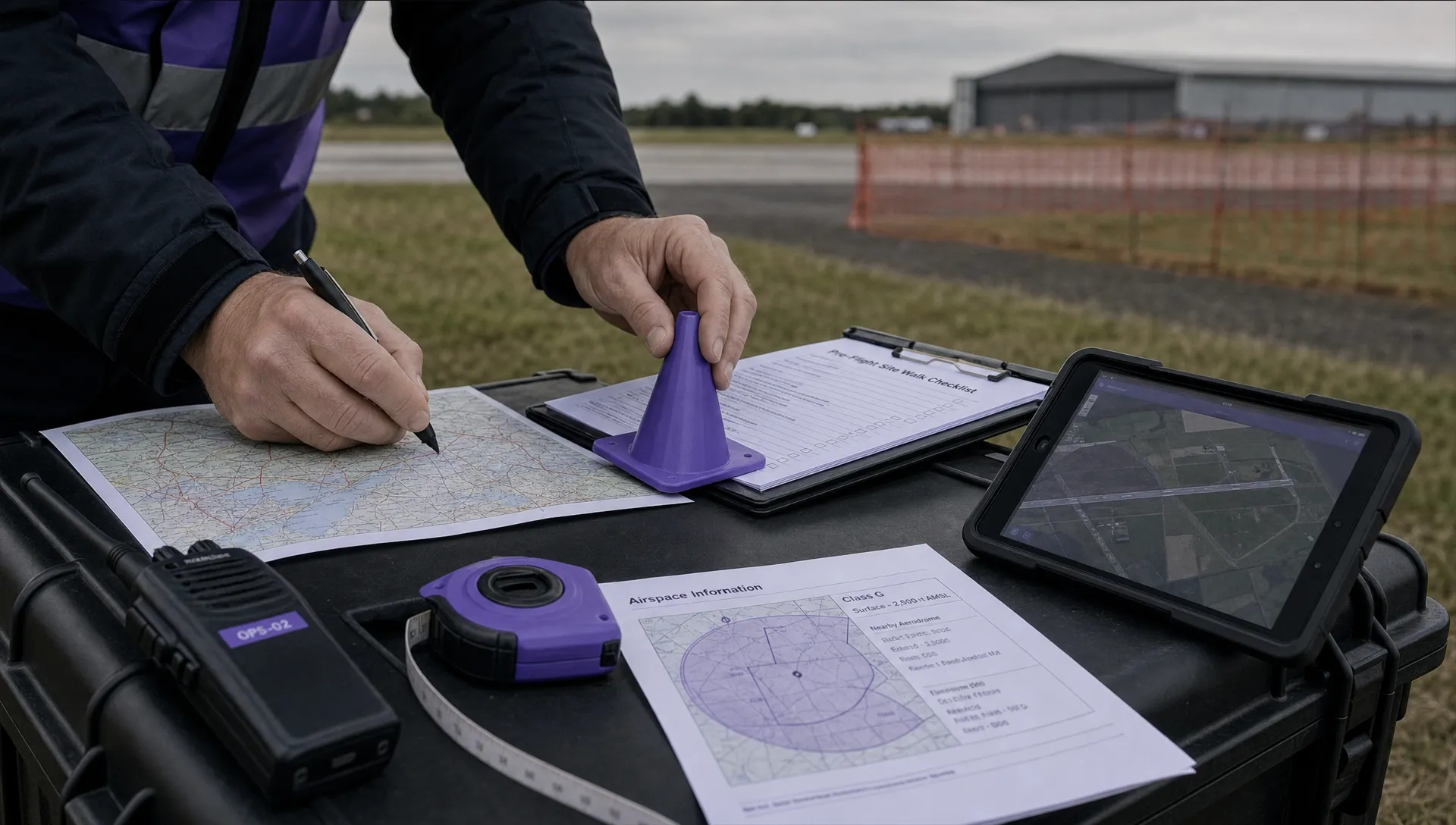 Drone Airport Rules: A Field Checklist for Site Assessments →
 FAA Part 107 Record-Keeping Rules for Commercial Teams →
 How to Review a DJI Flight Log After an Unexpected Event →
 Drone Laws Around the World: A Pre-Flight Research Framework →
 How to Compare Drone Survey Services for Complex Sites →