
BVLOS Drone Meaning and Why It Matters
BVLOS stands for Beyond Visual Line of Sight. In plain English, it means a drone is flown beyond the distance where the remote pilot can maintain direct, unaided visual contact with the aircraft.
That simple definition is important because BVLOS is not just “flying further”. It changes the safety case, the technology requirements, the operational procedures and the regulatory scrutiny around a drone mission. For survey companies, utilities, emergency services and commercial operators, BVLOS is one of the biggest steps between local drone jobs and truly scalable drone operations.
What does BVLOS mean in drone operations?
The practical BVLOS drone meaning is this: the pilot in command can no longer rely primarily on seeing the drone with their own eyes to understand its position, orientation and relationship to hazards.
Instead, the operation depends on a combination of systems and procedures, such as telemetry, command and control links, onboard cameras, airspace information, detect-and-avoid capability, visual observers in some cases, pre-planned routes, contingency procedures and a robust operational authorisation.
BVLOS does not automatically mean the drone is autonomous. A BVLOS flight can still be remotely piloted, with a human making decisions and retaining responsibility. Equally, a drone can fly automated waypoints while remaining within visual line of sight. The two terms describe different things: BVLOS is about where the aircraft is in relation to the pilot’s direct view, while autonomy is about how much of the flight is executed by onboard software.
BVLOS vs VLOS vs EVLOS
Most drone operators start with VLOS flying because it is the foundation of safe small unmanned aircraft operations. BVLOS sits at the other end of the complexity scale.
| Term | Meaning | Typical operational style | Key implication |
|---|---|---|---|
| VLOS | Visual Line of Sight | The remote pilot keeps direct, unaided visual contact with the drone | The pilot can visually monitor position, attitude and nearby hazards |
| EVLOS | Extended Visual Line of Sight | Trained observers help extend awareness beyond the pilot’s own view | Requires clear communication and defined observer procedures |
| BVLOS | Beyond Visual Line of Sight | The drone operates beyond direct visual contact | Requires a stronger safety case, systems, procedures and regulatory approval |
For many organisations, EVLOS can be a useful stepping stone. It introduces the need for team coordination, standard communications and more formal operational control. But BVLOS is a larger leap because the operation must prove that risks can be managed even when direct human eyesight is no longer the primary safety barrier.
Why BVLOS matters
BVLOS matters because it unlocks use cases that are difficult, inefficient or impossible under VLOS constraints. A pilot standing in one location can only cover so much ground while keeping the aircraft visible. That is fine for many local inspections, roof surveys and site progress updates, but it limits the value of drones across long corridors, remote assets and time-critical missions.
For commercial operators, BVLOS can turn drones from a site-by-site data capture tool into an infrastructure-scale capability.
Longer inspections with fewer interruptions
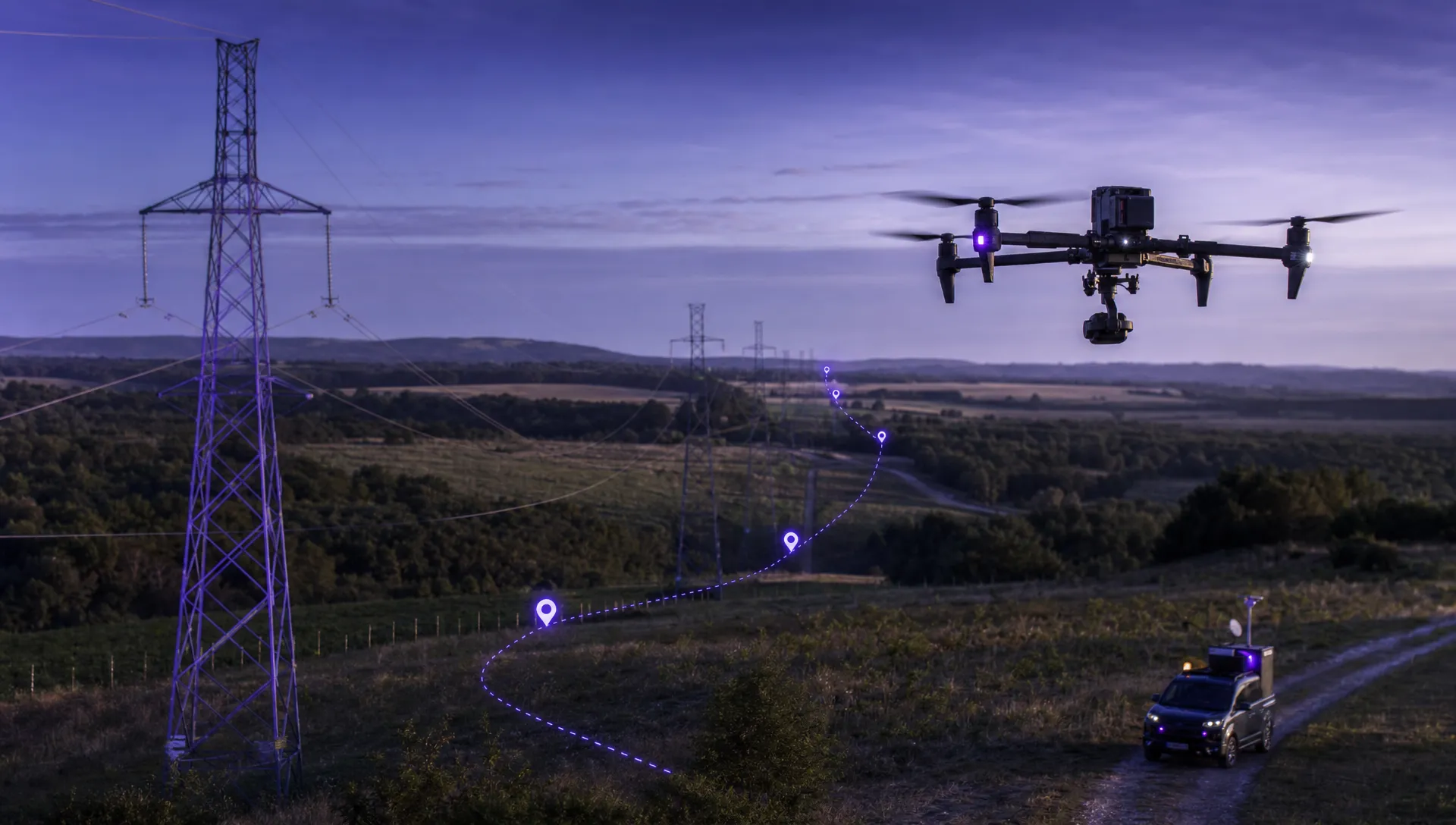
Utilities, rail operators, pipeline owners and highway authorities often need to inspect assets that stretch for miles. Under VLOS rules, a team may need to reposition repeatedly, arrange access to multiple locations and stop the mission whenever terrain, vegetation or distance breaks visual contact.
BVLOS can reduce those constraints. A well-approved BVLOS operation can cover longer linear routes, helping operators inspect powerlines, pipelines, rail corridors, solar farms, wind farms and remote estates more efficiently.
Safer access to hazardous or remote areas
Drone operations already help keep people away from dangerous environments. BVLOS can extend that benefit by allowing aircraft to gather data across areas where sending teams would be slow, costly or risky.
Examples include flood zones, wildfires, industrial sites, offshore infrastructure, mountainous terrain and post-incident scenes. For emergency services, this can support situational awareness before crews enter an area. For utilities, it can help prioritise repairs after storms or outages.
Better response times and operational coverage
In public safety, minutes matter. A BVLOS-capable drone programme may be able to launch from a fixed location, reach an incident area and provide live information before ground teams arrive. This is why drone-in-a-box concepts and remotely operated drone stations are attracting attention from police, fire, rescue and infrastructure security teams.
The benefit is not only speed. It is also repeatability. When a mission can be planned, logged, reviewed and refined, organisations can build a more consistent operational picture over time.
More scalable data collection
Survey companies and asset owners increasingly need repeatable datasets, not just attractive aerial imagery. BVLOS can support scheduled inspection routines, consistent route planning and repeat flights over the same asset network.
That matters for trend analysis. A single inspection tells you what something looked like today. Repeated BVLOS-enabled inspections can help show how vegetation, corrosion, ground movement, storm damage or construction progress changes over time.
What makes BVLOS harder than ordinary drone flying?
The challenge with BVLOS is that it removes one of the simplest safety barriers: the pilot’s direct view of the aircraft and surrounding airspace. To compensate, the operation needs other layers of risk reduction.
| BVLOS challenge | Why it matters | What operators need to consider |
|---|---|---|
| Detecting other aircraft | The pilot may not see crewed aircraft, gliders, helicopters or other drones directly | Airspace assessment, detect-and-avoid methods, observers or electronic conspicuity where applicable |
| Maintaining control | The drone may be far from the pilot or ground control station | Command and control link reliability, coverage analysis and lost-link procedures |
| Navigating obstacles | Terrain, structures, cables and vegetation may not be visible to the pilot | Accurate mapping, route planning, obstacle data and contingency routes |
| Managing emergencies | A fault may occur beyond direct visual contact | Pre-defined emergency actions, safe landing areas and clear escalation procedures |
| Proving compliance | Regulators need evidence that risks are understood and controlled | Risk assessment, operating procedures, training records, logs and maintenance evidence |
This is why BVLOS is as much an operational management challenge as a technology challenge. Better sensors matter, but they are only one part of the picture. Regulators and clients also want to see disciplined planning, competent crews, maintained aircraft, clear documentation and evidence that lessons are captured after each mission.
BVLOS regulation: permission-first, not equipment-first
BVLOS operations are heavily dependent on jurisdiction. In the UK, drone operators should start with the Civil Aviation Authority’s drone guidance and the relevant operational authorisation requirements for their activity. In most cases, routine BVLOS is not something a commercial operator can simply decide to do because they have bought a capable aircraft.
The regulatory question is not “Can the drone technically fly that far?” It is “Can the operator demonstrate that the operation is safe for the airspace, people, property and environment involved?”
That usually means considering factors such as:
- The class and complexity of the airspace
- The ground risk beneath the route
- The reliability of command and control systems
- How other airspace users will be detected and avoided
- Crew training, roles and communications
- Emergency and contingency planning
- Maintenance, logging and operational records
Across many markets, regulators are moving towards more scalable BVLOS frameworks, especially for infrastructure inspection, emergency response and delivery. The direction of travel is clear, but approval still depends on the specific operation, location, aircraft, systems and operator competence.
What BVLOS means for different types of operators
BVLOS is not equally relevant to every drone business. A real estate photographer or local roof surveyor may never need it. But for organisations managing large areas, long assets or urgent response tasks, it can change the economics of drone use.
Survey companies
For survey and mapping teams, BVLOS can support larger area coverage and more repeatable data capture. It may be valuable for quarries, construction corridors, environmental monitoring, coastal surveys and agricultural estates.
The key is data consistency. A survey business preparing for BVLOS should think beyond the aircraft and payload. It needs standardised flight planning, documented client requirements, repeatable checklists and clear records that show how each mission was conducted.
Utility companies
Utilities are one of the clearest BVLOS use cases. Power distribution networks, pipelines, water infrastructure, telecoms assets and renewable energy sites often cover wide areas with difficult access.
BVLOS can help utilities inspect more assets with fewer site moves, identify problems faster and reduce the need to send people into hazardous areas. However, these operations often involve complex airspace, critical infrastructure and high expectations around safety governance, so the operational framework must be mature.
Emergency services
For police, fire and rescue, ambulance services and disaster response teams, BVLOS can provide earlier visibility of an incident. A drone may be able to assess a fire perimeter, search a riverbank, check a blocked route or monitor a hazardous area while crews are still travelling.
The challenge is that emergency work is dynamic. BVLOS planning for public safety must account for changing airspace, moving people, unpredictable hazards and the need for fast decision-making under pressure.
How to prepare for BVLOS, even before you apply
Not every organisation is ready for BVLOS today. But many can start building the habits and systems that regulators, insurers and enterprise clients will expect to see.
Define the operational case clearly
A strong BVLOS proposal starts with a specific problem. “We want to fly BVLOS” is not enough. A better starting point is: “We need to inspect 40 km of powerline after storm events without repeatedly relocating ground teams.”
The clearer the use case, the easier it is to identify the route, aircraft, crew, hazards, airspace constraints, data requirements and safety mitigations.
Build mature risk assessment processes
BVLOS depends on credible risk management. If your organisation is still relying on copied templates, incomplete site notes or inconsistent pre-flight checks, BVLOS will expose those weaknesses quickly.
A practical first step is to improve how you assess ordinary drone missions. Dronedesk’s guide on building a drone flight risk assessment that works is a useful starting point for operators who want a more structured approach before moving towards more complex permissions.
Get fleet, crew and maintenance records in order
When operations scale, spreadsheets often become fragile. Aircraft maintenance, pilot currency, batteries, insurance, clients, jobs, checklists and flight logs all need to stay connected.
This becomes even more important when preparing for BVLOS because the operator must be able to evidence competence, readiness and control. If you are expanding from ad hoc drone jobs to multi-aircraft operations, the drone fleet management guide explains where operational management starts to outgrow simple admin tools.
Treat operational software as part of readiness
Software does not grant BVLOS permission, and it does not replace regulatory approval. But it can help create the operational discipline that complex drone programmes require.
Dronedesk brings together core drone operations management functions including client management, fleet management, team management, airspace intelligence, proximity intelligence, flight planning, flight logging, data reporting, configurable checklists and risk assessments. You can see the current platform capabilities on the Dronedesk features page.
For operators aiming at BVLOS in the future, the value is in creating a reliable record of how work is planned, approved, flown, logged and reviewed.
Common misconceptions about BVLOS
BVLOS is often discussed as if it is just a range upgrade. That can lead to unrealistic expectations.
BVLOS is not just a bigger battery. Endurance helps, but range is only useful if the operation can manage airspace, control links, ground risk and emergencies.
BVLOS is not the same as autonomous flying. A BVLOS aircraft may still be actively monitored and controlled by a remote pilot.
BVLOS does not remove the need for pilots. It often increases the need for trained people, clear roles and strong procedures.
BVLOS is not only for delivery drones. Infrastructure inspection, emergency response, environmental monitoring and surveying are among the strongest commercial use cases.
BVLOS approval is not one-size-fits-all. A rural pipeline inspection and an urban delivery route have very different risk profiles.
Frequently Asked Questions
What does BVLOS mean for drones? BVLOS means Beyond Visual Line of Sight. It describes a drone flight where the aircraft goes beyond the remote pilot’s direct, unaided visual range, so the operation relies on additional systems, procedures and approvals.
Is BVLOS legal in the UK? BVLOS can be possible in the UK, but it generally requires appropriate authorisation from the Civil Aviation Authority and a safety case suited to the operation. Operators should check current CAA guidance before planning any BVLOS activity.
What is the difference between BVLOS and VLOS? VLOS means the pilot can see the drone directly throughout the flight. BVLOS means the drone is beyond that direct visual range, which creates additional requirements for airspace awareness, control links, contingency planning and regulatory approval.
Do you need special equipment for BVLOS? Usually, yes, but equipment alone is not enough. BVLOS may require reliable command and control links, navigation systems, detect-and-avoid measures, telemetry, emergency procedures and documented operational controls.
Why is BVLOS important for commercial drone operators? BVLOS allows drones to cover longer distances, inspect larger assets, reach hazardous areas and support faster response. It is a key step towards scalable drone programmes in sectors such as utilities, surveying, logistics and emergency services.
Bringing BVLOS thinking into today’s operations
BVLOS is one of the most important concepts in the future of commercial drone work, but it rewards operators who build strong foundations first. Even if your current missions are VLOS, the same disciplines matter: accurate planning, clear risk assessments, maintained fleets, competent teams, reliable checklists and complete flight records.
For growing drone teams, now is the time to professionalise the admin behind the aircraft. Dronedesk helps operators manage the planning, safety and reporting workflows that sit around every flight, giving teams a more organised way to run safe and compliant drone operations as their work becomes more complex.
 Drone Manufacturers Compared for Enterprise Operations →
 How to Prepare for the Drone Licence Test →
 How to Choose a Drone Mapping Service for Your Project →
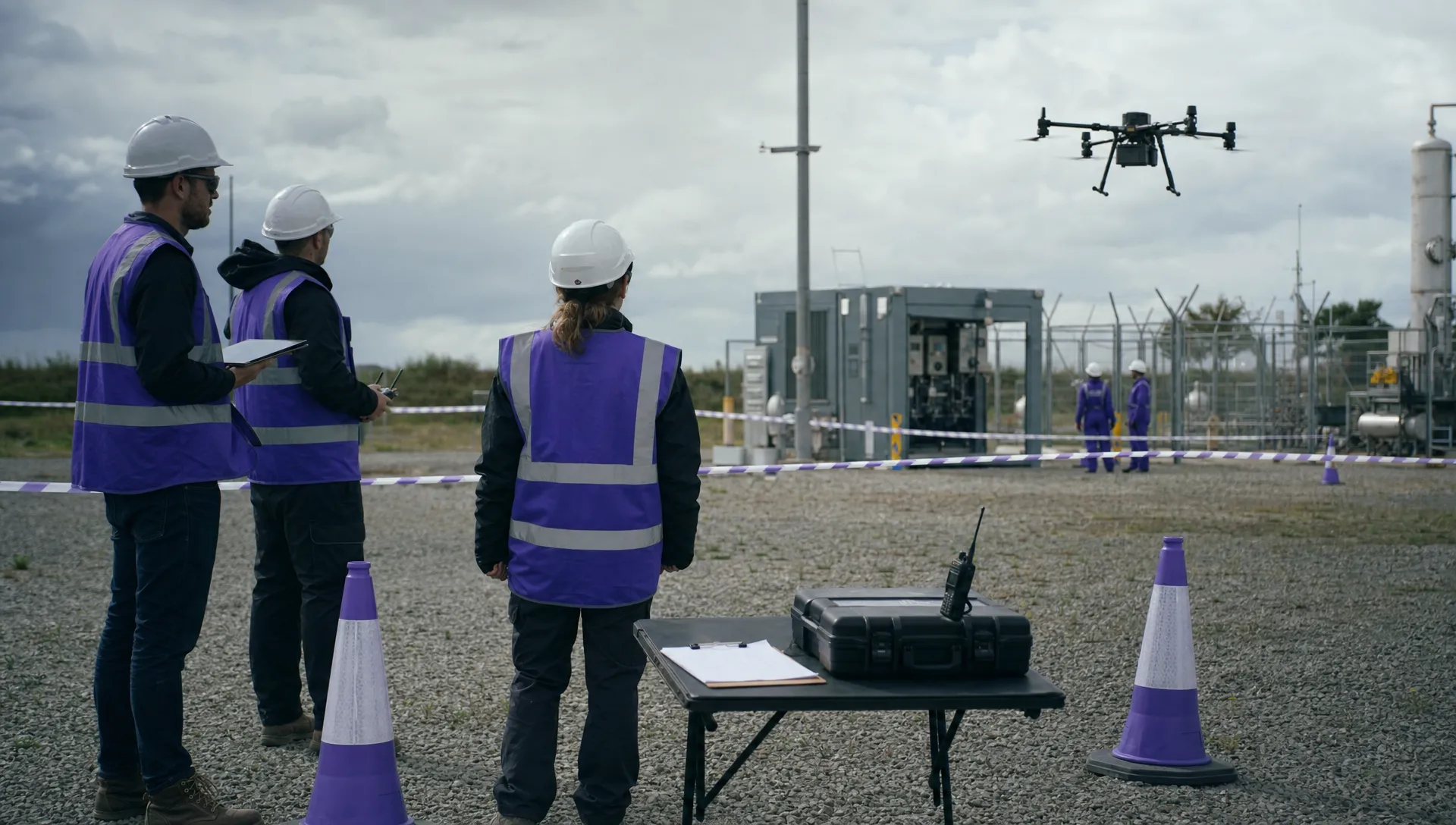 Drone Safety Rules That Every Commercial Team Needs →
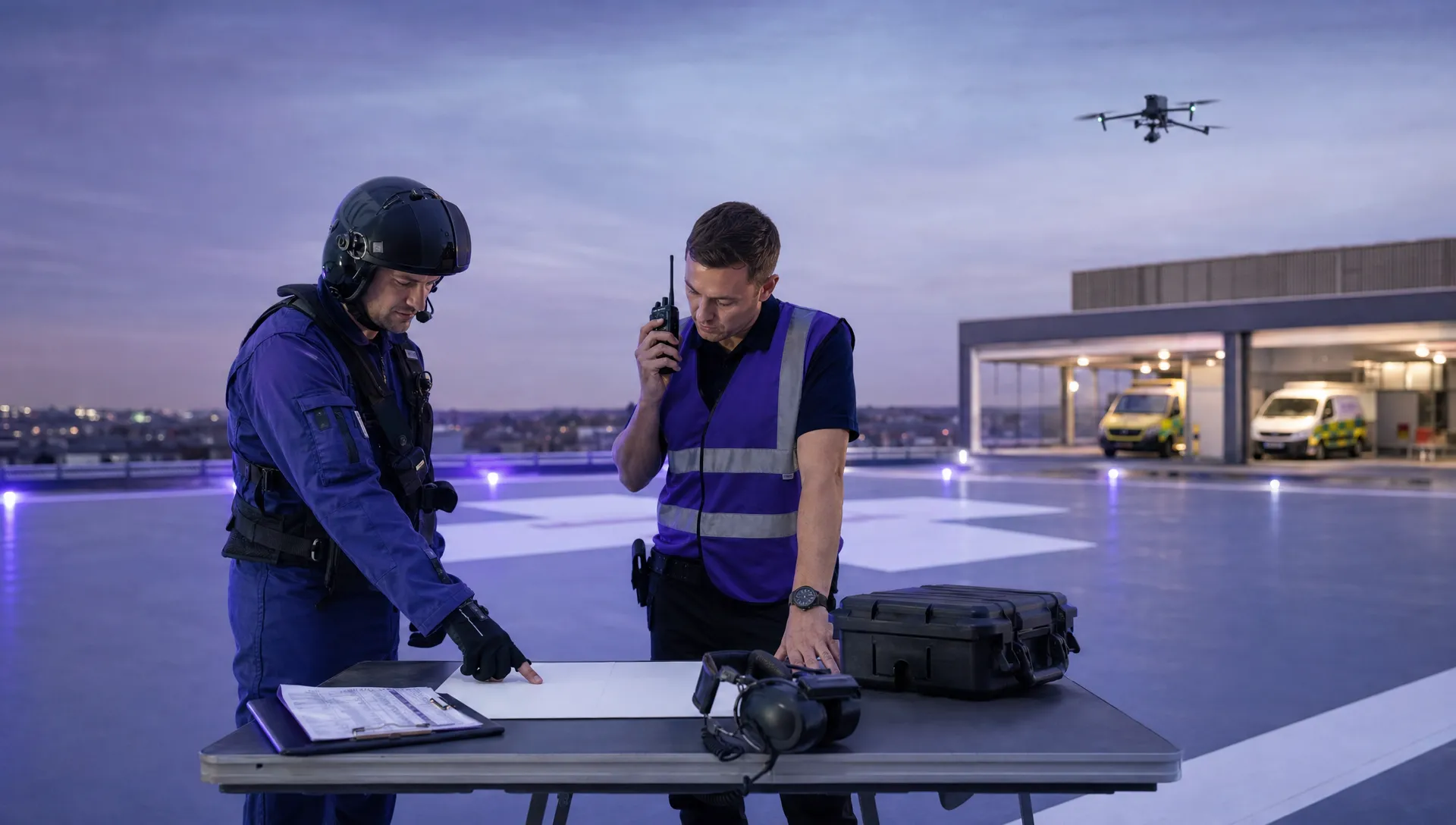 Airport Drone Rules: How to Plan Flights Without Surprises →
 FAA Part 107 Licence: Your Step-by-Step Application Guide →
 How to View DJI Flight Logs Online Safely →
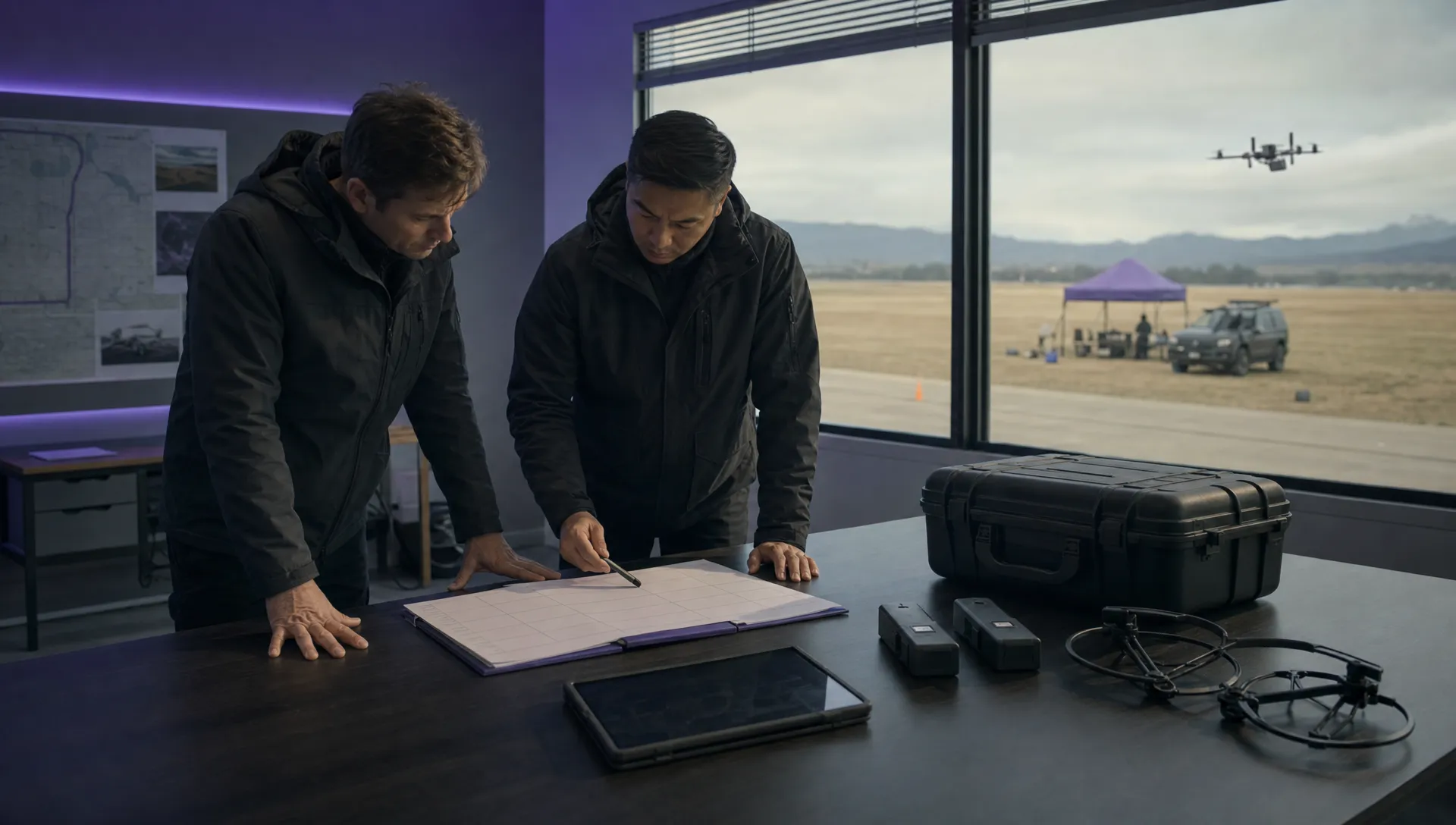 What Part 107 Covers Beyond the Pilot Certificate →
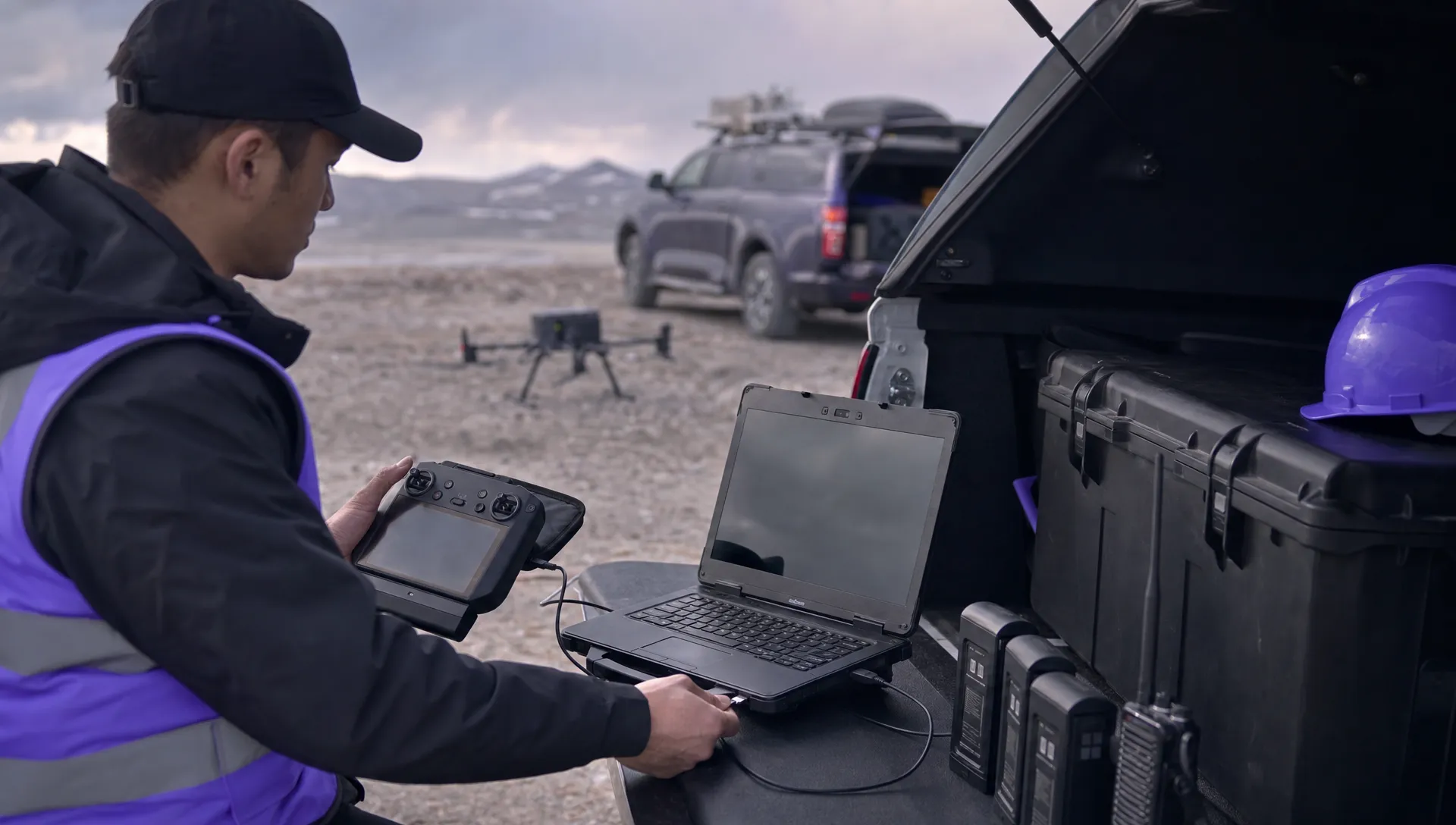 How to Download and Read a DJI Flight Log →
 Drone Videography Planning Tips for Professional Crews →