
Drone Operation Regulations Explained for Businesses
Using drones for surveys, inspections, emergency response or asset management is now a normal business activity. The regulatory burden, however, is still easy to misunderstand. In the UK, drone operation regulations are primarily risk-based. A paid job is not automatically more restricted than a recreational flight, but a business is expected to plan, insure, document and govern its operations to a professional standard.
This guide focuses on UK requirements for business drone use in 2026. If you operate outside the UK, the structure will still help, but you should map each point to your local aviation authority, privacy law and insurance requirements. It is also not legal advice. Treat it as a practical framework for building safer, more auditable operations.
The UK drone regulatory framework in one page
The UK Civil Aviation Authority (CAA) regulates civil drone use. Its main public guidance is available through the CAA drones portal, while more detailed operational guidance sits in CAP 722. For day-to-day flying rules, the Drone and Model Aircraft Code remains essential reading for remote pilots and managers.
The core idea is simple: the rules depend on the risk created by the flight. The CAA groups unmanned aircraft system (UAS) operations into three categories.
| Category | What it means | Typical business examples | Usual compliance route |
|---|---|---|---|
| Open | Lower-risk flying within defined limits | Rural mapping, simple site progress capture, low-risk inspections away from uninvolved people | Operator registration, pilot competence, Open category rules, no CAA Operational Authorisation if all limits are met |
| Specific | Operations that exceed Open category limits or create higher risk | Urban inspections, flights close to uninvolved people, some complex industrial sites, some emergency service deployments, BVLOS concepts | CAA Operational Authorisation or other accepted approval route, supported by risk assessment, procedures and competence evidence |
| Certified | Highest-risk operations, closer to manned aviation standards | Carrying people, certain dangerous goods operations, complex autonomous or high-risk operations | Aircraft, operator and pilot certification requirements, generally outside routine business drone use |
The important business point is that the category depends on the flight profile, not just the client, invoice value or whether the work is commercial. A roof survey for a paying client may be Open category if it meets the limits. A free community event flight could be Specific category if it involves unacceptable proximity to crowds.
What the Open category allows, and where it stops
The Open category is where many routine business flights can happen, provided the operation stays within the rules. It is useful because it avoids the need for a CAA Operational Authorisation, but it is not a shortcut for complex work.
In practice, an Open category operation usually means the remote pilot keeps the drone within visual line of sight, stays at or below 120 metres (400 feet) above the surface unless a specific exception applies, avoids restricted airspace without permission, follows the relevant separation distances from uninvolved people, and operates an aircraft that fits the applicable subcategory rules.
The Open category is split into A1, A2 and A3 subcategories. A1 generally covers lower-risk operations with lighter aircraft, although pilots must still avoid unsafe overflight of uninvolved people. A2 allows some operations closer to people, subject to aircraft and competence requirements. A3 is for operations far away from uninvolved people and certain built-up or recreational areas.
For businesses, the Open category works best when you can design the job around the rules. For example, a survey company may schedule a mapping flight before a site opens, create a controlled take-off area, brief site personnel so they are involved rather than uninvolved, and keep the aircraft well away from public roads. That kind of planning can keep a simple job simple.
Where businesses get into trouble is trying to force a higher-risk task into the Open category. If the flight requires operating close to members of the public, beyond visual line of sight, in a dense urban environment or in a way that exceeds the relevant aircraft limits, it is time to assess whether the Specific category applies.
When a business moves into the Specific category
The Specific category is where most professional complexity begins. It covers operations that cannot be safely or legally completed within Open category limits. This does not mean the flight is impossible. It means the operator needs a stronger permission, procedure and evidence framework.
A business may move into the Specific category when it needs to fly closer to uninvolved people than the Open category permits, operate heavier or more capable aircraft in constrained environments, perform BVLOS operations, work around complex industrial hazards, or use an operating model that requires a documented safety case.
For many UK organisations, the route involves an Operational Authorisation from the CAA. The application may rely on a predefined risk assessment route where suitable, or on a more detailed operating safety case. The operator will need to show that the aircraft, pilots, procedures, emergency planning and risk controls are appropriate for the proposed work.
Pilot competence matters here. The General VLOS Certificate (GVC) is commonly used as evidence of remote pilot competence for certain Operational Authorisation routes, but businesses should always check the current CAA requirements for their intended operation. A certificate alone is not the whole system. The regulator and your clients will also expect evidence that pilots understand company procedures, site hazards and emergency actions.
Regulatory duties businesses should not treat as admin
A compliant drone operation is not just a pilot with a certificate and a drone with enough battery. It is a chain of decisions that can be explained afterwards. That matters for safety, client confidence, insurance, audits and incident response.
Registration and accountability
Most business drone operators need to register as an operator with the CAA and display the Operator ID on the aircraft they are responsible for. Remote pilots may also need a Flyer ID or additional competence evidence, depending on the aircraft and operation.
In a company setting, you should be clear about who is the accountable UAS operator, who is the remote pilot for each flight, who approves higher-risk jobs, and who is responsible for aircraft maintenance records. This becomes especially important when a survey firm, utility company or emergency service has multiple pilots and shared aircraft.
Risk assessment and operating procedures
Risk assessment is the practical bridge between the rulebook and the job site. It should cover airspace, ground risk, nearby people, roads, railways, structures, weather, electromagnetic interference, wildlife, public access, emergency landing options and loss-of-control scenarios.
A weak risk assessment says the pilot will maintain visual line of sight and avoid people. A useful risk assessment explains how that will be achieved at that location, on that day, with that aircraft and crew. If you need a practical structure, Dronedesk has a separate guide on how to build a drone flight risk assessment that works.
Airspace, land access and local permissions
Airspace checks are not optional. Businesses need to identify flight restriction zones, controlled airspace, temporary restrictions, NOTAMs, protected sites and any local restrictions that affect the job. If the operation is near an aerodrome, within a restricted area or close to sensitive infrastructure, you may need permission from the relevant authority before flying.
Land access is a separate issue. Aviation rules may allow a flight, but you still need permission to take off and land from private land. Local byelaws, client site rules and public land restrictions can also affect where you operate.
Insurance
Business drone operations should have appropriate aviation insurance. In the UK, commercial drone operations are generally expected to meet applicable aviation insurance requirements, commonly including third-party liability cover. Do not assume a standard public liability policy covers UAS activity unless the policy explicitly says so.
Insurance also links back to compliance evidence. After an incident, an insurer may ask for the flight plan, risk assessment, pilot competence record, maintenance log, weather assessment and client brief. If those records are scattered across emails, spreadsheets and messaging apps, the operational risk becomes an administrative risk too.
Privacy and data protection
Drones often collect images, video, thermal data or location data that can identify people, vehicles, homes or working patterns. That brings privacy obligations into scope, particularly for survey companies, utilities and public bodies.
The UK GDPR and Data Protection Act 2018 may apply if personal data is captured or processed. The Information Commissioner's Office provides guidance on video surveillance and data protection, which is relevant when drones are used for monitoring, inspection or evidence gathering.
A sensible business approach includes data minimisation, clear client instructions, secure storage, defined retention periods, access control and a plan for handling subject access requests where relevant. For higher-risk deployments, a data protection impact assessment may be appropriate.
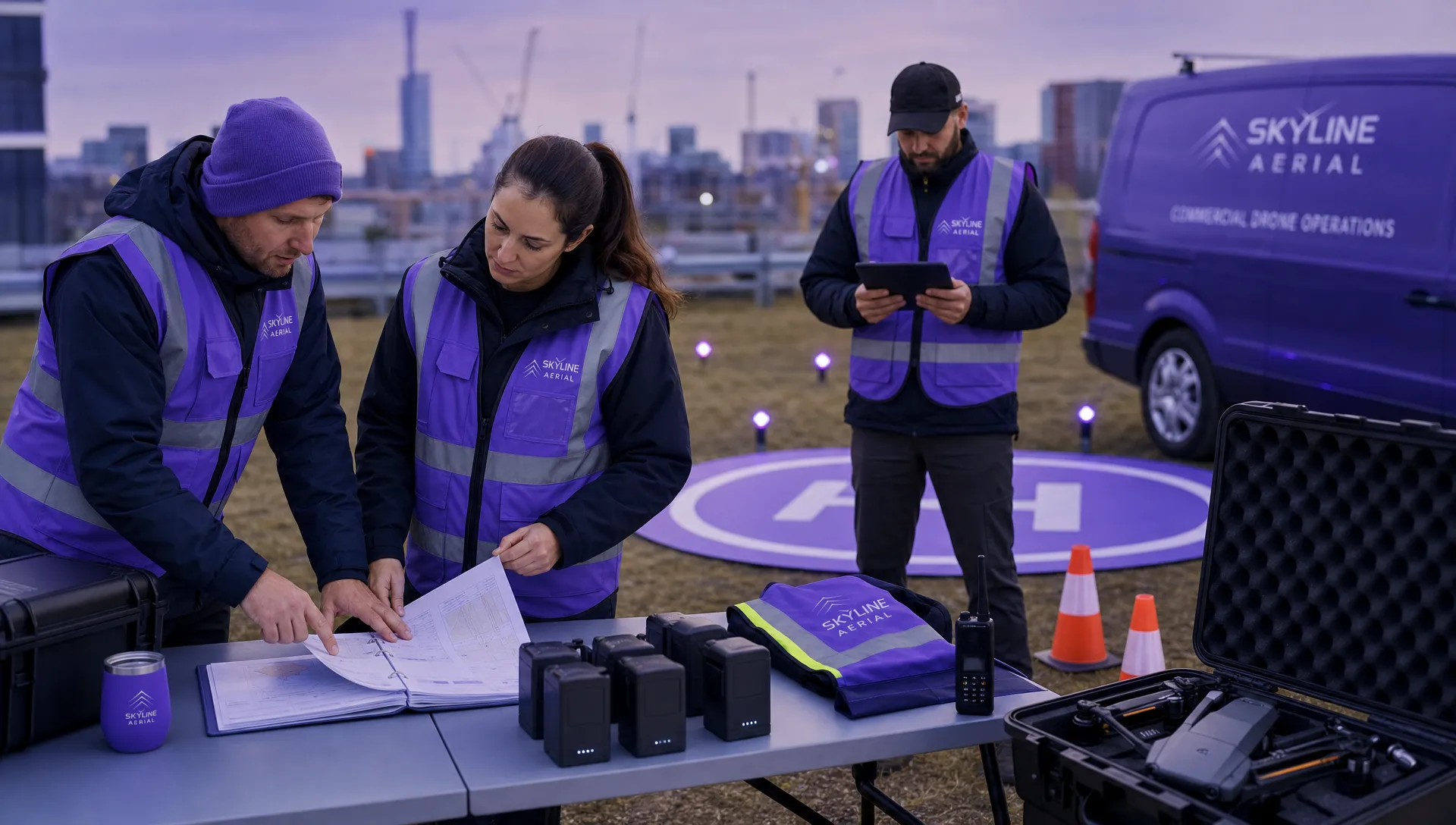
What compliance looks like in different sectors
The same drone operation regulations apply across sectors, but the risks and evidence needs vary. A business should translate the rules into the operational reality of its work.
Survey companies
Survey companies often work across mixed environments: rural land, construction sites, rooftops, highways, commercial property and residential areas. The compliance challenge is usually job variability. A simple agricultural mapping flight may be Open category, while a town-centre roof inspection may require a more controlled operating model.
Clients may ask for RAMS, insurance, pilot competency evidence, flight plans and proof of data security. A repeatable pre-flight workflow helps avoid rethinking every requirement from scratch while still adapting to each site.
Utility companies
Utilities face additional complexity because assets can run through public spaces, private land, roads, rail corridors, substations, waterways and critical infrastructure zones. Linear inspections can also create pressure to fly beyond visual line of sight, which normally requires a much higher level of authorisation and risk control.
For utilities, the strongest compliance systems usually combine aviation planning with asset access planning. The drone team needs to know who controls the site, who must be briefed, what isolation or safety controls are needed, and how captured data will be stored and shared.
Emergency services
Emergency services may need to deploy quickly, but speed does not remove the need for governance. Police, fire and rescue, ambulance and resilience teams need pre-agreed procedures, trained pilots, clear command structures and robust post-flight logs.
The difference is that emergency services should front-load as much compliance work as possible before the incident. Standard operating profiles, pre-approved equipment, pilot rosters, emergency checklists and evidence retention processes all help teams act quickly without losing accountability. For a practical public sector example, see how Dyfed-Powys Police approached a compliant in-house drone programme in this law enforcement drone operations case study.
Industrial, quarrying and construction sites
Industrial sites can look controlled, but they often contain serious aviation and ground hazards. These may include cranes, stockpiles, conveyors, blasting areas, dust, radio interference, moving vehicles and workers who are not briefed into the drone operation.
The key compliance distinction is whether people on site are genuinely involved in the operation. A person is not involved simply because they work for the client. They need to understand the drone activity, follow instructions, and be protected by the operating procedures. Site inductions, exclusion zones and clear communications are often as important as the aircraft itself.
Turning regulations into a repeatable business workflow
The most compliant drone businesses do not rely on heroic pilots remembering everything. They build a workflow that turns regulation into repeatable operational steps.
- Classify the job before quoting: Decide whether the planned flight is likely to be Open, Specific or outside your current approval, then price and schedule accordingly.
- Confirm operator, pilot and aircraft status: Check registration, pilot competence, aircraft airworthiness, firmware, batteries, maintenance and insurance before the job is accepted.
- Check airspace, ground risk and local constraints: Review CAA airspace information, site access, landowner permissions, nearby hazards, public access and weather limitations.
- Create the risk assessment and method statement: Document the control measures, emergency procedures, crew roles, communication plan and abort criteria.
- Capture approvals and briefings: Keep evidence of client approval, land access, airspace permission, site briefings and any required internal sign-off.
- Log the flight and close actions: Record what happened, who flew, which aircraft was used, any incidents or defects, and any follow-up maintenance or reporting actions.
Spreadsheets can work for a single pilot doing occasional low-risk jobs. They become fragile when a business has multiple aircraft, batteries, pilots, clients, authorisations and recurring sites. If you are scaling beyond ad hoc administration, this drone fleet management guide explains what growing operations should consider.
For organisations that want one place to manage operational evidence, the Dronedesk features page lists client management, fleet management, team management, airspace intelligence, proximity intelligence, flight planning, flight logging, data reporting, configurable checklists and risk assessments. Those capabilities align closely with the records businesses need to maintain for safer and more consistent drone operations.
Common compliance mistakes businesses make
Many drone compliance failures are not caused by reckless flying. They come from small assumptions that compound over time.
- Treating commercial use as the only regulatory question, instead of assessing the actual risk category of each flight.
- Reusing a generic risk assessment without checking site-specific hazards, public access or emergency landing options.
- Assuming a client has controlled a site when workers, visitors or members of the public have not been briefed.
- Forgetting privacy obligations when capturing imagery near homes, workplaces, vehicles or public areas.
- Flying from land without take-off and landing permission, even when the airspace itself is usable.
- Failing to record cancelled or aborted flights, defects, battery issues or near misses.
- Letting pilot competence, insurance documents, aircraft maintenance or Operational Authorisation evidence fall out of date.
The fix is not more paperwork for its own sake. The fix is a system that makes the safe action the easy action. If a pilot can see the latest aircraft status, use the correct checklist, access current site information and log the outcome in one process, compliance becomes part of operations rather than an afterthought.
A practical 2026 compliance checklist
Use this checklist before accepting or dispatching a business drone job. It is not a replacement for CAA guidance, but it will help managers ask the right questions.
| Question | Evidence to keep |
|---|---|
| Which regulatory category applies to this flight? | Open category assessment, Operational Authorisation reference or decision note |
| Is the business correctly registered as the UAS operator? | Operator ID, responsible person, aircraft labelling record |
| Is the remote pilot competent for this operation? | Flyer ID, A2 CofC, GVC or internal competency evidence where applicable |
| Is the aircraft fit for the task? | Aircraft record, maintenance log, battery status, firmware checks, defect history |
| Have airspace and local restrictions been checked? | Airspace review, permissions, NOTAM review, landowner or site access approval |
| Has the ground risk been controlled? | Risk assessment, exclusion zone plan, site briefing, communication plan |
| Are insurance and client requirements satisfied? | Insurance certificate, contract requirements, RAMS, approval emails |
| Are privacy risks managed? | Data handling plan, retention policy, signage or notification where appropriate, DPIA where needed |
| Is the flight properly closed out? | Flight log, incident or defect report, captured data record, follow-up actions |
This kind of evidence trail is especially valuable for businesses tendering for larger contracts. Professional clients increasingly expect drone operators to prove not only that they can capture data, but that they can do so safely, lawfully and consistently.
Frequently Asked Questions
Do UK businesses need a licence to fly a drone? There is no single business drone licence that applies just because a flight is paid work. UK rules are risk-based. A business may need operator registration, pilot IDs or certificates, insurance and, for higher-risk operations, a CAA Operational Authorisation.
What is an Operational Authorisation? An Operational Authorisation is a CAA approval that allows an operator to conduct certain Specific category drone operations under defined conditions. It normally depends on the operator having suitable procedures, risk controls, pilot competence and operational records.
Can a business fly a drone over people? It depends on the aircraft, subcategory, operating environment and whether the people are involved or uninvolved. Intentional overflight of uninvolved people is tightly restricted and should be checked against current CAA rules before planning the job.
Do drone privacy laws apply to surveys and inspections? Yes, if the drone captures personal data such as identifiable people, vehicles, homes or behaviour patterns. Businesses should consider UK GDPR, data minimisation, secure storage, retention periods and client responsibilities.
How long should a business keep drone flight records? Retention requirements can depend on your Operational Authorisation, insurance, client contracts and internal safety policy. Many businesses set a defined retention schedule for flight logs, risk assessments, maintenance records, permissions and incident reports so evidence is available if needed.
Are emergency services exempt from normal drone rules? Emergency services may have specific authorisations, procedures or legal powers that support urgent deployments, but they still need competent pilots, accountable governance, risk controls and records. The safest approach is to prepare standard operating models before an incident occurs.
Make drone compliance easier to manage
For businesses, the hard part of drone regulation is rarely one rule in isolation. It is keeping every job, pilot, aircraft, checklist, permission, risk assessment and flight log aligned as operations grow.
Dronedesk is an all-in-one web platform for drone operators, built to support end-to-end drone operations management. If your organisation needs a clearer way to plan flights, manage operational records and keep teams working from the same process, it can help turn regulatory requirements into a more consistent workflow.
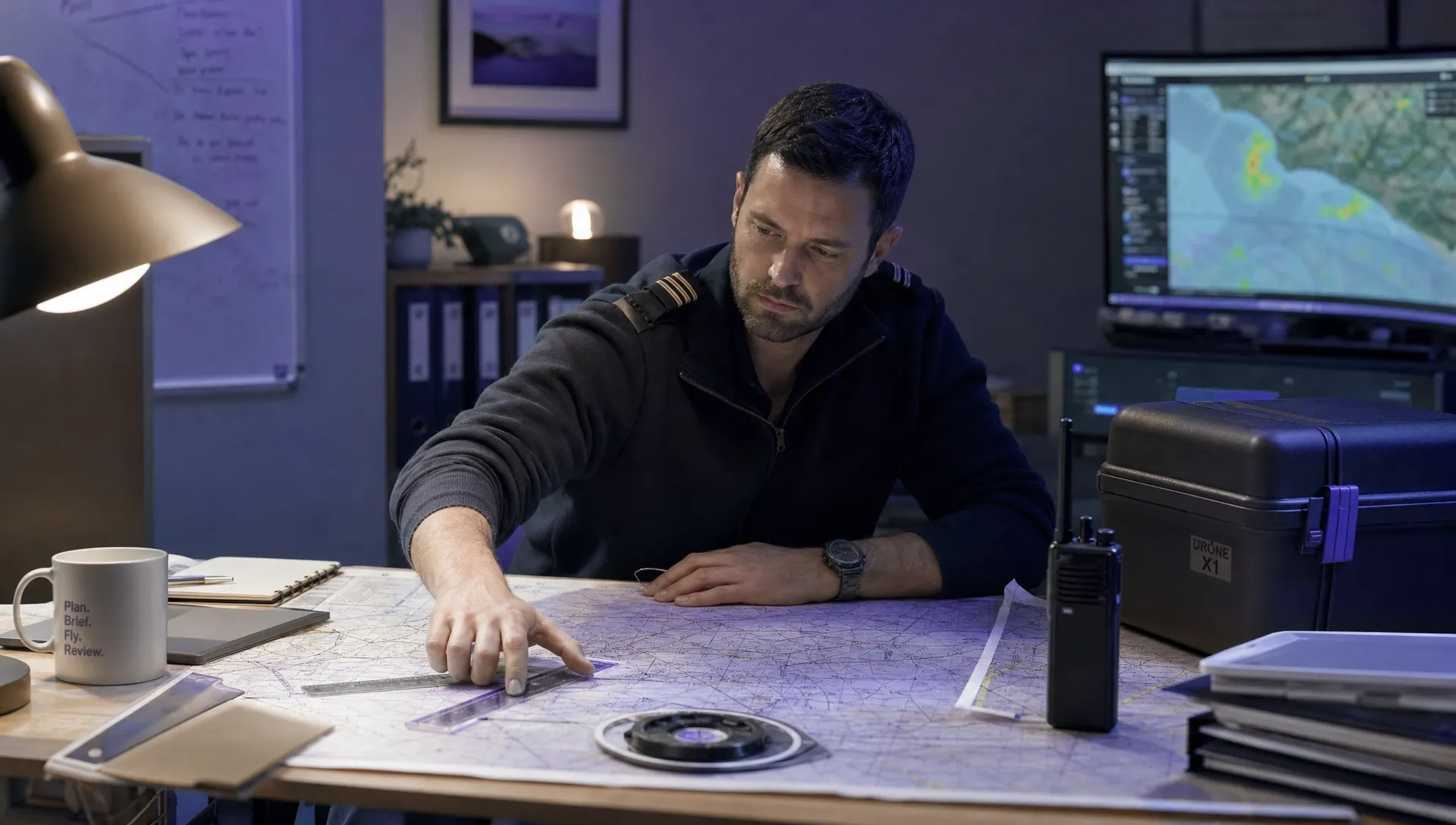 How to Prepare for the Drone Licence Test →
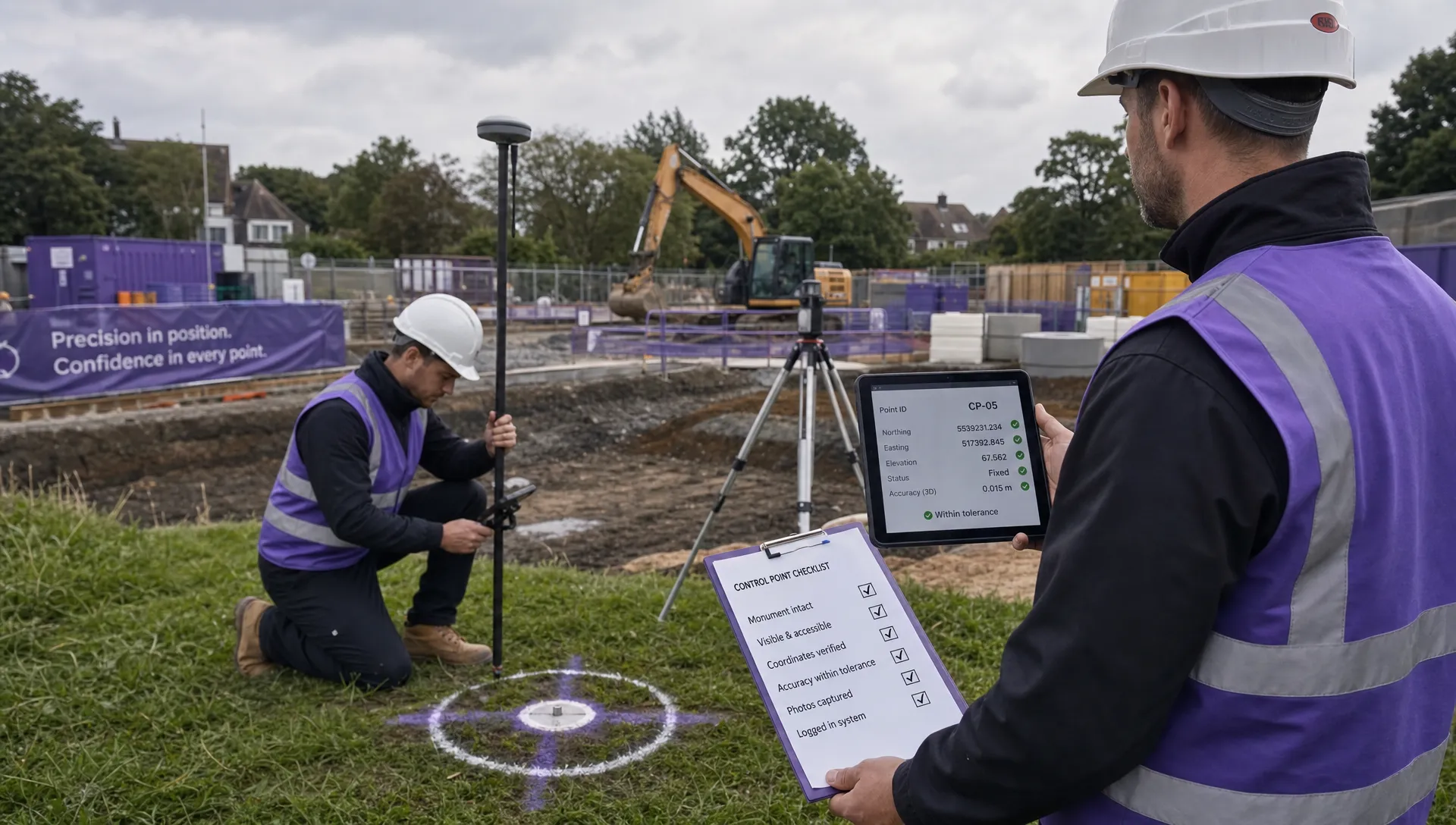 How to Choose a Drone Mapping Service for Your Project →
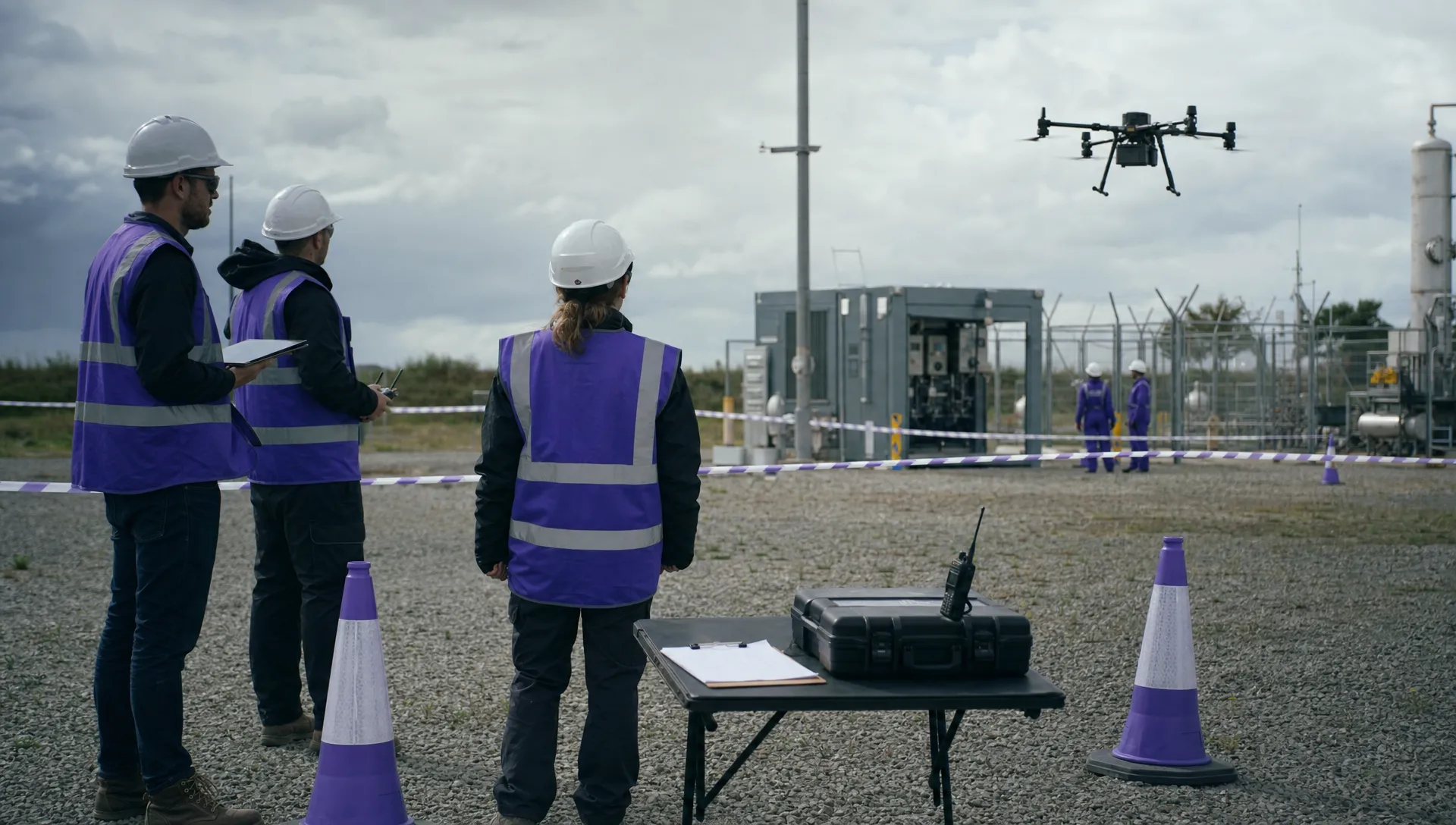 Drone Safety Rules That Every Commercial Team Needs →
 Airport Drone Rules: How to Plan Flights Without Surprises →
 FAA Part 107 Licence: Your Step-by-Step Application Guide →
 How to View DJI Flight Logs Online Safely →
 What Part 107 Covers Beyond the Pilot Certificate →
 How to Download and Read a DJI Flight Log →
 Drone Videography Planning Tips for Professional Crews →
 EU Drone Rules for Sub-250g Aircraft Explained →