
How BVLOS Drone Operations Change Commercial Workflows
BVLOS drone operations are not simply “normal drone flights over a longer distance”. They change the operating model behind commercial drone work: how jobs are scoped, how risk is assessed, how teams communicate, how data is captured, and how evidence is stored for compliance.
For drone operators, survey companies, utilities and emergency services, this is the real shift. The aircraft may get most of the attention, but the workflow is where BVLOS creates commercial value, and where many organisations discover they need stronger processes before they can scale.
What BVLOS changes first: the job stops being a single-site task
In visual line of sight operations, the workflow is often built around a pilot standing near the asset or incident area. Planning is usually focused on a defined site, a known take-off point, a relatively short flight duration and a small operational footprint.
BVLOS changes that footprint. A railway corridor, pipeline, flood zone, offshore asset or large agricultural estate may cover kilometres of airspace and several different ground environments. That means the job becomes less like a site visit and more like a managed operation.
| Workflow area | Typical VLOS approach | BVLOS operational impact |
|---|---|---|
| Scoping | Define a site and local hazards | Define a route, corridor, contingency areas and communications model |
| Planning | Check local airspace and site access | Assess changing airspace, ground risk, link performance and recovery options |
| Staffing | Pilot plus observer where needed | Remote pilot, observers or support roles, operations control and escalation paths |
| Risk assessment | Site-specific hazards | Route-wide risk, detect-and-avoid assumptions, lost link procedures and emergency response |
| Evidence | Flight logs and basic job records | More detailed audit trail for authorisations, decisions, maintenance and operational performance |
| Data workflow | Capture and process after the flight | Plan capture against business outcomes, quality checks and repeatable reporting |
This is why BVLOS is best approached as a workflow transformation, not just a regulatory milestone.
Planning becomes route-based, not location-based
The first practical change is planning. BVLOS missions require operators to think beyond the launch site. Instead of asking, “Can we fly here?”, teams need to ask, “Can we safely operate across this route, at this time, with these mitigations, and with a credible response if something changes?”
That expands the planning checklist. Operators need to consider airspace, ground risk, nearby aerodromes, obstacles, population density, terrain, weather, communications coverage, recovery sites and emergency access. For longer missions, conditions may vary significantly from one end of the route to the other.
In the UK, BVLOS generally sits outside routine low-risk drone flying and requires a stronger safety case. The UK Civil Aviation Authority’s drone guidance and publications such as CAP 722 remain key reference points for understanding operational expectations, categories and authorisation requirements.
For commercial teams, the planning workflow usually becomes more standardised. Repeatable templates, route libraries, defined approval steps and consistent risk assessment methods matter more because the margin for informal decision-making is smaller.
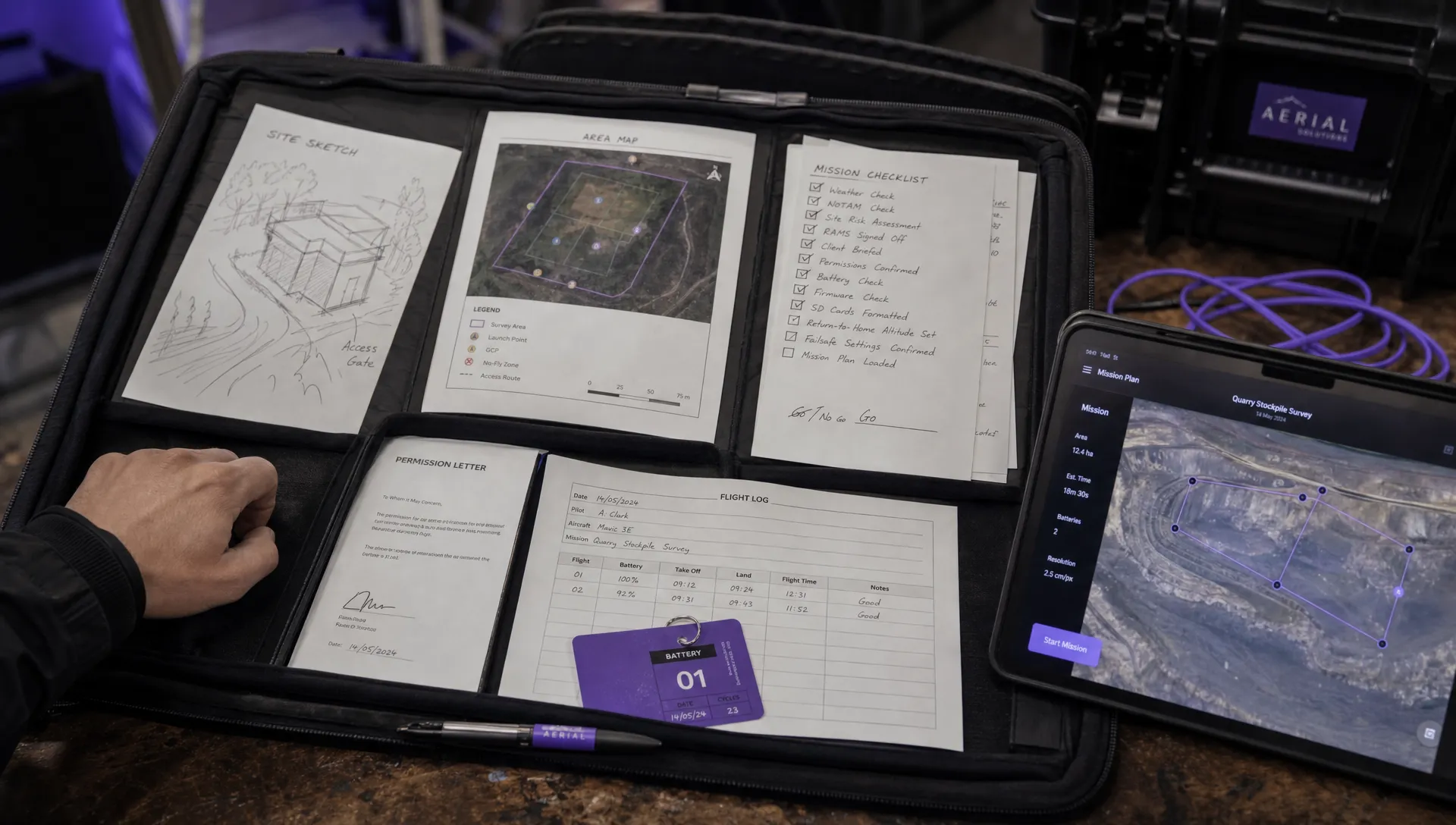
This is where digital operations management becomes important. Dronedesk supports flight planning, airspace intelligence, proximity intelligence, configurable checklists, risk assessments and flight logging, which are all relevant building blocks when teams need a consistent planning record. Operators who are still relying on folders, spreadsheets and chat threads often find that BVLOS readiness exposes gaps in their documentation and handover process.
Risk assessment becomes a living operational control
For many VLOS jobs, the risk assessment is completed before the flight, reviewed on site and updated if conditions change. BVLOS does not remove that requirement, but it raises the importance of treating risk assessment as an active operational control.
A BVLOS risk assessment has to account for more than visible hazards around the pilot. It needs to consider how the operation remains safe when the pilot cannot directly see the aircraft. That often includes command and control reliability, traffic awareness, contingency volumes, emergency landing areas, third-party risk, geo-awareness, weather thresholds and crew responsibilities.
Frameworks such as the JARUS Specific Operations Risk Assessment have influenced how many organisations think about structured drone risk assessment, particularly for more complex operations. The key lesson for workflow design is that risk assessment should not be treated as a generic form. It should connect directly to the mission profile, the aircraft, the environment and the mitigations being used.
If your organisation is building more disciplined pre-flight processes, this guide on how to build a drone flight risk assessment that works is a useful companion to the BVLOS conversation. Even before formal BVLOS approvals are in place, improving the quality of risk assessment makes day-to-day operations more resilient.
Team roles become more specialised
BVLOS drone operations often require a clearer division of responsibilities. A single skilled remote pilot may still be central to the mission, but the workflow may involve more people and more defined handovers.
Depending on the operation, a BVLOS team may include remote pilots, mission planners, payload specialists, observers, maintenance leads, data analysts and an operations manager. Emergency services may add incident commanders or control room staff. Utilities may involve asset managers and network control teams. Survey companies may involve GIS, CAD or inspection specialists.
The important workflow change is that everyone needs to understand what information they own and when it must be passed on. A maintenance issue, airspace update, client change request or weather deterioration cannot sit in someone’s inbox if it affects the safety case for a flight.
This is also why team management and fleet management become more than admin tasks. For BVLOS, it matters which aircraft is assigned, whether it is serviceable, whether the correct payload is configured, whether the pilot is current and whether the team is working from the latest version of the plan. If your fleet is growing, the Dronedesk drone fleet management guide explains why spreadsheets tend to become fragile as operational complexity increases.
Data capture moves closer to the business outcome
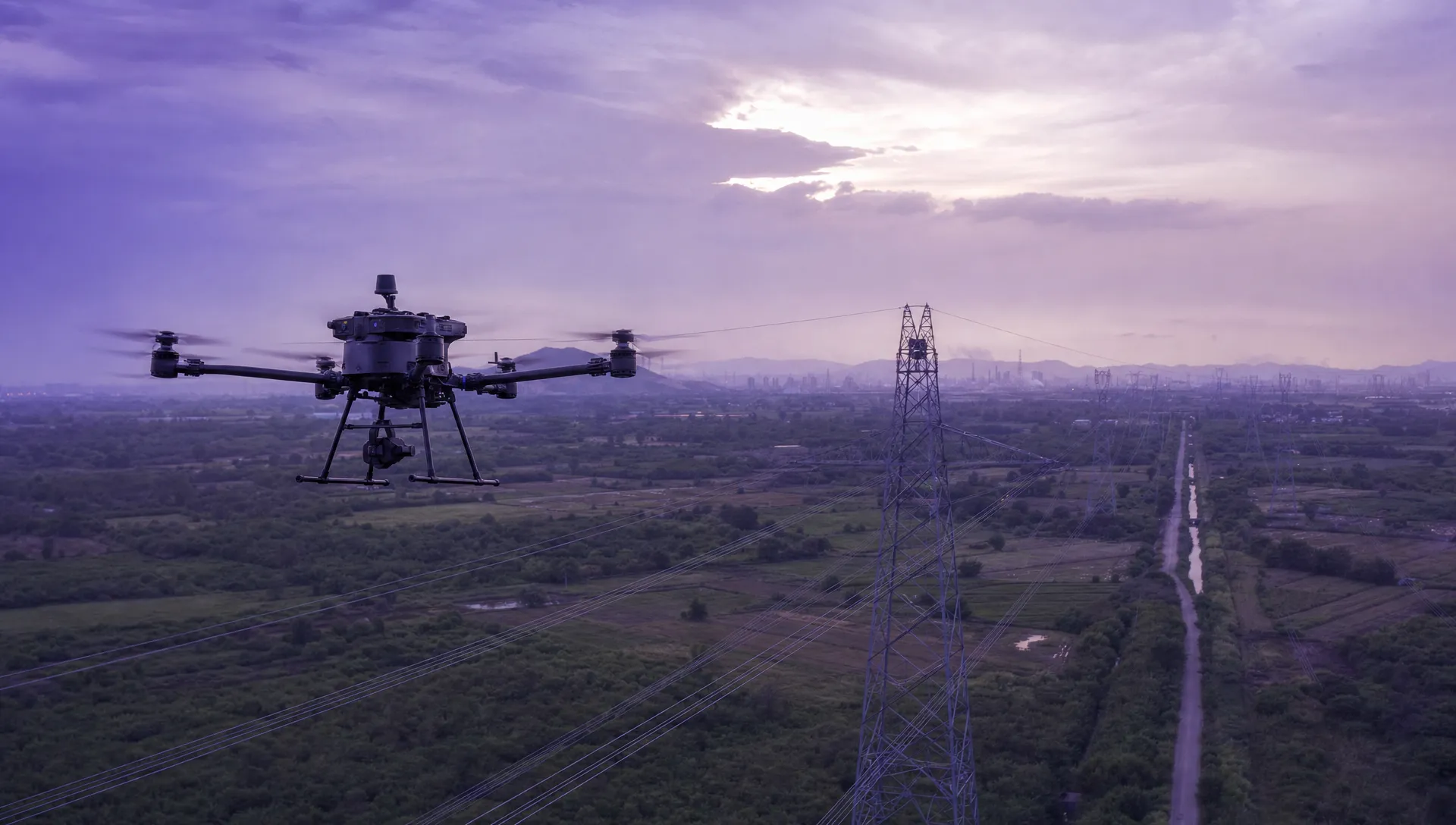
BVLOS changes the economics of data collection. A VLOS inspection might focus on one roof, one tower or one small section of land. BVLOS can make it practical to inspect longer linear assets, repeat routes more frequently or cover areas that are expensive or slow to access by road.
That means the data workflow needs to start earlier. Before the drone flies, the organisation should know what decision the data is meant to support. Is the goal to identify defects, detect change, update a map, prioritise maintenance, document flood extent, verify vegetation clearance or reduce the number of people sent into hazardous environments?
When the output is clear, the flight plan can be designed around the required resolution, overlap, sensor type, timing, route repeatability and quality assurance process. Without that clarity, BVLOS can simply produce more data without improving decisions.
For commercial operators, this is a major opportunity. The value proposition shifts from “we can fly a drone” to “we can deliver repeatable operational intelligence across assets at scale”. That is a stronger conversation with utilities, infrastructure owners, insurers, emergency planners and land managers.
Compliance evidence becomes part of everyday delivery
BVLOS approvals and customer confidence both depend on evidence. It is not enough to say that the team planned carefully, checked the aircraft and followed procedures. Operators need a reliable record that shows what happened and why.
That evidence may include client details, aircraft assignment, pilot information, checklists, risk assessments, airspace checks, maintenance status, weather decisions, flight logs, incident notes and post-flight reporting. The exact requirements will vary by regulator, customer and operational model, but the direction is clear: as operations become more complex, record-keeping becomes more valuable.
This is especially important when multiple teams work across different regions or contracts. If each team stores information in a different format, managers struggle to compare performance, audit compliance or improve procedures. Standardisation makes it easier to spot recurring issues, prove due diligence and train new staff.
Dronedesk is designed as an all-in-one drone operations management platform covering areas such as client management, fleet management, team management, flight planning, checklists, risk assessments, flight logging and reporting. Those functions are practical foundations for operators who want cleaner operational records without scattering information across disconnected tools.
Commercial workflows become more proactive
One of the biggest BVLOS workflow changes is the move from reactive site visits to proactive operational programmes.
A utility company, for example, may move from inspecting an asset after a reported fault to scheduling repeat corridor inspections based on season, risk and asset condition. A survey company may move from one-off mapping jobs to recurring monitoring. Emergency services may use drone workflows to support faster situational awareness across areas that are hard or unsafe to access.
This changes how work is sold, scheduled and measured. Instead of quoting only for pilot time on site, operators may need to price planning, authorisation support, data processing, reporting, standby availability, maintenance readiness and programme management.
| Sector | Workflow before BVLOS maturity | Workflow after BVLOS maturity |
|---|---|---|
| Utilities | Dispatch teams to inspect specific known issues | Run planned corridor inspections and prioritise field crews based on findings |
| Surveying | Capture individual sites on request | Build repeatable mapping and monitoring programmes over larger areas |
| Emergency services | Launch near the incident scene | Integrate drone intelligence into wider incident command and situational awareness |
| Infrastructure | Inspect isolated structures manually or by VLOS | Monitor distributed assets with standardised routes and evidence trails |
The commercial benefit comes from repeatability. Once the workflow is proven, the operator can deliver more consistent outputs, forecast resourcing more accurately and reduce the amount of bespoke admin required for every job.
Emergency services gain speed, but need disciplined information flow
For emergency services, BVLOS can be especially powerful because incidents do not always happen where access is easy. Floods, wildfires, missing person searches, hazardous material incidents and major traffic disruption can all create environments where aerial information is valuable but ground access is limited.
The workflow challenge is information flow. Drone teams need to integrate with command structures, not operate as a separate island. The mission objective may change quickly, and the data must reach the right people in a usable form.
This is why pre-defined checklists, team roles and reporting structures matter. During an incident, nobody wants to invent a workflow from scratch. A strong drone operations process gives emergency teams a faster route from request to launch, from flight to intelligence, and from intelligence to action.
Dronedesk’s search and rescue team case study shows how structured drone operations management can support emergency-service-style workflows, particularly where planning speed and consistency matter in the field.
Maintenance and fleet readiness become operational constraints
BVLOS places more emphasis on aircraft reliability and fleet readiness. If a VLOS job is delayed because a battery, propeller or payload issue is found on site, the commercial impact may be limited. If a BVLOS inspection programme depends on a specific aircraft configuration, a maintenance gap can disrupt a much larger schedule.
Fleet records, maintenance intervals, equipment assignment and aircraft availability therefore become part of mission planning. The question is not only whether a drone is available. It is whether the right drone, payload, batteries, firmware state, maintenance status and crew are ready for the specific operation.
For organisations running multiple aircraft, this can quickly become difficult to manage manually. BVLOS readiness often forces a more mature asset management mindset, similar to other safety-critical field operations.
Client communication becomes more consultative
Clients may be excited by BVLOS, but they will not always understand what it requires. A utility, survey client or public-sector stakeholder might see BVLOS as a way to cover more ground faster. The operator must explain the conditions, constraints, deliverables and responsibilities clearly.
That makes client management part of the operational workflow. Good communication should cover what BVLOS can achieve, what approvals or permissions may be needed, what data will be delivered, what could delay the operation, and what the client needs to provide.
For example, a client may need to confirm site access, asset priorities, landowner information, emergency contacts, data formats or reporting requirements. If those details are missing, the flight plan and risk assessment may be incomplete.
The more complex the mission, the more valuable it is to keep client information connected to the operational record. This reduces duplication and helps teams avoid planning from outdated assumptions.
The biggest mistake: treating BVLOS as a technology purchase
New aircraft, sensors, communications systems and detect-and-avoid capabilities all matter. However, buying technology without redesigning the workflow is a common mistake.
BVLOS success depends on the relationship between people, process, aircraft and evidence. A capable drone will not fix unclear responsibilities, weak risk assessments, inconsistent checklists, poor maintenance records or fragmented reporting.
Before investing heavily, operators should stress-test the workflow with questions such as:
- Can we produce a consistent operational record for every flight?
- Do we know who approves mission changes and how those changes are recorded?
- Are our aircraft, pilots, clients, checklists and risk assessments connected in one process?
- Can we scale from one pilot to multiple teams without losing visibility?
- Do our reports give managers enough information to improve safety and productivity?
If the answer to any of these is unclear, workflow maturity should be addressed alongside technical capability.
How to prepare your organisation for BVLOS workflows
The best preparation is not to wait until a regulator, client or procurement framework demands a more mature operating model. Many of the practices that support BVLOS also improve ordinary commercial drone work.
Start by standardising the basics: client records, aircraft records, pilot competency information, pre-flight planning, checklists, risk assessment, flight logging and post-flight reporting. Then look for points where information is duplicated, delayed or stored outside the main operational process.
Next, map the workflow from client request to final report. Identify every decision point, every handover and every piece of evidence required. This often reveals hidden admin that slows teams down, especially when operations move from occasional flights to regular programmes.
Finally, build repeatable templates for common mission types. A utility corridor inspection, quarry survey, search area assessment and roof inspection should not all start from a blank page. Templates improve consistency, while still allowing the team to adapt to the specific risks of each job.
Frequently Asked Questions
What are BVLOS drone operations? BVLOS stands for beyond visual line of sight. It refers to drone operations where the remote pilot cannot maintain unaided visual contact with the aircraft throughout the flight. These operations usually require additional planning, safety mitigations and regulatory approval.
How do BVLOS drone operations affect commercial drone teams? They make workflows more structured. Teams need stronger planning, clearer roles, more detailed risk assessment, better fleet readiness, reliable communications and stronger evidence management.
Are BVLOS operations only relevant to large companies? No. Smaller operators can benefit from preparing for BVLOS-style workflows because the same disciplines improve safety, consistency and client confidence. However, the cost and complexity of formal BVLOS operations may mean smaller teams need to be selective about use cases.
Which sectors benefit most from BVLOS workflows? Utilities, infrastructure inspection, surveying, agriculture, emergency services, logistics and environmental monitoring are strong candidates because they often involve large areas, linear assets or locations that are difficult to access safely.
Does BVLOS remove the need for on-site personnel? Not always. Some operations may still require observers, launch and recovery staff, maintenance support, security or liaison with local stakeholders. BVLOS changes the role of people in the workflow rather than eliminating them entirely.
Build the workflow before you scale the distance
BVLOS can unlock larger, safer and more efficient commercial drone programmes, but only when the workflow is ready. The organisations that benefit most will be those that can plan consistently, manage risk clearly, keep fleets and teams aligned, and produce reliable operational evidence.
If you are preparing for more complex drone operations, Dronedesk brings core operational tasks such as client management, fleet management, team management, flight planning, checklists, risk assessments, flight logging and reporting into one platform. That gives drone teams a cleaner foundation for today’s work and a more scalable path towards the BVLOS workflows of the future.
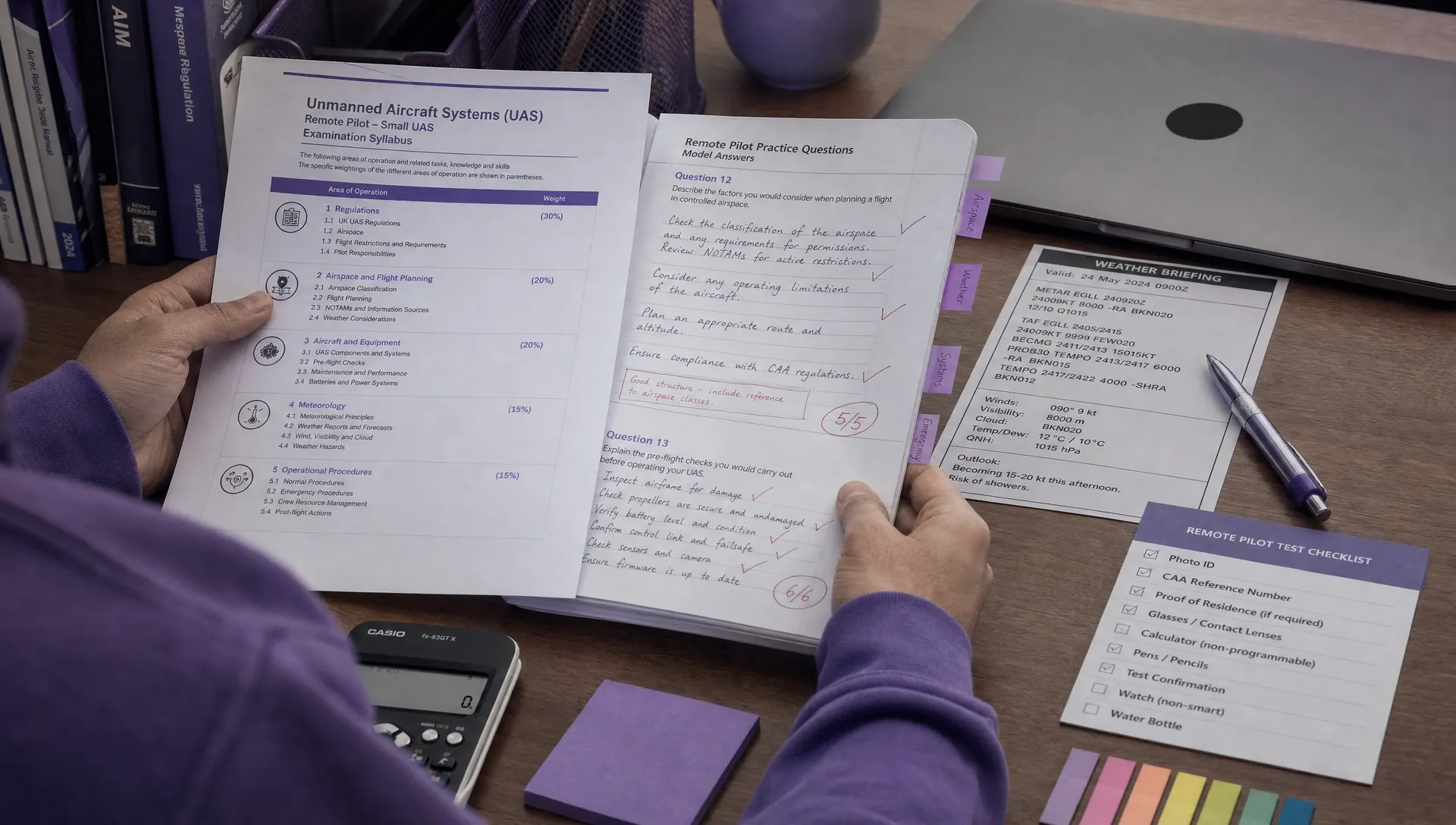 Drone Pilot Test Mistakes That Cost Candidates Marks →
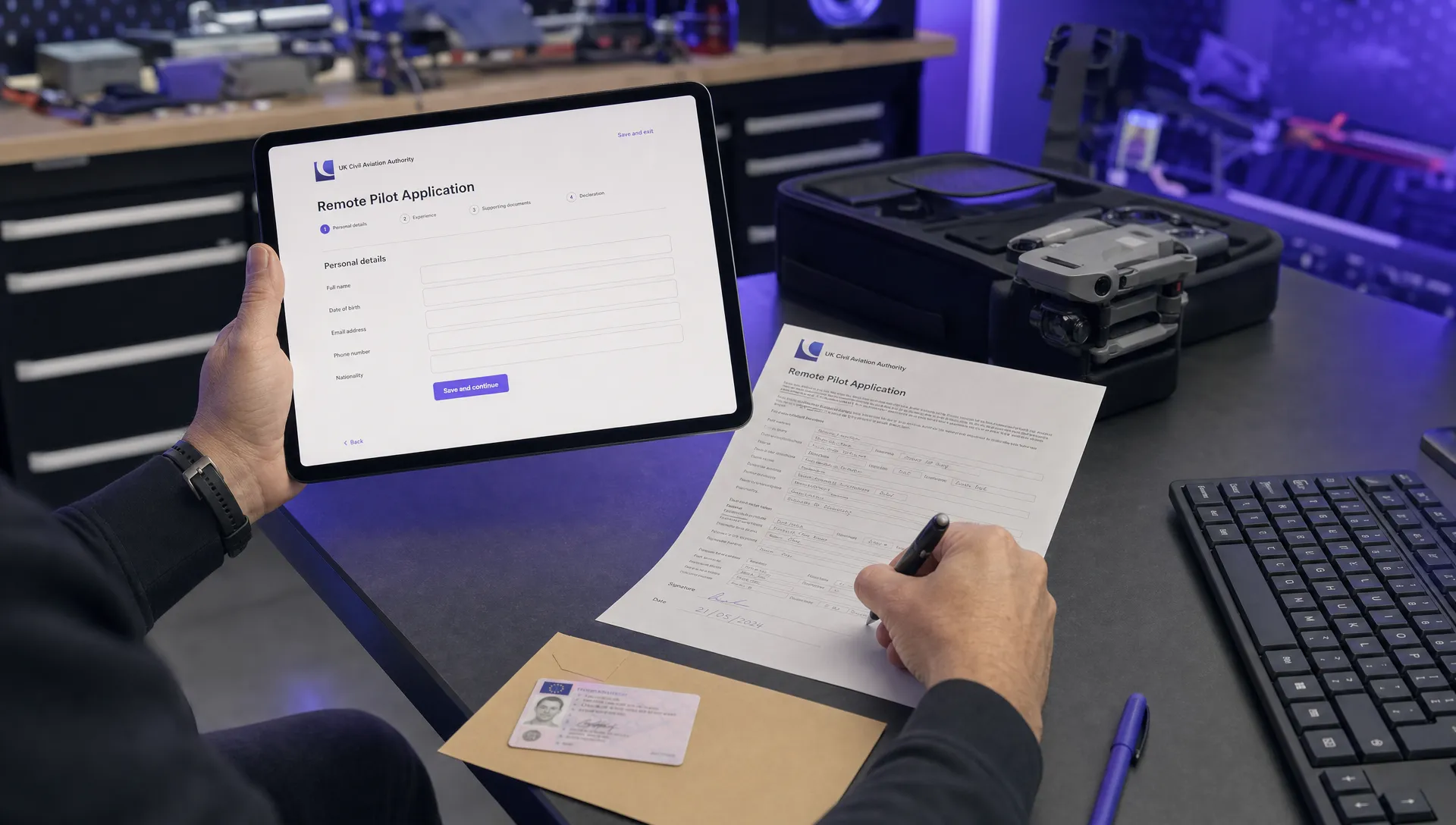 FAA 107 License vs Part 107 Certificate: What’s the Difference? →
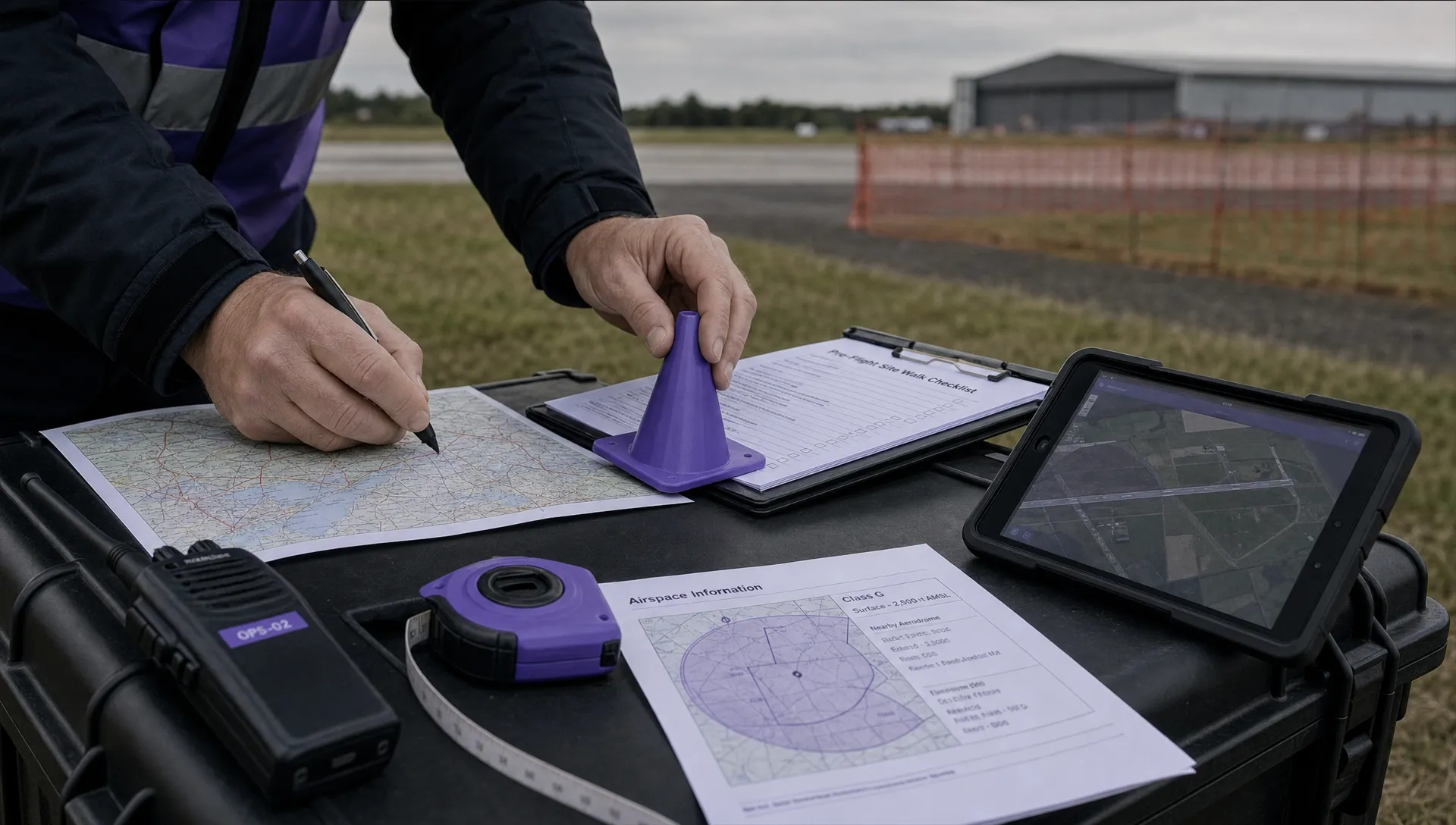 Drone Airport Rules: A Field Checklist for Site Assessments →
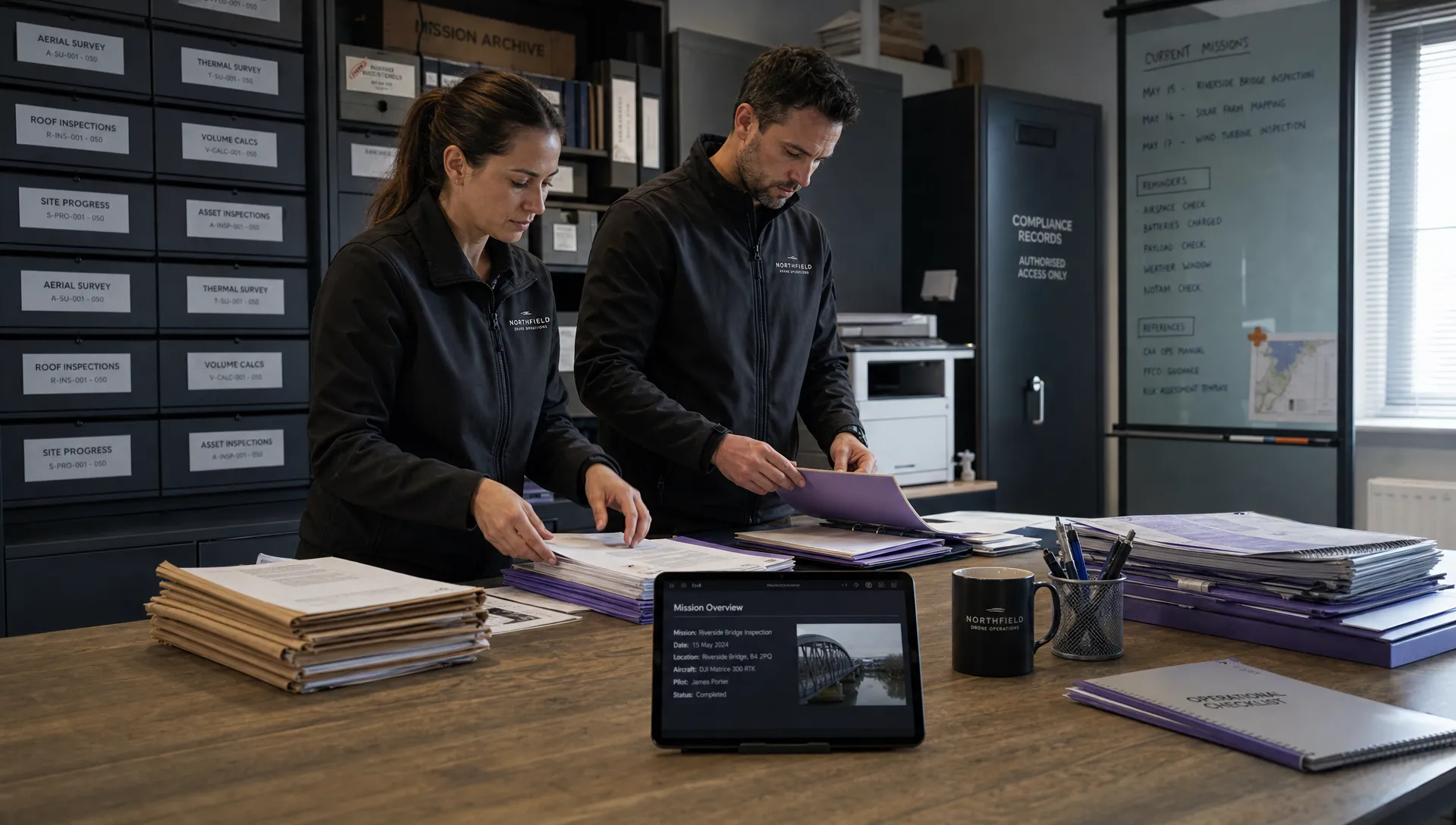 FAA Part 107 Record-Keeping Rules for Commercial Teams →
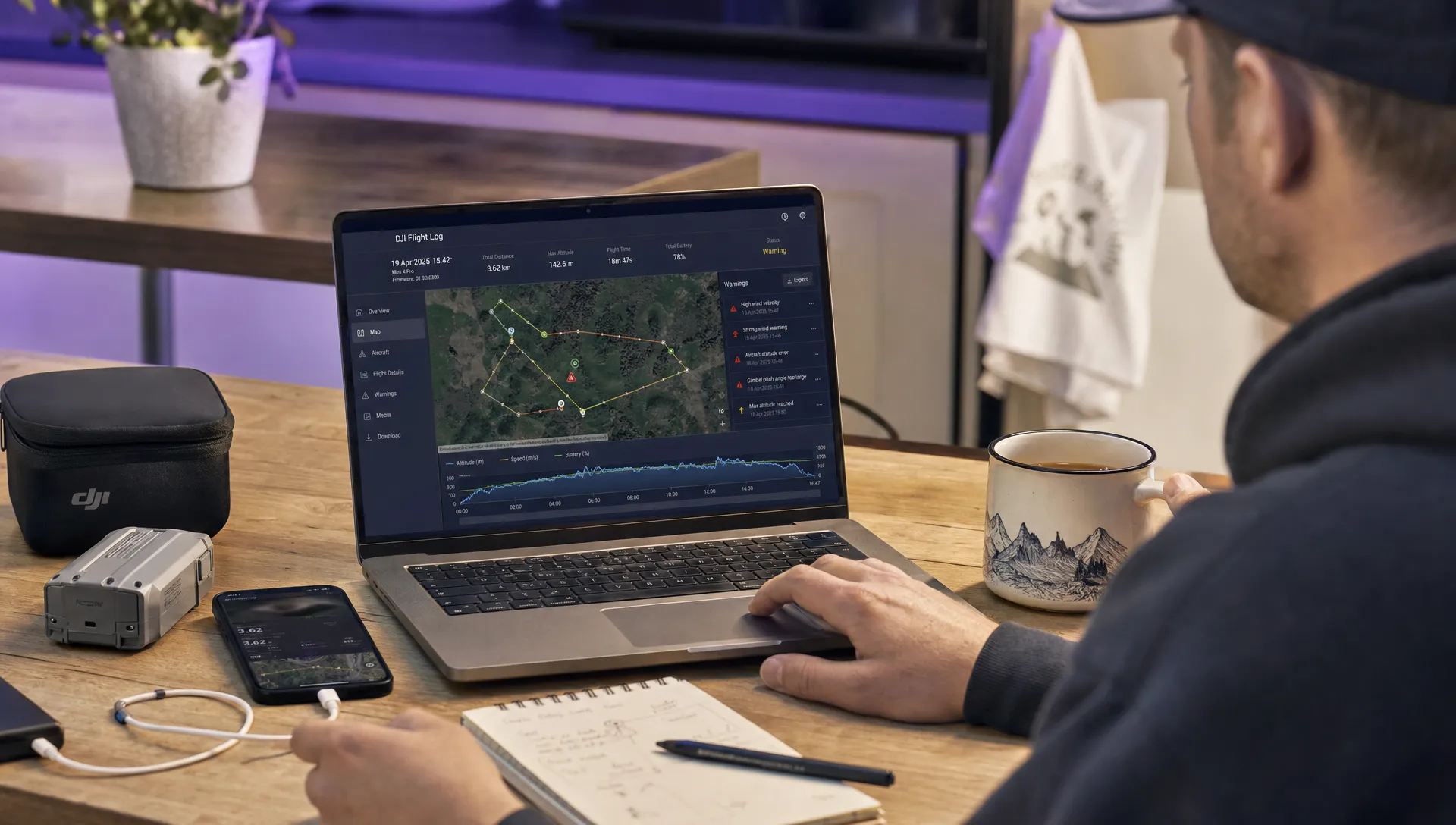 How to Review a DJI Flight Log After an Unexpected Event →
 Drone Laws Around the World: A Pre-Flight Research Framework →
 How to Compare Drone Survey Services for Complex Sites →
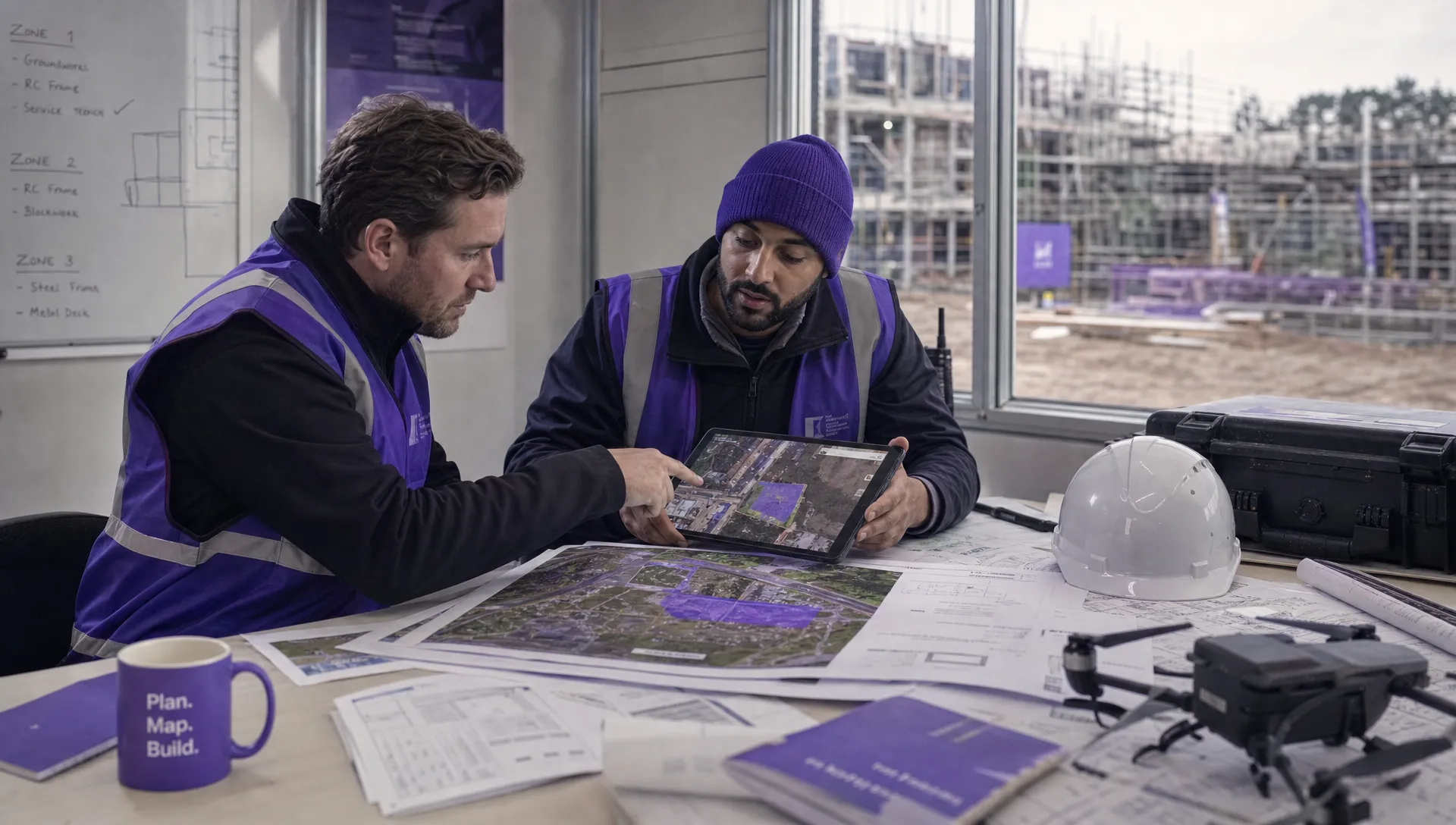 How to Start a Drone Mapping Business With a Clear Workflow →
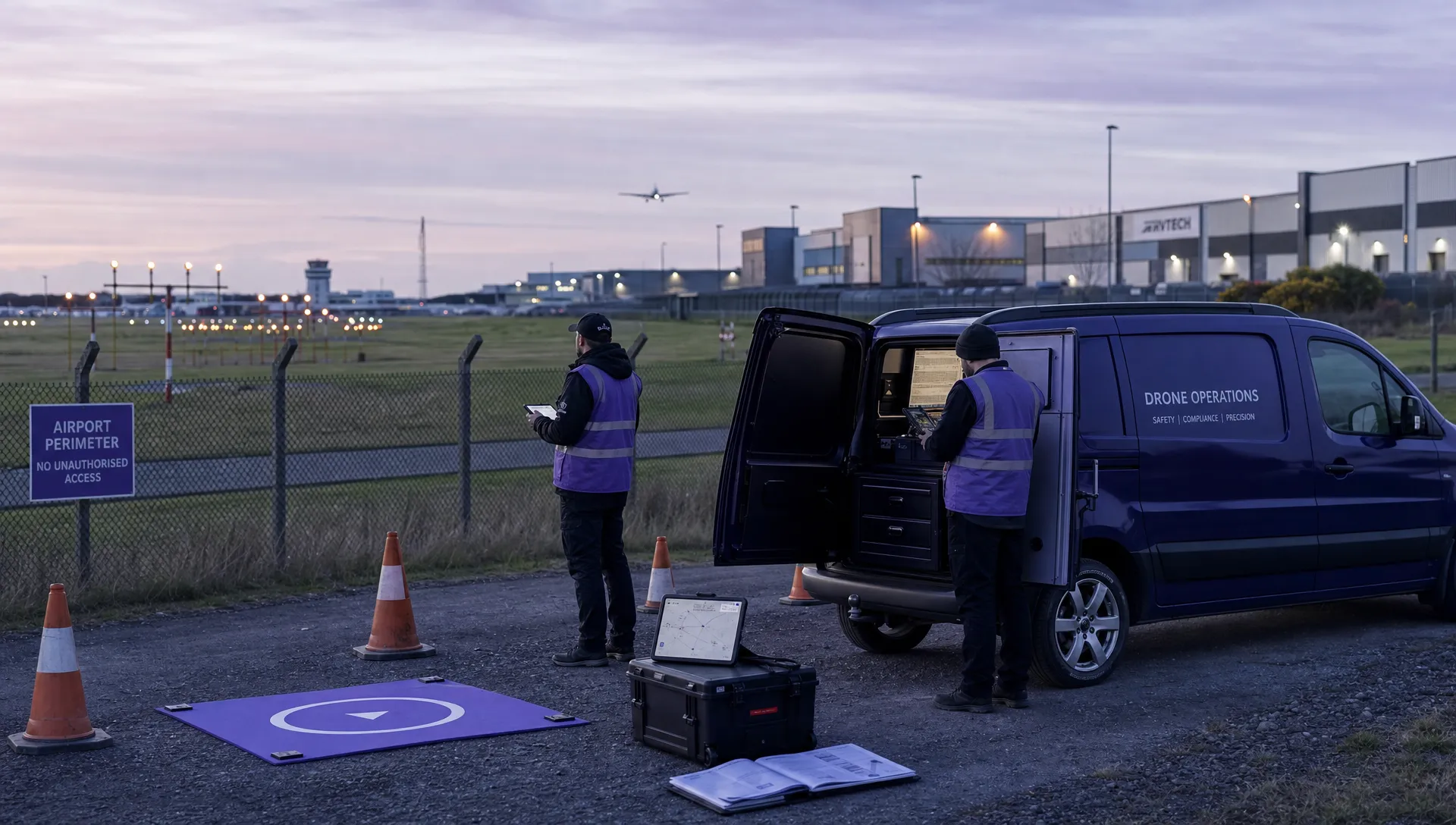 Class C Airspace Drone Rules for Commercial Flights →
 How to Create a Drone Job Pack for Every Mission →