
FAA Part 107 Drone License Explained for Beginners
If you want to use a drone for work in the United States, the FAA Part 107 drone license is usually the first qualification you need to understand. Strictly speaking, the FAA does not call it a licence. The official name is a Remote Pilot Certificate with a small UAS rating. But because most beginners search for Part 107 drone license, that is the phrase you will hear in courses, forums and client conversations.
Part 107 is not just a box to tick before you start charging for aerial work. It defines who can act as the remote pilot in command, what operating rules apply, when you need extra approvals, and what records you should be prepared to keep. For drone operators, survey companies, utilities and emergency services, understanding the basics early helps prevent costly planning mistakes later.
This guide explains what Part 107 is, who needs it, how to get certified, and what changes once you pass the test.
What FAA Part 107 actually is
FAA Part 107 is the main set of Federal Aviation Administration rules for routine civil operations of small unmanned aircraft systems in the United States. In plain English, it covers most non-recreational drone flights using aircraft weighing less than 55 lb, including payload.
The Remote Pilot Certificate belongs to the person, not the drone. Aircraft registration belongs to the drone. Airspace authorisation belongs to a specific flight area and time. Beginners often mix these up, but they are separate compliance pieces.
A Part 107 certificate allows you to act as remote pilot in command for eligible operations, provided you follow the Part 107 operating rules. It does not automatically allow every type of drone mission. Some operations still need airspace authorisation, a waiver, or a different public aircraft arrangement.
Who needs a Part 107 drone license?
You generally need Part 107 if your flight is not purely for personal recreation. Payment is not the only trigger. If the flight supports a business, organisation, inspection programme, public agency function, research project or monetised content, it may fall outside recreational rules.
| Flight situation | Is Part 107 usually needed? | Why |
|---|---|---|
| Flying in a park for fun with no business purpose | No, but recreational rules still apply | This is usually recreational flying, not Part 107 |
| Taking paid real estate photos | Yes | The flight supports a commercial service |
| Inspecting a company roof or solar array | Yes | The flight benefits an organisation, even if you are an employee |
| Mapping a construction site for internal progress records | Yes | The operation is work-related |
| A police, fire or emergency services mission | Part 107 or a public aircraft COA may apply | Public agencies can use different regulatory routes depending on the programme |
| A UK or overseas operator flying work missions in the US | Usually yes, plus extra checks may be needed | Part 107 applies to operations in US airspace, but foreign operator rules may also matter |
If you are based in the UK, remember that Part 107 is an FAA framework, not a CAA qualification. It is relevant when operating in US airspace. UK operations require the correct UK permissions, operational authorisations and compliance with CAA rules.
What Part 107 lets you do, and what it does not
With a Remote Pilot Certificate, you can conduct many routine drone jobs in the US, including aerial photography, site surveys, inspections, mapping support and training flights. You can operate in uncontrolled airspace without asking ATC, provided all Part 107 rules are met.
However, Part 107 does not give blanket permission to fly wherever and however you like. Controlled airspace still requires authorisation, usually through LAANC where available or through FAA DroneZone. Flights beyond visual line of sight, certain operations over people, some moving vehicle scenarios and other advanced missions may need additional approval or may be prohibited unless specific requirements are met.
For growing commercial teams, this distinction matters. Winning the job is only one part of professional drone operations. You also need a defensible plan, airspace checks, crew readiness, aircraft status, risk controls and post-flight records.
Eligibility requirements for beginners
To qualify for a Remote Pilot Certificate under Part 107, you must meet the FAA eligibility requirements. For most new drone pilots, that means you must be at least 16 years old, be able to read, speak, write and understand English, be in a physical and mental condition to safely operate a drone, and pass the initial aeronautical knowledge test.
You do not need to be a crewed-aircraft pilot. Many successful Part 107 pilots come from photography, surveying, engineering, utilities, agriculture, emergency services or facilities management backgrounds.
If you already hold a Part 61 pilot certificate and have completed a flight review within the required timeframe, the FAA provides an alternative route involving online training rather than the standard initial knowledge test. Most beginners, however, follow the standard test centre route.
How to get your FAA Part 107 drone license
The process is straightforward, but it helps to follow it in the right order. The FAA provides official guidance on its Become a Drone Pilot page, and you should always check the latest FAA instructions before booking.
- Study the Part 107 knowledge areas: Learn the regulations, airspace, weather, airport operations, loading, emergency procedures, decision-making and maintenance basics that appear in the exam.
- Create an IACRA account and get an FTN: The FAA Tracking Number is required before you can schedule the knowledge test.
- Schedule the Unmanned Aircraft General test: The initial test is booked through the FAA-approved testing provider network at an authorised knowledge testing centre.
- Take the exam: The standard initial test contains 60 multiple-choice questions, with two hours allowed and a passing score of 70 percent.
- Apply in IACRA after passing: Once your test result is available, complete the Remote Pilot Certificate application in IACRA.
- Complete TSA security vetting: After vetting, eligible applicants can receive a temporary certificate while the permanent certificate is processed.
- Register your aircraft before Part 107 operations: Drones flown under Part 107 must be registered through FAA DroneZone unless a specific exception applies.
The main unavoidable costs are the knowledge test fee and aircraft registration. Study materials can be free, paid or a mixture of both. The best option depends on how comfortable you are learning aviation concepts from FAA handbooks, charts and practice questions.
What is on the Part 107 test?
The exam is designed to check that you can make safe operational decisions, not just memorise drone terminology. Airspace is often the biggest challenge for new pilots because sectional charts and controlled airspace rules can feel unfamiliar at first.
| Test area | What beginners should understand |
|---|---|
| Regulations | Part 107 limits, remote pilot responsibilities, waivers and accident reporting |
| Airspace and charts | Classes of airspace, airport symbols, controlled airspace and restrictions |
| Weather | METARs, TAFs, wind, visibility, clouds and how weather affects small drones |
| Loading and performance | Weight, balance, battery performance, density altitude and aircraft limitations |
| Operations | Crew coordination, preflight checks, emergency procedures and communication |
| Human factors | Risk management, fatigue, hazardous attitudes and decision-making |
| Maintenance | Basic inspection, airworthiness considerations and when not to fly |
Do not study only to pass the test. The same knowledge helps you decide whether a real-world job is feasible, safe and legal. For example, being able to recognise controlled airspace or a temporary flight restriction can prevent an illegal launch before it happens.
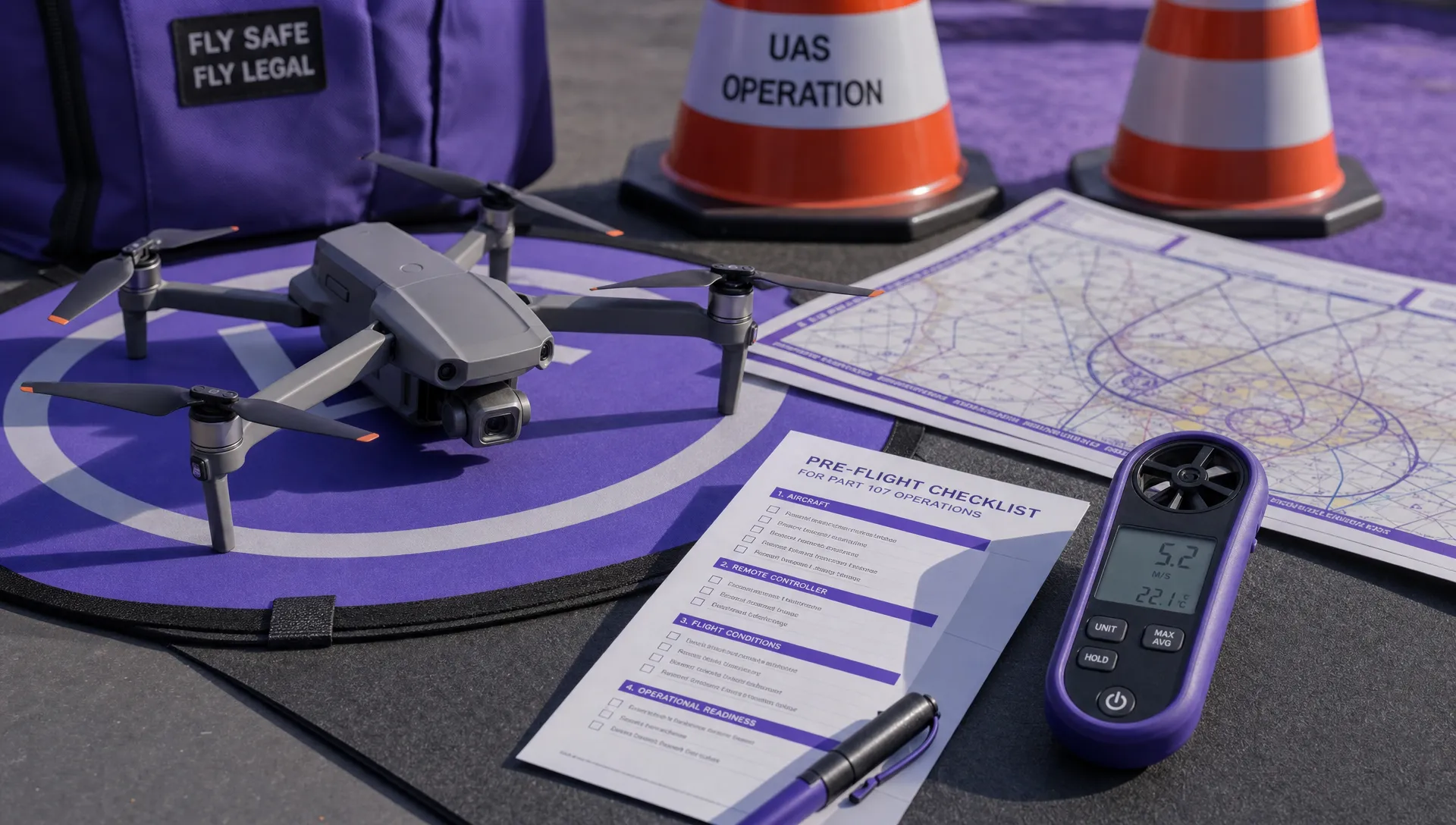
Core Part 107 operating rules after you pass
Once you have your certificate, you must still operate within the rule set. The following summary covers common limits, but it is not a substitute for checking the current FAA regulations before a mission.
| Rule area | Basic Part 107 requirement |
|---|---|
| Aircraft size | The drone must weigh less than 55 lb, including payload |
| Altitude | Generally up to 400 ft above ground level, or within 400 ft of a structure when allowed |
| Speed | Maximum groundspeed is 100 mph, or 87 knots |
| Visual line of sight | The remote pilot or visual observer must be able to see the drone unaided, other than corrective lenses |
| Airspace | Operations in Class B, C, D or certain Class E airspace require FAA authorisation |
| Right of way | Drones must yield to all crewed aircraft |
| Night operations | Allowed if the pilot has completed the required training and the drone has compliant anti-collision lighting |
| Operations over people | Allowed only when the operation meets the applicable category rules or has the necessary approval |
| Preflight | The remote pilot must check that the aircraft, control link, crew and operating environment are safe |
The most important practical habit is to treat every flight as a new operation. A site that was safe last week may be different today because of weather, people, temporary restrictions, nearby aircraft activity or client requirements.
Remote ID, registration and other paperwork
Part 107 pilots also need to understand Remote ID. The FAA describes Remote ID as a way for drones to provide identification and location information during flight. In most cases, if your drone must be registered, it must also meet FAA Remote ID requirements unless an FAA-recognised exception applies.
Do not assume that a lightweight drone is automatically exempt when used for Part 107 work. Recreational sub-250 g assumptions can lead to mistakes because Part 107 operations have their own registration expectations.
You should also be ready to manage operational paperwork. That may include aircraft registration, proof of pilot currency, airspace approvals, client permissions, site surveys, risk assessments, checklists, maintenance notes and flight logs. Part 107 also requires certain accidents to be reported to the FAA within 10 calendar days, including serious injury, loss of consciousness, or qualifying property damage.
Staying current after certification
Your Remote Pilot Certificate does not expire in the same way that many beginners expect. However, to exercise Part 107 privileges, you must have completed the required recurrent training within the previous 24 calendar months.
The current recurrent process is online rather than a repeat visit to a test centre for most remote pilots. This recurrent training is especially important because it covers rule updates, including night operations and operations over people.
If you manage pilots in a survey company, utility inspection team or emergency services drone unit, recurrent training should be tracked like any other operational readiness requirement. A qualified pilot who is not current may not be legally ready to act as remote pilot in command.
Turning a certificate into safe drone operations
Passing Part 107 is a strong start, but it is not the same as having a complete operating system. Professional drone work needs repeatable processes that help you prove what was planned, what was checked, who was responsible and what happened during the flight.
A practical Part 107 operating workflow usually includes site research, airspace and proximity checks, weather review, aircraft and battery readiness, crew briefing, risk assessment, client or land access confirmation, flight logging and post-flight notes. If risk assessment is new to you, Dronedesk has a useful guide on building a drone flight risk assessment that works.
For single pilots, this reduces reliance on memory. For teams, it creates consistency across different pilots, aircraft and clients. For enterprise or public sector operations, it supports governance and accountability.
Dronedesk is designed for this operational layer. Its drone operations management features include client management, fleet management, team management, airspace intelligence, proximity intelligence, flight planning, flight logging, data reporting, configurable checklists and risk assessments. If your organisation is moving beyond one aircraft and one pilot, the wider challenge is also covered in this drone fleet management guide.
Common beginner mistakes to avoid
Part 107 beginners usually run into trouble through assumptions, not bad intentions. The rules are manageable, but they need to be applied carefully on every mission.
- Assuming Part 107 is needed only when money changes hands.
- Forgetting that controlled airspace requires authorisation.
- Registering as a recreational flyer when the aircraft will be used for Part 107 work.
- Ignoring temporary flight restrictions, stadium restrictions or emergency response activity.
- Treating a passed exam as permission for beyond visual line of sight operations.
- Flying without checking local permissions, land access rules or client site safety requirements.
- Letting recurrent training currency lapse after the initial certificate is issued.
The safest mindset is simple: if the flight has a purpose beyond fun, check the Part 107 requirements before planning the job.
Frequently Asked Questions
Is the FAA Part 107 drone license the same as a Remote Pilot Certificate? Yes. Most people call it a Part 107 drone license, but the official FAA term is Remote Pilot Certificate with a small UAS rating.
How long does it take to get Part 107 certified? It depends on your study time, test centre availability and application processing. Many beginners prepare over a few weeks, but you should allow extra time if you are new to aviation charts and airspace.
Is the Part 107 test hard? It is very passable with focused study, but it should not be treated as a common-sense quiz. Airspace, weather and regulations require proper preparation.
Can I fly at night under Part 107? Yes, night operations are allowed if you meet the FAA training and anti-collision lighting requirements. You must still follow airspace, visibility and other operational rules.
Do I need Part 107 for YouTube or social media drone footage? If the flight supports monetised content, a brand, a business or any non-recreational purpose, Part 107 may be required. The intent of the flight matters.
Does Part 107 let me fly beyond visual line of sight? Not as a routine default. Beyond visual line of sight operations generally require additional FAA approval or a separate applicable regulatory pathway.
Is Part 107 valid in the UK? No. Part 107 is an FAA qualification for US operations. UK drone work is governed by the Civil Aviation Authority and UK-specific rules.
Ready to manage Part 107 operations professionally?
Getting certified is the beginning. The next step is building a repeatable process for planning, checking, logging and reviewing every flight.
Dronedesk helps drone operators manage the admin that surrounds safe, compliant operations, from clients, teams and fleets to airspace intelligence, flight planning, checklists, risk assessments and flight logs. If you are preparing for your first commercial jobs or scaling a multi-pilot programme, explore how Dronedesk can support your operation from planning through to reporting.
 How to Review a DJI Flight Log After an Unexpected Event →
 Drone Laws Around the World: A Pre-Flight Research Framework →
 How to Compare Drone Survey Services for Complex Sites →
 How to Start a Drone Mapping Business With a Clear Workflow →
 Class C Airspace Drone Rules for Commercial Flights →
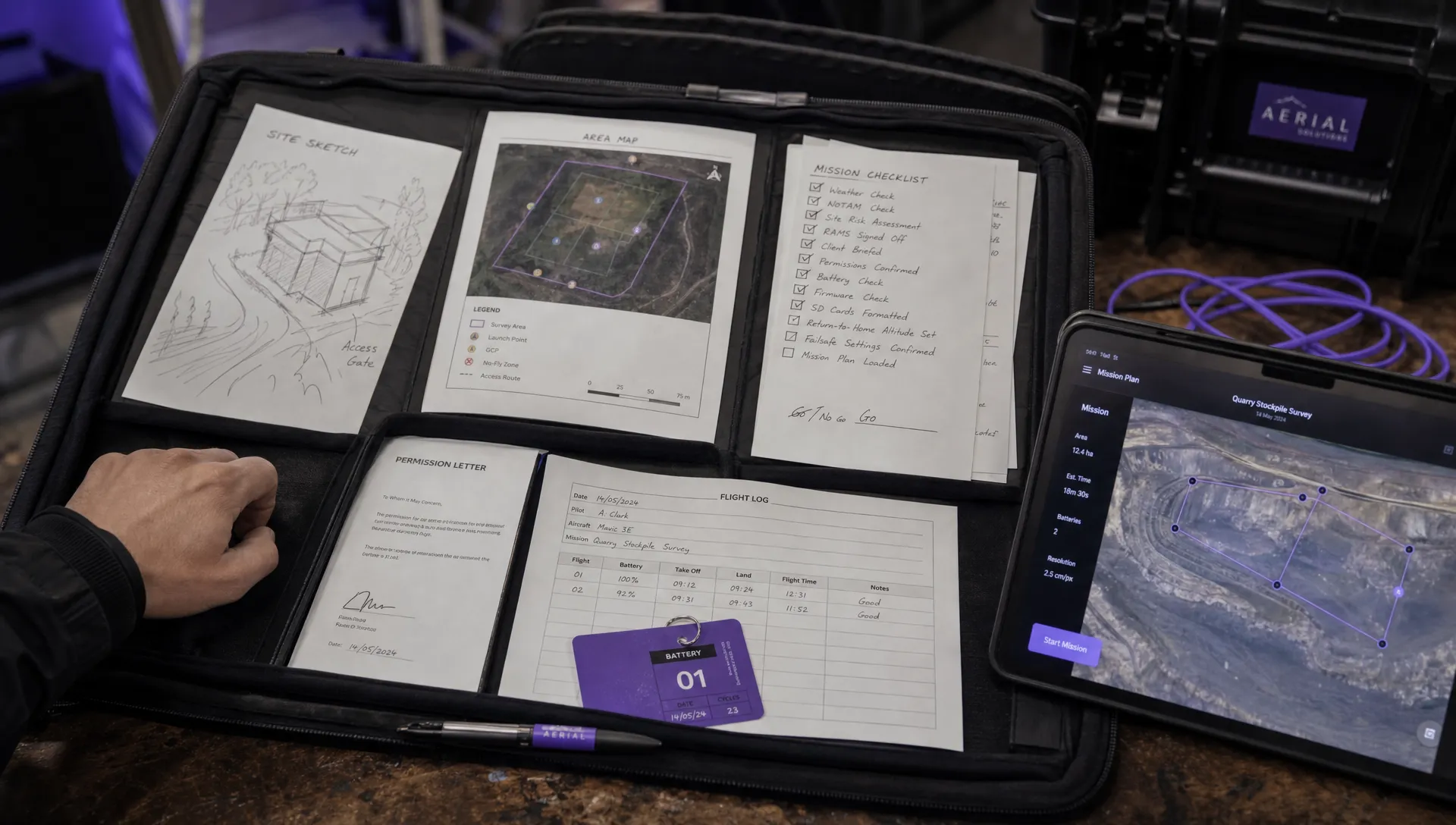 How to Create a Drone Job Pack for Every Mission →
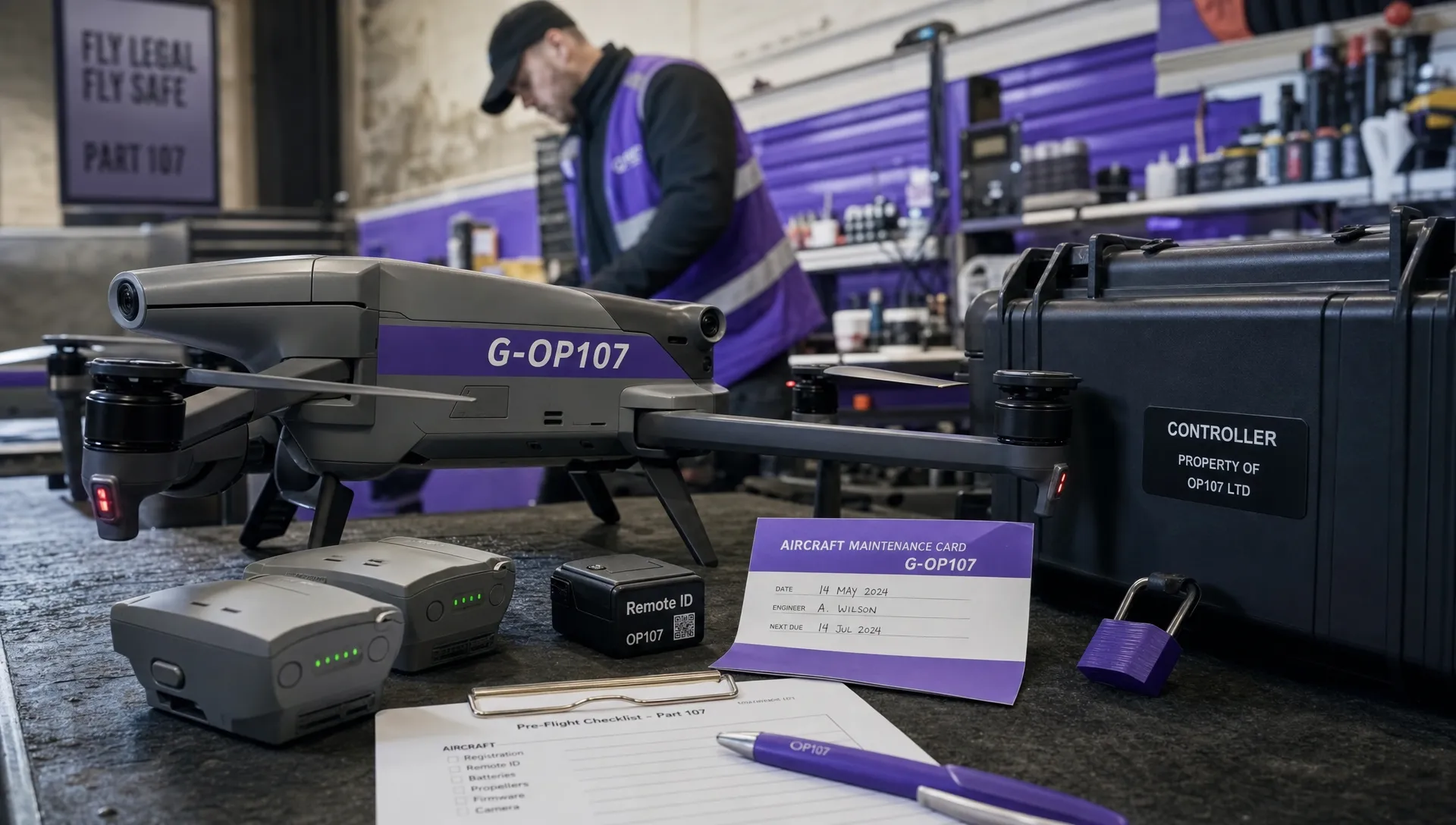 FAA Small UAS Rule: Key Requirements for Operators →
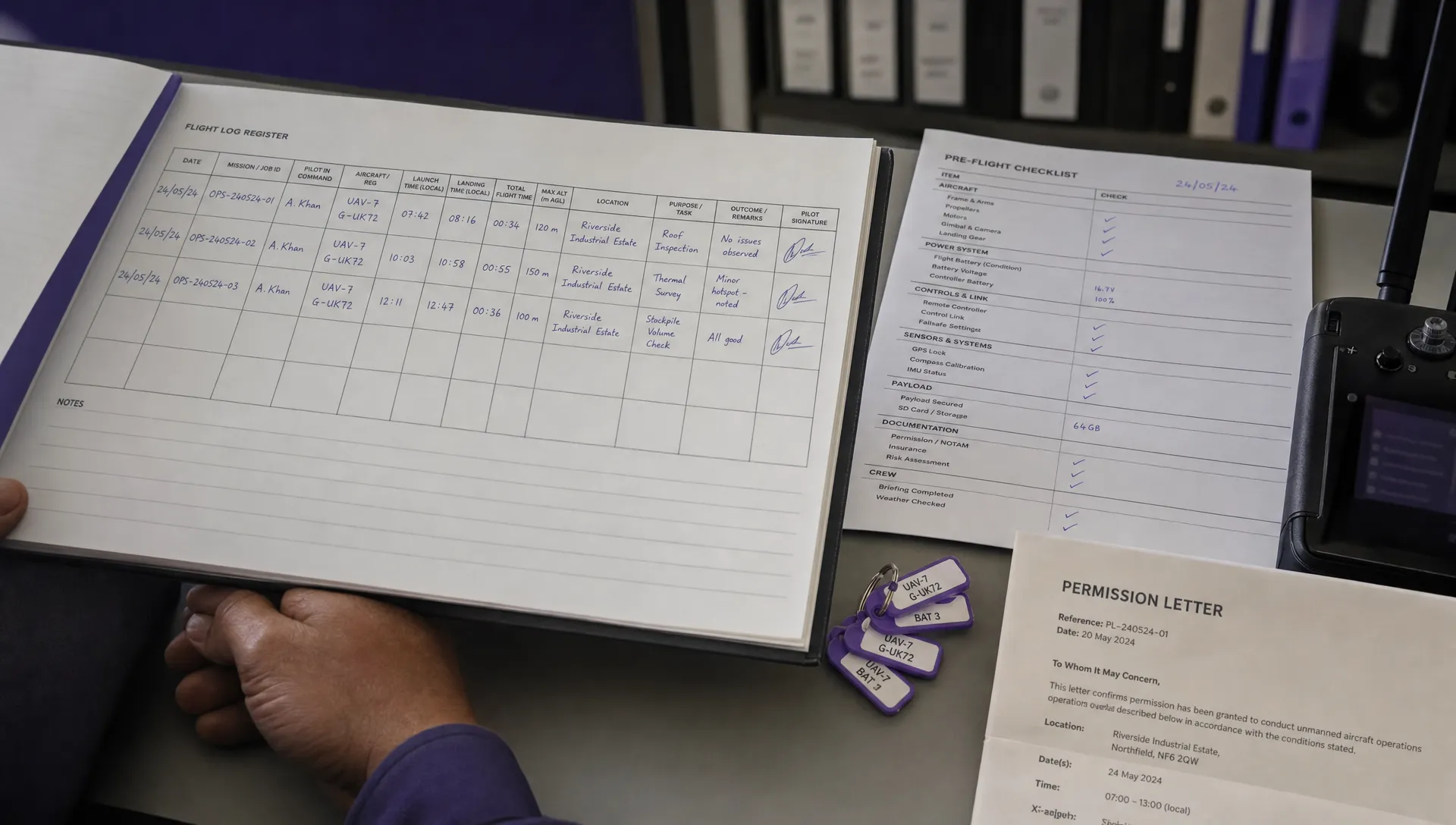 How to Build a Drone Pilot Flight Log That Is Audit Ready →
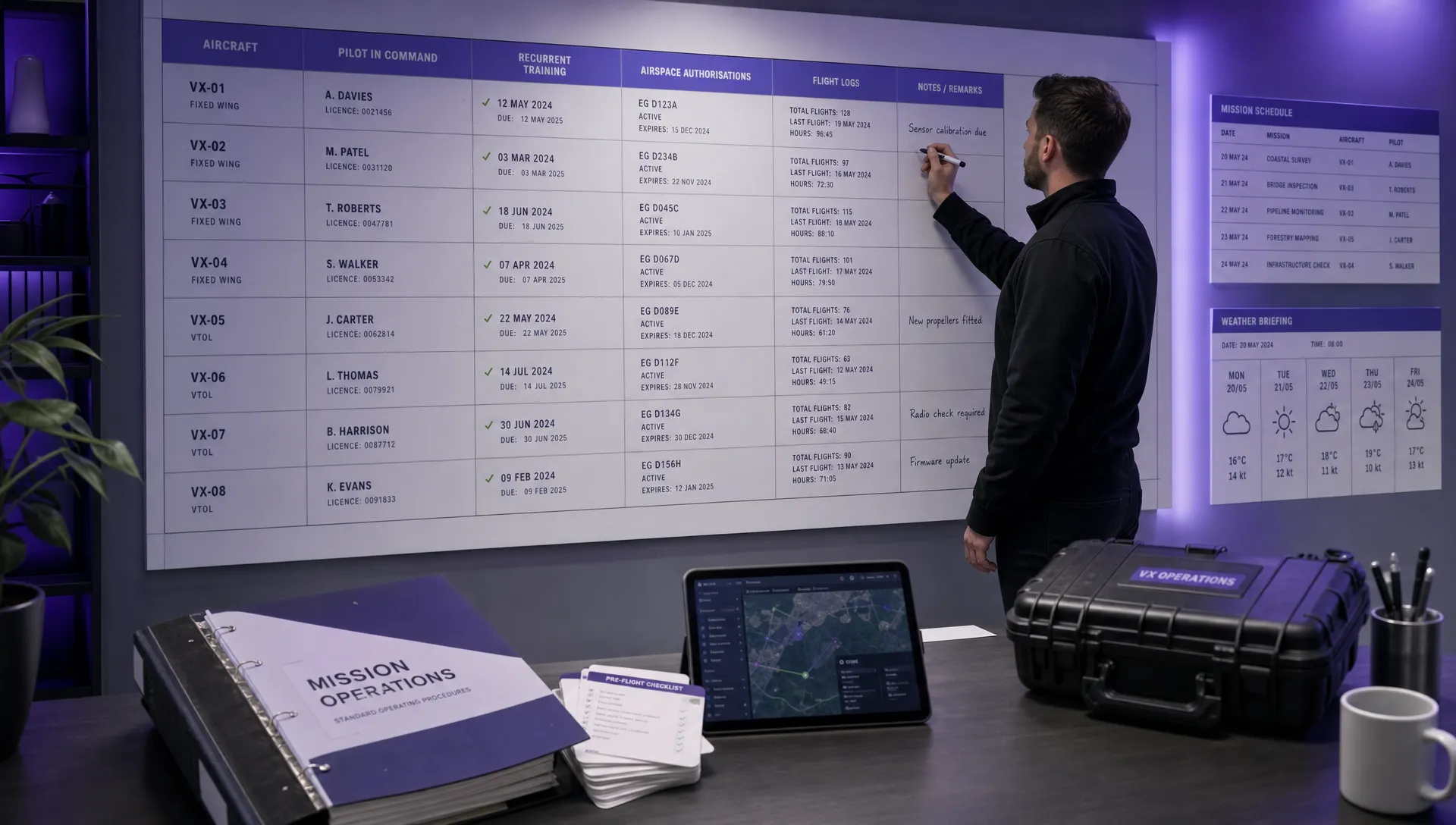 FAA Drone Licence Requirements for Commercial Pilots →
 FAA BVLOS Waivers Granted: What Successful Cases Show →