
Drone Visual Line of Sight Rules Explained
For commercial drone operators, visual line of sight sounds simple: keep the aircraft where you can see it. In practice, it is one of the most misunderstood parts of drone compliance, especially on mapping grids, roof inspections, utility corridors, emergency scenes and large construction sites.
The key point is this: drone visual line of sight is not just about seeing a tiny speck in the sky. It means being able to maintain meaningful visual awareness of the aircraft and the surrounding airspace so you can control the flight safely, avoid collisions and respond immediately if something changes.
This guide explains how VLOS works in UK drone operations, how it affects FPV and observer-supported flights, and how to plan missions that are safe, realistic and easy to evidence.
What does visual line of sight mean for drone operations?
Visual line of sight, often shortened to VLOS, means the remote pilot can maintain direct, unaided visual contact with the unmanned aircraft throughout the flight. Corrective glasses or contact lenses are fine, but binoculars, a zoom camera, a controller screen or a map display do not replace VLOS.
The UK Civil Aviation Authority’s Drone and Model Aircraft Code requires pilots to keep their aircraft in direct sight and to be able to fly safely within the rules. For professional operators, the practical standard is higher than simply knowing the drone is somewhere overhead.
A VLOS flight should allow the pilot to answer “yes” to four practical questions:
- Can I see the aircraft continuously without relying on the camera feed?
- Can I tell where it is, which direction it is travelling and whether it is behaving normally?
- Can I scan the surrounding airspace for helicopters, light aircraft, emergency aviation and other hazards?
- Can I take timely avoiding action, return, hold or land if the situation changes?
If the answer to any of these is no, the operation may already be outside meaningful VLOS, even if the drone is technically visible.
Why VLOS matters
VLOS is one of the main safety barriers in drone operations. It helps the remote pilot detect hazards that may not appear on a controller screen, including low-flying crewed aircraft, birds, kites, cranes, temporary obstacles and unexpected public movement.
It also provides resilience when technology fails. Live video can lag, freeze, drop out or show a narrow field of view. GNSS positioning can drift. A map display may tell you where the aircraft thinks it is, not necessarily what is happening around it. Visual awareness gives the pilot a direct way to understand the aircraft’s position and the wider environment.
For survey companies, utilities and emergency services, this matters because missions often happen in complex places. A roof edge may hide the drone at the far end of a structure. A transmission line corridor may tempt the pilot to fly further than the terrain allows. A blue-light incident may introduce other aircraft with little warning. VLOS keeps the operation anchored to what the pilot can actually supervise.
VLOS in UK drone rules
As of 2026, VLOS remains the default expectation for most UK Open Category drone flying. Flights that do not fit within the Open Category, or that need additional permissions due to operational risk, normally fall into the Specific Category and must follow the conditions of the operator’s Operational Authorisation.
The CAA’s rules and categories for drone flying set out the broad structure, but the most important compliance point is simple: do not assume that technology, automation or a competent observer automatically permits you to fly further than VLOS.
| Operating concept | What it means | Compliance point |
|---|---|---|
| Standard VLOS | The remote pilot keeps the drone in direct unaided sight | This is the normal basis for most Open Category operations |
| VLOS with an observer | A visual observer helps the pilot maintain awareness of the drone and surrounding airspace | The pilot remains responsible and must maintain effective communication with the observer |
| FPV within VLOS rules | The pilot uses a camera view or headset while another person maintains unaided visual contact | FPV does not remove the need for VLOS where the rules require it |
| EVLOS | Extended visual line of sight, usually involving positioned observers and defined procedures | This generally requires an appropriate authorisation, not just an informal observer chain |
| BVLOS | Beyond visual line of sight, where the aircraft is not kept in direct visual contact | This requires specific permissions and a stronger safety case |
Your Operational Authorisation, operations manual, risk assessment and client requirements may add more restrictive limits. Always follow the most restrictive applicable condition.
Is there a fixed distance for drone visual line of sight?
There is no universal VLOS distance that works for every drone, pilot and location. A large aircraft with high-contrast markings may remain visually useful at a greater distance than a small grey quadcopter against cloud or woodland. The same aircraft may be easy to see on one job and difficult to see on another.
In some UK authorisations or operating procedures, you may see explicit horizontal or vertical limits. Those limits matter, but they are not a guarantee that the flight is safely within VLOS. If visibility, background, glare or terrain prevents you from maintaining effective visual contact, you must reduce the distance, change the pilot position or redesign the flight.
Common factors that reduce VLOS include:
- Small aircraft size, low-contrast colour or poor lighting
- Haze, rain, low cloud, glare or low sun
- Complex backgrounds such as trees, roofs, cliffs or industrial structures
- Obstructions between the pilot and the drone
- Pilot fatigue during long, repetitive survey flights
- Over-reliance on telemetry, map view or automated mission planning
The safest planning assumption is to define a maximum operating radius for the specific job, then test whether that distance remains visually manageable from the chosen control point.
How VLOS affects common commercial drone work
Different sectors experience VLOS challenges in different ways. The rule is the same, but the planning decisions vary.
For mapping and surveying, grid missions often push the aircraft to the edges of a site. The pilot may be tempted to stand at one convenient launch point and let the automated flight cover the whole area. A better approach is to divide the site into smaller blocks, reposition between blocks and choose control points with clear sightlines.
For utility inspections, VLOS becomes a major factor on linear assets such as power lines, rail corridors, pipelines and roads. The operation may need staged take-off points, coordinated access and carefully briefed observers. If the intended method involves losing direct visual contact over distance, terrain or infrastructure, it needs a different authorisation basis.
For emergency services, VLOS must be balanced against urgency, scene safety and other aviation activity. Helicopters, drones from other agencies, smoke, floodwater, darkness and rapidly changing cordons can all affect what the pilot can see. A clear observer role and simple communication protocol are especially valuable.
For quarries, construction and industrial sites, VLOS can be lost behind stockpiles, buildings, cranes, silos or cuttings. A higher, safer control point can improve sightlines, but it does not remove the need to manage people, vehicles and site permissions.
How to plan a VLOS-compliant flight
A good VLOS plan starts before the drone is powered on. It should be visible in the job brief, risk assessment, checklists and flight log, not just assumed by the pilot on the day.
| Planning question | Why it matters | What to record |
|---|---|---|
| Where will the remote pilot stand? | The control point determines the usable sightline | Launch point, control point and any planned repositioning |
| What is the maximum planned distance from the pilot? | The mission may be legal on paper but unrealistic visually | Planned radius or operating area boundaries |
| What could block the sightline? | Buildings, trees, terrain and infrastructure can break VLOS quickly | Obstructions and mitigation measures |
| What are the light and weather conditions? | Glare, haze and cloud can make the drone hard to see | Weather, visibility and sun position considerations |
| Who is scanning for other aircraft? | VLOS includes awareness of surrounding airspace | Pilot and observer responsibilities |
| What happens if sight is lost? | A rehearsed response avoids hesitation | Hold, return, land or other contingency procedure |
This is where operational discipline matters. A practical drone flight risk assessment should not just say “VLOS maintained”. It should explain how VLOS will be maintained for that specific location, aircraft, pilot position and mission profile. If you want a deeper structure for that process, Dronedesk has a guide on building a drone flight risk assessment that works.
Visual observers: useful, but not a shortcut
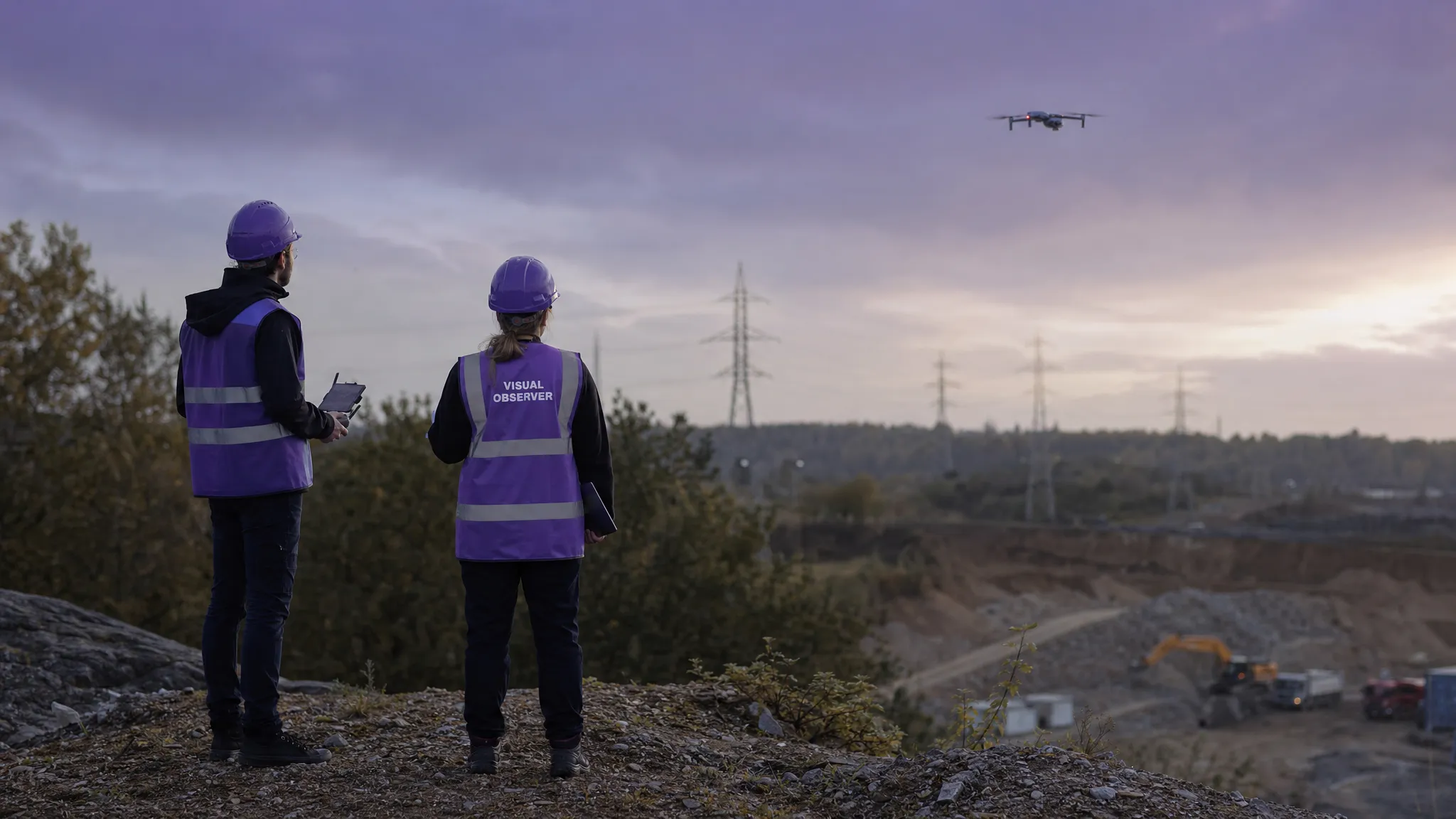
A visual observer can be extremely valuable. They can help scan for crewed aircraft, keep eyes on the drone while the pilot checks telemetry, monitor public movement and provide a second perspective during complex operations.
However, observers are often misunderstood. In standard VLOS operations, an observer helps the remote pilot maintain situational awareness. They do not automatically transfer legal responsibility away from the pilot, and they do not necessarily permit the aircraft to be flown beyond the pilot’s permitted VLOS conditions.
For observer-supported operations, the briefing should cover the planned flight area, expected aircraft behaviour, emergency calls, lost-sight actions and airspace hazards. Communication must be immediate and unambiguous. Phrases such as “aircraft approaching from the west”, “drone hard to see against trees” or “hold position” are far more useful than vague warnings.
If observers are positioned away from the pilot to extend the operating range, that becomes a more complex operational concept. It may fall under EVLOS or another authorised method, depending on the operation and jurisdiction. Do not treat a chain of observers as a workaround unless your authorisation and procedures explicitly support it.
FPV, screens and automation
FPV and automated flight planning are powerful tools, but neither changes the meaning of drone visual line of sight.
A live camera feed shows what the drone camera is pointing at. It does not show the whole airspace around the aircraft. It may not reveal a helicopter approaching from behind, a bird closing from above, or a loss of separation from an obstacle outside the camera’s field of view.
Similarly, an automated mapping mission can fly a precise route, but the pilot still needs to supervise the aircraft and be ready to intervene. Automation can reduce workload, but it can also create complacency if the pilot stops actively monitoring the visual environment.
FPV headset operations need particular care because the pilot’s eyes are inside the aircraft’s camera view rather than on the aircraft itself. Where VLOS is required, a competent observer must maintain direct visual contact and communicate effectively with the pilot. For commercial FPV work in the Specific Category, the operation must follow the relevant authorisation, procedures and risk controls.
What to do if you lose sight of the drone
Losing sight of the drone is not automatically an incident, but continuing as if nothing has happened is a serious mistake. The correct response should be pre-planned and proportionate to the environment.
First, stop any non-essential manoeuvre and avoid making the situation worse. If the drone is moving away, pause or hold if safe to do so. Use telemetry and map information to help reorientate, but remember that these are aids, not replacements for visual awareness.
If you cannot immediately regain sight, follow your planned contingency. That may mean returning along a known safe route, landing in a pre-identified area, or using a controlled return-to-home function if it is suitable for the site. The safest choice depends on obstacles, airspace, people, weather and the aircraft’s position.
If there is any indication of crewed aircraft nearby, prioritise avoiding action. In many cases, descending or landing safely will be the correct response. The mission can wait. Airspace safety cannot.
After the flight, record what happened and review the plan. Was the aircraft too small for the distance? Was the sun angle underestimated? Did the pilot position need changing? Was the automated route too ambitious? Good operators use near misses and lost-sight moments to improve future planning.
Evidencing VLOS in your operational records
For commercial operators, VLOS compliance is not only about doing the right thing in the field. It is also about being able to show how the flight was planned, briefed and completed.
Useful records include the mission plan, airspace checks, weather assessment, control point, maximum operating distance, observer briefing, risk assessment, checklists, flight log and any post-flight notes. For larger teams, consistency is especially important because different pilots may interpret VLOS differently unless the process is standardised.
Dronedesk is designed for drone operations management and includes features such as airspace intelligence, proximity intelligence, flight planning, configurable checklists, risk assessments, flight logging, fleet management, team management and data reporting, as listed on the Dronedesk features page. For operators managing multiple pilots or aircraft, a structured system can help keep VLOS considerations visible across planning, execution and review.
Growing teams should also think about how VLOS decisions connect to aircraft allocation, pilot competency, maintenance status and standard operating procedures. Those wider controls are covered in more depth in Dronedesk’s drone fleet management guide.
Practical VLOS checklist for pilots
Before your next operation, ask yourself the following questions during planning and again on site:
- Have I chosen a control point that gives me a clear line of sight across the operating area?
- Is the planned maximum distance realistic for this drone, in today’s visibility and background conditions?
- Will any part of the route pass behind trees, buildings, terrain, plant or other obstructions?
- Do I need to split the job into smaller sections or reposition the pilot between sections?
- If an observer is used, have they been briefed on exactly what to watch and what words to use?
- Do I have a clear lost-sight procedure that fits this site?
- Does my risk assessment explain how VLOS will be maintained rather than simply stating that it will be?
This checklist is deliberately practical. VLOS is not a box-ticking phrase. It is a live safety control that should shape the way the mission is designed.
Frequently Asked Questions
What counts as drone visual line of sight? Drone visual line of sight means the remote pilot can maintain direct, unaided visual contact with the aircraft and understand its position, movement and surrounding airspace well enough to control it safely.
Can I use binoculars to maintain VLOS? No. Binoculars, zoom lenses and camera feeds can support situational awareness in limited ways, but they do not replace the requirement for unaided visual contact, except for normal corrective glasses or contact lenses.
How far can I fly while remaining within VLOS? There is no single safe distance for every operation. It depends on the drone, weather, light, background, terrain, pilot eyesight and any limits in your authorisation or procedures. If you cannot maintain effective visual awareness, you are too far away.
Can a visual observer extend my drone’s range? A visual observer can help the pilot maintain awareness, but they are not automatically a legal shortcut for extending range. Extended visual line of sight operations need appropriate procedures and, where required, authorisation.
Does FPV count as visual line of sight? FPV does not count as unaided visual line of sight by itself. If VLOS is required, someone must maintain direct visual contact with the drone and be able to communicate effectively with the pilot.
What is the difference between VLOS, EVLOS and BVLOS? VLOS means the pilot keeps direct visual contact with the drone. EVLOS uses additional controls, often including observers, to extend visual coverage under an authorised procedure. BVLOS means the drone is flown beyond direct visual contact and requires specific approval and safety mitigations.
Make VLOS easier to plan, brief and evidence
VLOS compliance depends on good decisions before, during and after the flight. The more complex your sites, clients, pilots and aircraft become, the more important it is to manage those decisions consistently.
Dronedesk gives drone operators a single platform for planning flights, managing risk assessments and checklists, logging flights, checking airspace and keeping operational records organised. If you want a simpler way to manage compliant drone operations, explore how Dronedesk can support your team’s workflow.
 BVLOS Drone Requirements for Building a Safety Case →
 Drone Pilot Test Mistakes That Cost Candidates Marks →
 FAA 107 License vs Part 107 Certificate: What’s the Difference? →
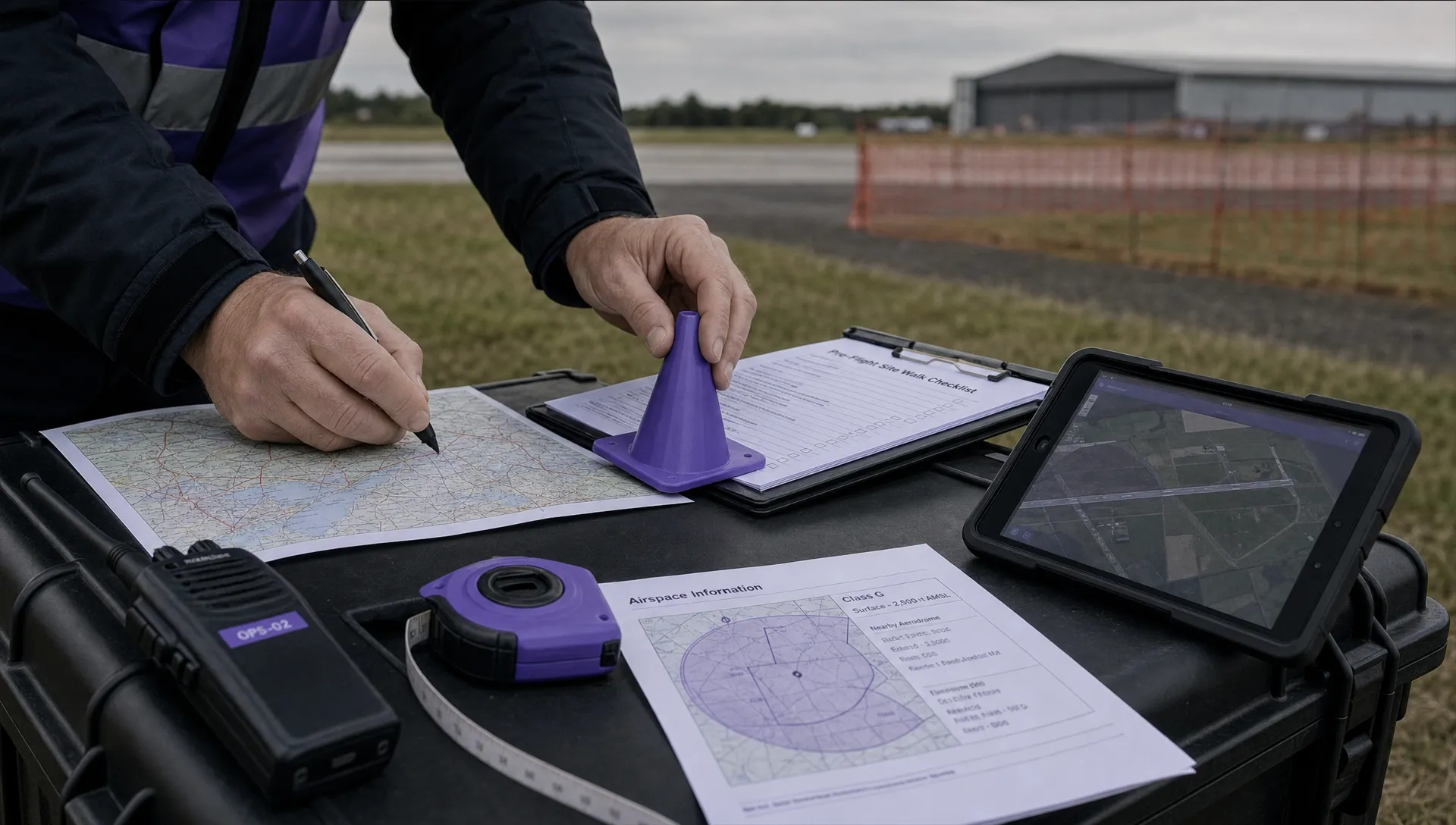 Drone Airport Rules: A Field Checklist for Site Assessments →
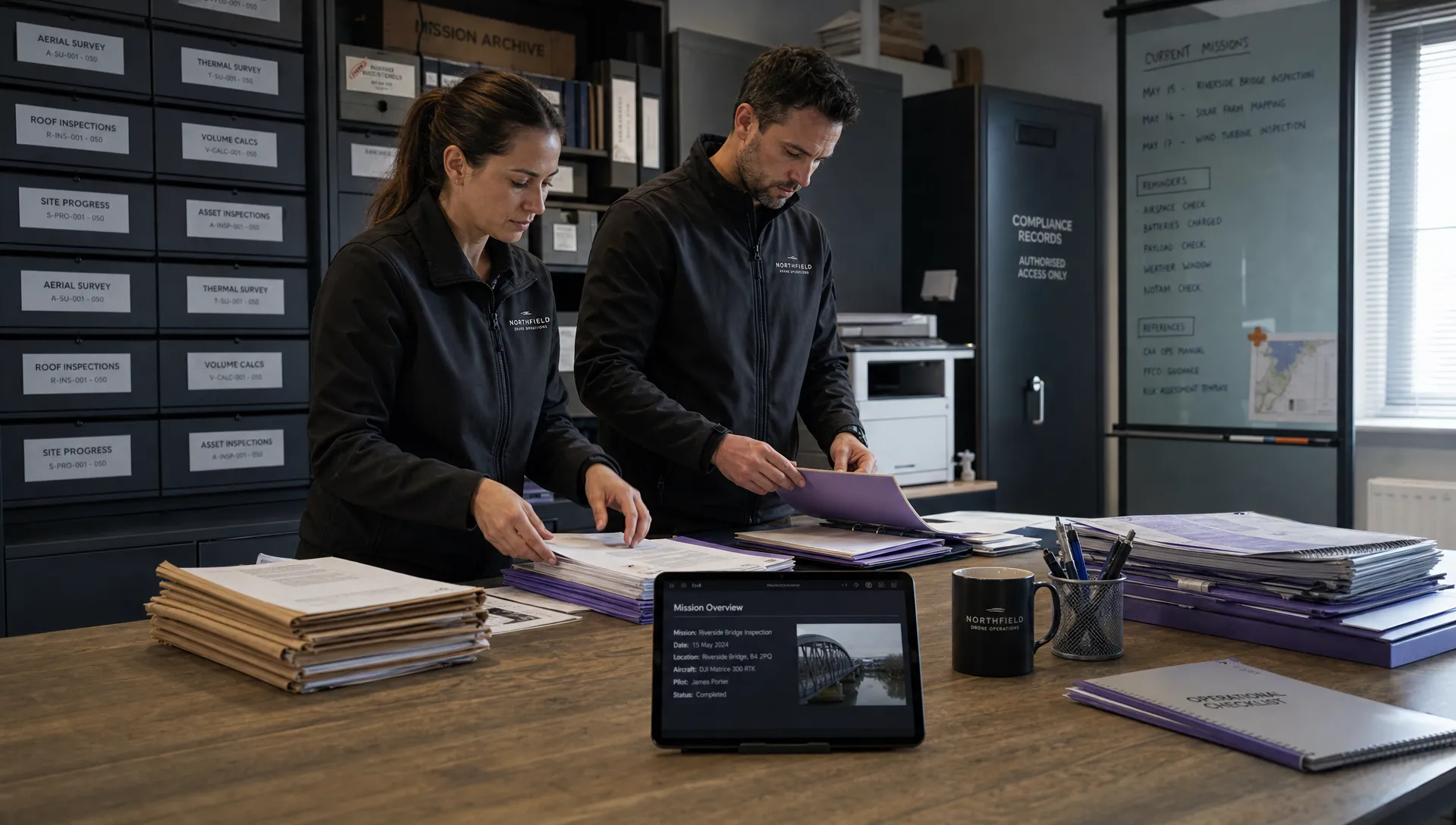 FAA Part 107 Record-Keeping Rules for Commercial Teams →
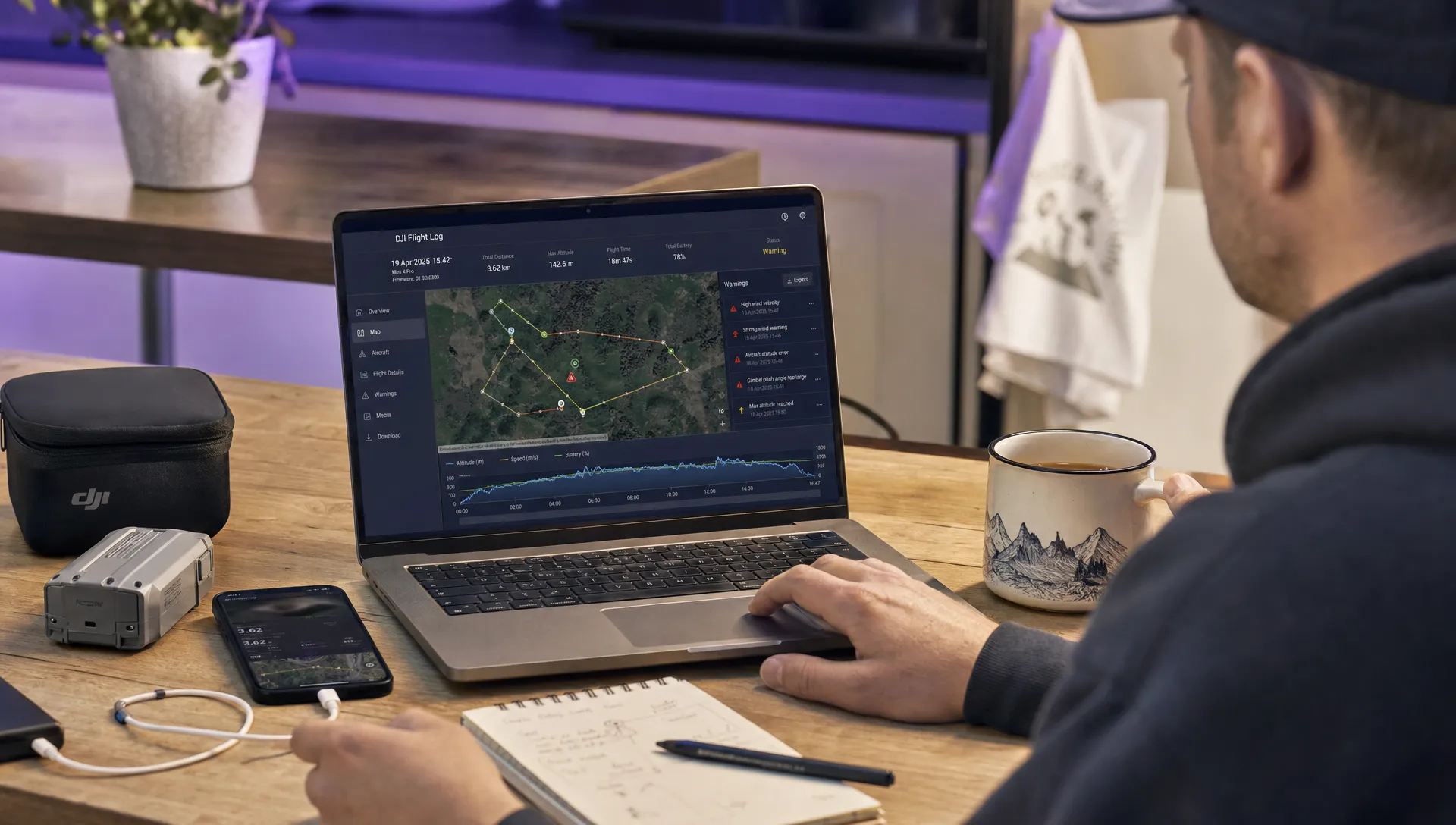 How to Review a DJI Flight Log After an Unexpected Event →
 Drone Laws Around the World: A Pre-Flight Research Framework →
 How to Compare Drone Survey Services for Complex Sites →
 How to Start a Drone Mapping Business With a Clear Workflow →
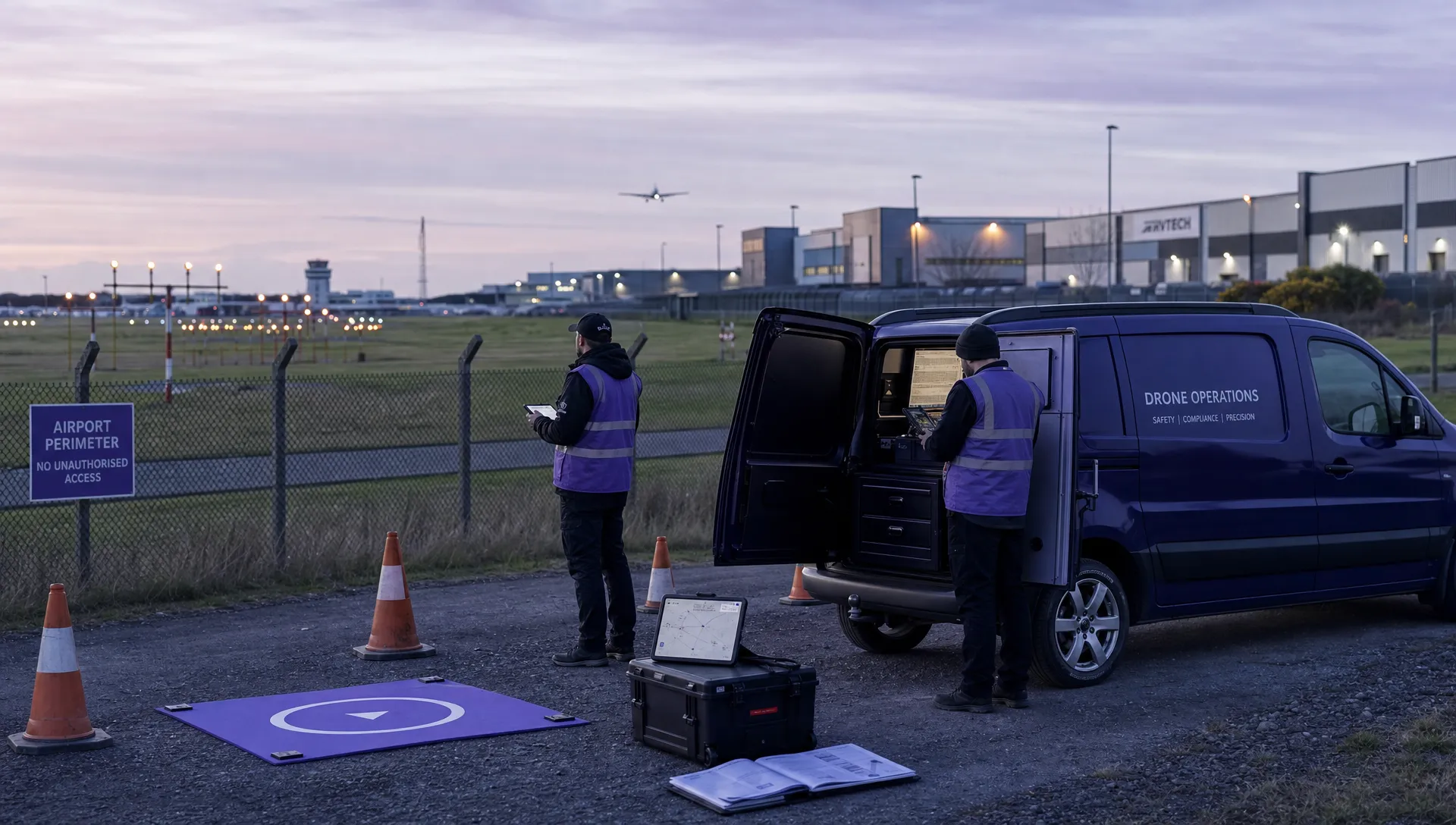 Class C Airspace Drone Rules for Commercial Flights →