
Drone Flying Laws: A Practical Guide for Operators
For professional operators, drone flying laws are not just a compliance detail. They decide whether a job can be accepted, how it must be planned, what permissions are needed, which pilot can fly, what evidence must be kept and what happens if something goes wrong.
This guide is written primarily for UK drone operators, including survey companies, utilities, emergency services and commercial inspection teams. If you operate outside the UK, use the structure as a practical compliance framework, then check the rules published by your own aviation authority before flying.
Drone regulation also changes. Treat this article as operational guidance, not legal advice, and always verify current requirements with the UK Civil Aviation Authority before making decisions on a live mission.
The UK drone law framework in plain English
In the UK, drone operations are regulated by the Civil Aviation Authority (CAA). The legal framework includes the Air Navigation Order, UK unmanned aircraft regulations and CAA guidance such as the Drone and Model Aircraft Code.
The most important principle for operators is that UK drone law is risk-based. In practice, the first question is not simply “is this commercial?” but “which operational category does this flight fall into?”
| Category | What it means in practice | Typical operator relevance |
|---|---|---|
| Open | Lower-risk flights that can normally be conducted without prior CAA operational authorisation, provided all Open category rules are met | Straightforward visual line of sight work away from higher-risk airspace, crowds and close proximity issues |
| Specific | Flights that fall outside the Open category and require a CAA Operational Authorisation, supported by appropriate procedures and risk assessment | Many complex commercial, infrastructure, emergency service and higher-risk survey operations |
| Certified | Higher-risk operations requiring certification closer to traditional aviation standards | Complex operations such as carrying people or other very high-risk use cases |
For many commercial teams, the key challenge is knowing when a seemingly routine job has crossed from Open into Specific. A roof inspection near a busy street, a utility inspection beside a live road, or a mapping project that cannot be completed within visual line of sight may all need more than a standard Open category plan.
The core drone flying laws every operator should check
Registration and operator responsibilities
If you are responsible for a drone that must be registered, you need the correct Operator ID. The operator is the person or organisation responsible for managing the drone, not necessarily the person holding the controller on the day.
Many pilots also need a Flyer ID, which involves passing the required theory test. Additional competency, such as an A2 Certificate of Competency (A2 CofC) or General VLOS Certificate (GVC), may be needed depending on the type of operation and authorisation.
For companies, this matters because records must match reality. If a subcontract pilot is flying under your operating procedures, make sure you know whose Operator ID applies, what authorisation the flight is being conducted under and whether the pilot’s competency is current.
Operational category and authorisation
Before each job, confirm whether the flight fits the Open category rules. If it does not, you need to operate under a suitable CAA Operational Authorisation or redesign the mission.
Open category flights typically require visual line of sight, a maximum height of 120 metres above the surface unless a valid exception applies, compliance with separation rules, and no flight over assemblies of people. The exact conditions depend on the drone, location, people nearby and subcategory.
Specific category operations require a more formal operating framework. This usually includes an operations manual, documented procedures, competent remote pilots and risk assessment evidence. Do not stretch the Open category to make a job fit. If the legal basis is weak before take-off, the whole operation is exposed.
Airspace, flight restriction zones and temporary restrictions
Airspace checks are a legal requirement in practice, not a nice-to-have planning step. Aerodrome Flight Restriction Zones (FRZs), restricted areas, danger areas, temporary restrictions, NOTAMs and local airspace arrangements can all affect whether a flight is legal.
If a site is close to an airport or protected aerodrome, permission is required from the appropriate air traffic control unit or aerodrome operator before flying in the FRZ. Other temporary restrictions may be created for events, emergency incidents, security operations or state occasions.
A single map layer is rarely enough for professional work. Operators should check authoritative sources, document what was checked, record the time of the check and retain evidence with the job file.
Land access and site permissions
CAA permission deals with aviation safety. It does not automatically give you the right to take off, land, enter private land, operate from a highway, work on a rail site or fly from a controlled industrial location.
For commercial work, site permissions often involve more than the client’s approval. You may also need the landowner, occupier, facilities manager, local authority, highways team, rail operator, port authority or utility asset owner to confirm access arrangements.
This is especially important for survey companies and utility operators. A flight can be aviation-compliant but still breach land access rules, site safety procedures or contractual requirements.
Height, visual line of sight and separation from people
The 120 metre rule is widely known, but it is often misunderstood. In the Open category, the maximum is generally 120 metres from the closest point of the earth’s surface, not simply 120 metres above your take-off point. Terrain, buildings and structures can complicate planning.
Visual line of sight also means the remote pilot can maintain direct unaided visual contact with the aircraft, except for normal corrective lenses. Observers can support situational awareness, but they do not automatically convert a flight into an extended visual line of sight operation unless your authorisation and procedures allow it.
Separation from uninvolved people depends on the operating category, aircraft and authorisation. The practical rule for operators is simple: identify who could be affected, determine whether they are involved or uninvolved, apply the correct separation limits, and build a contingency plan for unexpected movement.
Privacy and data protection
Drone flying laws are not limited to aviation. If your drone captures images, video, thermal data or other information that can identify people, UK data protection law may apply.
The Information Commissioner’s Office guidance on drones is useful for understanding privacy expectations. Professional operators should consider lawful basis, data minimisation, retention, signage, client instructions and how to respond if a member of the public asks what is being recorded.
For emergency services, utilities and survey teams, this is more than reputational risk. Poor data handling can undermine stakeholder confidence even where the aviation side of the job was well managed.
Insurance
Commercial drone operations commonly require aviation liability insurance. Client contracts may also specify minimum cover levels, named insured parties or additional requirements for high-risk sites.
Do not assume a general public liability policy covers unmanned aircraft operations. Check that the policy is appropriate for the aircraft, type of work, location and operating category. Keep the certificate with your job records, especially where principal contractors or public sector clients may audit the operation later.
A practical compliance workflow before every drone job
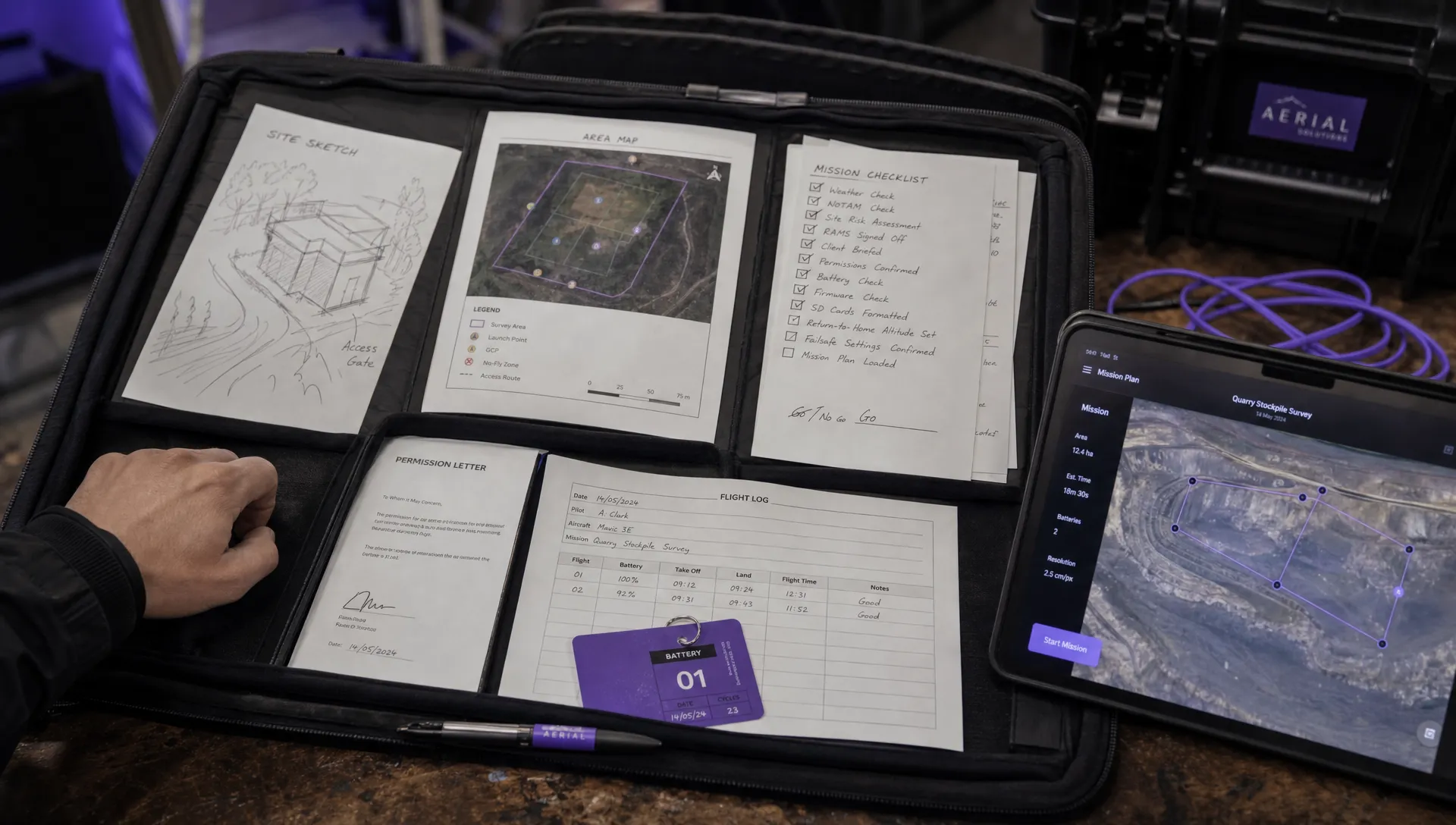
A repeatable workflow helps prevent legal gaps, especially when teams are busy or responding at short notice. The aim is to turn drone flying laws into operational prompts that are checked the same way every time.
- Define the mission: Confirm the purpose, client, site, date, aircraft, payload, pilot, crew and required outputs.
- Classify the operation: Decide whether the flight fits Open, Specific or another permission route, and record the reason.
- Check airspace and restrictions: Review FRZs, controlled or restricted airspace, NOTAMs, temporary restrictions and local hazards.
- Assess people and property: Identify uninvolved people, roads, buildings, sensitive sites, livestock, vehicles and neighbouring land.
- Confirm permissions: Record aviation permissions, land access, client authority, site inductions and any stakeholder notifications.
- Complete the risk assessment and briefing: Document mitigations, emergency procedures, crew roles, weather limits and abort criteria.
- Fly, log and review: Capture the flight log, deviations, incidents, maintenance issues and lessons learned.
The legal value of this workflow is evidence. If a client, regulator, insurer or internal safety manager asks why a flight went ahead, the answer should be visible in the file, not reconstructed from memory.
| Compliance question | Evidence to keep | Common red flag |
|---|---|---|
| Was the operation in the correct category? | Category decision, authorisation reference if applicable, pilot competency | Treating paid work as automatically legal because the pilot has a Flyer ID |
| Was the airspace checked properly? | Airspace screenshots, NOTAM check, FRZ permission if needed | Relying on an old saved map or a verbal assumption |
| Were people and property managed? | Site survey, cordon plan, observer notes, client briefing | No plan for members of the public entering the area |
| Was data protection considered? | Privacy assessment, signage or notification plan, client data instructions | Capturing identifiable people without a clear purpose |
| Was the aircraft fit to fly? | Maintenance record, defect status, battery checks, firmware notes where relevant | No link between fleet records and the aircraft used |
| Was the flight reviewed afterwards? | Flight log, incident notes, maintenance actions, lessons learned | Closing the job without recording deviations or issues |
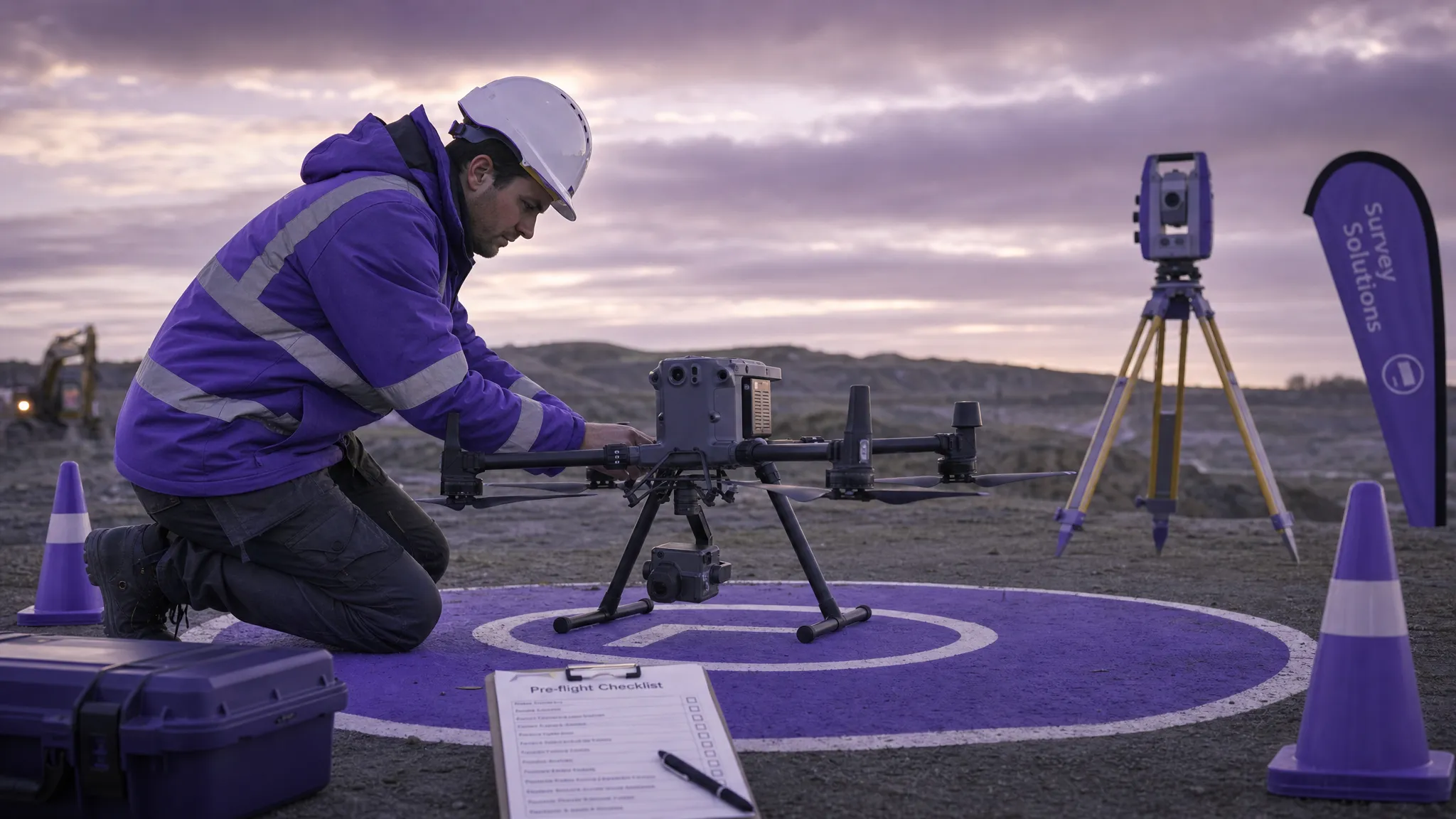
How drone laws affect common operator scenarios
Survey and mapping work
Survey flights often look low risk because they take place over open land. Many do fit within the Open category, provided the aircraft, height, airspace, people separation and visual line of sight requirements are met.
Problems appear when the site is larger than expected, terrain blocks the pilot’s view, the client asks for higher-altitude coverage, or the survey boundary sits near a village, road, railway or protected site. If the pilot cannot maintain visual line of sight throughout the mission, you may need a different operating model or authorisation.
Operators should also remember that mapping data can include people, vehicles, private gardens and sensitive infrastructure. Privacy planning belongs in the job file, not just in the client contract.
Roof, construction and built environment inspections
Built environment work is one of the easiest areas for legal assumptions to fail. A small drone does not automatically make a city-centre inspection compliant. The key issues are uninvolved people, traffic, adjacent property, take-off and landing control, emergency landing options and whether the aircraft can be operated within the applicable separation rules.
A practical approach is to plan the site as a controlled operating area. Confirm who is involved, how they will be briefed, how access will be managed, and what happens if a member of the public enters the area. If you cannot control the risk within Open category limits, consider whether a Specific category authorisation is required.
Utility and infrastructure operations
Utility operators often fly near power lines, substations, pipelines, telecoms assets, roads, rail corridors or restricted industrial sites. Aviation compliance is only one layer of the legal picture.
You may need asset owner permission, site safety approval, electrical safety controls, railway or highways coordination, environmental restrictions and security clearance. Electromagnetic interference, loss of GNSS, confined emergency landing areas and difficult public access also influence the risk assessment.
For teams managing multiple aircraft and pilots across many sites, standardised records become essential. If spreadsheets are becoming hard to control, Dronedesk’s drone fleet management guide explains when dedicated fleet processes start to matter.
Emergency services and public safety operations
Emergency services may operate under specific authorisations, exemptions or pre-agreed procedures, but they are not outside the law. The challenge is that the risk picture can change minute by minute.
A missing person search, major fire, flood response or road traffic incident may involve temporary restrictions, other aircraft, blue-light coordination, crowds, privacy-sensitive footage and rapidly changing weather. The best legal preparation happens before the callout: current authorisations, trained pilots, rehearsed procedures, clear command roles and post-flight records.
Emergency service teams should also define how drone evidence is stored, who can access it and how footage is shared. That helps protect both operational integrity and public trust.
Risk assessments are where the law becomes operational
A legal requirement is often written in broad terms: maintain safe separation, avoid endangering people, comply with authorisation conditions. A risk assessment turns those duties into site-specific actions.
A good drone risk assessment should identify the air risk, ground risk, operating environment, people affected, aircraft limitations, crew competence, weather limits, emergency procedures and residual risk. It should also be usable by the pilot, not just written for an audit.
If you need a deeper structure, this guide on how to build a drone flight risk assessment that works covers the practical elements in more detail.
For Specific category work, the risk assessment also supports the case for authorisation. For Open category work, it shows that the operator has applied the law sensibly to the real environment.
Records that make drone law compliance auditable
Professional operators should assume that any job may be reviewed later. That review might come from a client, insurer, regulator, internal safety team or, in the worst case, an incident investigation.
Useful records include operator and flyer IDs, pilot competency evidence, CAA authorisations, operations manual version, aircraft maintenance history, battery records, airspace checks, land permissions, site surveys, risk assessments, checklists, flight logs, incident reports and client approvals.
The CAA does not need operators to create unnecessary paperwork for its own sake. The point is to prove that decisions were made properly at the time. A neat audit trail also helps teams spot weak points before they become compliance failures.
This is where an operations management platform can support discipline. Dronedesk is an all-in-one web platform for drone operators, and its features page lists client management, fleet management, team management, airspace intelligence, proximity intelligence, flight planning, flight logging, data reporting, configurable checklists and risk assessments. Used consistently, tools like these can help operators keep legal planning, operational records and post-flight evidence in one place.
Common mistakes that put operators at risk
Even experienced teams can drift into non-compliance when work becomes routine. The most common problems are rarely dramatic. They are small gaps repeated often.
- Assuming a sub-250g drone is rules-free: Smaller aircraft can still be subject to registration, airspace, privacy and safety requirements.
- Checking airspace too early and not again: Temporary restrictions and NOTAMs can change between booking and take-off.
- Confusing client permission with legal permission: A client can approve the work but cannot waive CAA rules or third-party land rights.
- Ignoring uninvolved people: People moving through the site can change the operating category or invalidate the plan.
- Letting commercial pressure drive the decision: If the legal basis is not clear, postpone, redesign or seek the correct authorisation.
- Keeping weak records: If you cannot show what was checked, who approved it and why the flight was safe, compliance is harder to defend.
The best operators build a culture where stopping a flight is treated as professional judgement, not failure.
If the job does not fit the Open category
When a mission cannot be flown legally in the Open category, there are usually three options.
First, redesign the job. Change the take-off point, aircraft, timing, cordon, crew, flight path or data capture method so the operation fits the rules.
Second, operate under an existing CAA Operational Authorisation if your organisation has one and the mission is within its scope. The scope matters. An authorisation is not a blanket permission to fly anywhere, in any way, for any purpose.
Third, apply for or vary an authorisation. This takes planning, documentation and competent personnel, so it should not be left until the week of a critical contract.
For repeat work, such as infrastructure inspections, emergency service operations or urban surveys, the cost of building the right authorisation framework is often lower than repeatedly trying to force complex jobs into an unsuitable category.
Working across borders
Drone flying laws change significantly between countries. A UK Operational Authorisation does not automatically allow you to fly in an EU member state, the United States or elsewhere. EASA member states, the FAA and other aviation authorities have their own registration, competency, remote identification, insurance and authorisation rules.
Cross-border operators should create a country-specific compliance pack before accepting work. That pack should confirm the regulator, legal category, registration route, pilot competency, insurance requirements, local airspace tools, privacy rules and any import or radio equipment constraints.
For multinational companies, the safest approach is to standardise the internal workflow while localising the legal checks.
Frequently Asked Questions
What are the main drone flying laws in the UK? UK operators must follow CAA rules covering registration, pilot competency, operational categories, airspace restrictions, maximum height, visual line of sight, separation from people, safety responsibilities and, where relevant, Operational Authorisation requirements.
Do I need a licence to fly a drone commercially? The UK system is not based on a simple commercial drone licence. You may need an Operator ID, Flyer ID, additional competency such as A2 CofC or GVC, suitable insurance and a CAA Operational Authorisation depending on the operation.
Can I fly a drone under 250g anywhere? No. Smaller drones are still subject to airspace restrictions, privacy law, safety duties and, in many cases, registration requirements. Weight can reduce some restrictions, but it does not remove the law.
How high can I fly a drone in the UK? In the Open category, the usual maximum is 120 metres above the closest point of the surface unless a valid exception or authorisation applies. Always check the CAA rules for your exact operation.
When does a drone job need Specific category authorisation? If the operation cannot meet Open category conditions, for example due to proximity to uninvolved people, operating environment, aircraft type, visual line of sight limits or other risk factors, it may need to be conducted in the Specific category.
Do drone laws apply to emergency services? Yes. Emergency services may operate under specific authorisations, exemptions or procedures, but they still need a lawful operating framework, trained personnel, risk controls and appropriate records.
Turn drone laws into everyday operating discipline
The operators who handle drone flying laws best do not treat compliance as a final tick-box before take-off. They build it into quoting, planning, crew allocation, site approval, risk assessment, flight logging and post-flight review.
If your team is managing clients, pilots, aircraft, permissions, checklists, risk assessments and logs across multiple jobs, Dronedesk can help centralise that operational workflow. Explore Dronedesk to see how a dedicated drone operations management platform can support safer, more organised and more auditable drone work.
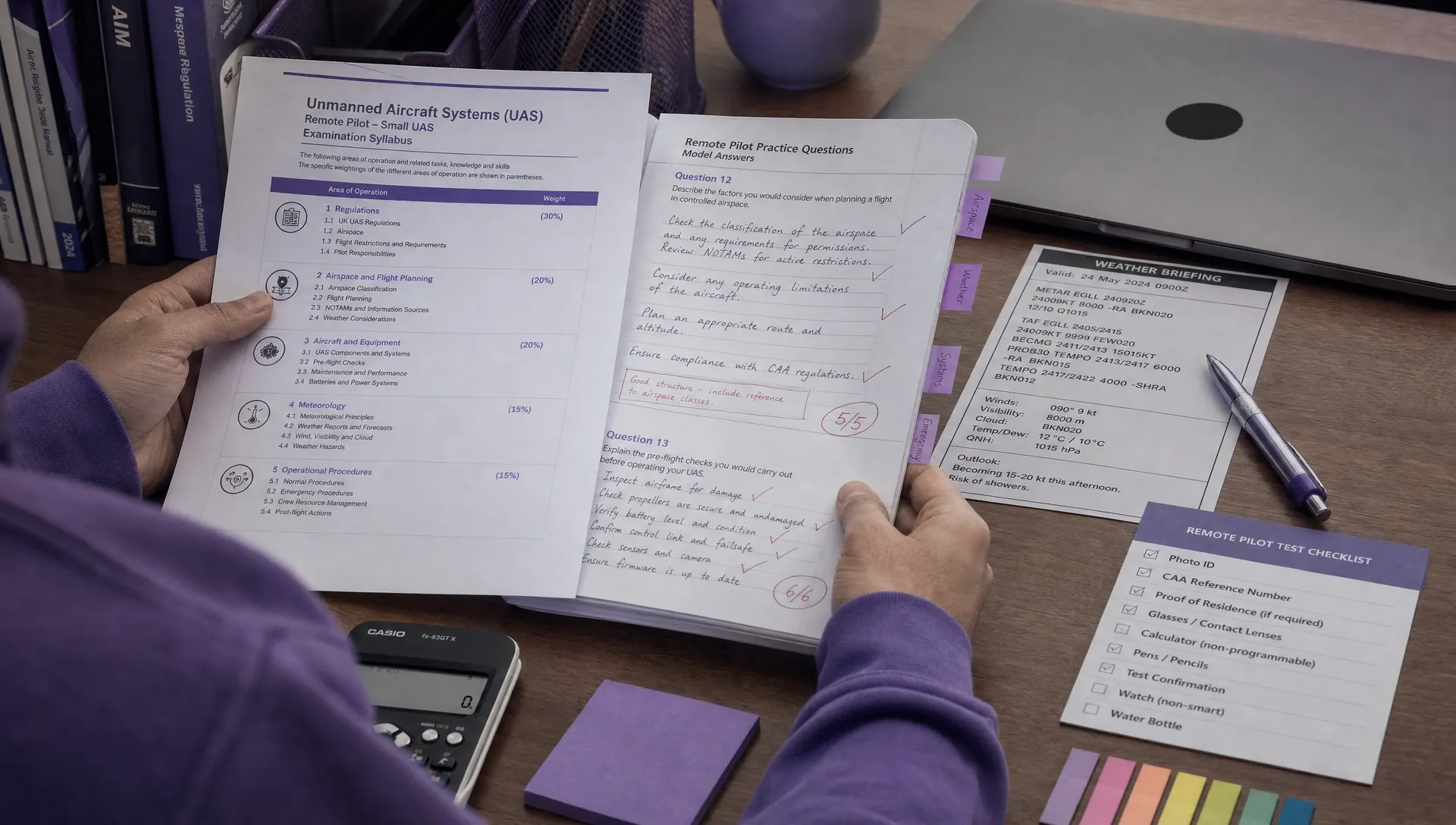 Drone Pilot Test Mistakes That Cost Candidates Marks →
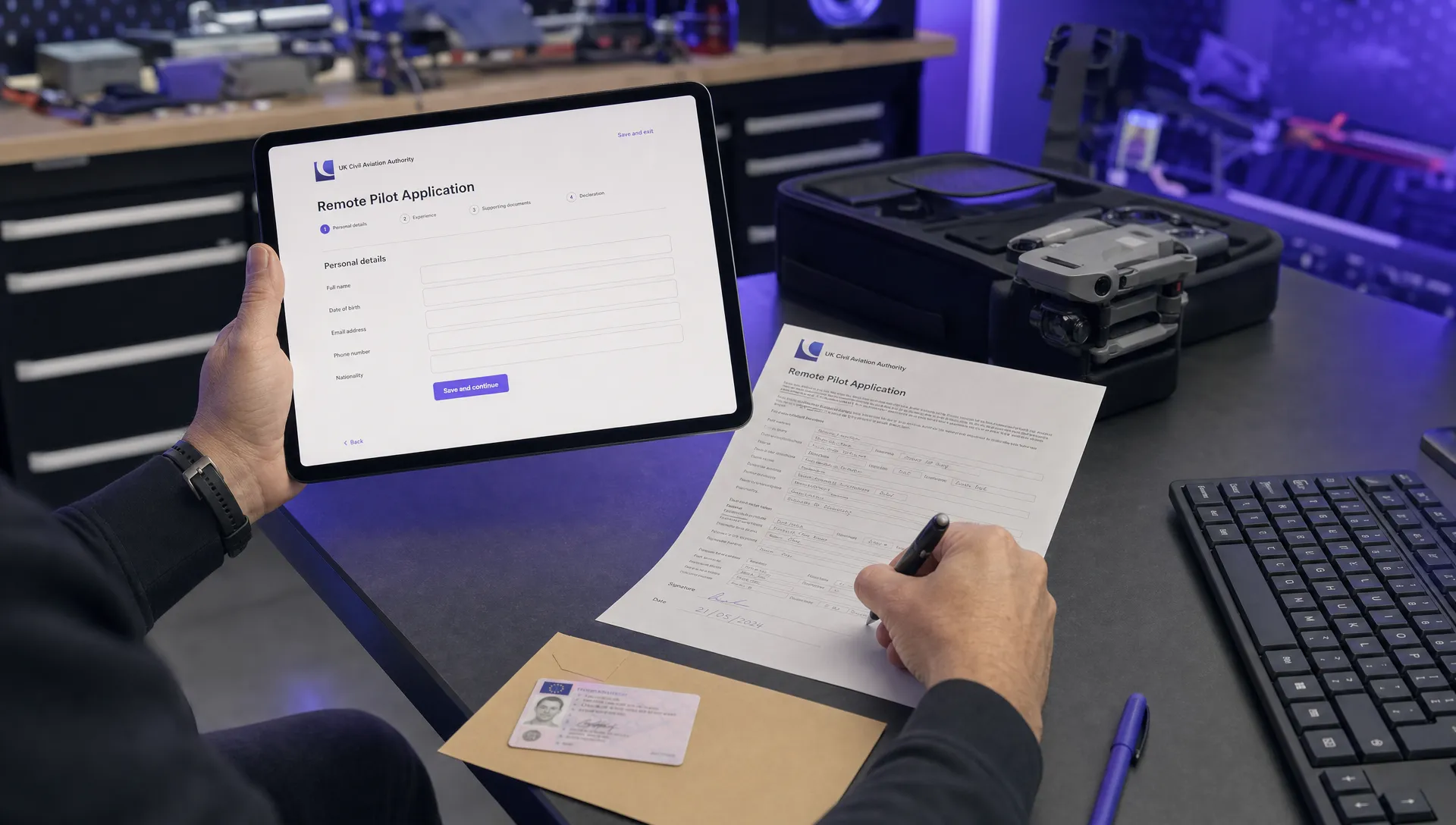 FAA 107 License vs Part 107 Certificate: What’s the Difference? →
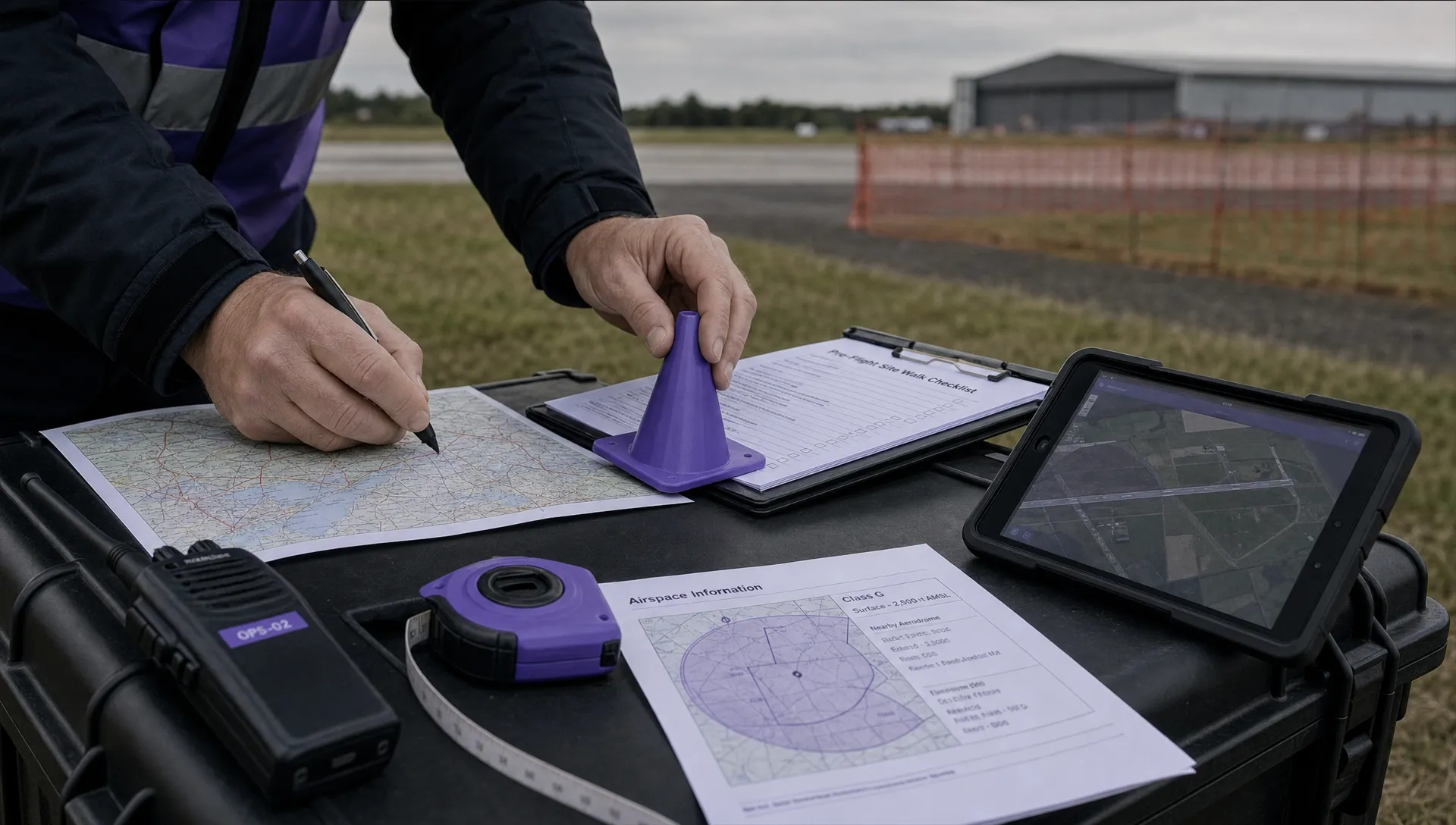 Drone Airport Rules: A Field Checklist for Site Assessments →
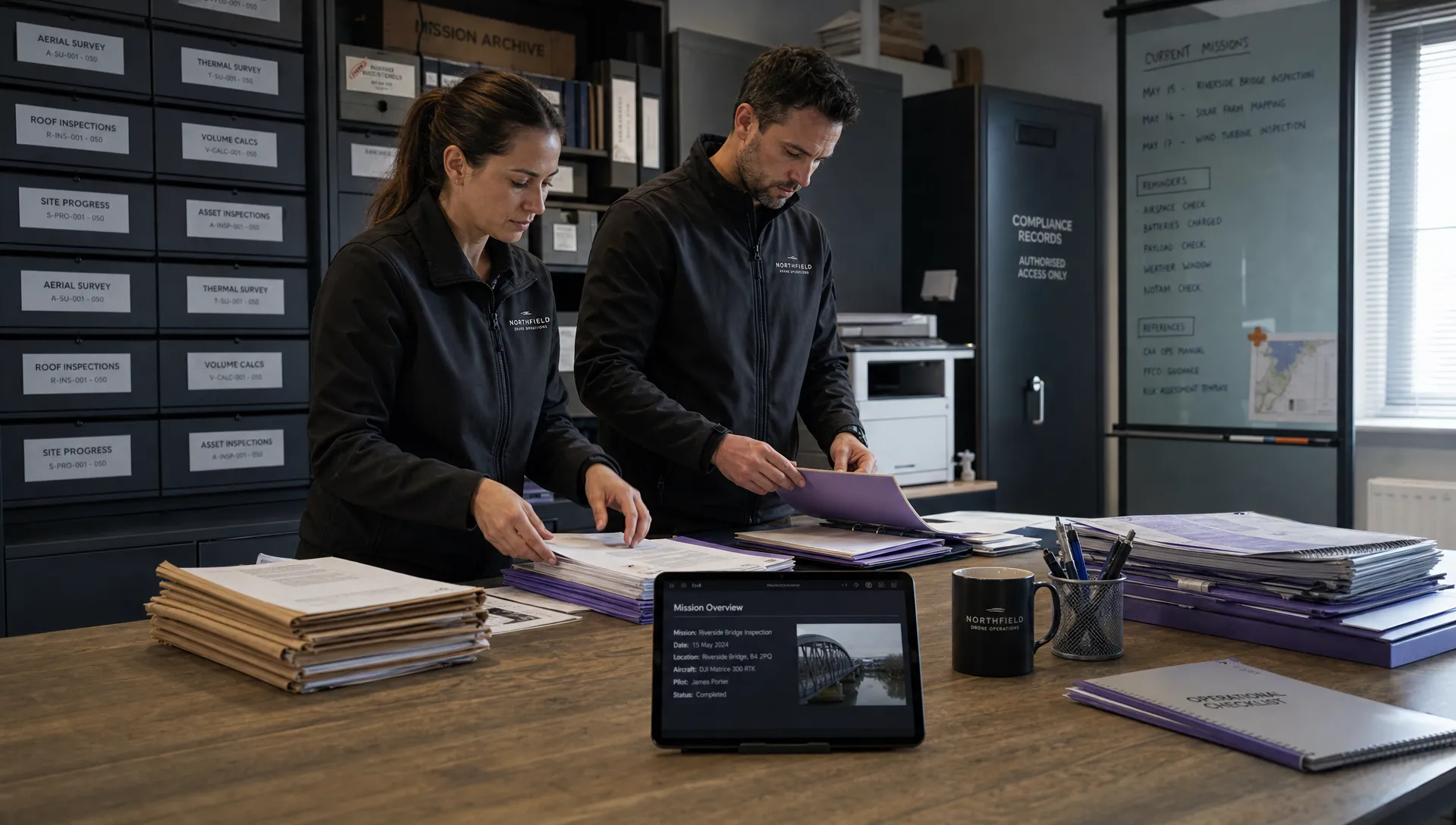 FAA Part 107 Record-Keeping Rules for Commercial Teams →
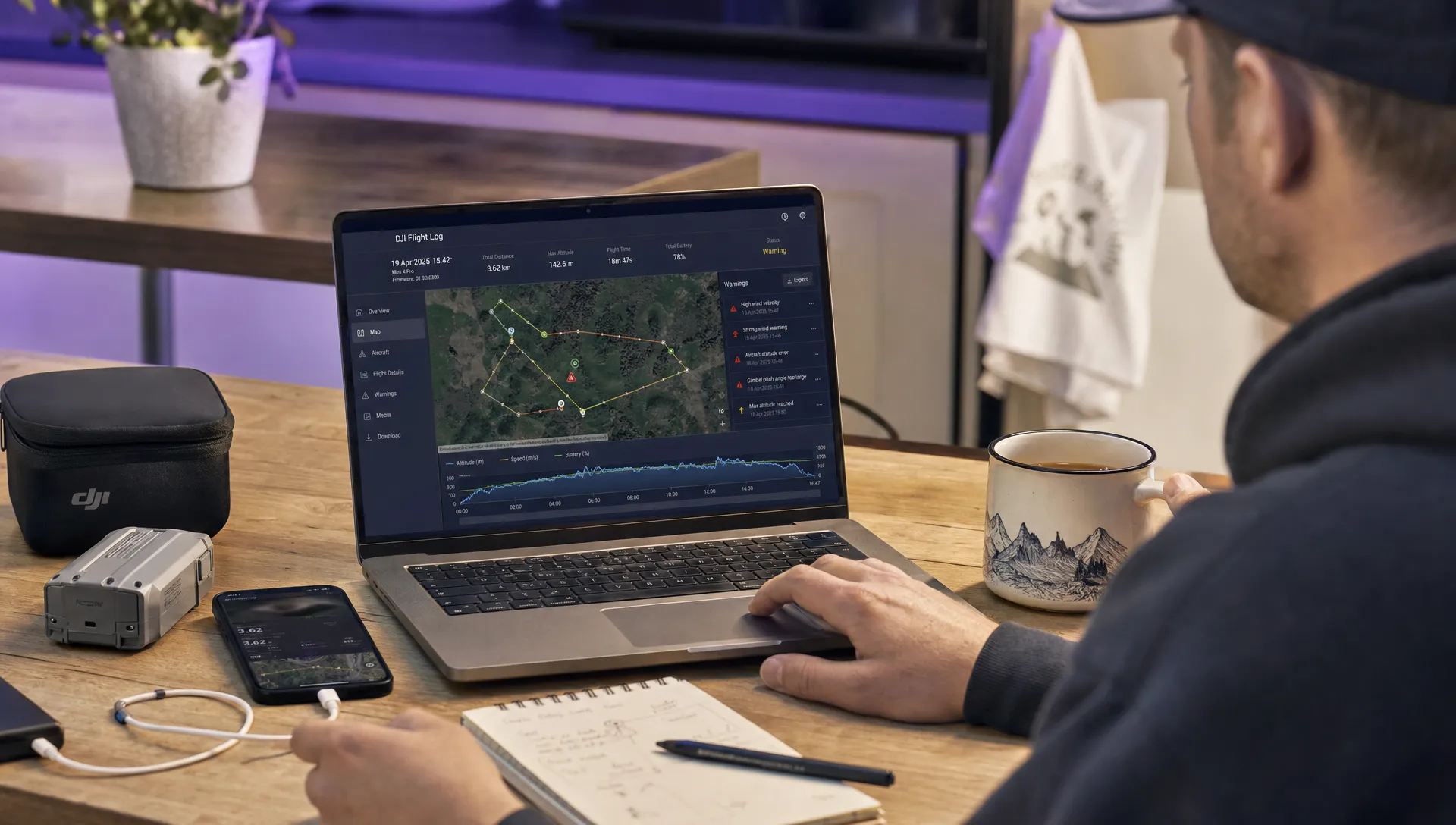 How to Review a DJI Flight Log After an Unexpected Event →
 Drone Laws Around the World: A Pre-Flight Research Framework →
 How to Compare Drone Survey Services for Complex Sites →
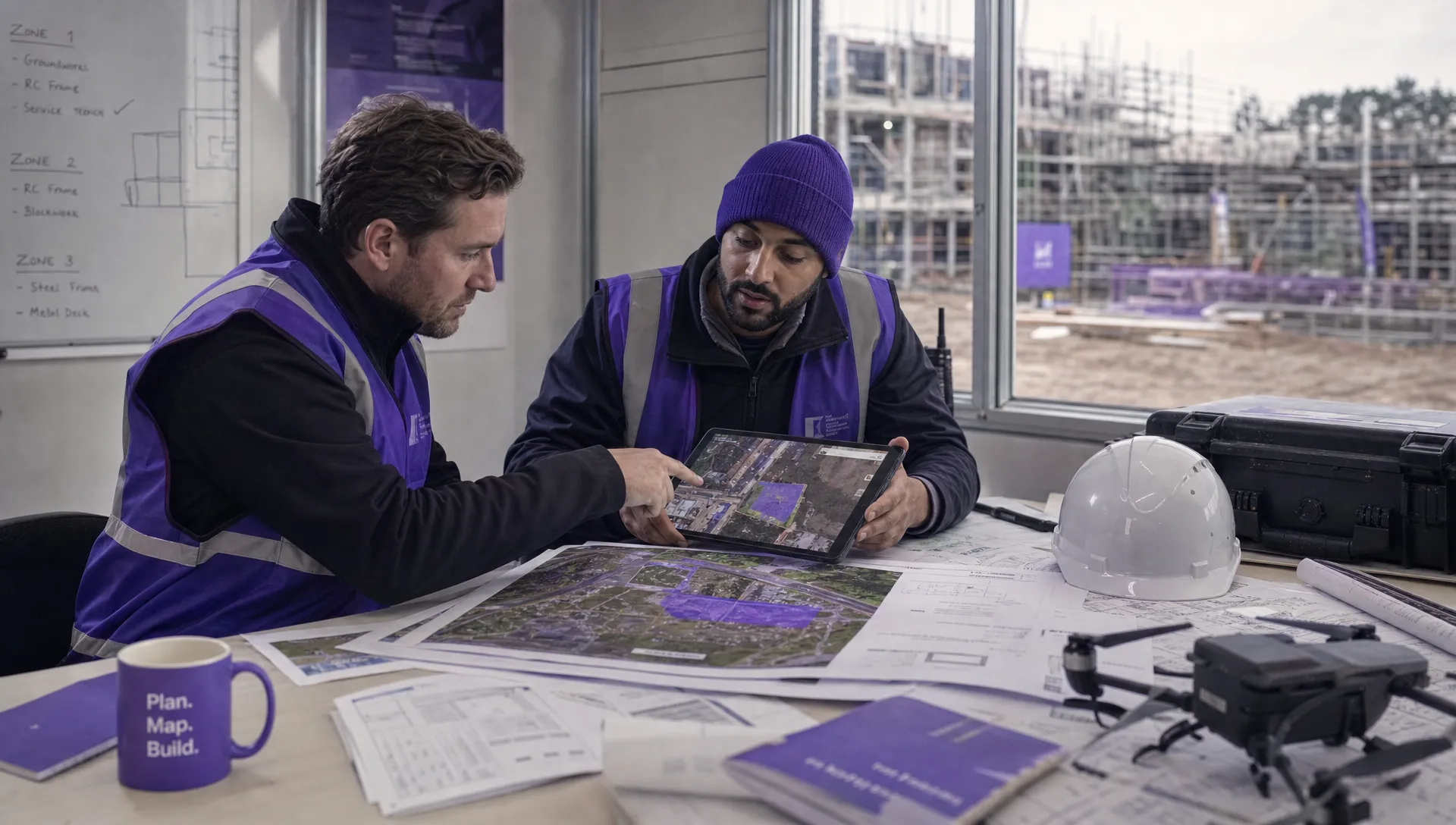 How to Start a Drone Mapping Business With a Clear Workflow →
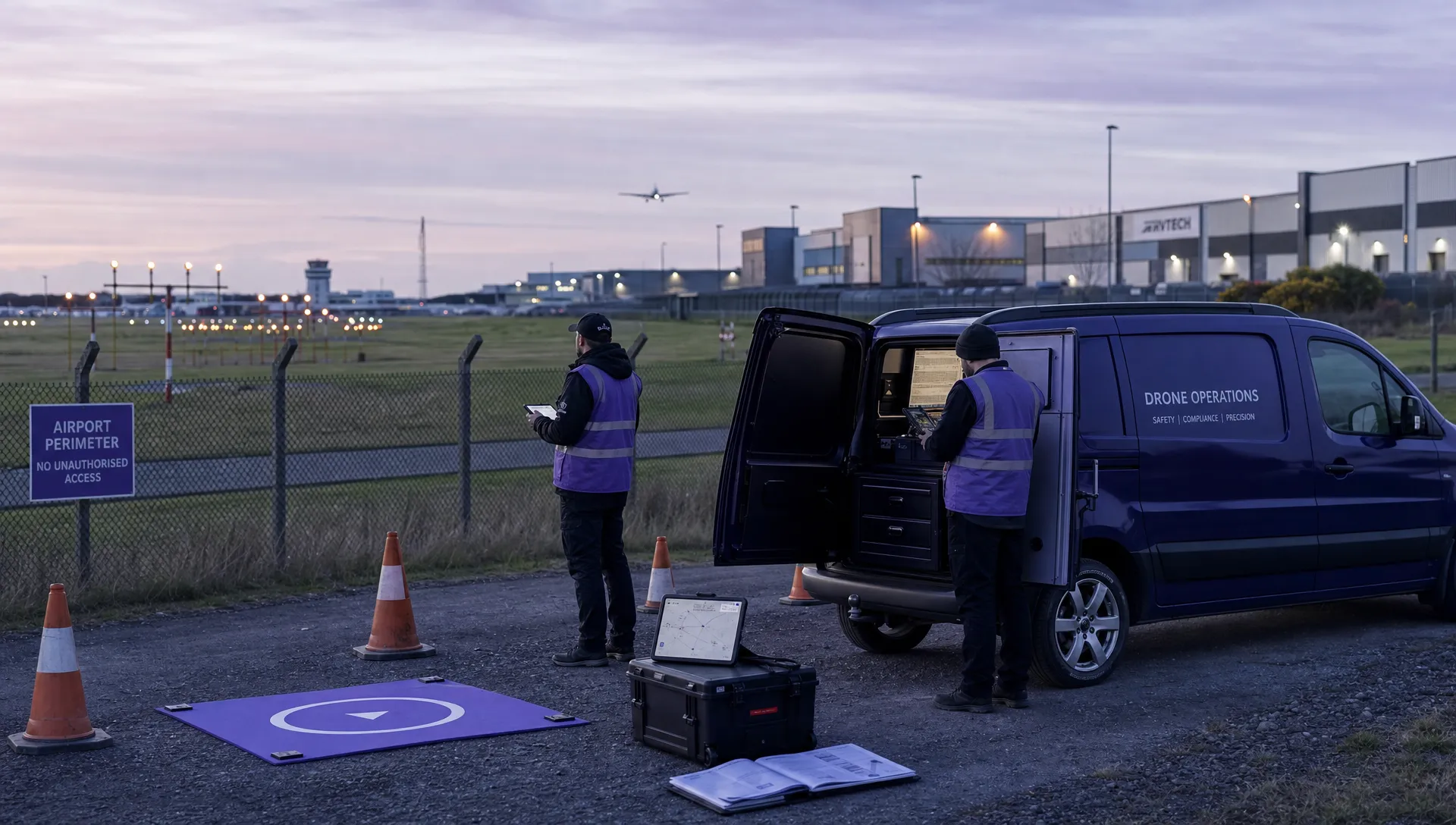 Class C Airspace Drone Rules for Commercial Flights →
 How to Create a Drone Job Pack for Every Mission →