
Beyond Visual Line of Sight Explained for Operators
Beyond visual line of sight, usually shortened to BVLOS, is one of the most important concepts in commercial drone operations. It is also one of the most misunderstood. For many operators, it sounds like a simple extension of range: fly further, cover more ground, finish jobs faster. In practice, BVLOS changes the entire risk profile of an operation.
For survey companies, utility inspection teams, emergency services and experienced drone operators, BVLOS can open the door to longer linear inspections, remote asset monitoring, search and rescue support, environmental surveys and delivery operations. But it also demands stronger planning, better evidence, more robust procedures and, in most jurisdictions, specific regulatory approval.
This guide explains what BVLOS means, how it differs from VLOS and EVLOS, what regulators usually expect, and what operators should prepare before attempting to build a BVLOS capability.
What does beyond visual line of sight mean?
A drone flight is BVLOS when the remote pilot cannot maintain direct, unaided visual contact with the aircraft throughout the operation. In simple terms, if the pilot cannot see the drone well enough to know its position, orientation and surrounding traffic with their own eyes, the flight is no longer visual line of sight.
That does not necessarily mean the drone is hundreds of miles away. BVLOS can occur because of distance, terrain, trees, buildings, darkness, weather, or any other factor that prevents the pilot from maintaining effective visual contact.
The key point is that BVLOS is not defined only by distance. It is defined by the pilot’s ability to see and avoid hazards using direct visual observation.
| Term | What it means | Typical use case | Approval level |
|---|---|---|---|
| VLOS | The remote pilot keeps unaided visual contact with the drone | Most routine commercial drone work | Usually standard operational rules apply |
| EVLOS | Observers extend visual coverage by maintaining sight of the drone and communicating with the pilot | Linear surveys, larger sites, some public safety operations | Often requires specific procedures and approval |
| BVLOS | The drone operates beyond the pilot’s direct visual contact | Long corridor inspections, remote monitoring, advanced delivery, emergency response | Usually requires a specific authorisation or waiver |
In UK terms, the Civil Aviation Authority’s drone guidance makes clear that operators must understand the category of operation, the associated risks and the permissions required. BVLOS is generally not a routine Open category activity. It normally sits in the Specific category, or in higher-risk cases may move towards a certified aviation-style framework.
Why BVLOS matters for operators
BVLOS is attractive because many valuable drone missions are not naturally confined to a small visible area. Utility networks, railway lines, pipelines, coastal defences, forests, flood zones and emergency scenes can extend far beyond the pilot’s visual range.
For a survey company, BVLOS could mean inspecting longer stretches of infrastructure with fewer take-off points. For a utility company, it could support faster inspection of pylons, solar farms, wind assets or distribution networks. For emergency services, it could help maintain situational awareness across wide search areas, hazardous zones or flood-affected communities.
The commercial opportunity is significant, but so is the responsibility. BVLOS removes the remote pilot’s most basic safety tool: direct sight of the aircraft and its surroundings. That means the operation needs other ways to manage air risk, ground risk, communications, navigation, contingencies and human decision-making.
Internationally, regulators are beginning to create more structured pathways for routine BVLOS in defined use cases. For example, recent reporting on delivery drones cleared for flight over populated cities in Brazil shows how some markets are moving towards national BVLOS frameworks. Even so, operators should treat each country’s rules as distinct. A capability accepted in one jurisdiction does not automatically transfer to another.
BVLOS is a safety case, not just a drone feature
One common mistake is assuming that buying a more capable aircraft makes an operator “BVLOS ready”. A reliable drone is important, but BVLOS approval usually depends on the entire operating system.
Regulators and clients want to know how the operator will keep people, property, crewed aircraft and the drone itself safe when the pilot cannot simply look up and see what is happening. That means the safety case must cover the aircraft, the people, the route, the airspace, the operating procedures and the fallback plans.
A mature BVLOS concept of operations will usually address:
- The purpose of the operation and why BVLOS is necessary
- The exact route, area, altitude and operating environment
- Ground risk, including people, roads, property and sensitive sites
- Air risk, including nearby aerodromes, low-level aviation and airspace restrictions
- Command and control links, including redundancy and lost-link behaviour
- Detect and avoid capability, whether technical, procedural, strategic, or a combination
- Pilot, observer and support crew responsibilities
- Emergency procedures and decision points
- Maintenance, training, record-keeping and post-flight review
For operators used to VLOS work, the shift is often cultural as much as technical. BVLOS operations are less about “turning up and flying” and more about building a repeatable operational system that can be audited, challenged and improved.
The regulatory picture in the UK and beyond
In the UK, drone operations are generally assessed according to risk. Most low-risk flights fall under standard rules, while more complex operations require an Operational Authorisation from the CAA. BVLOS is usually treated as a higher-risk activity because it affects how the operator detects hazards and responds to conflict.
An A2 CofC, GVC, insurance policy or advanced aircraft does not automatically permit BVLOS. These may form part of an operator’s competence and operational framework, but the actual permission depends on the authorisation and the conditions attached to it.
The regulatory approach varies by country. In the United States, many commercial BVLOS operations have historically required a Part 107 waiver or specific exemption from the FAA. In the EU, BVLOS is typically handled through Specific category authorisations, often supported by a structured risk assessment such as SORA. In other regions, national aviation authorities are developing corridor-based, network-based or use-case-specific BVLOS frameworks.
The details change over time, but the underlying pattern is consistent: BVLOS operators must demonstrate that they can manage the additional risk created by losing direct visual contact.
Key risk areas in BVLOS operations
BVLOS risk assessment should be specific to the mission, not copied from a generic template. A rural pipeline survey, an offshore inspection and an urban emergency response operation each create very different hazards.
The most important risk areas usually fall into four categories.
Air risk
Air risk is the possibility of conflict with crewed aviation or other airspace users. This can include helicopters, light aircraft, military traffic, gliders, microlights, balloons and other drones.
In VLOS operations, the pilot may be able to see and avoid nearby traffic. In BVLOS, that visual layer is reduced or removed. Operators therefore need strategic and tactical mitigations. These might include choosing low-risk routes, flying at appropriate altitudes, using segregated or restricted airspace where available, coordinating with aerodromes, using observers, applying detect and avoid systems, or designing procedures around known local aviation activity.
Ground risk
Ground risk concerns the consequences if the aircraft fails or lands outside the intended area. A route over open farmland has a different ground risk from a route over roads, railways, industrial sites or populated areas.
Mitigations can include route design, altitude selection, parachute or containment systems where appropriate, reliable geofencing, emergency landing areas, public notification, site access controls and robust maintenance.
Command and control risk
BVLOS depends heavily on the command and control link between the pilot, ground control station and aircraft. Operators must understand what happens if communications degrade or fail.
A credible plan should define lost-link triggers, automatic return-to-home behaviour, holding patterns, flight termination logic where appropriate, battery thresholds and escalation procedures. It should also consider whether the communications method is suitable for the terrain, distance, weather and local network conditions.
Human factors
Human factors are often underestimated. BVLOS can reduce the pilot’s intuitive sense of the aircraft’s position and condition. Instead of looking at the drone, the pilot may be interpreting telemetry, maps, alerts, airspace data and communications from other crew members.
That increases the importance of clear roles, checklists, briefings, workload management and decision-making authority. The more complex the operation, the more disciplined the crew coordination needs to be.

Technology that supports BVLOS
BVLOS is enabled by technology, but no single technology solves the whole problem. Operators should think in layers.
Aircraft reliability matters first. The platform must be suitable for the mission duration, weather, payload, navigation requirements and emergency behaviour. Batteries, propulsion, autopilot systems, GNSS performance and maintenance records all become part of the evidence.
Detect and avoid is another major area. This may include onboard sensors, ground-based surveillance, electronic conspicuity receivers, ADS-B In, radar, optical systems, procedural deconfliction, or a combination of methods. Operators should be careful not to overstate what any one system can do. For example, not every aircraft transmits ADS-B, and not every environment gives clean sensor performance.
Connectivity is equally important. BVLOS operations may rely on radio links, cellular networks, satellite communications, mesh systems or hybrid architectures. Each has limitations. A mobile network that performs well in a town may be patchy in a remote valley. A radio link that works over flat terrain may struggle behind hills or structures.
Finally, planning and operational data systems become more important as complexity increases. Routes, checklists, risk assessments, logs, fleet status, team roles and client information all need to be consistent and easy to retrieve. Platforms such as Dronedesk bring together drone operations management features including flight planning, airspace intelligence, proximity intelligence, configurable checklists, risk assessments, flight logging, fleet management, team management, client management and data reporting. These tools do not replace regulatory approval, but they can help operators organise the operational evidence and day-to-day admin that more advanced missions demand.
A practical BVLOS readiness checklist
Before investing heavily in BVLOS aircraft or sensors, operators should test their readiness at an organisational level. The following table is not a regulatory substitute, but it can help identify gaps before formal engagement with an aviation authority, client or safety assessor.
| Readiness area | Questions to ask | Why it matters |
|---|---|---|
| Use case | Is BVLOS genuinely needed, or could VLOS or EVLOS achieve the outcome? | Regulators expect proportionality and clear operational justification |
| Operating environment | What airspace, terrain, population and infrastructure risks exist along the route? | BVLOS safety cases are environment-specific |
| Aircraft capability | Can the platform meet endurance, navigation, payload and contingency requirements? | Capability must match the mission, not just the marketing specification |
| Detect and avoid | How will the operation prevent conflict with other airspace users? | Loss of direct visual see-and-avoid is the central BVLOS challenge |
| Communications | What happens if the control link, telemetry or network connection degrades? | Lost-link behaviour must be predictable and documented |
| Crew competence | Are roles, training, handovers and emergency decisions clearly defined? | Human factors can make or break complex operations |
| Documentation | Are plans, risk assessments, checklists, logs and maintenance records controlled? | Evidence quality is critical for approval and auditability |
If several answers are weak, it is usually better to strengthen the operating system before applying for approval. BVLOS authorisations are built on confidence. The clearer and more evidence-based the operator’s approach, the easier it is for stakeholders to understand the risk controls.
Planning a BVLOS operation step by step
A sensible BVLOS planning process starts with the mission outcome, not the aircraft. Define what the client or public service needs, then decide whether BVLOS is the right method.
Next, map the operating area in detail. Consider controlled airspace, restricted areas, aerodromes, heliports, prisons, critical infrastructure, roads, railways, public rights of way, terrain, trees, powerlines and emergency landing options. Airspace intelligence and proximity intelligence can support this stage, but the operator remains responsible for validating assumptions and checking current restrictions.
The route should then be designed around risk reduction. This might mean following low-population corridors, avoiding known aviation hotspots, using pre-agreed launch and recovery points, limiting altitude, or segmenting a mission into smaller phases. For some use cases, EVLOS may be a realistic stepping stone before full BVLOS.
After that, define procedures. Crew briefings, weather limits, go or no-go criteria, communications checks, failsafe behaviour, emergency contacts and post-flight reviews should be documented before the operation. Configurable checklists are particularly useful because BVLOS workflows often need to be tailored to aircraft type, mission type and operating environment.
Finally, record what happened. Flight logs, incident notes, maintenance updates and lessons learned help build an evidence trail. Over time, this evidence can support safer operations, stronger client assurance and better regulatory conversations.
Common BVLOS mistakes to avoid
The first mistake is treating BVLOS as a shortcut. If the goal is simply to cover more ground without improving planning, procedures and oversight, the operation is unlikely to be defensible.
The second is relying too heavily on a single mitigation. A detect and avoid sensor, a mobile connection, an observer, or a pre-planned route can all help, but BVLOS safety normally depends on layers. If one layer fails, another should reduce the risk.
The third is underestimating local aviation. Low-level aircraft may appear in places where drone teams do not expect them, especially near farms, hospitals, emergency scenes, coastlines and rural strips. Local knowledge, NOTAM checks, coordination and conservative route design all matter.
The fourth is poor documentation. Advanced operations are easier to challenge if the operator cannot show what was planned, who was responsible, what was checked and what happened after the flight. Good records are not bureaucracy for its own sake. They are part of operational control.
Is BVLOS right for every operator?
No. For many drone businesses, VLOS and carefully planned EVLOS operations may deliver the best balance of cost, complexity and value. BVLOS can require significant investment in aircraft, training, procedures, technology, regulatory engagement and operational oversight.
The strongest candidates are operators with repeatable use cases, clear commercial or public value, disciplined safety management and enough operational volume to justify the extra work. A utility inspection programme covering long corridors is a better BVLOS candidate than a one-off roof survey. A public safety agency with defined emergency response scenarios may have a stronger case than an operator trying to use BVLOS for convenience.
The right question is not “Can we fly BVLOS?” It is “Can we prove that this BVLOS operation is necessary, controlled and safe enough for the environment?”
Frequently Asked Questions
What is beyond visual line of sight in drone operations? Beyond visual line of sight means the remote pilot cannot maintain direct, unaided visual contact with the drone throughout the flight. The drone may be too far away, obscured by terrain or operating in conditions where the pilot cannot reliably see and avoid hazards visually.
Is BVLOS legal in the UK? BVLOS can be legal in the UK, but it normally requires the correct authorisation from the Civil Aviation Authority. It is not something operators should assume is covered by standard VLOS permissions, qualifications or insurance.
Is EVLOS the same as BVLOS? No. EVLOS uses trained observers to extend visual coverage while maintaining a visual method of monitoring the aircraft. BVLOS goes beyond that model because the aircraft is not kept within direct visual observation by the pilot or visual observer network in the same way.
Do I need a special drone for BVLOS? You need an aircraft and operating system suitable for the mission and risk profile. That may require specific endurance, communications, navigation, detect and avoid, containment, maintenance and failsafe capabilities. The drone is only one part of the approval case.
Can software make an operator BVLOS compliant? Software alone cannot make an operation compliant or grant approval. However, good operations management software can help structure planning, checklists, risk assessments, logging, fleet information, team responsibilities and reporting, which are all important parts of a professional operating system.
Build the operational discipline before the distance
BVLOS is not just a longer flight. It is a more advanced form of aviation operation that demands evidence, structure and discipline. Operators that succeed are usually those that start with a clear use case, build layered mitigations, document their decisions and treat every flight as part of a controlled system.
If your organisation is preparing for more complex drone work, Dronedesk can help centralise the admin behind professional operations, including flight planning, risk assessments, checklists, flight logging, fleet management, team management, client management, airspace intelligence, proximity intelligence and reporting. Explore the platform at Dronedesk and build a stronger foundation for safer, more scalable drone operations.
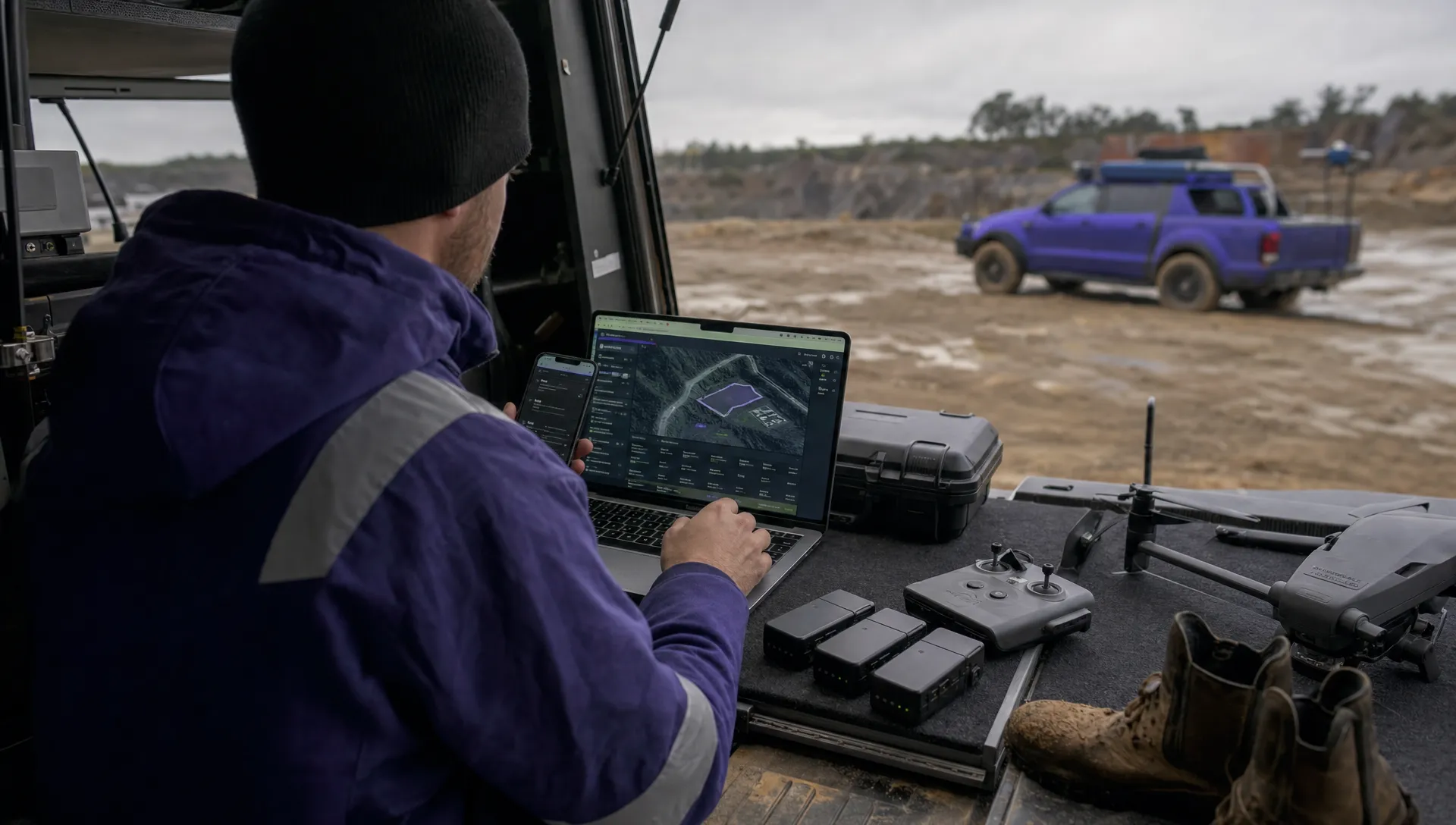 Drone Operating Rules for Managing Contractors and Employees →
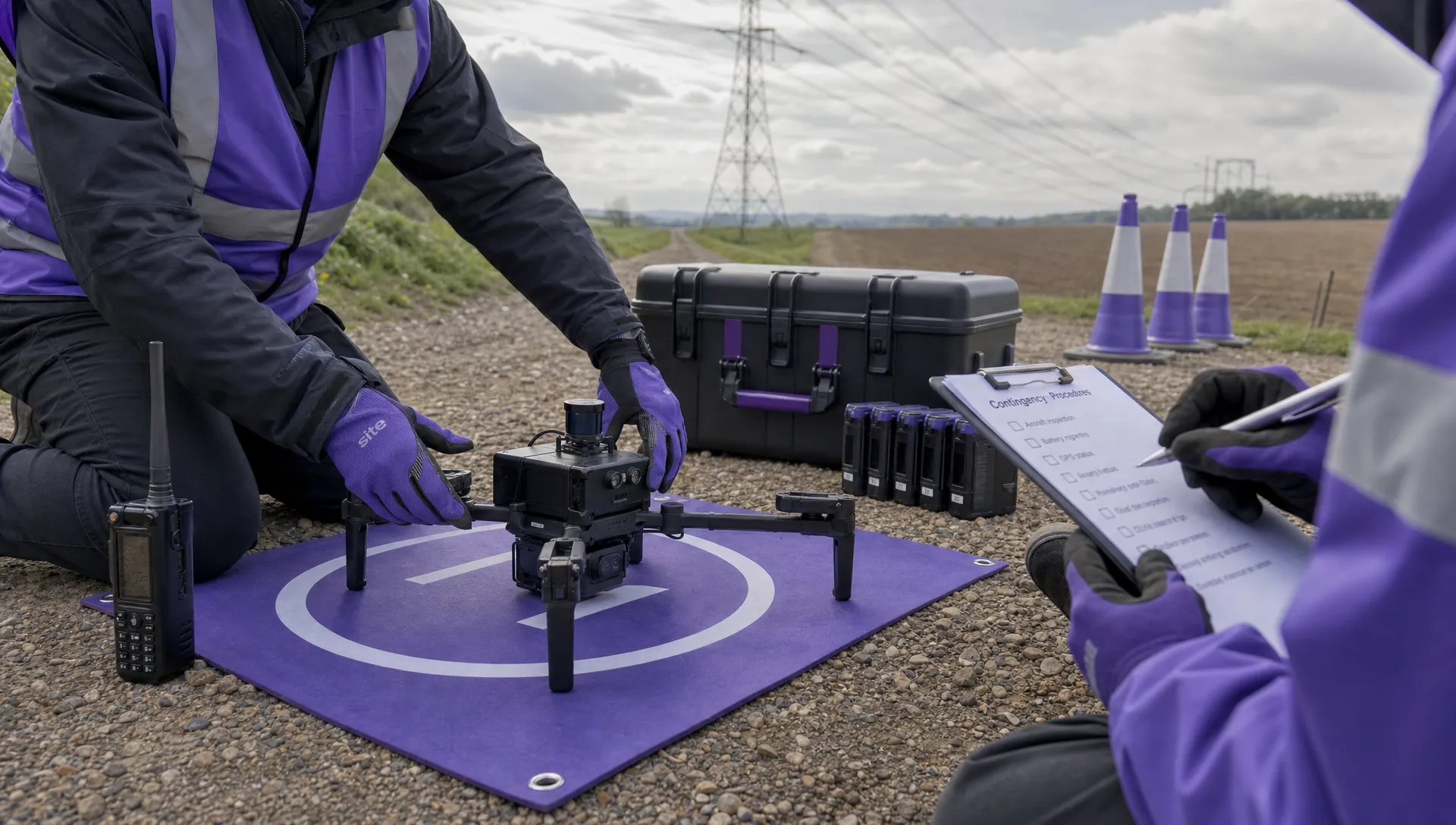 BVLOS Drone Requirements for Building a Safety Case →
 Drone Pilot Test Mistakes That Cost Candidates Marks →
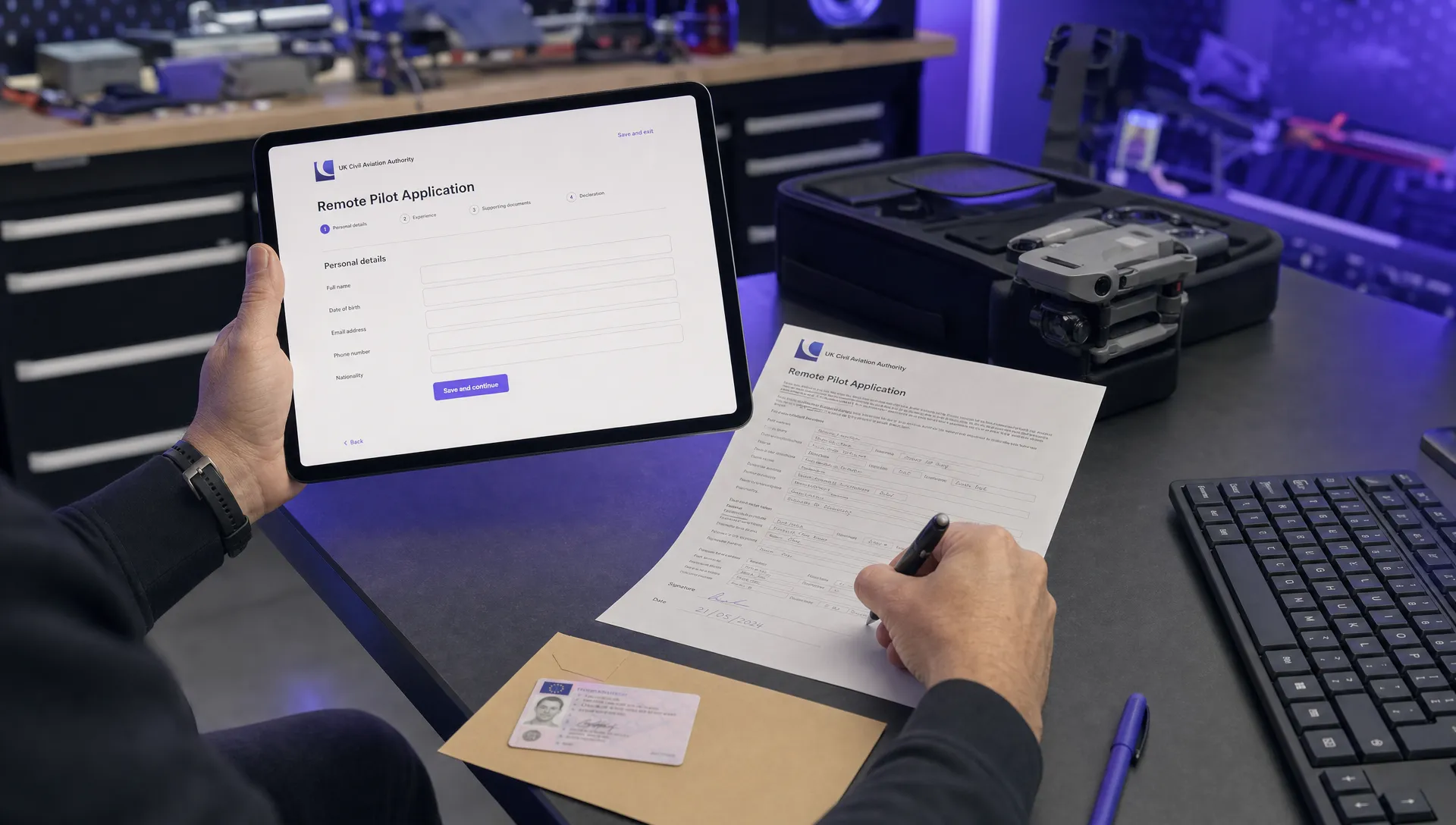 FAA 107 License vs Part 107 Certificate: What’s the Difference? →
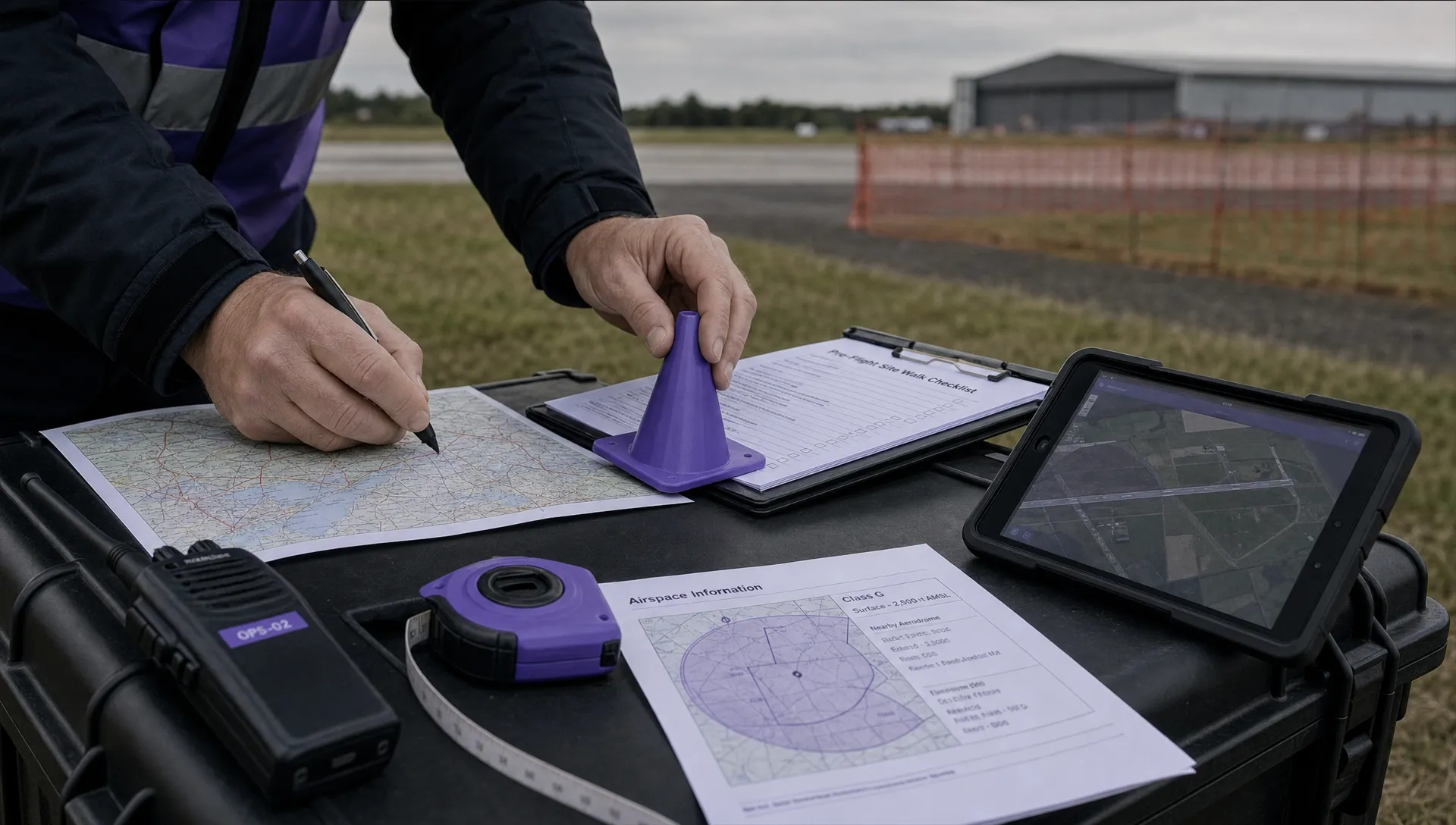 Drone Airport Rules: A Field Checklist for Site Assessments →
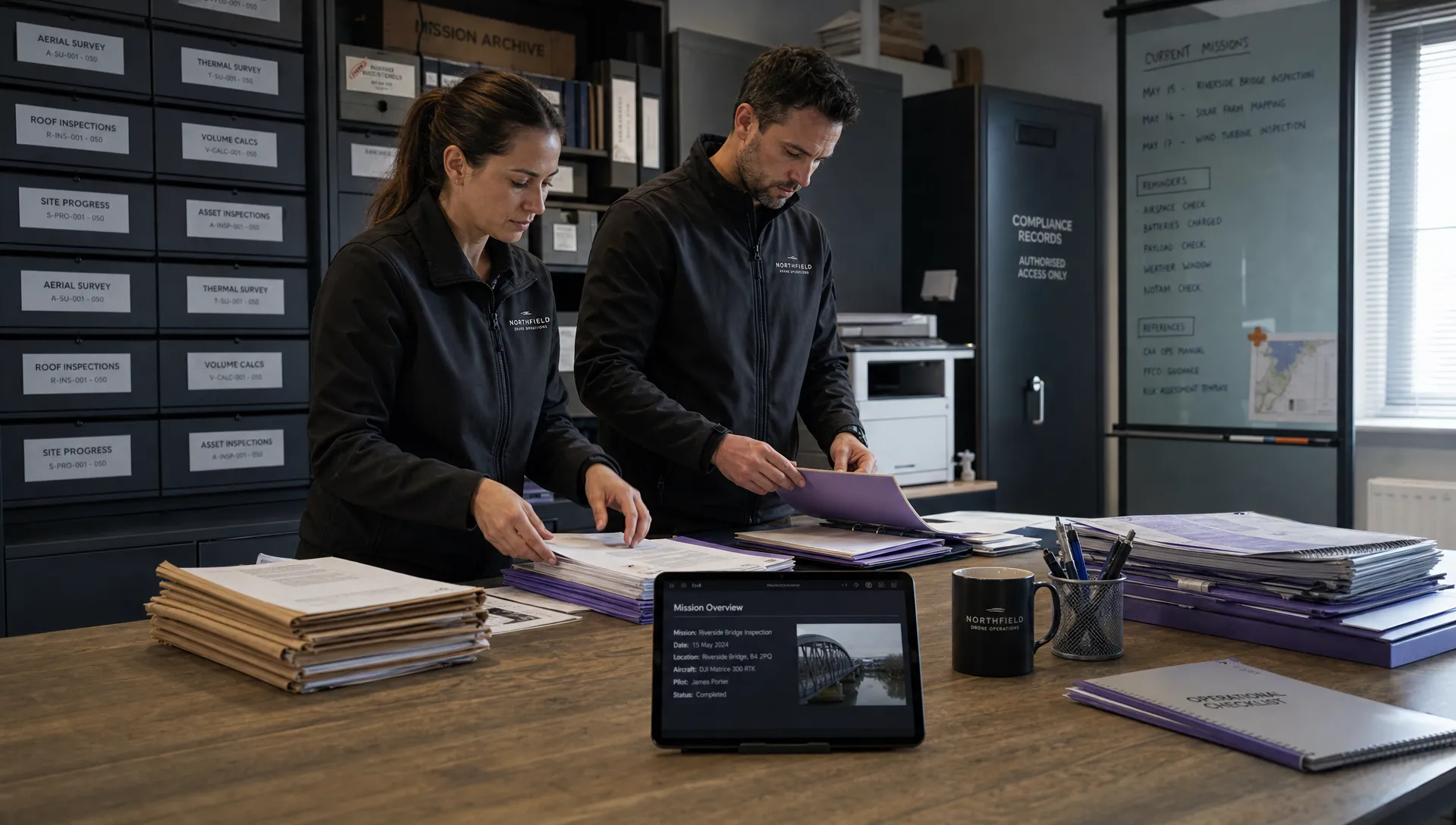 FAA Part 107 Record-Keeping Rules for Commercial Teams →
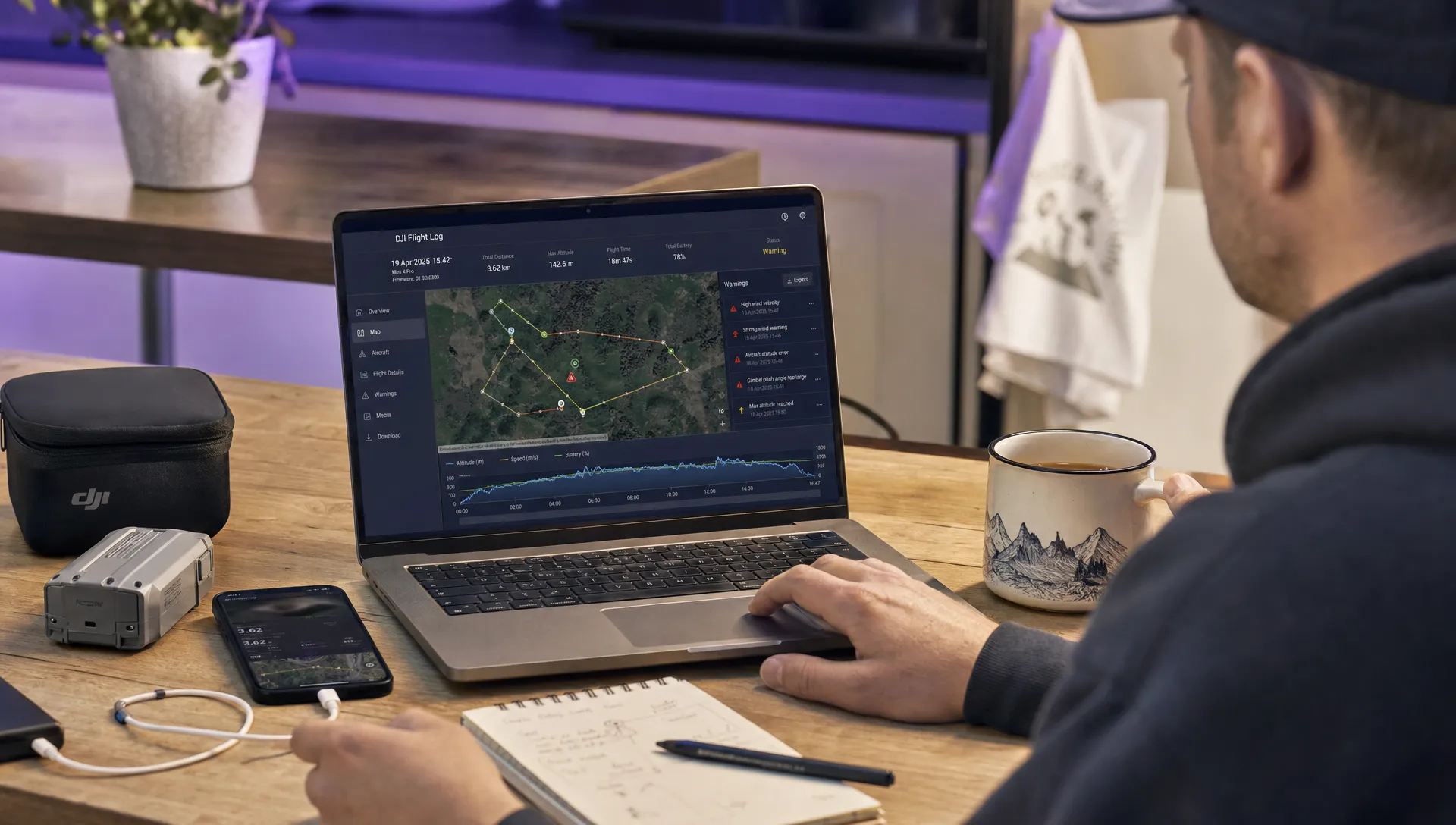 How to Review a DJI Flight Log After an Unexpected Event →
 Drone Laws Around the World: A Pre-Flight Research Framework →
 How to Compare Drone Survey Services for Complex Sites →
 How to Start a Drone Mapping Business With a Clear Workflow →