
Drone Laws by Country: How to Research Before You Fly
Searching for drone laws by country is a sensible starting point, but it is not enough for a safe, legal operation. Drone rules change, official guidance is sometimes split across several agencies and the answer often depends less on the country name than on the exact operation you intend to fly.
For professional drone operators, survey companies, utility providers and emergency services, the research has to be more rigorous. A construction progress flight in open countryside, a thermal inspection near power infrastructure and a rapid response flight near an airport may all sit under different approval routes in the same jurisdiction.
This guide gives you a practical research workflow you can use before flying in a new country or region. It is not legal advice, but it will help you ask better questions, prioritise official sources and keep a defensible record of your decisions.
Why drone laws by country are hard to compare
Most country summaries make drone rules look simpler than they are. They often reduce a jurisdiction to headline points such as maximum height, visual line of sight, registration and insurance. Those points matter, but they rarely tell the whole story.
A country may have national drone regulations, local geographic zones, airport restriction procedures, privacy laws, landowner requirements, critical infrastructure restrictions, environmental protections and radio frequency rules. In federal systems, state or local rules may add another layer. In the European Union, common EASA rules apply across member states, yet national aviation authorities still manage local zones, operational authorisations and some administrative requirements.
That is why a reliable research process should separate three questions:
- Can the aircraft and operator legally operate in the country? This covers registration, pilot competence, insurance, import rules and any local entity requirements.
- Can this specific flight be conducted at this location? This covers controlled airspace, restricted areas, temporary restrictions, proximity to aerodromes, people, roads, railways, ports and sensitive sites.
- Can the captured data be collected, stored and shared? This covers privacy, data protection, client restrictions, security classification and contractual obligations.
If you only answer the first question, you may still be grounded at the site.
Start with the operation, not the country
Before opening a regulator website, define the flight properly. A vague request such as a drone survey in France or a drone inspection in Australia is too broad to research accurately.
Build a short operation profile that includes the aircraft, maximum take-off mass, payload, pilot location, flight altitude, operating area, proximity to people, airspace class, whether the flight is VLOS or BVLOS, whether it is at night and whether any imagery includes people, private property or sensitive infrastructure.
This profile lets you map the work against the relevant operational category. For example, a routine roof inspection with a small drone may sit under a low-risk route in one country, while a linear infrastructure inspection beyond visual line of sight may require a specific authorisation, safety case or certified operator status.
For emergency services, the profile should also record whether any public authority exemptions, special permissions or incident command procedures apply. Emergency response does not automatically remove aviation obligations, and assumptions made in the first hour of an incident can create problems later if logs, permissions and risk decisions are not documented.
Use official sources first
General articles can help you orient yourself, but official sources should drive the final decision. The best sources are usually the national civil aviation authority, an official airspace service, a published aeronautical information service and any formal UAS or drone portal operated by the regulator.
Here is a practical starting table for common jurisdictions. The purpose is not to summarise every rule, but to show where professional operators should begin their research.
| Jurisdiction | Official place to start | What to verify before planning |
|---|---|---|
| United Kingdom | UK Civil Aviation Authority drone guidance | Operator and flyer requirements, operational authorisation, airspace restrictions, NOTAMs and local restrictions |
| European Union | EASA unmanned aircraft rules | Open, specific or certified category, national geographic zones, operator registration and local authority processes |
| United States | FAA UAS guidance | Part 107 requirements, aircraft registration, Remote ID, controlled airspace authorisation and local restrictions |
| Canada | Transport Canada drone safety | Basic or advanced operations, pilot certificates, registration, controlled airspace and site permissions |
| Australia | CASA drone rules | Recreational or commercial rules, operator accreditation or certification, airspace approvals and standard operating conditions |
| New Zealand | CAA New Zealand drone guidance | Part 101 or Part 102 route, airspace, consent requirements and local council or landowner conditions |
For countries not shown in the table, search for the national aviation authority first rather than relying on travel blogs or outdated forum posts. If the official material is not available in a language your team can read confidently, use a qualified local aviation adviser, local partner or legal translator for high-risk work.
Build a jurisdiction research pack
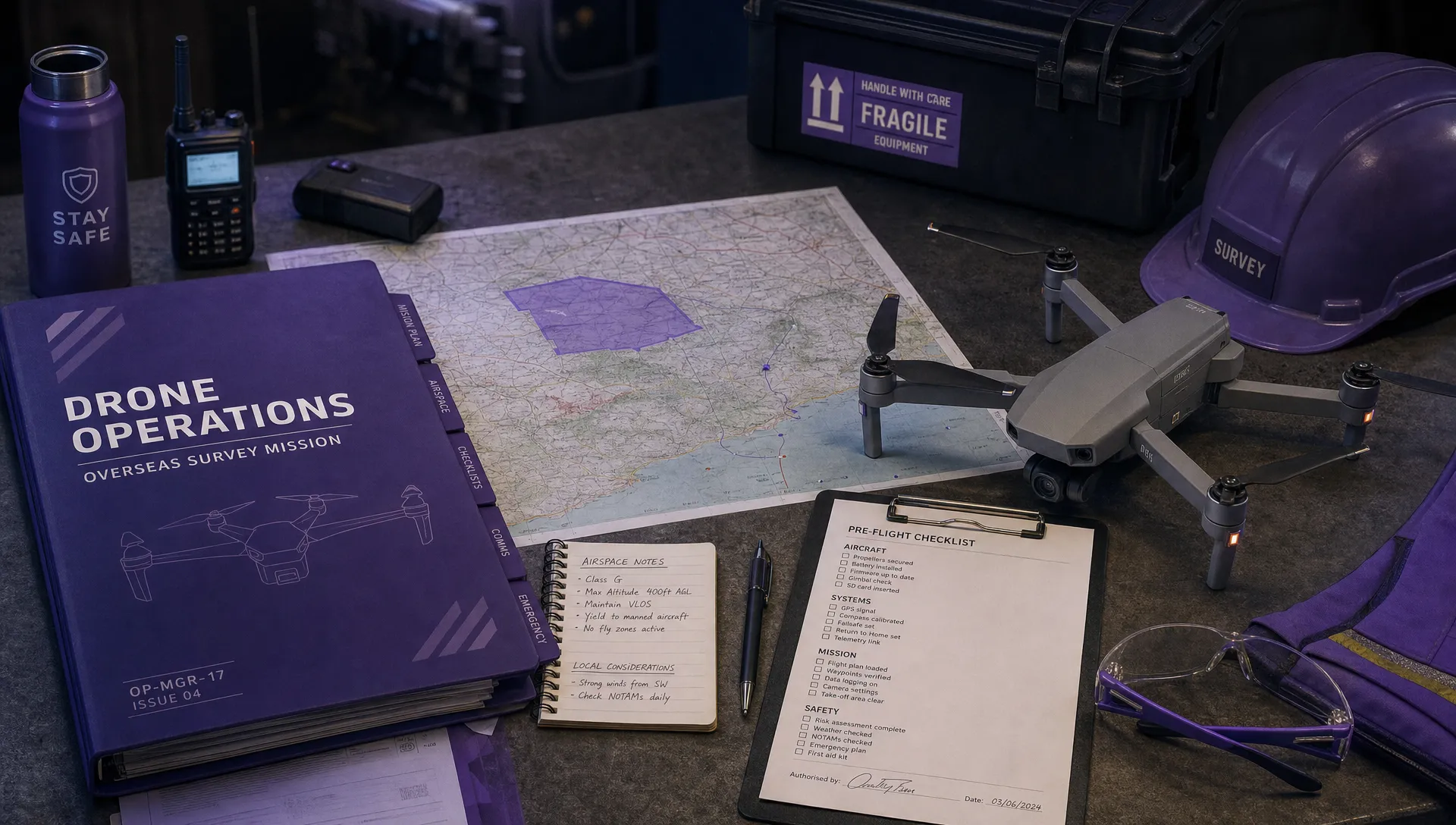
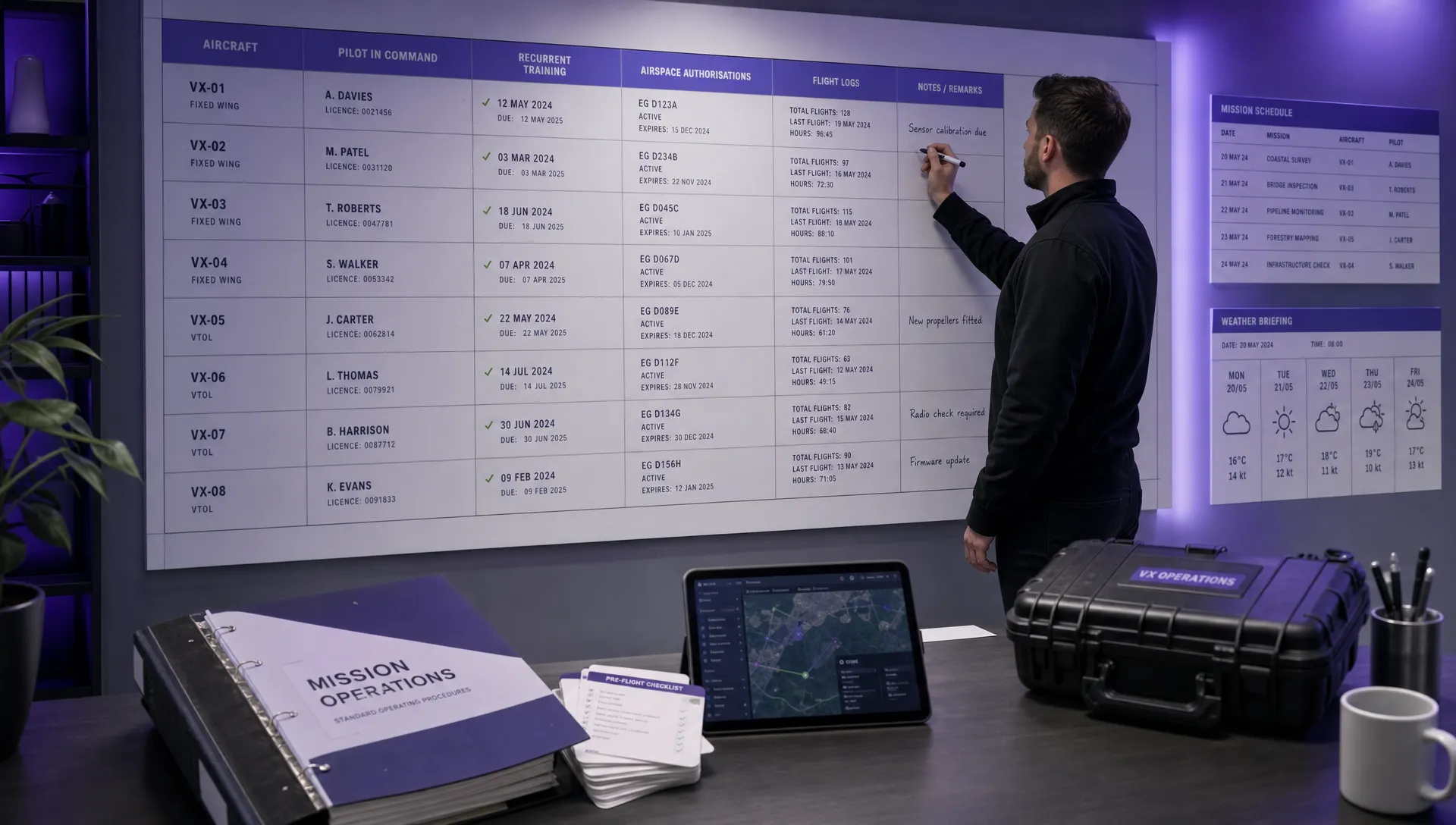
Professional operators should be able to show how they reached a go or no-go decision. A jurisdiction research pack does not need to be a lengthy legal memo, but it should capture enough evidence to support the planning decision and brief the team.
A useful pack includes:
- Official regulator links and the date accessed
- Operator registration and pilot competency evidence needed for the country
- Aircraft registration, class, marking and remote identification requirements
- Airspace source used for the operating area
- Permission route for controlled, restricted or special-use airspace
- Insurance requirements, including minimum cover if specified
- Privacy, data protection and client data handling constraints
- Local contact details for the aviation authority, air navigation service provider or land manager
- Any local partner, sponsor or permit reference needed to operate
The date matters. Drone laws by country can change during regulatory transitions, and operational portals may be updated before summary pages are rewritten. Keep screenshots or exported PDFs where appropriate, but also keep the official link so another team member can re-check the live source before deployment.
The regulatory checks that most often decide whether you can fly
Once you have the official sources, focus on the checks that most often change the operational answer.
Operator registration and local recognition
Many countries require the operator, not just the pilot, to be registered. If a company is flying commercially across borders, check whether the registration is recognised locally or whether a separate registration is needed.
In the EU, EASA rules create a common structure, but operator registration and operational procedures still have national components. Outside harmonised systems, do not assume your home-country permission travels with you. A UK Operational Authorisation, US Part 107 certificate or Australian ReOC may be valuable evidence of competence, but it does not automatically grant operating rights elsewhere.
Pilot competence and medical requirements
Some jurisdictions distinguish between recreational and commercial work. Others classify operations by risk. Check whether the remote pilot needs a local certificate, online test, practical assessment, radio qualification or aviation medical.
For utilities and emergency services, also check whether specialist work changes the requirement. Night operations, BVLOS, hazardous environments and flights near critical infrastructure may trigger additional competence expectations even if the base drone rules seem permissive.
Aircraft registration, marking and identification
Aircraft requirements can include registration marks, electronic identification, manufacturer class, maintenance records, firmware status or import documentation. If you are travelling with multiple aircraft, confirm each one is compliant, not just the primary aircraft.
Fleet records become important here. A team that can quickly prove aircraft serial numbers, maintenance status, payload configuration, insurance and pilot allocation is in a stronger position than one searching through spreadsheets at the border or on site. Dronedesk covers areas such as fleet management, team management, flight planning, flight logging, configurable checklists and risk assessments, which are listed on the Dronedesk features page.
Airspace, aerodromes and temporary restrictions
Airspace research should never stop at a national drone map. Check aerodromes, controlled airspace, heliports, military areas, prisons, ports, emergency scenes, sporting events, NOTAMs and temporary flight restrictions. Some restrictions appear only in aeronautical information products or local notices.
Airport proximity is a common source of last-minute delays, especially when a site looks clear on a satellite map but sits under an approach path or inside a flight restriction zone. If this is part of your work, Dronedesk has a separate guide on planning drone flights near airports without surprises.
Land, privacy and data rules
Aviation permission does not usually grant land access. You may still need permission from a landowner, site manager, local authority, police force, infrastructure owner or environmental agency.
Data rules can be just as important as flight rules. Survey companies and public-sector teams should check whether imagery of people, vehicles, homes, industrial sites or critical infrastructure is subject to privacy, security or data residency requirements. For cross-border work, clarify where data will be stored, who can access it and whether the client imposes stricter controls than the law.
Do not rely on the most permissive summary you find
Drone operators often find conflicting information online. One website says permission is required, another says drones are allowed under a certain weight and a forum post says nobody checks. Treat contradictions as a signal to go back to primary sources.
The safest approach is to use a hierarchy of evidence. Current legislation and regulator guidance come first. Official airspace data and authorisation portals come next. Formal client or site owner requirements then sit alongside your own operating procedures. Blogs, social posts and informal pilot comments are useful only for spotting questions you may have missed.
If an operation is commercially important, do not let a country summary be the final authority. Contact the regulator, air navigation service provider or a local aviation consultant and keep the response with the job file.
Turn research into a repeatable pre-flight workflow
The real value of country research is not the document you create once. It is the repeatable workflow that stops teams making different decisions for similar jobs.
Create a standard pre-flight compliance checklist for new jurisdictions. Use it to confirm the official source, operational category, pilot requirements, aircraft requirements, airspace status, local permissions, insurance, data controls and emergency procedures. Then tailor it for the country and operation type.
This is particularly useful for organisations with multiple pilots or regional teams. A utility inspection team may have one workflow for routine VLOS asset inspections and a separate workflow for BVLOS corridor work. An emergency service may have a peacetime training workflow, an incident response workflow and a mutual aid workflow for operations outside its usual area.
Risk assessment should sit beside legal research, not after it. A flight can be legal and still be a poor operational decision if site hazards, weather, crew fatigue, public access, communications or recovery options are not controlled. If you are improving your internal process, this guide to building a drone flight risk assessment that works sets out a practical structure.
Special considerations for commercial and public-sector operations
Professional operations tend to raise issues that casual country guides ignore.
For survey companies, check whether the client expects deliverables to meet a recognised accuracy standard and whether local law affects ground control placement, road access or surveying near protected sites. Also confirm if operating over third-party land requires notices or consents.
For utility companies, critical infrastructure rules can be stricter than general drone rules. Power stations, substations, pipelines, water assets, telecoms sites and transport corridors may have security requirements that are not obvious in aviation guidance. The asset owner may also impose flight windows, induction requirements and escort rules.
For emergency services, speed matters, but so does auditability. Your team should know in advance which permissions are pre-arranged, which exemptions apply, who can authorise deployment and how flights will be logged after an incident. If mutual aid could take your aircraft into another region or country, research those requirements before the event, not during it.
Red flags before flying in a new country
Pause the operation and escalate if you encounter any of these issues:
- The official regulator page contradicts the airspace portal or recent legal notice
- You cannot confirm whether foreign operators are allowed to conduct commercial work
- The flight is near an airport, border, military site, prison, port or critical infrastructure
- The client asks for BVLOS, night flying or flight over people without a clear authorisation route
- Local police, land managers or security staff may be unaware of your permission
- Captured data includes sensitive facilities, private individuals or protected locations
None of these automatically means you cannot fly. They mean the job needs more evidence, more coordination or a different operational plan.
Keep your country research alive
A country pack should not be treated as permanent. Review it before each deployment, especially after regulatory announcements, major incidents, election cycles, sporting events, natural disasters or security alerts. Temporary restrictions can appear quickly, and local enforcement expectations may change even when the written rules have not.
For recurring work, schedule a formal review of country requirements at least annually and whenever your aircraft, payload, operating method or client scope changes. A new drone with remote identification capability, a heavier payload or a BVLOS method can move the same job into a different approval path.
The goal is not to memorise every rule in every country. It is to create a disciplined way to find the current rule, verify the local constraints and document the decision before a pilot arrives on site.
Frequently Asked Questions
What is the best source for drone laws by country? The best source is the official civil aviation authority or government drone portal for the country where you plan to fly. Use general guides only as a starting point, then confirm registration, pilot competence, airspace and permission requirements through official sources.
Can I use my drone licence in another country? Sometimes it may support your application or demonstrate competence, but it rarely grants automatic permission. Check whether the destination country recognises your qualification or requires local registration, testing or authorisation.
Do drone laws apply differently to commercial operators? Yes, many jurisdictions distinguish between recreational and commercial operations or classify flights by operational risk. Commercial work may require operator registration, insurance, pilot qualifications, specific permissions or additional client and site approvals.
How close can I fly to an airport in another country? There is no universal answer. Airport restrictions depend on the country, airspace structure, airport type, flight height, location and authorisation process. Always check the official airspace source and request permission through the required local channel.
Should I keep records of my legal research? Yes. Keep the source links, access dates, permissions, regulator correspondence, airspace checks, risk assessments and flight logs with the job file. This helps brief the team and provides an audit trail if a client, regulator or site authority asks how the flight was approved.
Make international drone planning easier to control
Researching drone laws by country is only useful if the findings make it into the flight plan, risk assessment, checklist and flight log. For growing teams, that is where disconnected documents and spreadsheets become a weakness.
Dronedesk brings core drone operations administration into one platform, including client management, fleet management, team management, airspace intelligence, proximity intelligence, flight planning, flight logging, data reporting, configurable checklists and risk assessments. If your team needs a more consistent way to plan and document compliant operations, explore the Dronedesk drone operations management features.
 FAA Part 107 Record-Keeping Rules for Commercial Teams →
 How to Review a DJI Flight Log After an Unexpected Event →
 Drone Laws Around the World: A Pre-Flight Research Framework →
 How to Compare Drone Survey Services for Complex Sites →
 How to Start a Drone Mapping Business With a Clear Workflow →
 Class C Airspace Drone Rules for Commercial Flights →
 How to Create a Drone Job Pack for Every Mission →
 FAA Small UAS Rule: Key Requirements for Operators →
 How to Build a Drone Pilot Flight Log That Is Audit Ready →
 FAA Drone Licence Requirements for Commercial Pilots →