
BVLOS Operations: Building a Safe Operational Framework
BVLOS operations can unlock work that is difficult, slow or risky with visual line of sight flights alone: long utility corridors, remote surveying, emergency response, security patrols, logistics trials and infrastructure monitoring. Yet safe BVLOS is not achieved by buying a capable aircraft and adding a longer radio link. It depends on an operational framework that proves the flight can be planned, controlled, evidenced and improved every time.
For drone operators, survey companies, utility teams and emergency services, that framework has to satisfy three practical tests. It must be acceptable to the regulator, usable by the people running the mission and robust enough to cope with abnormal situations. If any one of those is missing, the operation becomes fragile.
If your team is still aligning on the basics, Dronedesk has a useful primer on what a BVLOS drone is and why it matters. This article takes the next step: how to build the operational system around the aircraft.
Start with the operational intent, not the aircraft
A safe BVLOS framework begins with a clear concept of operations, often shortened to ConOps. This describes what you intend to do, where you intend to do it, who will control it and what assumptions make the operation safe.
Too many BVLOS projects start with a technical capability and then try to retrofit a safety case around it. A stronger approach is to define the mission first. For example, inspecting 80 km of overhead power lines in rural terrain has a different risk profile from supporting a fire service drone as first responder programme in a town centre. Both may be BVLOS, but they should not share the same generic procedures.
Your ConOps should answer:
- What operational problem is BVLOS solving?
- What route, area or volume of airspace will be used?
- What aircraft, command link and payload are required?
- What people, systems and procedures are needed to maintain control?
- What happens if navigation, communications, weather or airspace conditions change?
- What evidence will prove the operation was conducted as authorised?
This is the foundation for everything that follows. It also helps prevent scope creep, where a team obtains approval for one operating model but gradually applies it to more complex missions without re-assessing the risk.
Map the regulatory pathway early
BVLOS requirements vary by jurisdiction, airspace class, aircraft type and mission profile. In the UK, most routine BVLOS work will sit outside the Open category and require the appropriate authorisation from the Civil Aviation Authority. The CAA guidance on Operational Authorisation is a sensible starting point for UK operators, alongside the latest CAA unmanned aircraft publications and any conditions attached to your existing permissions.
For European operations, the Specific category framework and SORA methodology are central reference points. The JARUS SORA methodology is widely used to structure the Specific Operations Risk Assessment, and EASA maintains the Easy Access Rules for Unmanned Aircraft Systems for EU regulatory requirements.
Regulation should not be treated as a form to complete at the end. It influences aircraft selection, route design, contingency planning, crew competence, airspace coordination, data retention and the evidence you will need to provide. If the regulatory basis is unclear, freeze the operational scope until it is resolved.
| Framework decision | Why it matters for BVLOS | Evidence to keep |
|---|---|---|
| Operating category or authorisation route | Determines the safety case, approvals and conditions | Authorisation, ConOps and supporting risk assessment |
| Airspace environment | Drives deconfliction, communications and detect and avoid needs | Airspace analysis, NOTAM checks and coordination records |
| Ground environment | Affects ground risk, emergency landing options and public exposure | Population assessment, route maps and ground risk controls |
| Crew model | Defines responsibilities during normal and abnormal operations | Role descriptions, training records and duty logs |
| Technical architecture | Establishes how control, surveillance and recovery are maintained | Aircraft records, C2 link data, maintenance and test evidence |
Treat air risk and ground risk separately
BVLOS operations combine two distinct risk problems. Air risk is the possibility of conflict with other airspace users. Ground risk is the possibility of harm to people or property on the surface. A credible framework needs controls for both, not a single broad statement that the route is low risk.
Air risk controls may include strategic deconfliction, operating in segregated or controlled airspace, electronic conspicuity, detect and avoid capability, procedural separation, visual observers in defined segments, coordination with air traffic services and clear contingency volumes. The right mix depends on where you fly and what other traffic is reasonably expected.
Ground risk controls focus on where the aircraft could go during normal flight and credible failures. That includes route selection, minimum height, emergency landing areas, population density, sensitive sites, road crossings, public notification and payload hazards. For utilities and survey operators, the safest route is often not the shortest route. It is the route that provides defensible separation from people and credible recovery options.
A common mistake is to assume that rural equals low risk. Rural areas can still contain livestock, isolated properties, roads, railways, recreational aviation, emergency helicopter activity and communications dead zones. Safe BVLOS planning depends on site-specific intelligence.
Build a practical control model
A BVLOS control model defines how the operation is commanded, monitored and stopped. It should be simple enough for the crew to use under pressure and detailed enough to remove ambiguity.
At minimum, define who has authority to launch, continue, pause, divert or terminate the flight. If the remote pilot is supported by payload operators, observers, airspace coordinators, incident commanders or client representatives, each role needs defined responsibilities and communication rules.
For emergency services, the command structure is especially important. The drone team may be operating inside a wider incident response where priorities change quickly. The BVLOS framework should make clear how aviation safety decisions interact with incident command decisions. The person responsible for flight safety must be able to say no or stop without negotiation.
For utility and survey companies, handovers deserve particular attention. Long corridor missions may involve multiple crew positions, launch and recovery teams, remote operations centres or client site contacts. A handover is a risk event, not an admin step. Use standard callouts, recorded status points and clear acceptance criteria before control responsibility changes.
Make technology support the safety case
The aircraft is only one part of the BVLOS system. The broader architecture may include command and control links, telemetry, navigation, detect and avoid systems, geofencing, parachutes, flight termination, weather sources, airspace data, remote identification where required and maintenance controls.
Each element should map to a risk control. If a system is not linked to a hazard, it may be unnecessary complexity. If a hazard has no technical or procedural control, the framework is incomplete.
For example, a secondary command link can reduce the likelihood of lost control, but it does not by itself solve airspace conflict. A parachute can reduce ground impact severity, but it does not justify routing over dense crowds without further controls and authorisation. Detect and avoid can be powerful, but it must be tested against the traffic environment and integrated into crew procedures.
Documentation should specify performance expectations in plain operational terms. Rather than simply listing equipment, describe what the crew must be able to see, decide and do during the flight. This helps avoid a gap between the engineering design and the real operating procedure.
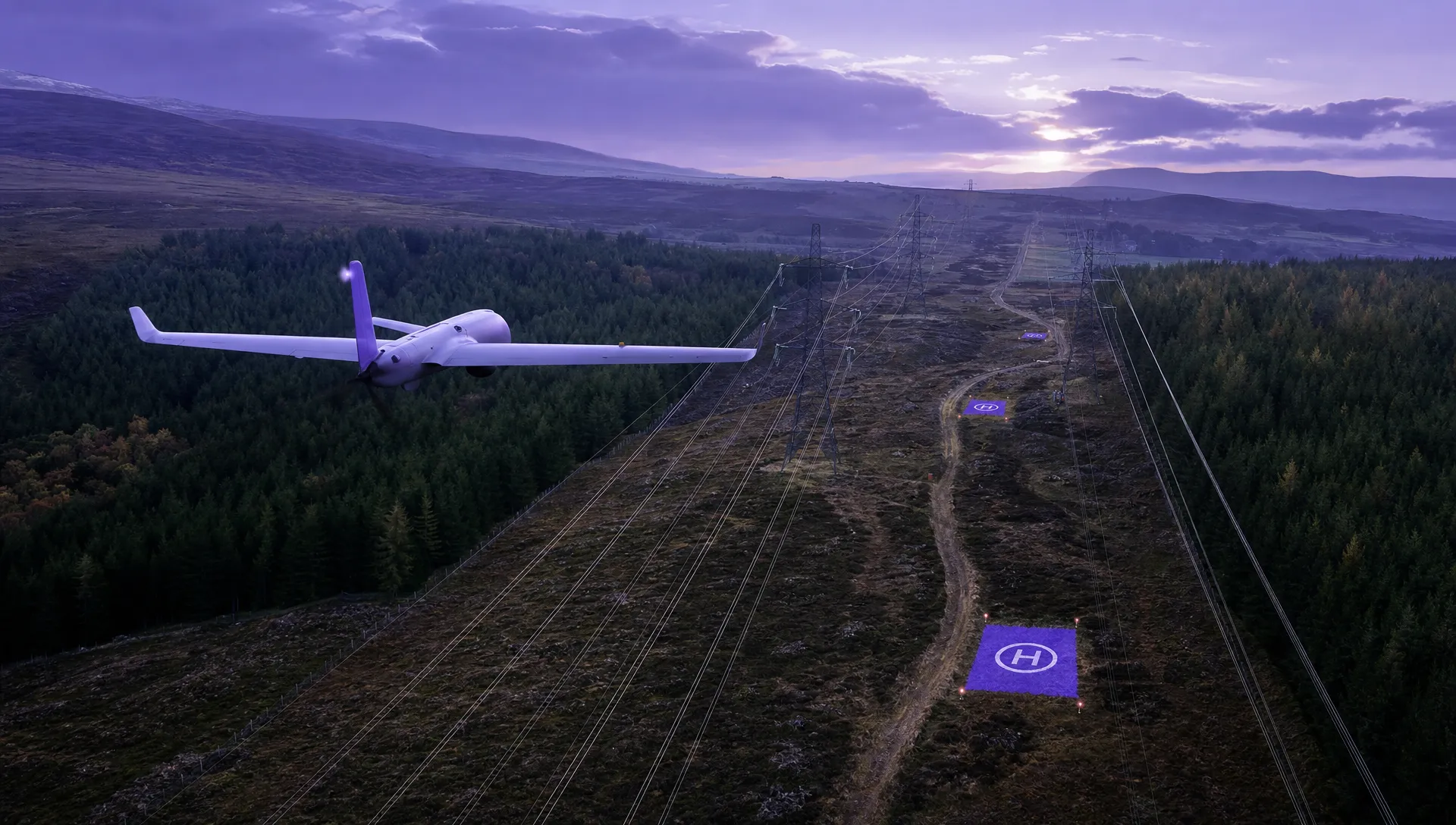
Standardise planning, checklists and evidence
BVLOS safety improves when repeatable work is handled through repeatable processes. Pre-flight planning, site assessment, crew briefings, aircraft checks, risk assessments, authorisation evidence and post-flight logs should follow a standard structure.
According to Dronedesk's drone operations management features, the platform includes client management, fleet management, team management, airspace intelligence, proximity intelligence, flight planning, flight logging, data reporting, configurable checklists and risk assessments. For teams building a BVLOS framework, those functions are relevant because they help keep operational information, planning evidence and records in one consistent workflow rather than scattered across disconnected files.
The value of standardisation is not bureaucracy. It is consistency. If your team cannot show how a risk was assessed, who approved the plan, what aircraft status was checked and what happened during the flight, the operation becomes difficult to defend after an incident or audit.
A useful planning pack for BVLOS operations should normally include:
- ConOps and mission scope
- Airspace review and coordination evidence
- Ground risk assessment and route rationale
- Weather limits and go or no-go criteria
- Aircraft configuration and maintenance status
- Crew roles, competence and duty status
- Normal, abnormal and emergency procedures
- Communications plan
- Client or incident command requirements
- Flight log and post-flight review record
For a deeper look at structuring risk work, see Dronedesk's guide on building a drone flight risk assessment that works.
Create operating limits that crews can actually use
Operating limits should be explicit, measurable and visible to the crew. Avoid vague phrases such as suitable weather, adequate communications or low population area. Those may be fine in conversation, but they are weak controls in an operational framework.
Define limits for wind, visibility, precipitation, temperature, cloud base where relevant, GNSS quality, link strength, battery margins, crew duty time, traffic density, emergency landing availability and any site-specific triggers. Then specify what happens when a limit is approached or breached.
| Condition | Example control question | Required crew action |
|---|---|---|
| Weather deteriorates | Is the forecast still within authorised limits for the full route? | Hold launch, shorten route or recover |
| C2 link degrades | Is command authority still reliable within the defined threshold? | Climb, return, switch link or trigger contingency procedure |
| Unexpected aircraft enters area | Is separation still assured? | Pause, divert, descend, coordinate or terminate as authorised |
| Emergency landing area unavailable | Is there a valid alternative within reach? | Re-plan before launch or recover if airborne |
| Incident command changes tasking | Does the new task remain inside the approved ConOps? | Re-assess before accepting the task |
The point is to remove guesswork. In mature BVLOS operations, crews do not debate whether a condition feels acceptable. They compare it with predefined limits and act accordingly.
Train for abnormal situations, not just normal flights
Training for BVLOS should cover more than aircraft handling. In many BVLOS concepts, manual stick and rudder skill is less central than systems monitoring, decision-making, communications and abnormal procedure management.
Crew training should include loss of command link, degraded telemetry, navigation errors, weather changes, intruding traffic, emergency landing decisions, public interaction, payload malfunction, cyber or data issues and coordination with external parties. Tabletop exercises are useful, but crews also need realistic simulations and supervised operational rehearsals.
Training records should show competence against role-specific tasks. A remote pilot, airspace coordinator, observer and payload operator may all need different evidence. For emergency services, training should also reflect the pressure of time-critical incidents, night operations where authorised and coordination with non-aviation teams.
Competence is perishable. Include periodic checks, scenario refreshers and lessons from post-flight reviews. A BVLOS framework that depends on one highly experienced individual is not scalable.
Use logs and reporting for continuous assurance
BVLOS operations generate evidence. Flight logs, maintenance records, risk assessments, airspace checks, crew duty data, incident reports and client records should feed back into the safety system.
This is where operational management becomes part of safety management. If repeated flights show recurring link dropouts in a particular valley, that is not just a technical note. It may require route adjustment, additional communications infrastructure or a change to contingency procedures. If crews repeatedly raise the same checklist exception, the checklist or the equipment may need review.
For growing teams, fleet visibility also matters. Aircraft utilisation, maintenance status, battery history, firmware versions, payload configuration and pilot allocation can all affect BVLOS readiness. Dronedesk's drone fleet management guide is a helpful companion if your operation is moving beyond ad hoc aircraft tracking.
A useful assurance rhythm might include daily operational review for active programmes, weekly trend review for exceptions and monthly safety performance review for management. Keep it proportionate, but make it real. The purpose is to catch weak signals before they become incidents.
Plan emergency response before you need it
BVLOS emergency procedures must be short, rehearsed and tied to real decision points. A long manual is not helpful if the crew has seconds to act.
Separate abnormal procedures from emergency procedures. An abnormal situation might be degraded telemetry with the aircraft still stable. An emergency might be loss of control, flyaway risk, collision risk or forced landing. Crews should know the difference because the escalation path and urgency are not the same.
Your emergency plan should cover:
- Lost command and control link
- Lost navigation or degraded positioning
- Detect and avoid alert or unexpected traffic
- Aircraft leaving the approved operational volume
- Forced landing or crash response
- Fire risk from batteries or payload
- Data protection issue if sensors capture sensitive information
- Notification to regulator, client, landowner or emergency services where required
For public sector and utility operations, include contact details and escalation rules in the active flight pack, not only in a central manual. If a drone comes down near a substation, railway, road or public event, the first few calls matter.
Scale through phases, not leaps
Safe BVLOS programmes usually mature in stages. Start with constrained routes, predictable environments, lower ground risk and strong oversight. Increase complexity only when evidence supports it.
A phased roadmap may look like this:
- Baseline VLOS discipline: Standardise planning, checklists, logging, maintenance and risk assessment before adding BVLOS complexity.
- Extended visual line of sight or observer-supported trials: Test communications, handovers, procedures and data capture under controlled conditions where permitted.
- Constrained BVLOS operations: Use limited routes, defined airspace controls and conservative weather or traffic limits.
- Routine BVLOS operations: Expand frequency and operational variety once evidence shows the controls are stable.
- Networked or multi-site BVLOS: Add remote operations centres, multiple aircraft or wider route networks only with a refreshed safety case.
This staged approach is especially useful for organisations with stakeholders who are not aviation specialists. It gives leadership, clients and regulators a clear evidence trail showing how the operation matured.
Adapt the framework to the sector
The core principles are consistent, but the emphasis changes by sector.
Survey companies need repeatable data quality, route accuracy, payload configuration control and client deliverables tied back to the flight record. Their BVLOS framework should connect aviation decisions with survey accuracy, ground control and data governance.
Utility companies need resilience across linear infrastructure, often in remote environments with difficult access. Their framework should prioritise corridor risk modelling, emergency landing options, landowner coordination, maintenance scheduling and asset criticality.
Emergency services need speed, clarity and command integration. Their framework should minimise ambiguity during incidents, define who can authorise launch, protect aviation decision-making and capture enough evidence without slowing the response.
Drone operators serving multiple sectors need configurable procedures. A single generic BVLOS checklist rarely fits every mission. The safer approach is a common operating system with mission-specific controls layered on top.
Frequently Asked Questions
What are BVLOS operations? BVLOS operations are drone flights conducted beyond the remote pilot's direct visual line of sight. They require additional controls because the pilot cannot rely on unaided vision to maintain awareness of the aircraft, terrain and other airspace users.
Do all BVLOS flights need special authorisation? In many jurisdictions, yes. Requirements depend on the country, operating category, aircraft, airspace and mission. UK operators should check current CAA requirements, and EU operators should review the Specific category and SORA route where applicable.
What is the most important part of a BVLOS safety framework? The most important part is the link between the operational risk and the controls used to manage it. Aircraft capability, crew procedures, airspace coordination, emergency planning and evidence capture must all support the same safety case.
Can visual observers make BVLOS operations safe? Visual observers can be part of a safe operating model, but they are not a universal solution. Their placement, communication method, field of view, fatigue management and authority to call a stop must be defined and tested.
How often should a BVLOS risk assessment be reviewed? Review it whenever the route, aircraft, crew model, airspace, ground environment, payload, procedures or operating limits change. Routine operations should also have scheduled reviews based on flight logs, incidents and trend data.
Put the framework into everyday operations
BVLOS operations succeed when safety is built into routine work rather than treated as a separate approval exercise. Start with a clear ConOps, map the regulatory pathway, separate air and ground risk, define usable operating limits, train for abnormal events and keep evidence from every flight.
Dronedesk supports the operational building blocks many drone teams need for that discipline, including planning, risk assessments, configurable checklists, fleet and team management, airspace and proximity intelligence, flight logging and reporting. If your organisation is preparing for more complex operations, visit Dronedesk to see how a single operations management platform can support safer, more consistent drone work.
 How to Review a DJI Flight Log After an Unexpected Event →
 Drone Laws Around the World: A Pre-Flight Research Framework →
 How to Compare Drone Survey Services for Complex Sites →
 How to Start a Drone Mapping Business With a Clear Workflow →
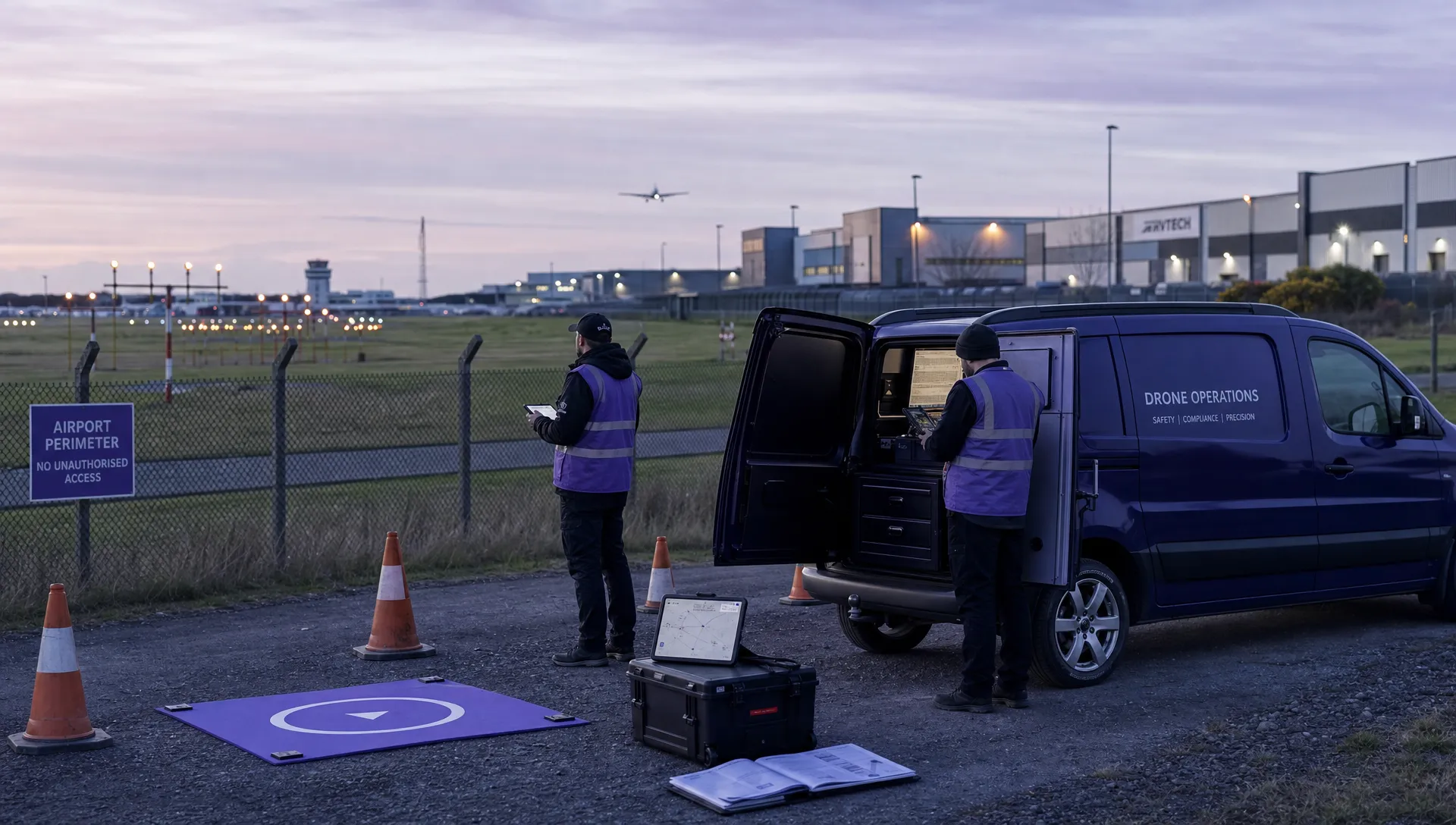 Class C Airspace Drone Rules for Commercial Flights →
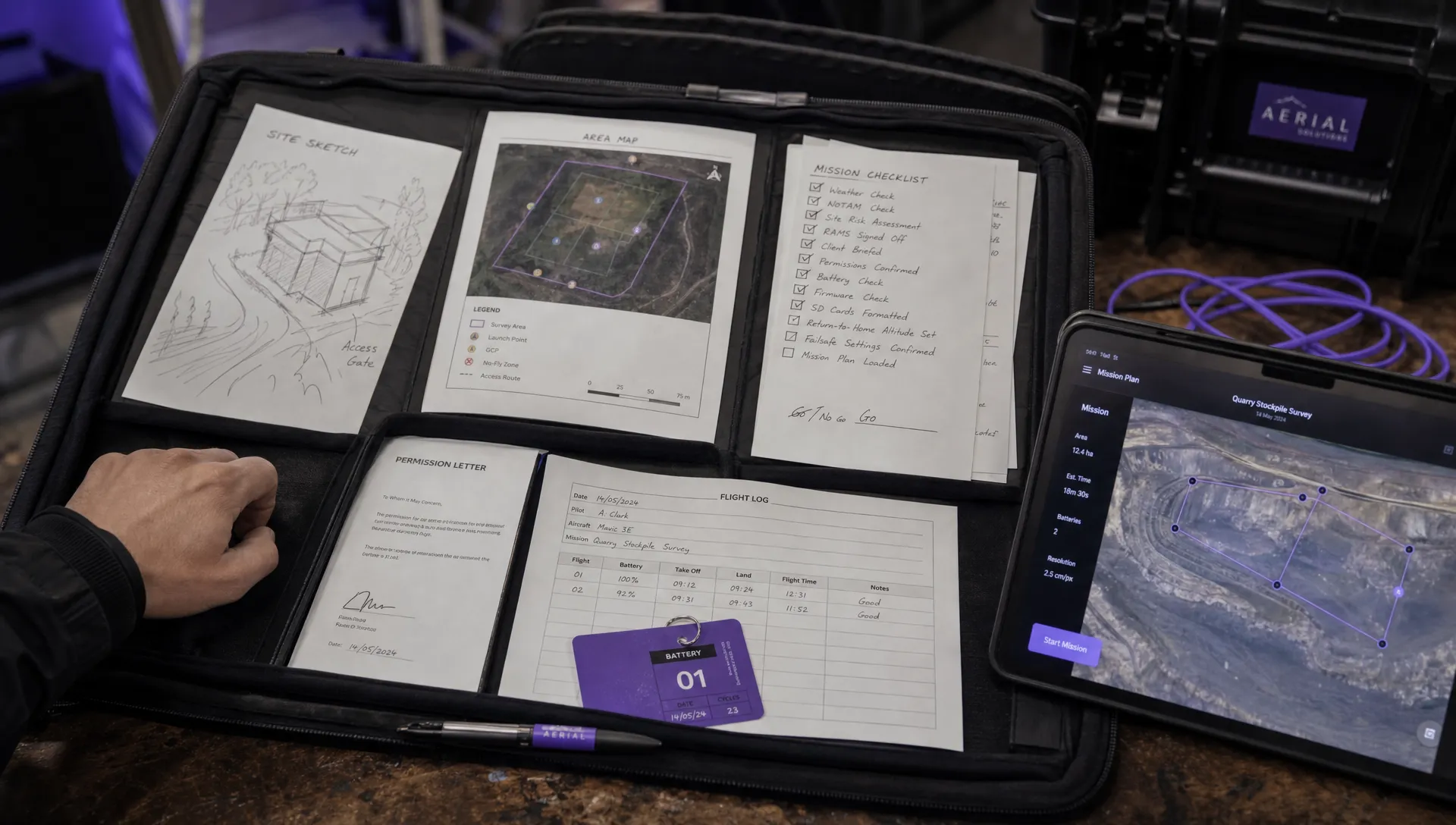 How to Create a Drone Job Pack for Every Mission →
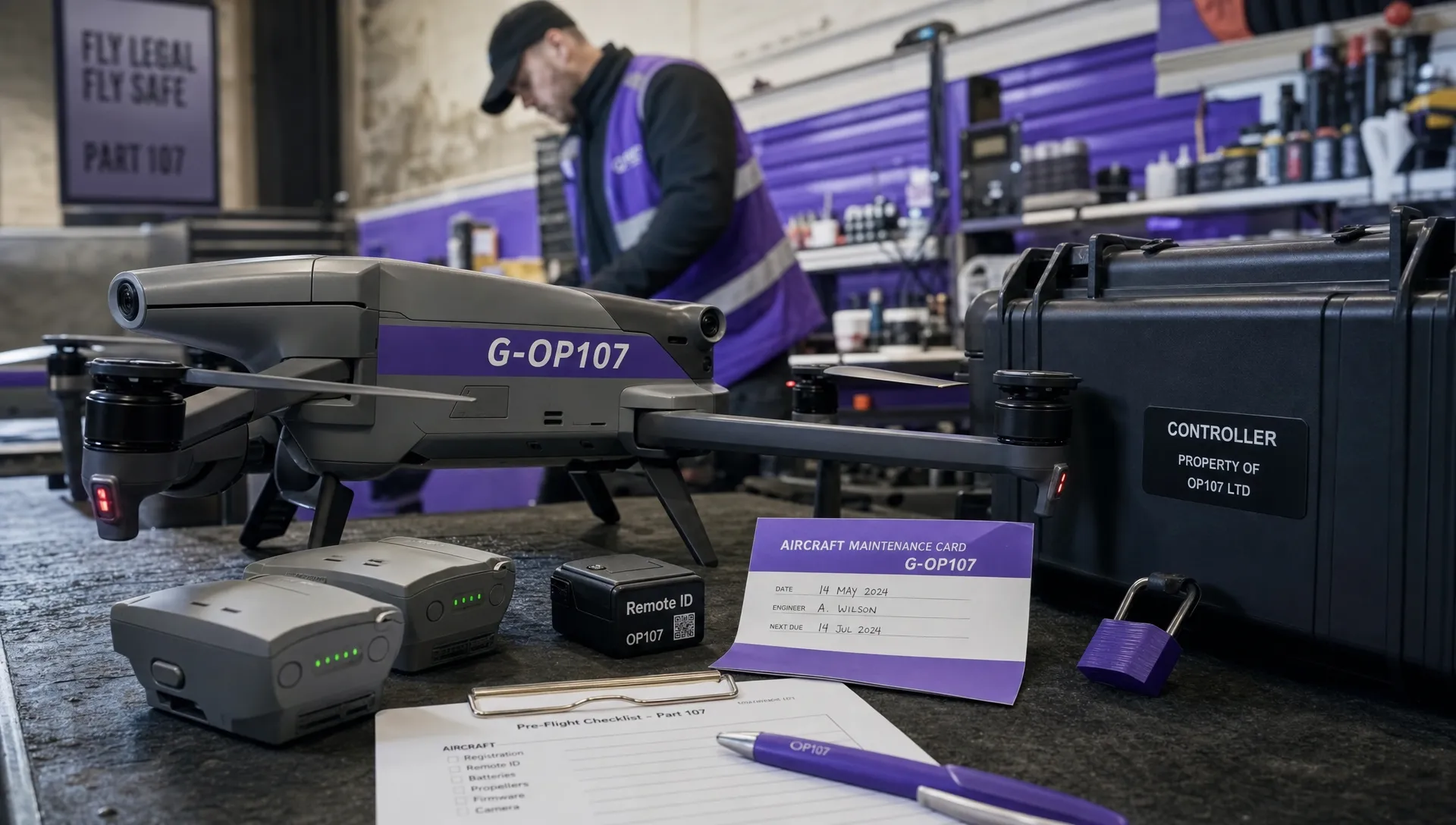 FAA Small UAS Rule: Key Requirements for Operators →
 How to Build a Drone Pilot Flight Log That Is Audit Ready →
 FAA Drone Licence Requirements for Commercial Pilots →
 FAA BVLOS Waivers Granted: What Successful Cases Show →